American Concentration Camps
Landscape of Place and Memory
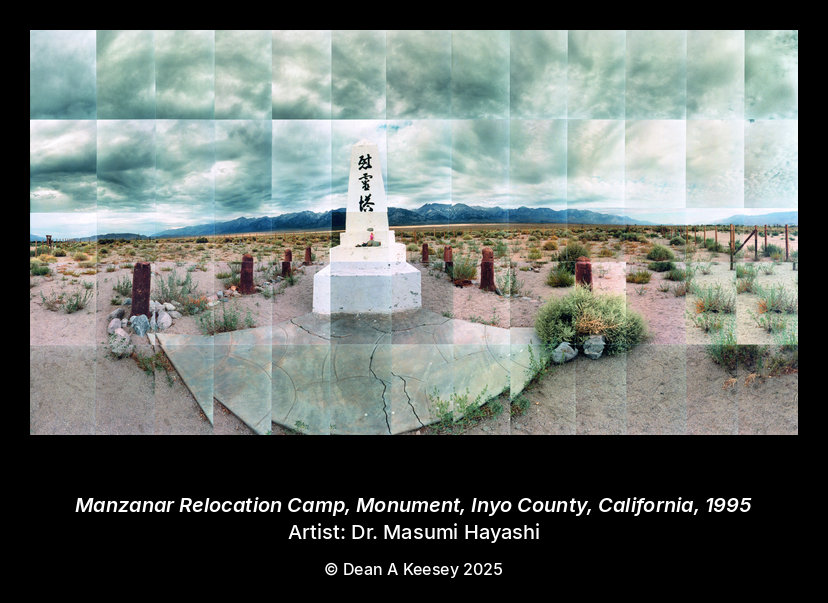
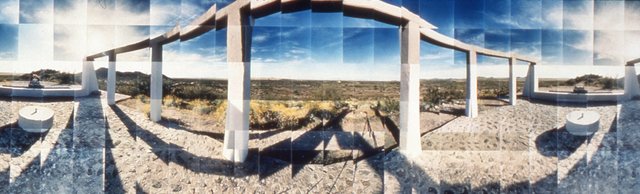
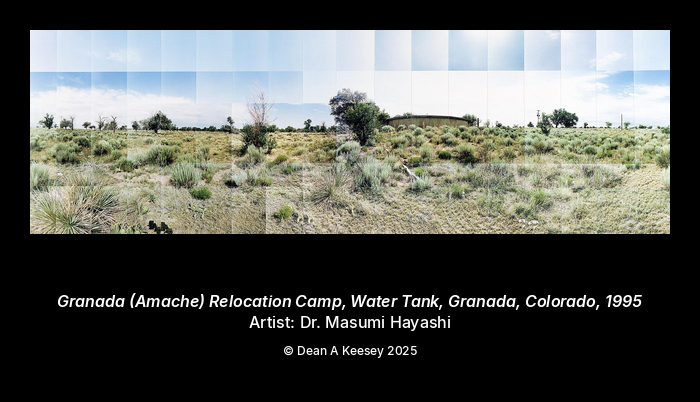
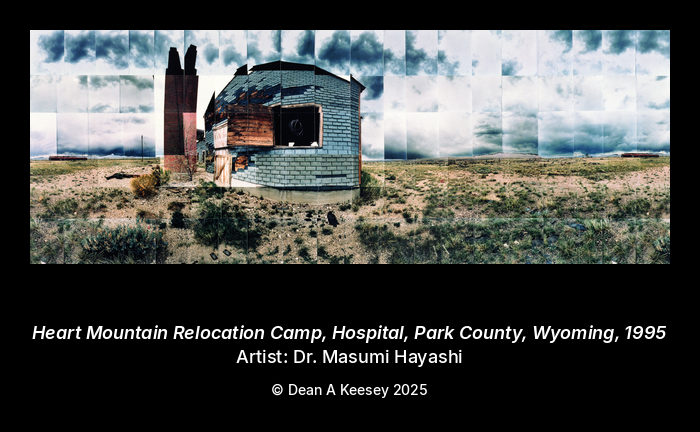
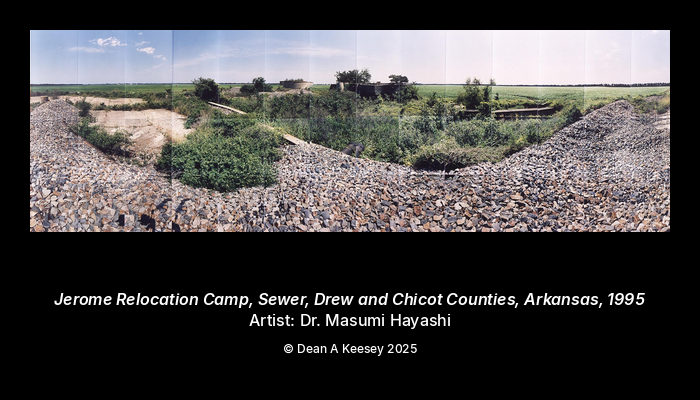
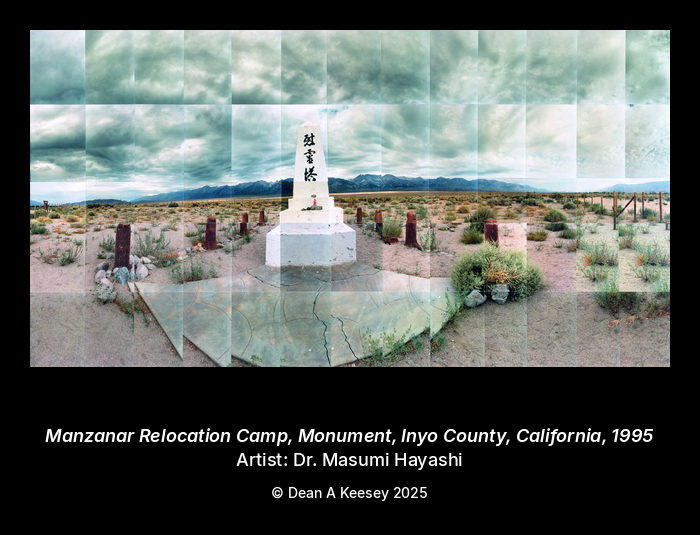
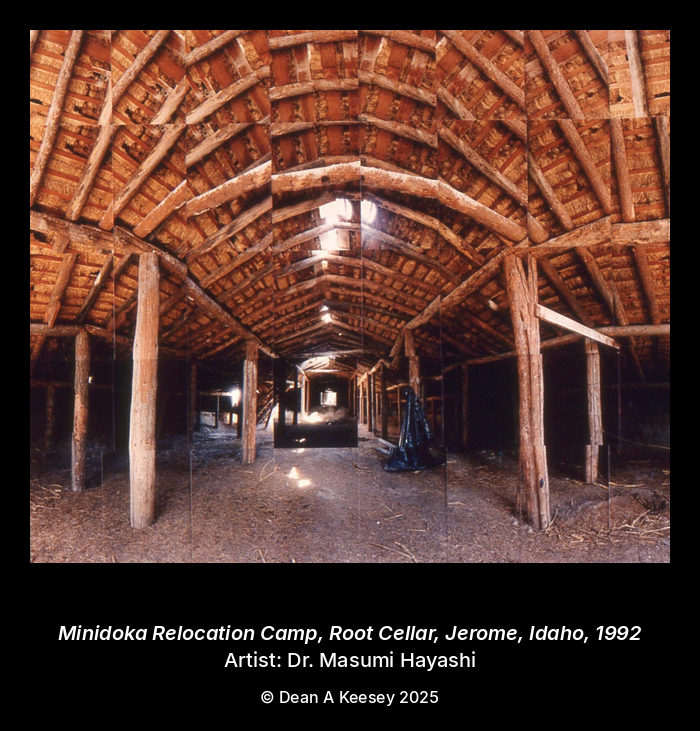
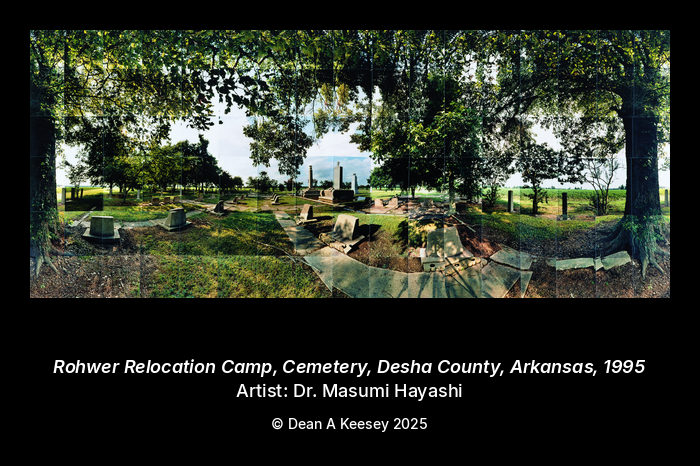
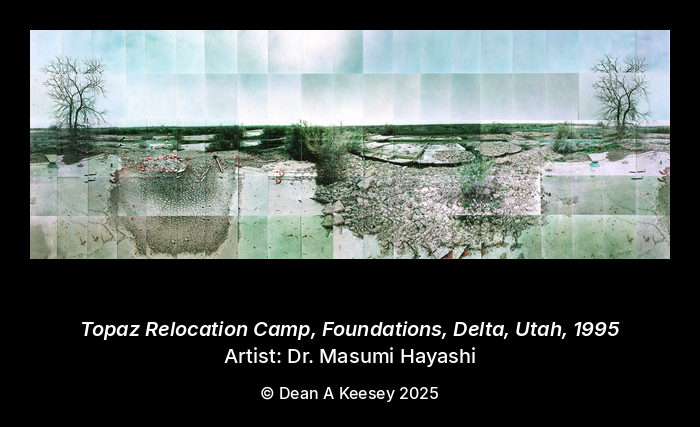
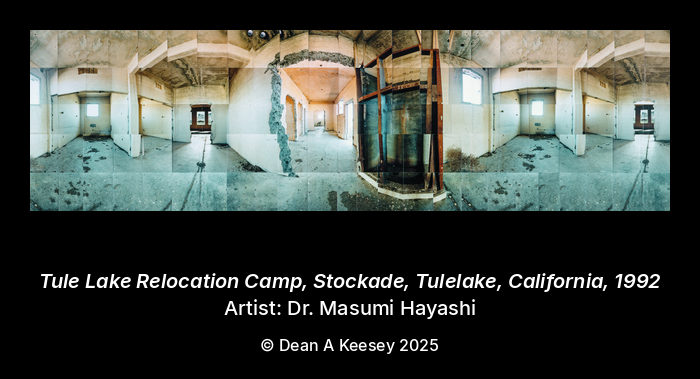
"These photographs are about beauty and irony, history and memory. The panoramic photo collages are a reconstruction of space, a remapping of space. These are landscapes of place representing the memory of that land and that place."
Three Perspectives on Memory
The Photography
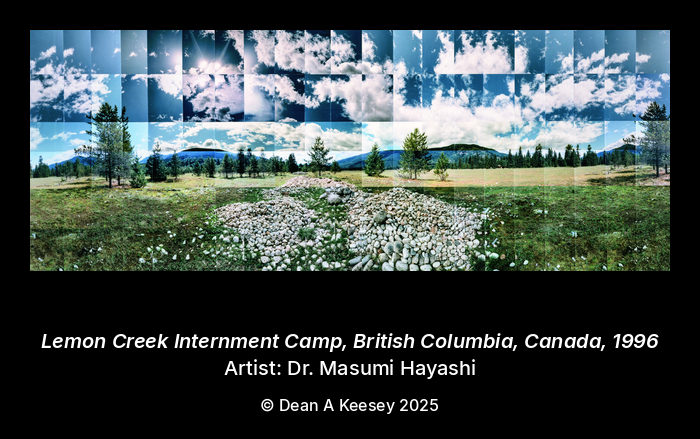
Panoramic photo collages documenting Japanese American and Japanese Canadian incarceration sites, plus portraits of internee survivors who shared their stories.
View Gallery (36 photographs) →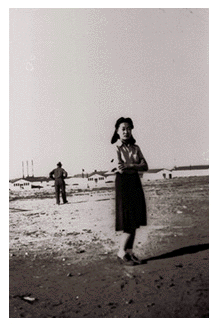
Family Album
Personal stories and photographs from families incarcerated during World War II, preserving the human experience behind the historical events.
Explore Family Stories →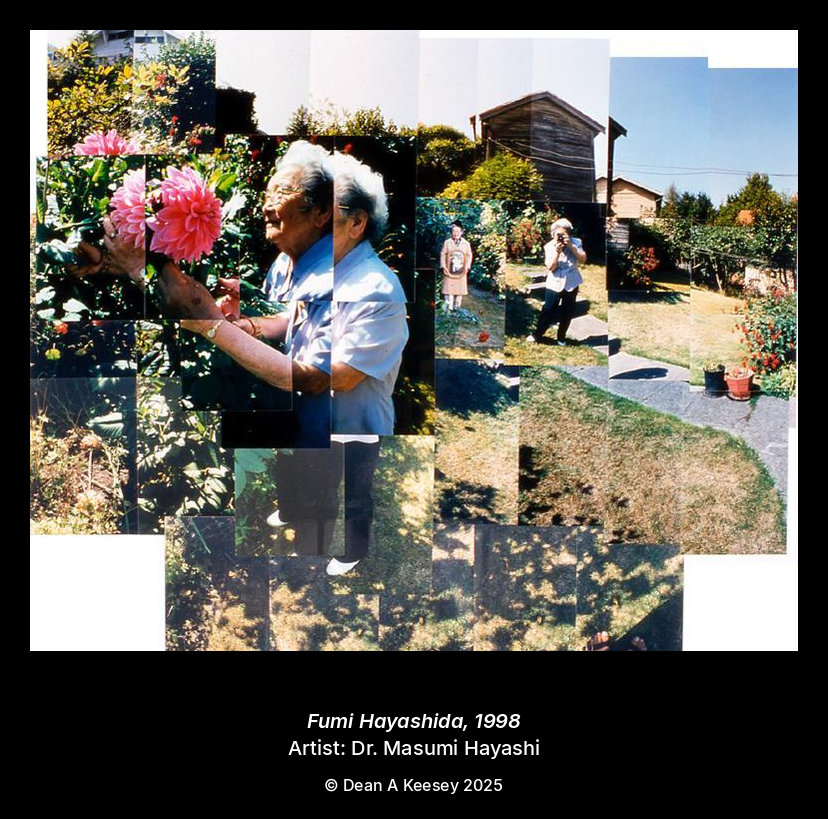
Historical Context
Oral histories, interviews, and historical documentation providing context for understanding this chapter of American history.
The Ten Concentration Camps
During World War II, 120,000 Japanese Americans were forcibly removed from their homes and incarcerated at ten concentration camps across the Western United States. Dr. Masumi Hayashi, born in 1945 at the Gila River camp in Arizona, spent decades photographing all ten sites. Survivors share their memories of life in these camps.
WRA camps (US) Canadian internment sites
About Dr. Masumi Hayashi
Dr. Masumi Hayashi (1945-2006) was a Japanese American sansei artist born at the Gila River concentration camp in Arizona. As a professor of photography at Cleveland State University, she dedicated decades to documenting sites of historical trauma through her distinctive panoramic photo collages.
Her work on the Japanese American concentration camps stands as a powerful testament to memory, justice, and the enduring human spirit. Through her art, she preserved not just the physical remains of these sites, but also the emotional and historical weight they carry. Her portraits of survivors and recorded interviews ensure their voices are never forgotten.