Canadian Concentration Camps
Japanese Canadian Internment, 1942–1949
Location: British Columbia / Ontario, Canada
Operated: March 4, 1942 - January 1, 1949
Peak Population: 22,000
The Canadian Incarceration
The following research is Masumi Hayashi’s own, written to accompany the Canadian camp photographs.
After the bombing of Pearl Harbor in the United States, the Canadian government passed the “Order in council PC 1486” expanding the power of the Minister of Justice to remove any and all persons from a designated protected zone (100 mile radius of the BC coast). This was part of the War Measures Act. On March 4, 1942, the BC Security Commission was established and 22,000 Japanese Canadians were given 24 hours to pack, before being incarcerated, interned, and separated from their families.
Like the American assembly centers, which housed internees at Santa Anita and other race tracks, the Japanese Canadians were initially housed in a temporary facility just as demeaning in Vancouver called Hastings Park Race Track.
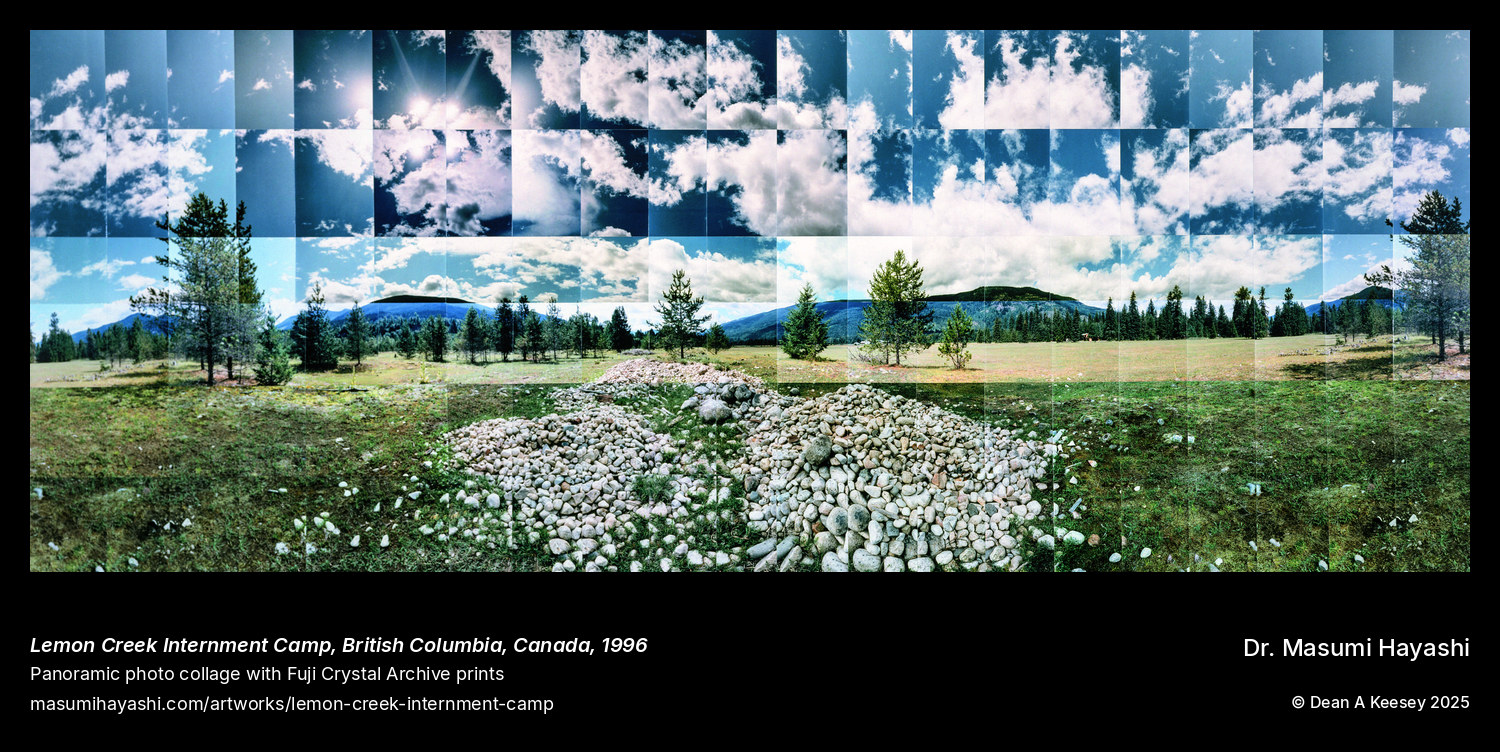
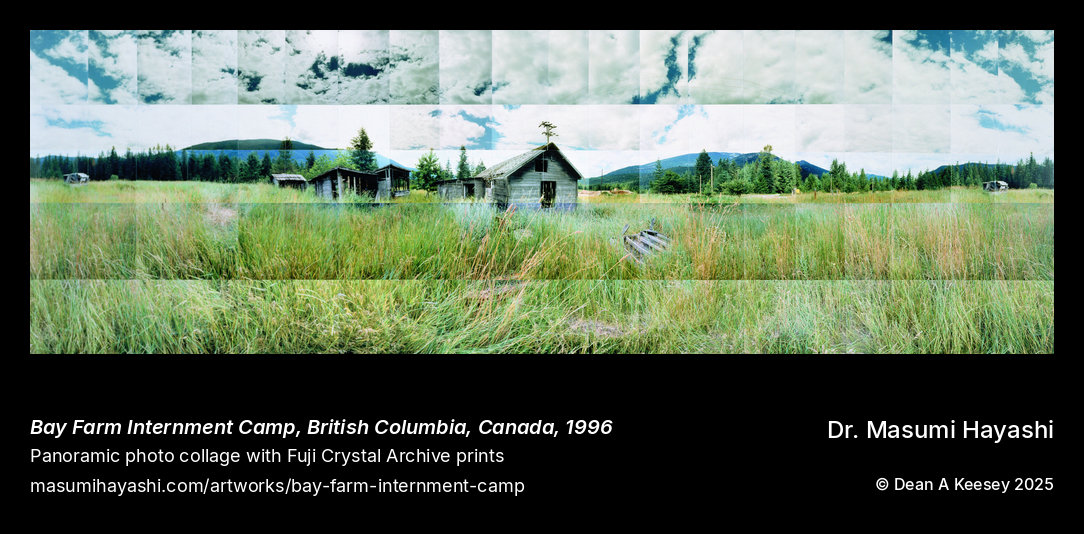
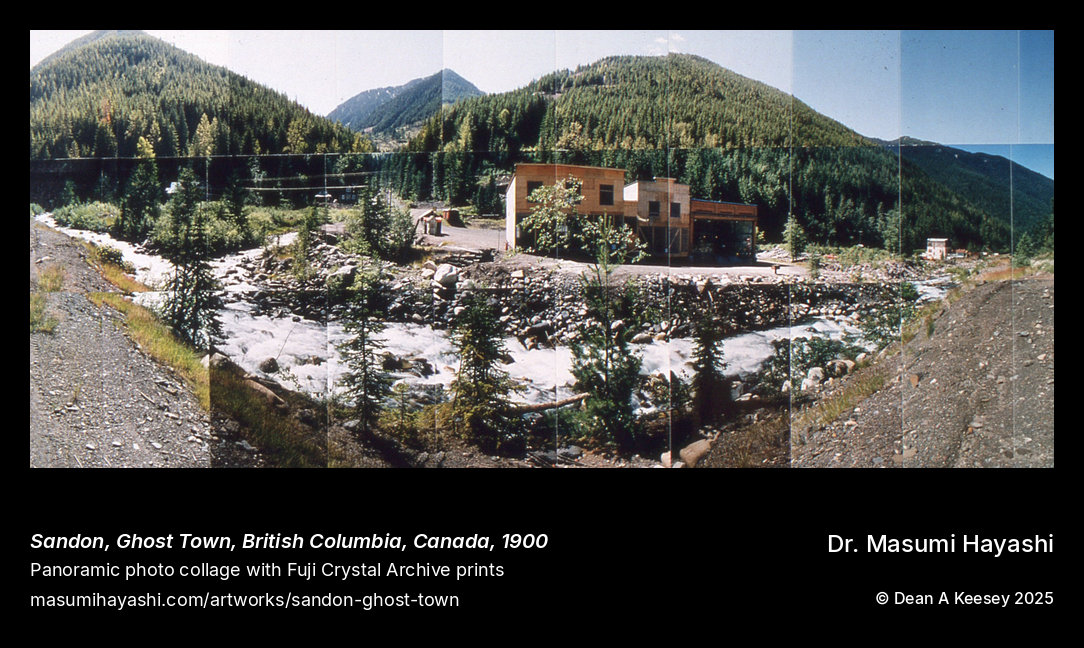
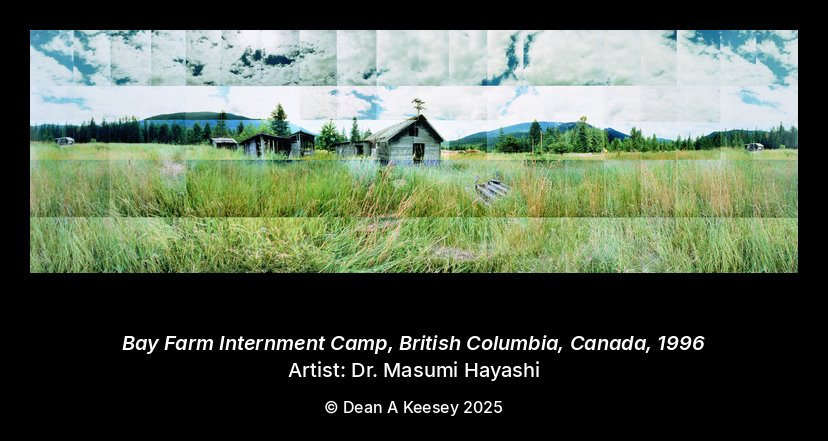
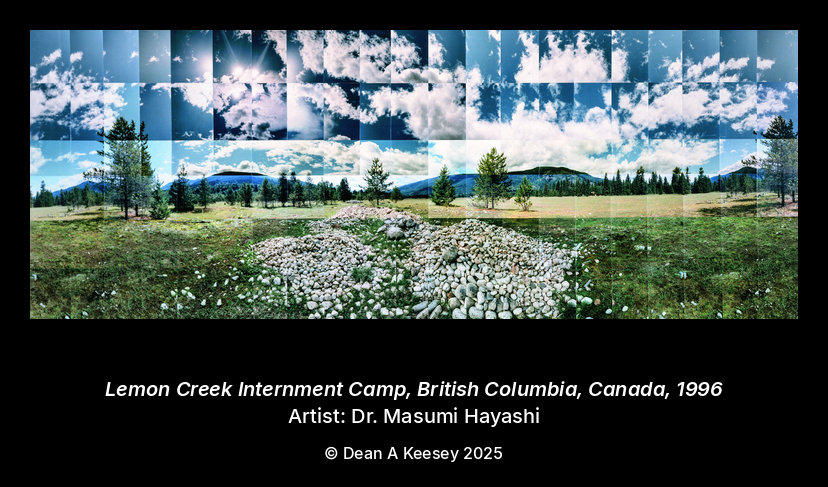
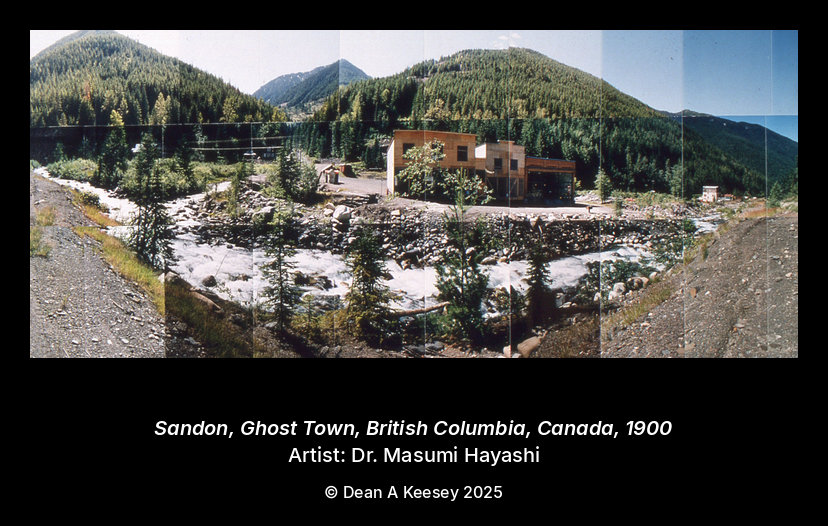
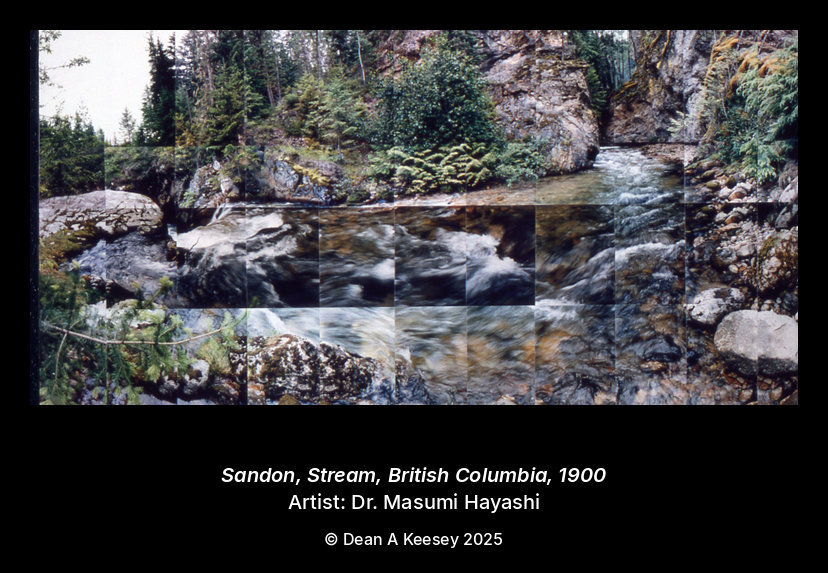
Men were separated from their families and forced to work on work crews building roads, railroads, and sugar beet farms. The women and children and older people were sent inland to internment camps (desolate ghost towns and farms made into small cities) in the interior of British Columbia at Greenwood, Sandon, Kaslo, New Denver, Rosebery, Slocan City, Bay Farm, Popoff, Lemon Creek, and Tashme.
“Self-supporting” camps were established in Lillooet, Bridge River, Minto City, McGillivray Falls, and Christina Lake. 1,161 internees paid for their relocation and leasing of farms in these desolate areas that provided a less restrictive, less punitive environment. These Japanese Canadians were still considered “enemy aliens” by the government.
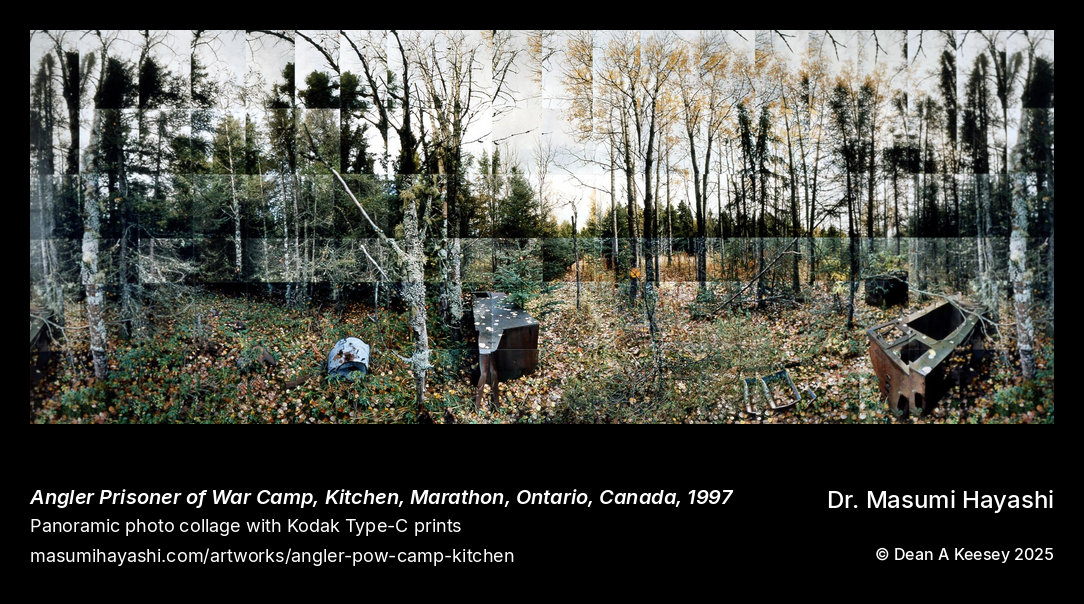
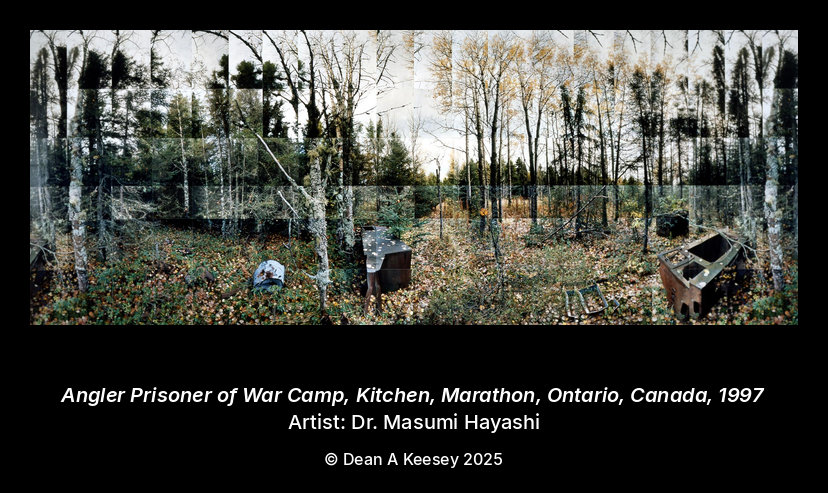
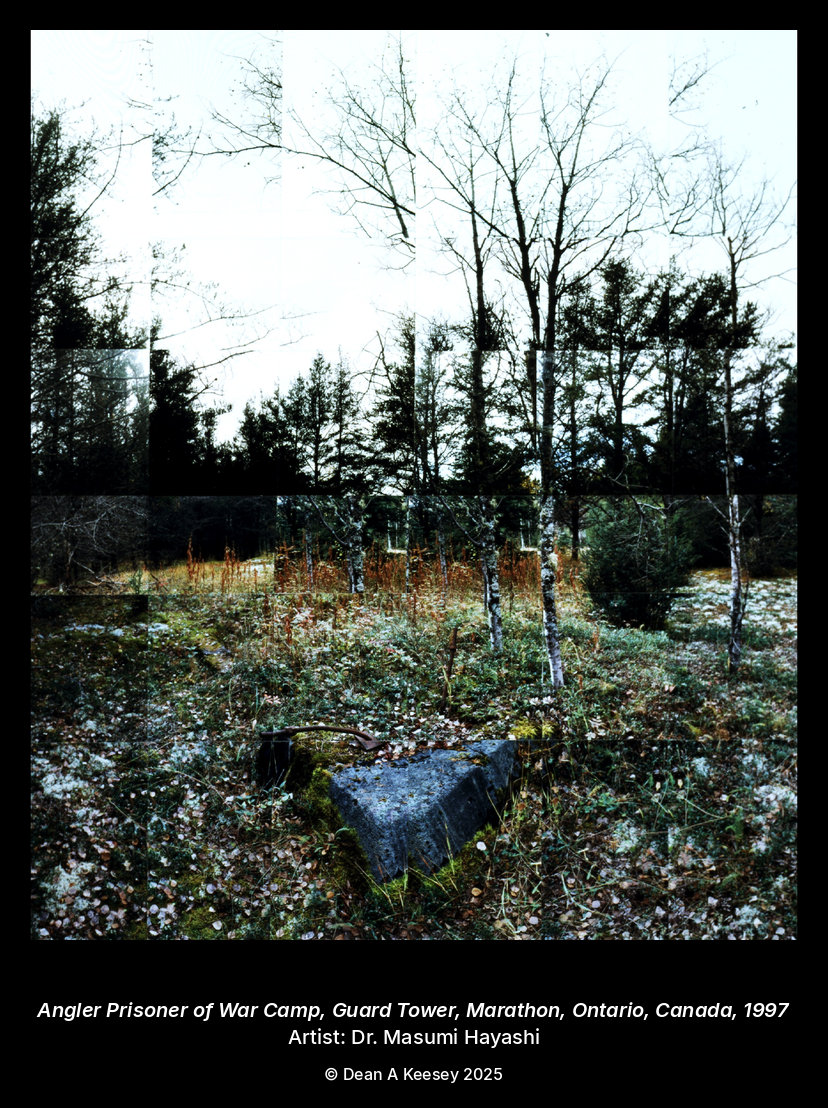
About 945 men worked on road construction camps at Blue River, Revelstroke, Hope, Schreiber, Black Spur. Those men who complained of the separation from families (Nisei Mass Evacuation Group) as well as other “dissident men” who violated curfew hours were sent to the “prisoner of war” camps at Angler and Petawawa in Ontario (699 men). They were forced to wear shirts with round, red targets on their backs.
Similar to the emasculation and impoverishment of the Jews before the roundup to the German concentration camps, the Japanese Canadians had property, businesses, cars, and boats confiscated and sold by the Canadian government before they were forced into labor camps. Without their property, assets, or jobs they were then charged inequitably for their internment. Harold Hirose, a veteran of the second world war, had five acres of Surrey farmland (a neighboring area of Vancouver) which was confiscated and sold for $36. He received a check for $15 which included charges for the administrative costs in a transaction which he did not approve. He subsequently made several appeals to the government to recover the land but these failed. (see Justice in Our Time, The Japanese Canadian Redress Settlement, Roy Miki and Cassandra Kobayashi, 1991, Talonbooks, pp. 81.)
Unlike the Japanese Americans the Japanese Canadians were not allowed to join the military until after 1945. In spite of the incarceration, the Japanese Canadians volunteered to serve in the Canadian Armed Forces.
In 1945 the Canadian government extended the War Measures Act which allowed the MacKenzie King government to execute the “final solution” which forced these Japanese Canadian citizens to repatriate to Japan (a country most of the Japanese Canadians had never been to before) or a forced a “dispersal” to eastern or midwest Canada. Until 1949 it was illegal for the Japanese Canadians to return to Vancouver or western Canada, despite the end of the war.
For the Japanese Canadians there were no homes, farms, and other property left behind before internment. They were forced to start their lives over, with no economic resources, in an estranged and racially repressive environment of midwest and eastern Canada.
In 1988 redress for the Japanese Canadians was passed and the Prime Minister issued an apology for the miscarriage of justice that led to internment and incarceration. Yet the $21,000 of redress money hardly compensates for the lost years of incarceration, property confiscated, family separations and disruptions, and the invisible psychological scars and memories of racial injustices that remain.
Sites Photographed
Masumi Hayashi photographed three Canadian sites between 1996 and 1997:
Lemon Creek Internment Camp, British Columbia, 1996 — panoramic photo collage, approximately 27” × 65”
Bay Farm Internment Camp, British Columbia, 1996 — panoramic photo collage, approximately 26” × 64”
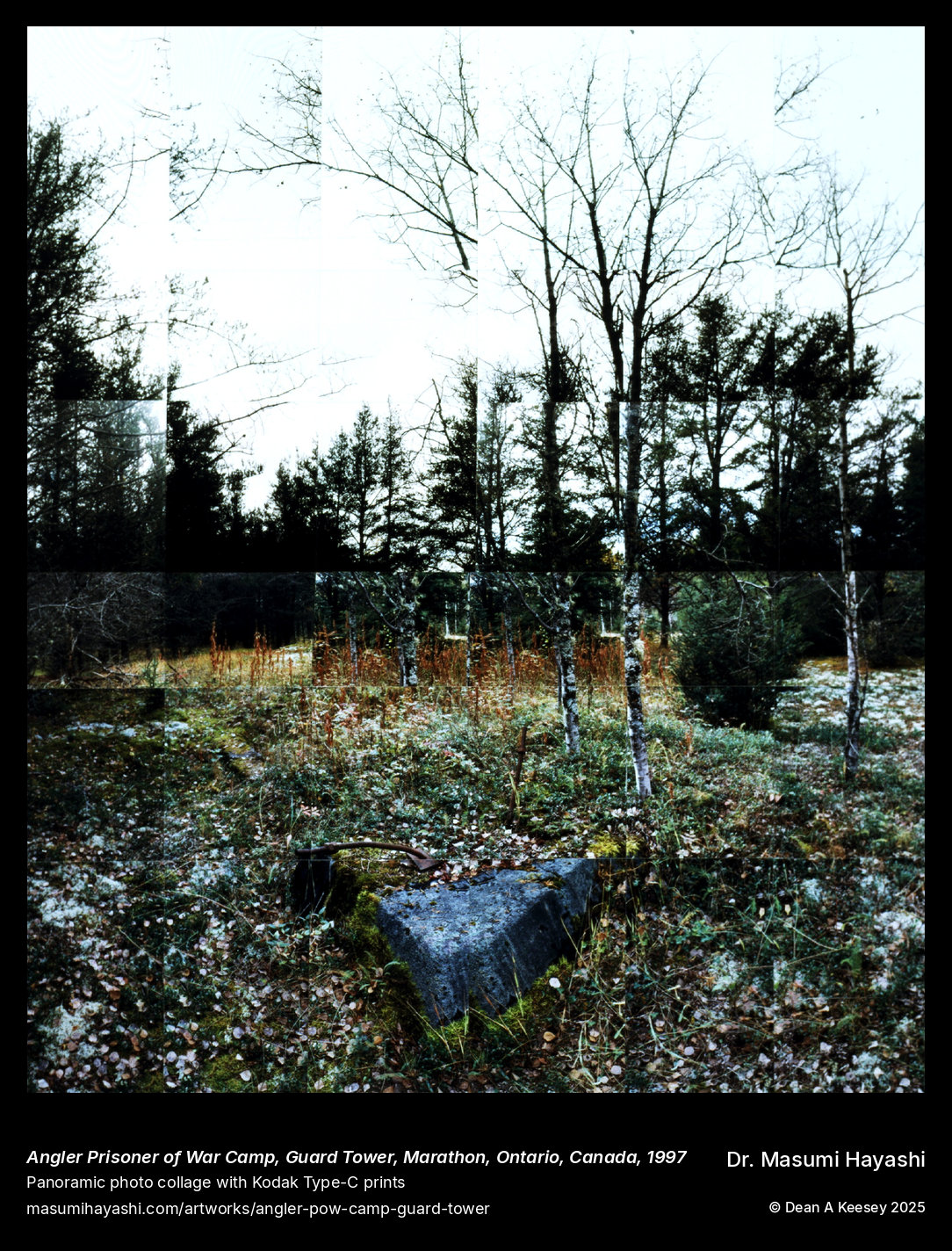
Angler P.O.W. Camp, Ontario, 1997 — panoramic photo collage
Angler was the prisoner of war camp in Marathon, Ontario, where men who protested the separation from their families were sent. They were required to wear shirts with round, red targets on their backs.
The 2001 Exhibition
In September 2001, “Hidden Places, Silent Spaces” opened at the Oregon Nikkei Legacy Center in Portland, presenting the American and Canadian camp photographs together for the first time in that context. Masumi Hayashi’s exhibition statement, written fourteen days after September 11, 2001, addressed directly what she saw repeating:
“With the common reaction to this tragedy of September 11, 2001, being exclamation ‘it’s just like Pearl Harbor,’ gut reactions go back to that time 60 years ago. For Japanese Americans and the Japanese Canadians, the tragedy involves not only the sadness of the painful loss of American lives. It is also the horror and dread of the reactionary racism and harassment to another group of innocent American people who happen to have the face of the enemy. It is my sincere wish that history will not repeat itself.”
— Masumi Hayashi, Oregon Nikkei Legacy Center, Portland, September 25, 2001
Gallery
External Resources
- Densho Encyclopedia - Japanese Canadian Internment ↗
Historical documentation of the Canadian internment
- National Association of Japanese Canadians ↗
Advocacy and historical resources for the Japanese Canadian community
- Japanese Canadian Redress: Justice in Our Time ↗
Documentation of the 1988 redress settlement
Explore More
American Concentration Camps
Explore the full project: photography, oral histories, family albums, and historical context documenting the incarceration of 120,000 Japanese Americans.
View the Complete Project →Oral Histories
Listen to internees share their memories of evacuation, camp life, and resilience during this period.
Listen to Interviews →Family Album
View photographs taken by internees themselves, documenting daily life inside the camps.
View Family Stories →All Ten Camps
Learn about the other War Relocation Authority concentration camps across the Western United States.
Explore All Camps →Historical Context
Archives, educational materials, and recommended reading about the Japanese American incarceration.
View Resources →