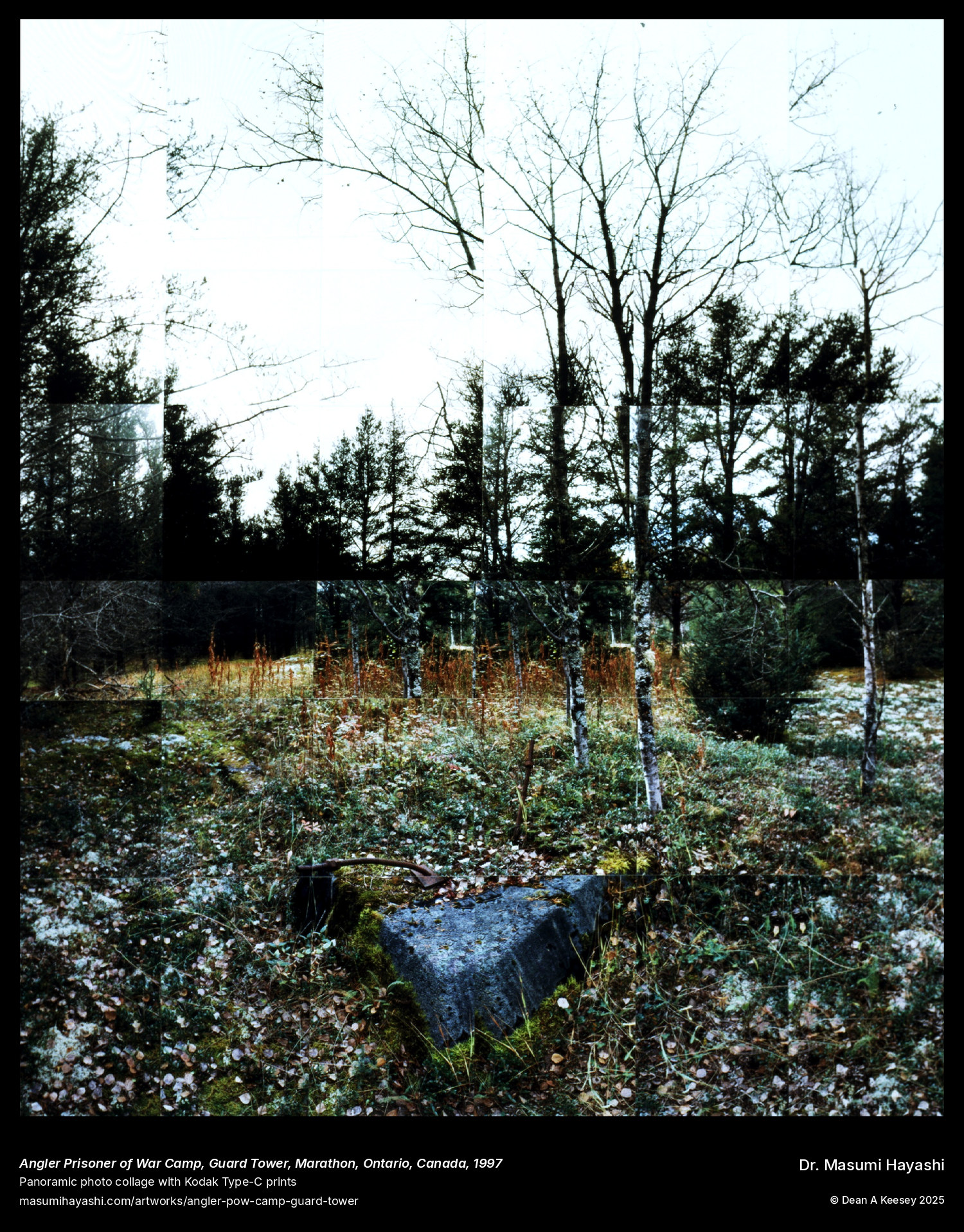
Angler Prisoner of War Camp, Guard Tower
Marathon, ON, Canada
Panoramic photo collage with Kodak Type-C prints
1997
28 x 32
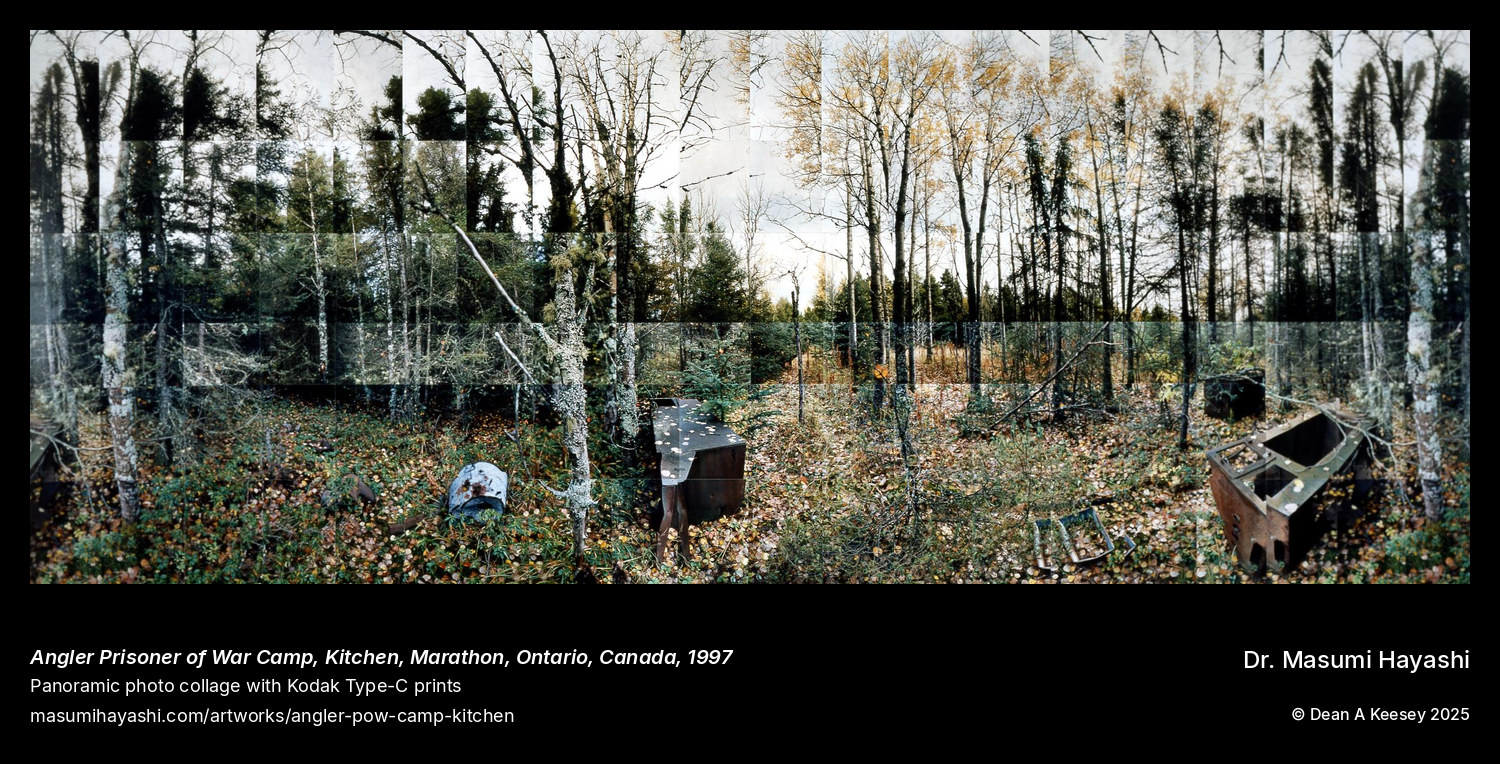
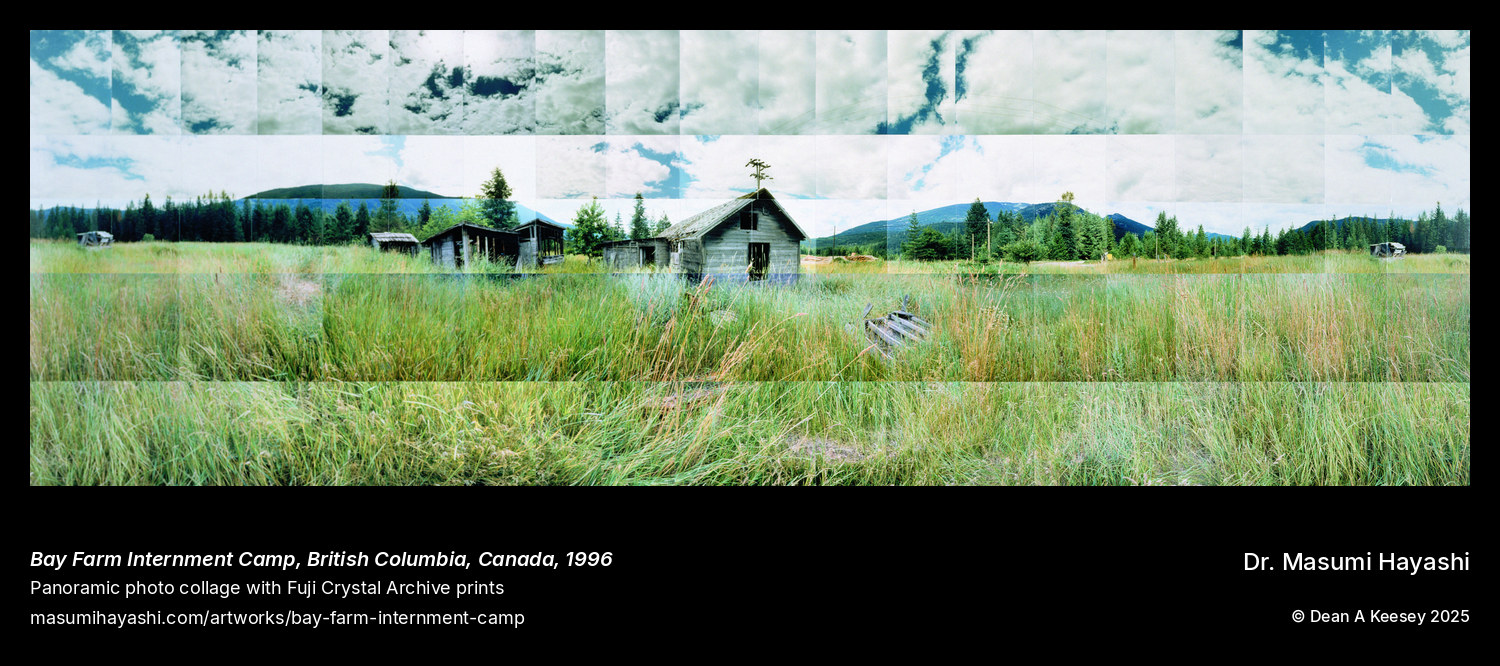
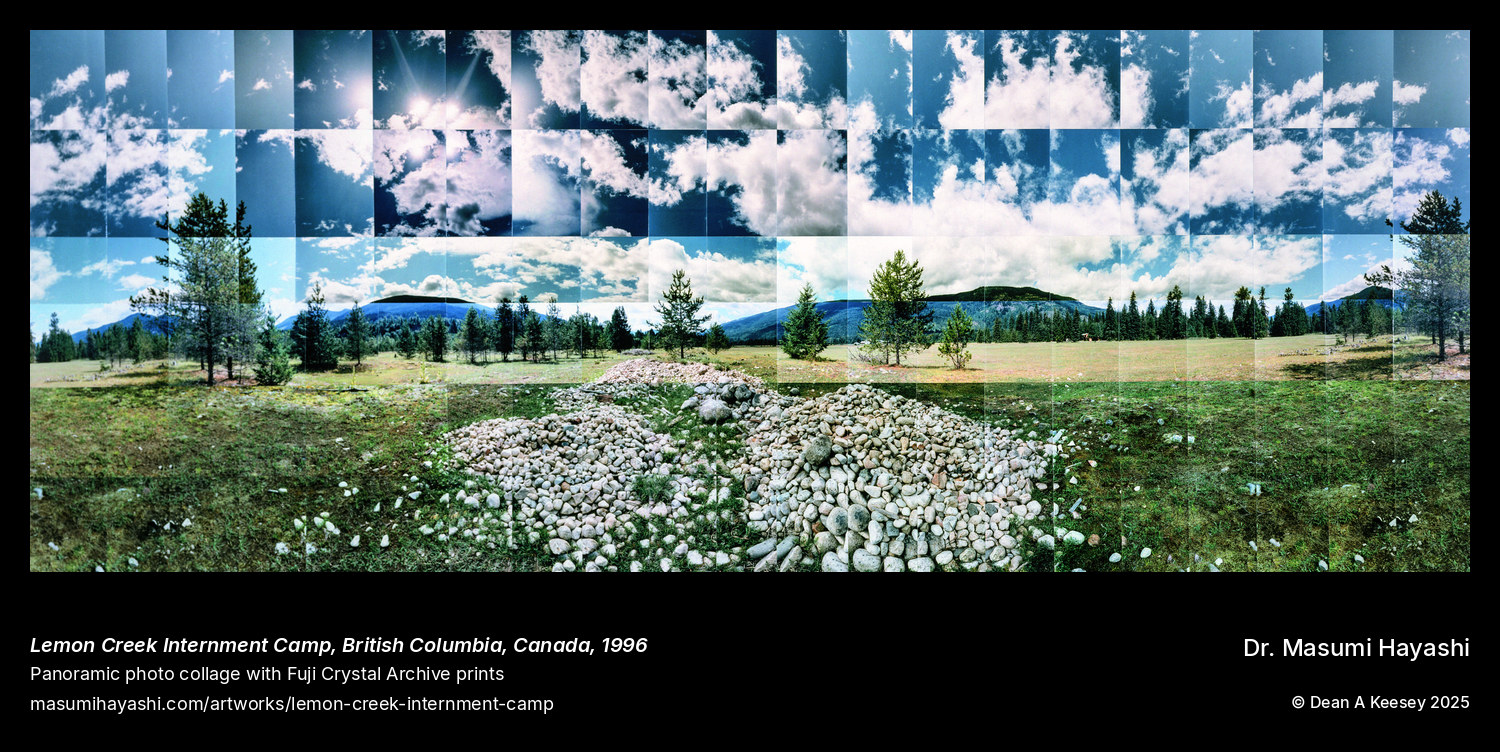
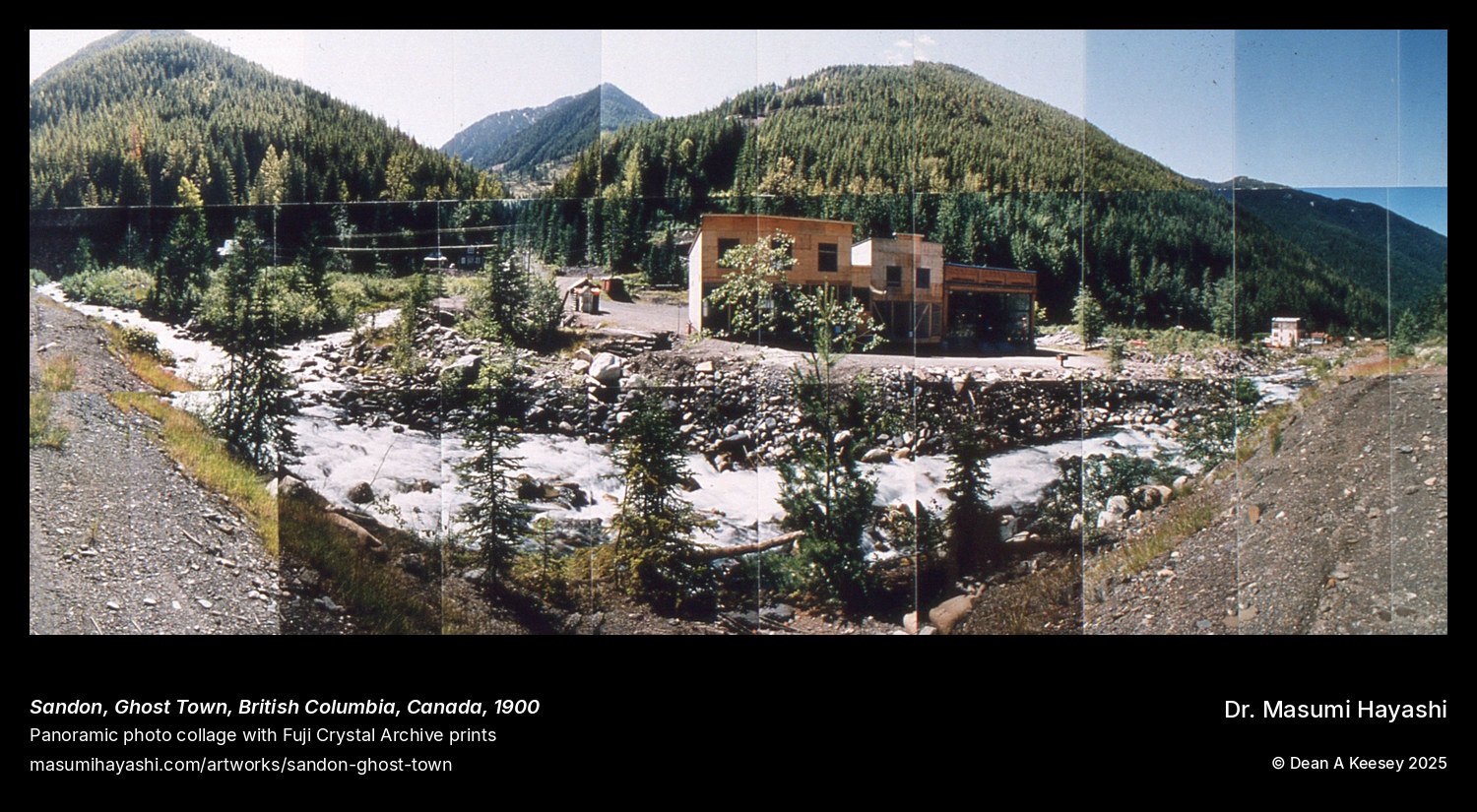
This 28-by-32-inch near-square panorama documents the guard tower at Angler Prisoner of War Camp in Marathon, Ontario—one of twenty-six camps Canada operated during World War II to detain both enemy combatants and its own Japanese Canadian citizens. The compact format focuses attention on the watchtower structure that symbolized imprisonment and surveillance.
Created in 1997, the work extends Hayashi’s documentation of Japanese incarceration beyond United States borders. Canada’s treatment of its Japanese population paralleled and in some ways exceeded American violations: the Canadian government not only imprisoned 22,000 Japanese Canadians but also sold their property without consent and maintained restrictions until 1949—four years after the war ended.
Angler’s complex history makes it distinctive among incarceration sites. Initially a prisoner of war camp for German and Italian military personnel, it later housed Japanese Canadians deemed “troublemakers”—men who resisted government orders or protested the sale of their confiscated property. The guard tower witnessed both wartime detention and the imprisonment of Canadian citizens exercising their rights of protest.
The near-square format concentrates the composition on the tower’s vertical presence, the structure representing surveillance and control across multiple populations. The photo collage technique fragments this instrument of power while documenting its survival decades after the camps closed.
The guard tower’s survival enables documentation unavailable at most incarceration sites, where structures were demolished after the war. This tangible remnant of Canada’s parallel violation of its Japanese population extends Hayashi’s systematic coverage of North American incarceration.
This work documents Canadian Concentration Camps, one of the concentration camps where Japanese Americans were incarcerated during World War II.
Part of the American Concentration Camps project