Heart Mountain
Heart Mountain War Relocation Center
Location: Cody, Wyoming
Operated: August 12, 1942 - November 10, 1945
Peak Population: 10,767
Heart Mountain Location & Map
Location: Park County, Wyoming Address: Heart Mountain Interpretive Center, 1539 Road 19, Powell, WY 82435 Coordinates: 44.6717°N, 109.0003°W Elevation: 4,500 feet
Heart Mountain is located in northwestern Wyoming’s Bighorn Basin, approximately:
- 14 miles northeast of Cody, Wyoming
- 12 miles southwest of Powell, Wyoming
- 80 miles west of the Montana border
- At the eastern base of Heart Mountain peak (8,123 ft)
Getting to Heart Mountain
By Car: From Cody, take US Highway 14A east. The Heart Mountain Interpretive Center is located off Road 19, with clear signage from the highway.
Interpretive Center Hours:
- May-September: 10:00 AM - 5:00 PM (Wednesday-Saturday)
- October-April: By appointment
Historical Overview
Heart Mountain opened on August 12, 1942, as the seventh of ten War Relocation Authority concentration camps. The first internees arrived from assembly centers in California, Washington, and Oregon, many from farming and fishing communities along the Pacific coast.
The camp was named for the distinctive heart-shaped mountain (8,123 feet) that rises from the surrounding plains. The mountain, sacred to local Native American tribes, became an ironic symbol of a site dedicated to denying freedom.
Camp Layout and Infrastructure
The camp consisted of 468 barracks arranged in rectangular blocks, along with:
- 32 mess halls
- 24 laundry/latrine buildings
- 21 recreation halls
- Administrative buildings
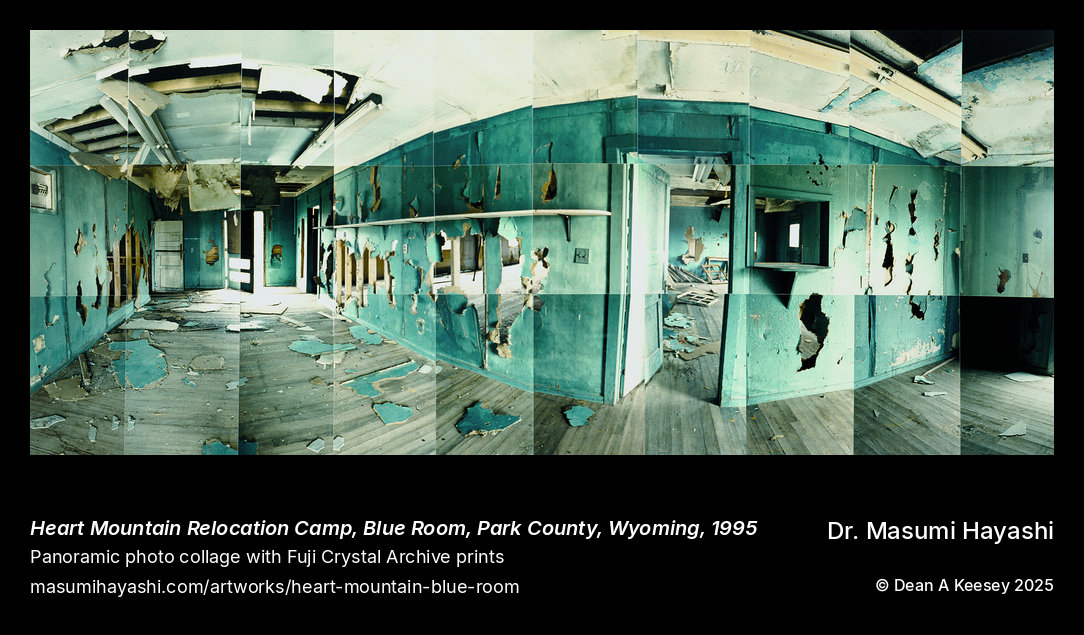
- Hospital complex (174 beds)
- High school and elementary schools
- Wastewater treatment facility
- 9 guard towers along the perimeter
Each barracks measured 20 x 120 feet, divided into 6 one-room apartments housing families of varying sizes. Walls were single-layer wood covered with tar paper, providing minimal insulation against Wyoming’s extreme temperatures.
Timeline of Key Events
- August 12, 1942: First internees arrive at Heart Mountain
- November 1942: School opens with 1,500 students
- February 1943: Registration crisis - loyalty questionnaire causes division
- June 1944: Draft resistance begins - 63 men refuse induction
- November 1945: Fair Play Committee leaders convicted in federal court
- November 10, 1945: Camp officially closes
Resistance and the Fair Play Committee
Heart Mountain became a center of organized resistance to the draft. In 1944, when the U.S. government reinstated the draft for Japanese Americans while their families remained imprisoned, many questioned the constitutionality of being drafted while denied their civil rights.
The Fair Play Committee (FPC) formed to challenge the government’s right to draft men from behind barbed wire. Sixty-three Heart Mountain internees refused to report for their draft physical, leading to their prosecution and imprisonment. Their stand raised fundamental questions about citizenship, loyalty, and constitutional rights that continue to resonate today.
Notable Internees and Events
Fair Play Committee Leaders
- Kiyoshi Okamoto - President of the Fair Play Committee
- Paul Nakadate - Vice President
- Frank Emi - Secretary and key organizer
Cultural Contributors
- Estelle Ishigo - Caucasian artist who voluntarily accompanied her Japanese American husband to Heart Mountain and documented camp life through paintings and writings
- Bill Hosokawa - Journalist and editor of the Heart Mountain Sentinel (camp newspaper)
- George “Horse” Yoshinaga - Future sportswriter and columnist
Community Institutions
- Heart Mountain Sentinel (newspaper)
- Agricultural projects (10,000+ acres cultivated)
- Schools (elementary through high school with 1,500+ students)
- Buddhist temple and Christian churches
- Athletic leagues and cultural programs
Daily Life Behind Barbed Wire
Despite imprisonment, internees created community infrastructure:
Economic Activity
- Agricultural production for the camp and commercial sale
- Consumer cooperatives
- Silkscreen shop producing posters for the U.S. government
- Woodworking and other small businesses
Education
The Heart Mountain school system eventually employed 47 teachers instructing over 1,500 students. Despite overcrowding and shortages of supplies, teachers and students maintained educational standards, with a graduating class of 304 in 1945.
Recreation and Culture
- Baseball leagues (Heart Mountain Eagles)
- Sumo wrestling
- Traditional Japanese arts and crafts
- Boy Scouts and Girl Scouts
- Dances and social events
- Japanese language and cultural classes
Environmental Challenges
The Wyoming high desert location created extreme hardships:
Climate Extremes
- Winter temperatures dropping to -30°F
- Summer heat exceeding 100°F
- Temperature swings of 30-40°F in a single day
- Persistent high winds creating dust storms
Infrastructure Inadequacies
- Thin barracks walls providing minimal insulation
- Coal-burning stoves often inadequate for heating
- Dust infiltrating living quarters through wall gaps
- Limited water supply in the arid climate
- Outdoor toilets and washing facilities (later improved)
Many internees, particularly those from mild California coastal climates, suffered health problems from the harsh conditions, including respiratory issues from dust and cold, and malnutrition from limited fresh food during winter months.
Present Day - National Historic Landmark
In 2006, Heart Mountain was designated a National Historic Landmark. The Heart Mountain Wyoming Foundation was established to preserve the site and educate the public about this chapter of American history.
Heart Mountain Interpretive Center
Opened in 2011, the 11,000-square-foot interpretive center features:
- Comprehensive historical exhibits
- Personal testimonies and artifacts
- Original barrack building relocated to the site
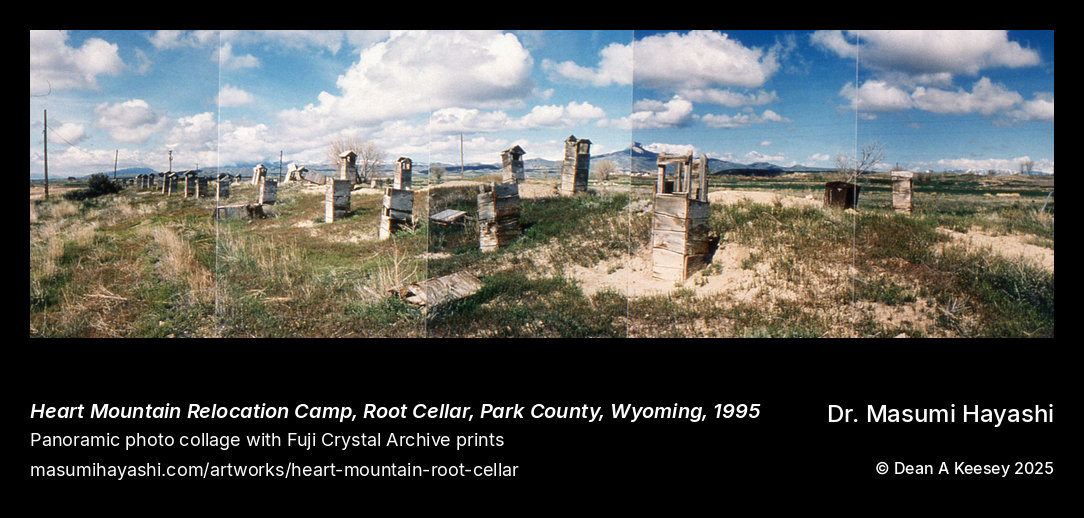
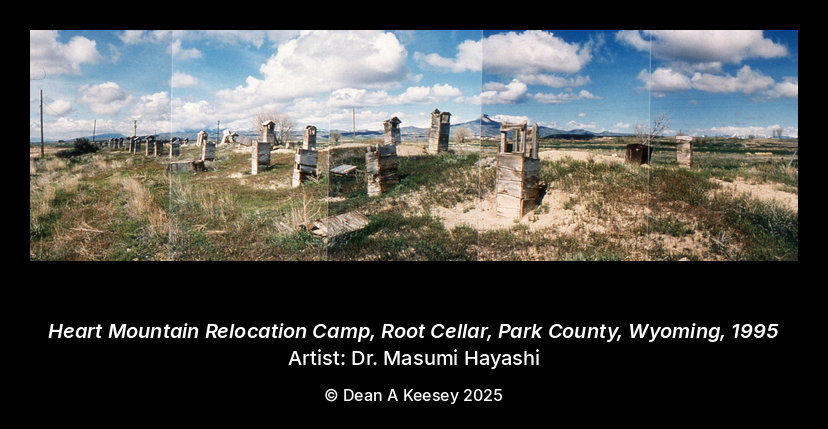
- Root cellar restoration
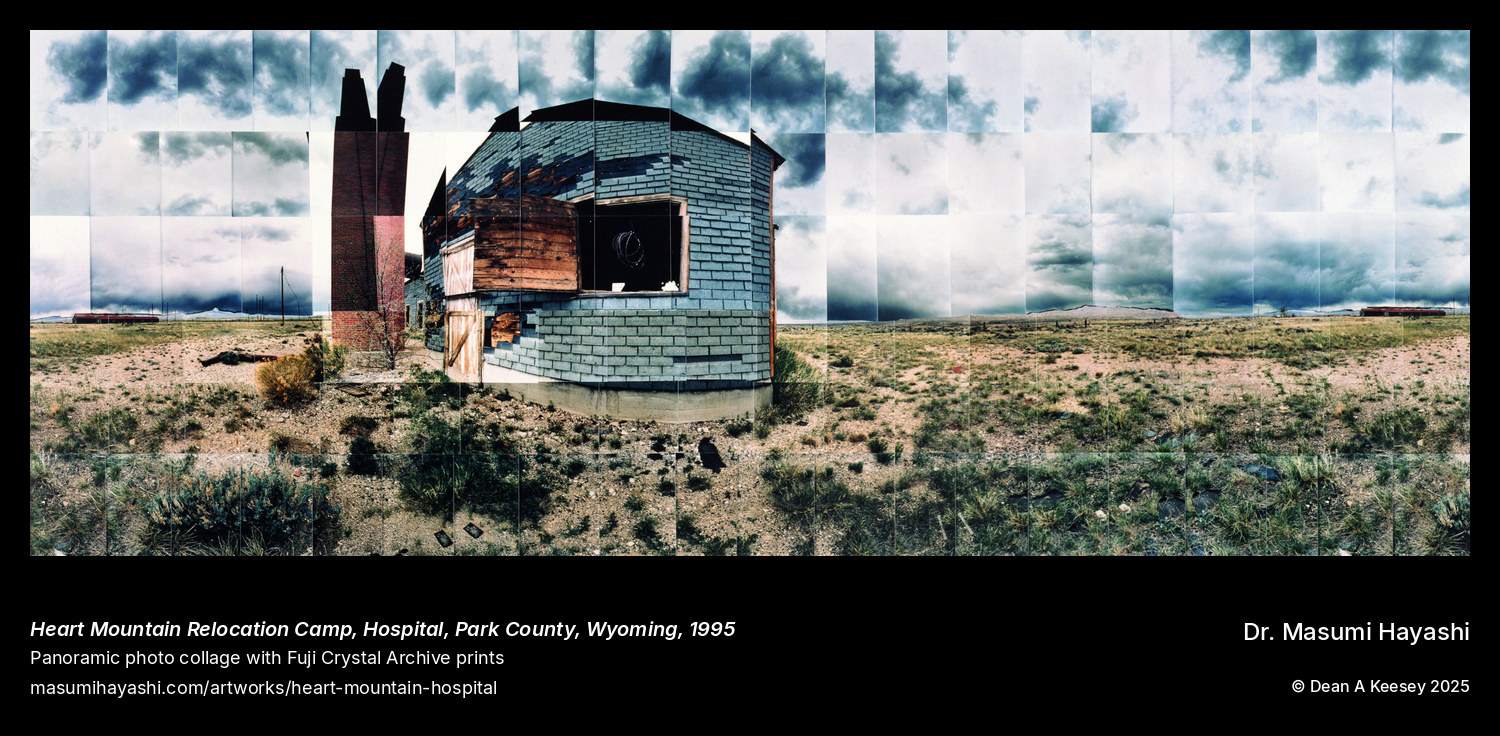
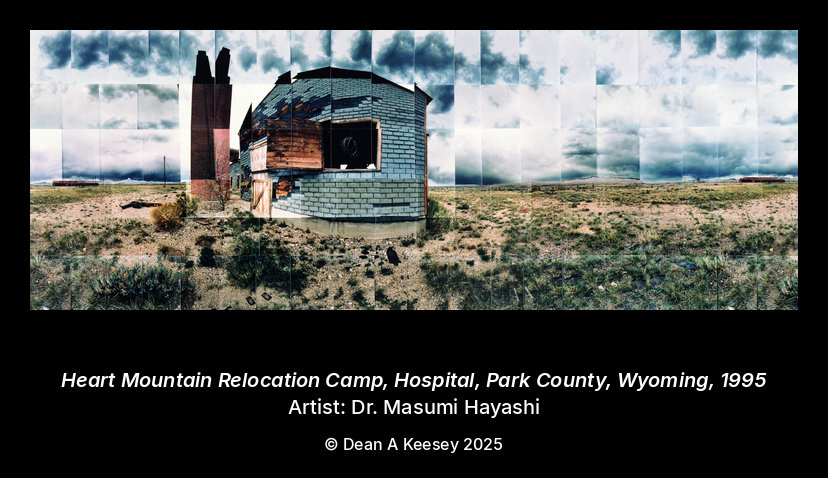
- Hospital chimney preserved in place
- Educational programs and resources
- Annual Heart Mountain Pilgrimage
Preserved and Reconstructed Features
- Hospital chimney (original)
- Root cellar (restored)
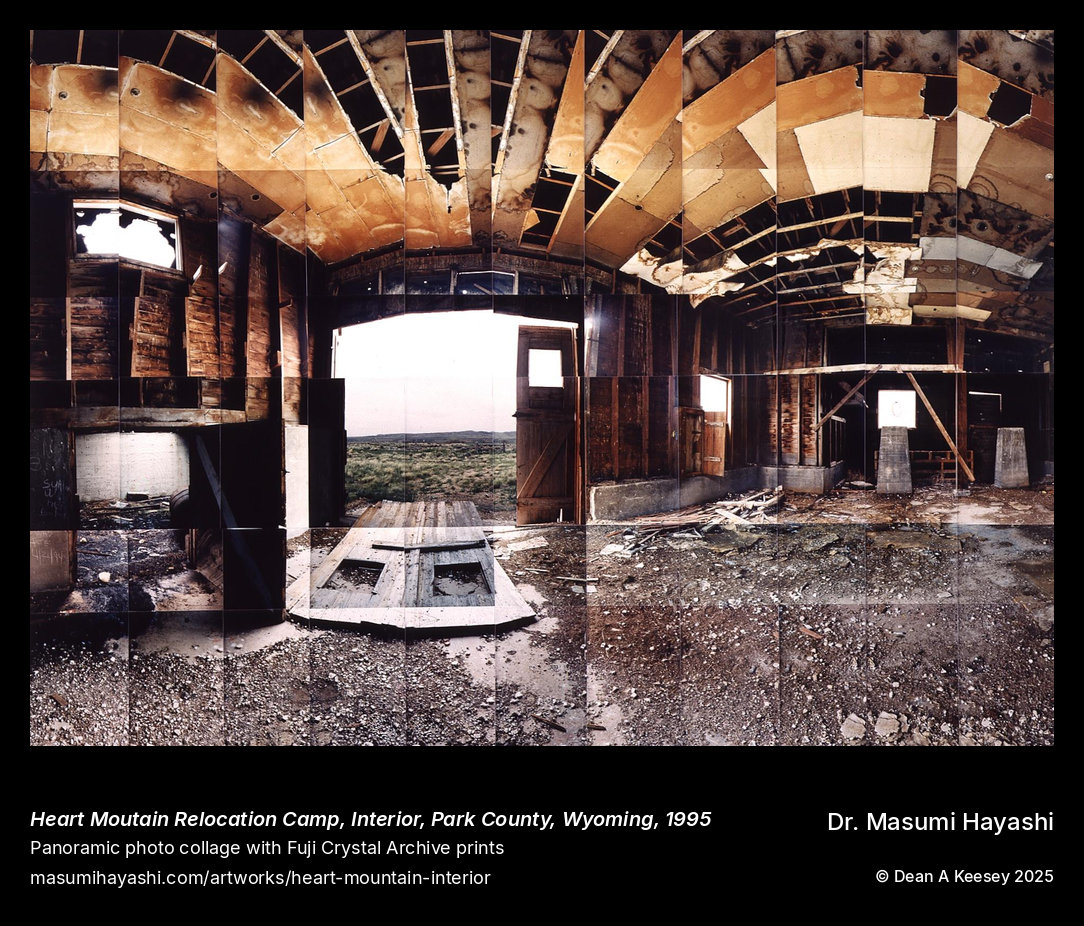
- Barrack (relocated original)
- Honor Roll monument (original)
- Boundary markers showing camp perimeter
- Foundation remnants throughout the site
Research and Education
The Foundation maintains an extensive research library and oral history collection, and partners with schools nationwide to teach about constitutional rights, civil liberties, and the consequences of prejudice and wartime hysteria.
Geographic Context
Heart Mountain’s location in Wyoming’s remote Bighorn Basin was deliberately chosen for isolation. The combination of:
- Extreme distance from West Coast cities
- Harsh environmental conditions
- Sparse local population
- Limited transportation access
- Visibility from guard towers across flat terrain
…made the location ideal for the government’s purposes of isolation and control, while creating severe hardships for internees unprepared for high desert extremes.
Significance in Masumi Hayashi’s Work
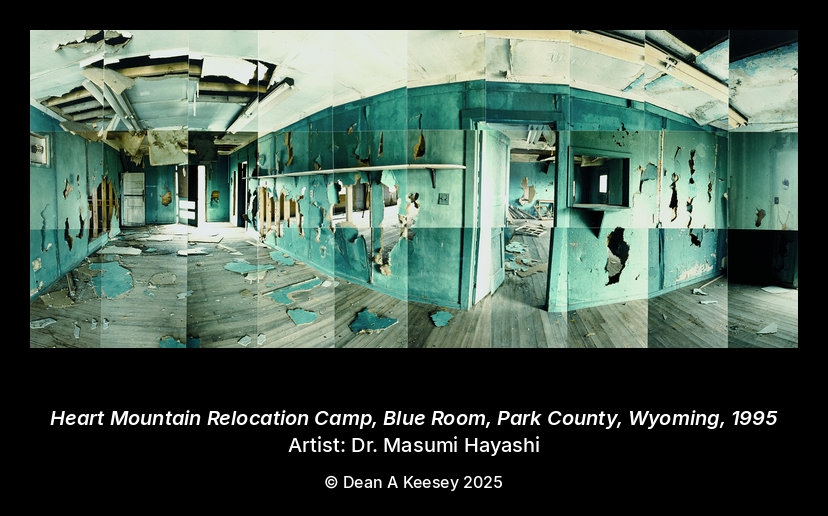
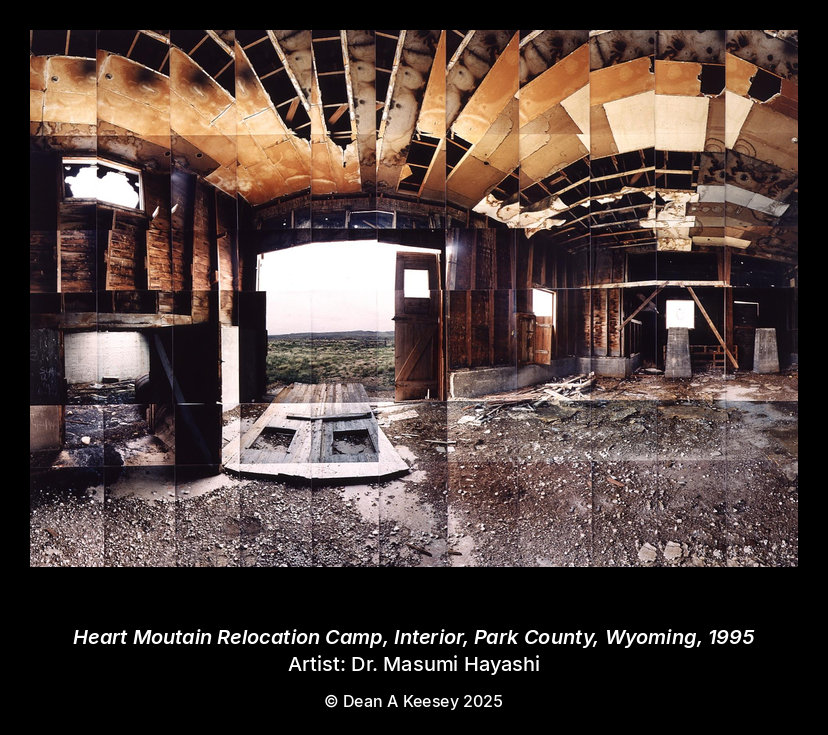
Masumi Hayashi photographed Heart Mountain as part of her comprehensive documentation of all ten War Relocation Authority camp sites. Born herself at Gila River concentration camp in 1945, Hayashi’s work transforms these sites from historical footnotes into powerful testimonies of injustice.
Her panoramic photo collages of Heart Mountain capture the vast emptiness of the Wyoming landscape, the traces of human habitation barely visible against the sagebrush plains, and the enduring presence of Heart Mountain itself - a witness to the constitutional crisis that unfolded at its base.
Through her systematic documentation, Hayashi ensures these sites remain visible in American memory, challenging viewers to reckon with the material evidence of mass incarceration on U.S. soil.
Gallery
External Resources
- Heart Mountain Wyoming Foundation ↗
Interpretive center and museum preserving Heart Mountain history and educating about the internment
- Densho Encyclopedia - Heart Mountain ↗
Comprehensive historical documentation of Heart Mountain concentration camp
- National Park Service - Heart Mountain ↗
National Historic Landmark information and resources
Explore More
American Concentration Camps
Explore the full project: photography, oral histories, family albums, and historical context documenting the incarceration of 120,000 Japanese Americans.
View the Complete Project →Oral Histories
Listen to internees share their memories of evacuation, camp life, and resilience during this period.
Listen to Interviews →Family Album
View photographs taken by internees themselves, documenting daily life inside the camps.
View Family Stories →All Ten Camps
Learn about the other War Relocation Authority concentration camps across the Western United States.
Explore All Camps →Historical Context
Archives, educational materials, and recommended reading about the Japanese American incarceration.
View Resources →