Gila River
Gila River War Relocation Center
Location: Rivers, Arizona
Operated: July 20, 1942 - November 16, 1945
Peak Population: 13,348
Gila River Location & Map
Location: Gila River Indian Reservation, Pinal County, Arizona Coordinates: 33.0736°N, 111.7400°W (approximate center) Elevation: Approximately 1,200 feet Distance from Phoenix: 50 miles south
Gila River War Relocation Center was located on tribal lands within the Gila River Indian Reservation, near the small town of Rivers (originally named Butte). The camp consisted of two distinct sites:
- Canal Camp: Located north, designed for 4,800 internees
- Butte Camp: Located 3.5 miles south, designed for 10,000 internees
Getting to Gila River Historical Site
Access Restricted: The former camp sites remain within sovereign Gila River Indian Community lands. Visitors require permits from tribal authorities, typically granted only to verified descendants of former internees and researchers with demonstrated legitimate purpose.
Current Status: The Gila River Indian Community has maintained a commitment to preserve the site, avoiding development or construction unless absolutely necessary.
Historical Overview
Gila River War Relocation Center opened on July 20, 1942, as one of the first permanent incarceration sites established under Executive Order 9066. The camp ultimately imprisoned over 16,000 Japanese Americans throughout its three-year operation, with a peak population of 13,348 reached in November 1942.
The camp was one of only two concentration camps located on American Indian reservations (both in Arizona), reflecting the tragic irony of one marginalized community’s land being used to imprison another. The federal government leased 16,500 acres from the Gila River Indian Community, promising agricultural development and compensation that largely never materialized.
Camp Layout and Architecture
The center consisted of two geographically separate camps located 3.5 miles apart:
Canal Camp (North)
- Designed capacity: 4,800 internees
- Housed primarily people from Turlock Assembly Center
- Contained the camp fire station
- Elementary and high schools
- Standard barracks layout in blocks
Butte Camp (South)
- Designed capacity: 10,000 internees
- Housed primarily people from Tulare and Santa Anita Assembly Centers
- Central hospital facility
- Elementary and high schools
- Baseball field complex (became famous for Kenichi Zenimura’s program)
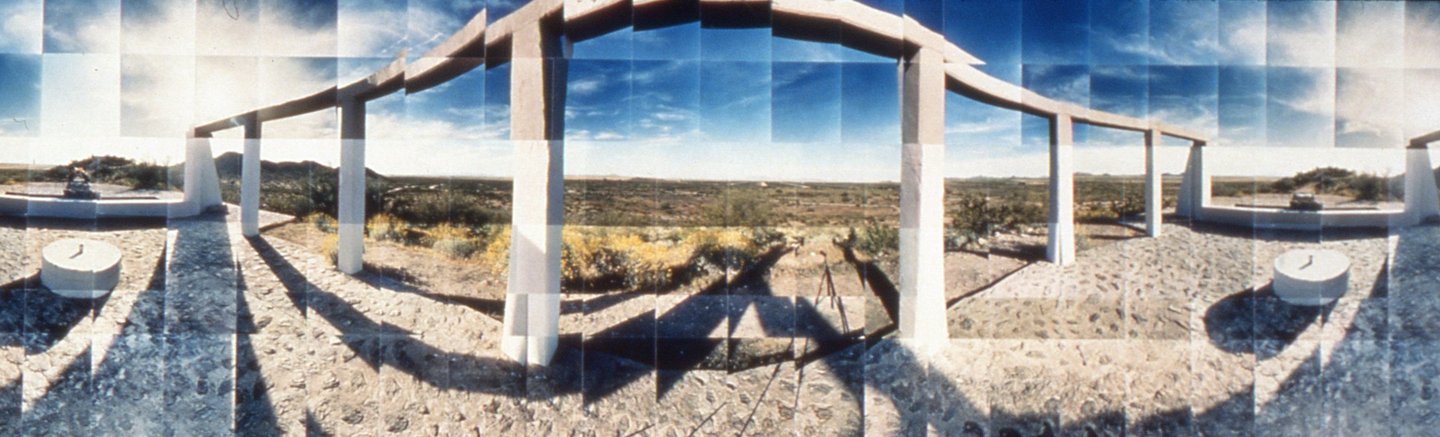
- Memorial overlook site
Each block in both camps typically contained:
- Residential barracks (tar-paper covered wooden structures)
- 1 mess hall
- 1 recreation building
- 1 latrine/washroom facility
- 1 laundry building
The barracks lacked insulation, creating extreme hardship in the Arizona desert climate. Internees responded by constructing homemade evaporative coolers (“swamp coolers”) and digging beneath buildings to access cooler earth—ingenious adaptations born of desperate necessity.
Timeline of Key Events
- July 20, 1942: First internees arrive at Gila River
- July 1942: Summer heat peaks with 25 days over 105°F recorded
- November 30, 1942: Peak population of 13,348 reached
- Fall 1942: Agricultural production begins yielding 242,000 pounds of vegetables
- April 23, 1943: First Lady Eleanor Roosevelt visits camp
- 1943: Following loyalty questionnaire, approximately 1,800 internees relocated
- 1944: Fiscal year production exceeds four million pounds of produce, supplied to eight other WRA camps
- April 18, 1945: Gila River Eagles baseball team defeats three-time state champion Tucson Badgers 11-10
- September 28, 1945: Butte Camp closes
- November 10, 1945: Canal Camp closes
- November 16, 1945: Gila River officially closes
- December 31, 1945: Masumi Hayashi born at Gila River (just weeks after official closure)
Daily Life and Community
Despite imprisonment in one of the harshest desert environments in America, internees established a functioning community with remarkable cultural vitality:
Education
- Elementary schools in both Canal and Butte camps
- High school programs
- Adult education and vocational training
- English language classes
- Traditional Japanese arts instruction
Work and Production
By February 1943, 7,649 internees (58% of the population) held jobs:
- Agricultural work: Produced millions of pounds of vegetables
- Camouflage net production: Approximately 450 workers earned $9.20 daily (substantially higher than standard WRA wages of $12-19 monthly)
- Camp services: Mess halls, hospitals, schools, administration
- Skilled crafts: Issei craftsmen created furniture and decorative items from scrap materials
Cultural Life
- The Gila News-Courier: Camp newspaper
- Religious services: Buddhist and Christian congregations
- Youth programs: Boy Scouts, Girl Scouts
- Arts: Traditional Japanese dance, wood carving classes
- Women’s clubs and social organizations
- Theater groups and performances
Baseball Legacy
Kenichi Zenimura, a professional baseball player and founder of the Nisei League, transformed Gila River into a baseball powerhouse:
- Created a diamond at Butte Camp using hand tools
- Organized a 32-team camp league
- Coached the Gila River Eagles high school team
- On April 18, 1945, the Eagles defeated the Tucson Badgers (three-time state champions) 11-10 in a watershed moment demonstrating internee talent and challenging racial prejudices
Notable Internees and Events
Eleanor Roosevelt’s Visit (April 23, 1943)
First Lady Eleanor Roosevelt visited Gila River, touring facilities and observing war production efforts. Her visit generated controversy when she sipped milk in the mess hall and commented it was sour—a subtle yet pointed response to media accusations that internees received preferential treatment. The incident highlighted the reality of inadequate camp conditions despite government propaganda.
Military Service
994 Nisei men from Gila River served in the U.S. Army, including volunteers for the highly decorated 442nd Regimental Combat Team. Women also joined military auxiliary services. An Issei-built memorial honoring these servicemen once overlooked the Butte Camp site. Among those memorialized was Kazuo Masuda, a Nisei war hero whose story became emblematic of Japanese American loyalty despite incarceration.
Loyalty Questionnaire Crisis (1943)
The controversial loyalty questionnaire administered in 1943 created profound divisions:
- Approximately 1,800 internees relocated following the questionnaire
- 75% (deemed “disloyal”) transferred to Tule Lake Segregation Center
- 25% relocated to keep families together or reunite at Crystal City Detention Center in Texas
The questionnaire’s infamous Questions 27 and 28 forced impossible choices, particularly for Issei who would become stateless if they renounced Japanese citizenship without eligibility for U.S. citizenship.
Demographics
The Gila River population came primarily from:
- Los Angeles County
- Sacramento and Amador Counties
- Southern San Joaquin Valley (3,000 from Tulare area)
- Hawaii (155 Japanese immigrants)
Approximately 62% were U.S. citizens by birth, including thousands of children and teenagers like Masumi Hayashi, born in the camp’s final months.
Climate and Environmental Hardships
The Sonoran Desert location created extreme hardships:
Summer Heat:
- Regular temperatures exceeding 100°F
- July 1942: 25 days above 105°F
- Uninsulated tar-paper barracks became ovens
- Internees slept outdoors when possible
- Homemade evaporative coolers provided minimal relief
Harsh Desert Conditions:
- Minimal natural shade
- Intense sun exposure
- Sparse vegetation (mesquite, creosote, cacti)
- Dust storms
- Limited water despite proximity to Gila River
- Scorpions, snakes, and other desert wildlife
The environmental extremes served dual purposes: making escape attempts dangerous while ensuring isolation from the general population. The choice of reservation land also minimized political opposition from white landowners.
Present Day - Restricted Access and Preservation
Tribal Sovereignty and Site Control
Following the camp’s closure in November 1945, the War Relocation Authority removed valuable infrastructure including piping and electrical wiring, leaving only broken concrete foundations. The Gila River Indian Community received no benefit from the constructed facilities, and promised agricultural development never materialized.
Today, the former camp sites remain within sovereign Gila River Indian Community lands. The tribal government maintains strict control:
- Access permits required: Generally granted only to verified descendants of former internees
- Preservation commitment: Verbal agreement to avoid development unless absolutely necessary
- Archaeological protection: Sites preserved as they were left
- Cultural sensitivity: Recognition of the dual trauma (indigenous land use for Japanese American imprisonment)
What Remains
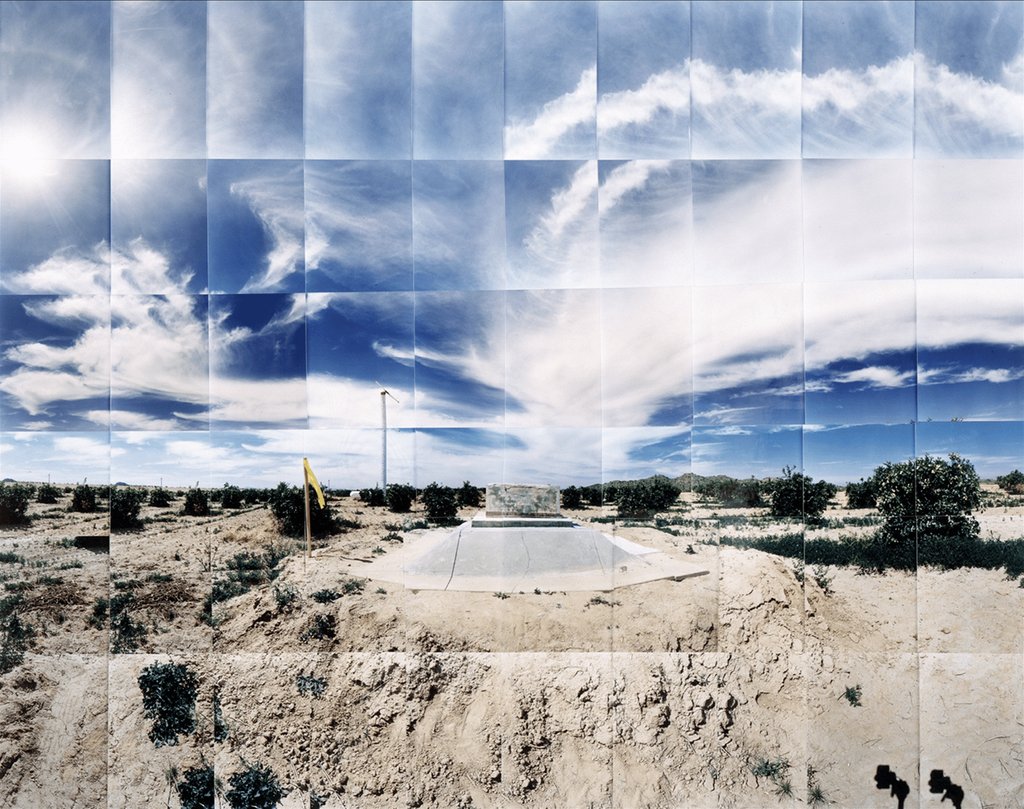
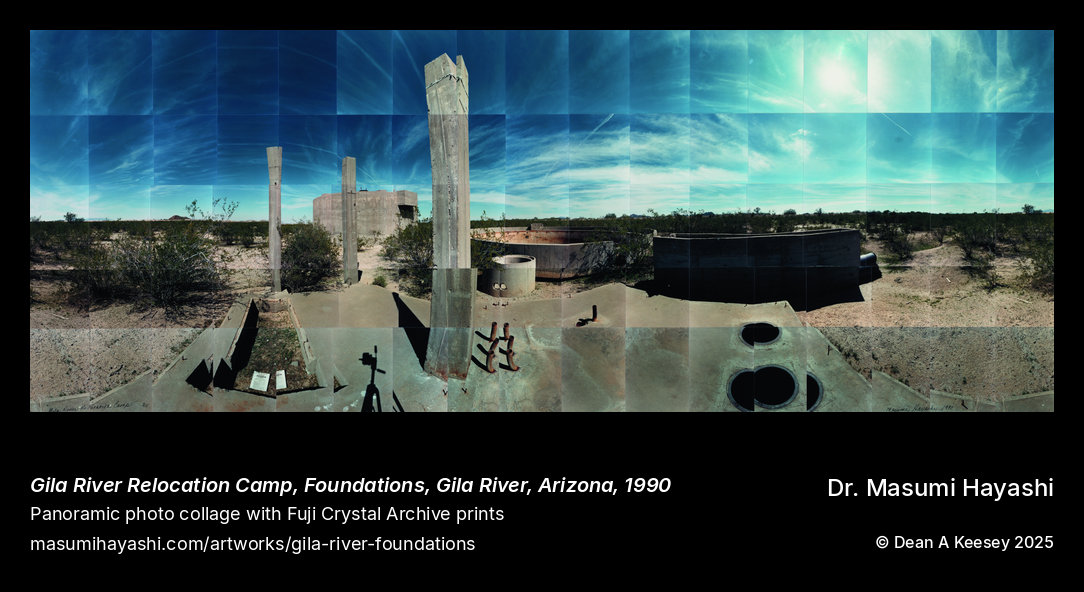
- Concrete foundations scattered across the desert
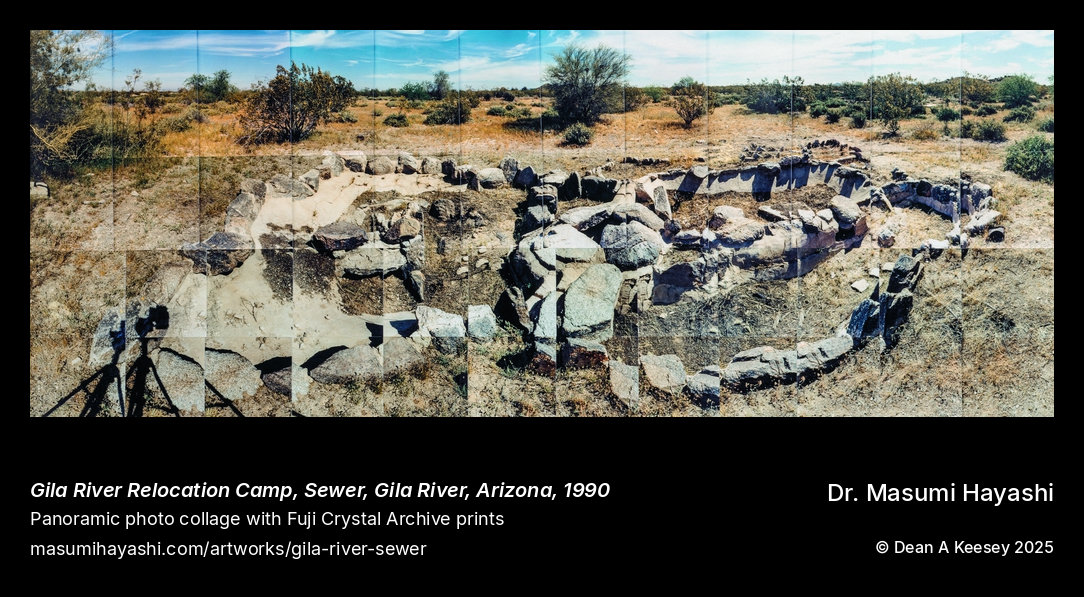
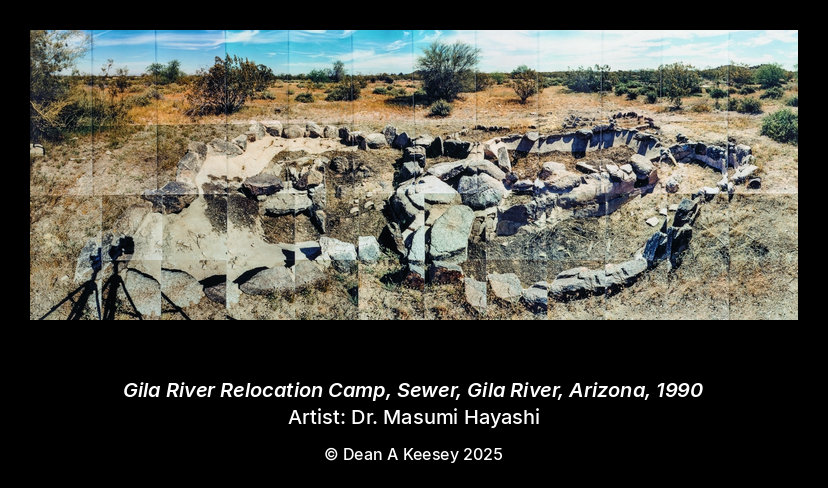
- Sewer system remnants
- Cemetery markers and memorial sites
- Desert landscape reclaimed much of the developed area
- Few visible structures above ground
- Archaeological features documented by researchers
Memorial Efforts
- Issei-built memorial honoring military servicemen (historical)
- Ongoing advocacy for National Historic Site designation
- Educational programs through Densho and other organizations
- Pilgrimage events requiring tribal permission
Significance in Masumi Hayashi’s Life and Work
Personal Connection
Masumi Hayashi was born at Gila River on December 31, 1945, just six weeks after the camp’s official closure on November 16, 1945. Her birth at this site connects her indelibly to the incarceration experience, even though she had no conscious memory of the camp.
This profound personal history shaped her life’s work. Decades later, she would return to photograph all ten War Relocation Authority camps, creating panoramic photo collages that transform these sites from historical abstractions into visceral, haunting physical spaces.
Artistic Documentation
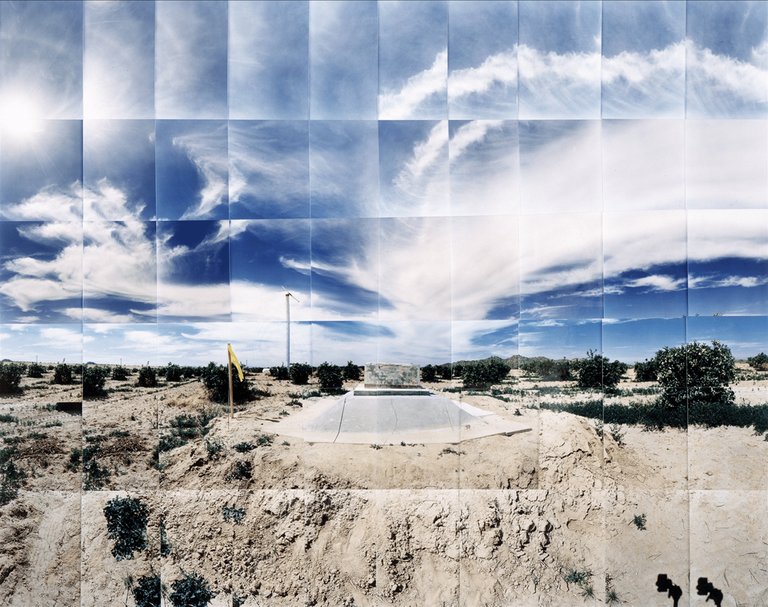
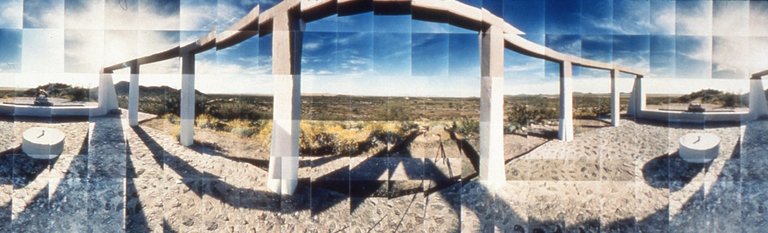
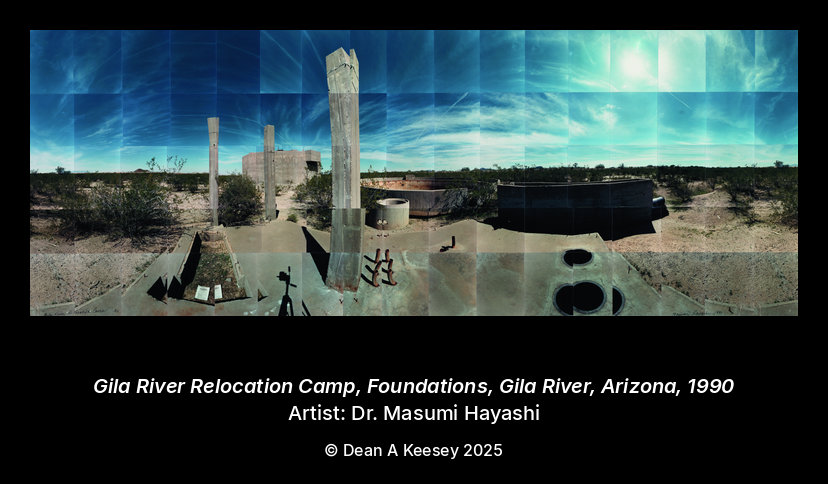
Hayashi’s photographs of Gila River capture:
- Foundations: Concrete remnants where barracks once stood
- Sewer systems: Infrastructure left behind when valuable materials were stripped
- Dog graves: Poignant markers of the small acts of dignity internees maintained
- Monuments: Memorial sites honoring those who lived and served despite imprisonment
- Desert reclamation: Nature slowly erasing the physical evidence of injustice
Her work forces viewers to confront the material reality of mass incarceration on American soil—not as distant history, but as sites that still exist, where she herself entered the world.
Legacy and Memory
By photographing her birthplace and the other nine camps, Hayashi created a comprehensive visual archive ensuring these sites cannot be forgotten. Her panoramic format mirrors the expansive desert landscapes while fragmenting the images—a technique that evokes both the vastness of the incarceration system and the fractured communities it created.
For Gila River specifically, her work represents a daughter returning to document the place of her birth, transforming personal trauma into public memory, and ensuring that even as the desert reclaims the physical evidence, the photographic record remains.
Geographic and Historical Context
Location on Indigenous Land
Gila River’s location on the Gila River Indian Reservation represents a tragic intersection of American colonial violence:
- Indigenous people forcibly confined to reservations
- Japanese Americans forcibly confined on those same lands
- Federal government exploiting both communities
- Post-war abandonment leaving no benefit to the tribal community
This history demands recognition of interconnected struggles against racism and displacement.
Agricultural Irony
Despite the Sonoran Desert environment, Gila River became one of the most productive agricultural operations in the WRA camp system:
- Fiscal year 1944: Over 4 million pounds of produce
- Supplied eight other WRA camps
- Demonstrated what could have been possible with proper investment in the reservation
The contrast between this productivity and the government’s failure to develop the land for the Gila River Indian Community afterward reveals the cynical exploitation underlying the entire system.
Arizona’s Two Reservation Camps
Both of Arizona’s camps (Gila River and Poston) were located on American Indian reservations, making them unique among the ten WRA sites. This geographic fact highlights patterns of federal land control and the systematic marginalization of both indigenous and Japanese American communities.
This page honors all who were imprisoned at Gila River, the Gila River Indian Community whose land was used for incarceration, and particularly Masumi Hayashi, whose birth at this site in December 1945 would shape a lifetime of artistic testimony to this chapter of American history.
Gallery
External Resources
- Densho Encyclopedia - Gila River ↗
Comprehensive historical documentation and personal stories from Gila River
- Gila River Indian Community ↗
Information about the tribal community that maintains the former camp sites
- National Archives - Gila River Records ↗
Official government records and documentation
Explore More
American Concentration Camps
Explore the full project: photography, oral histories, family albums, and historical context documenting the incarceration of 120,000 Japanese Americans.
View the Complete Project →Oral Histories
Listen to internees share their memories of evacuation, camp life, and resilience during this period.
Listen to Interviews →Family Album
View photographs taken by internees themselves, documenting daily life inside the camps.
View Family Stories →All Ten Camps
Learn about the other War Relocation Authority concentration camps across the Western United States.
Explore All Camps →Historical Context
Archives, educational materials, and recommended reading about the Japanese American incarceration.
View Resources →