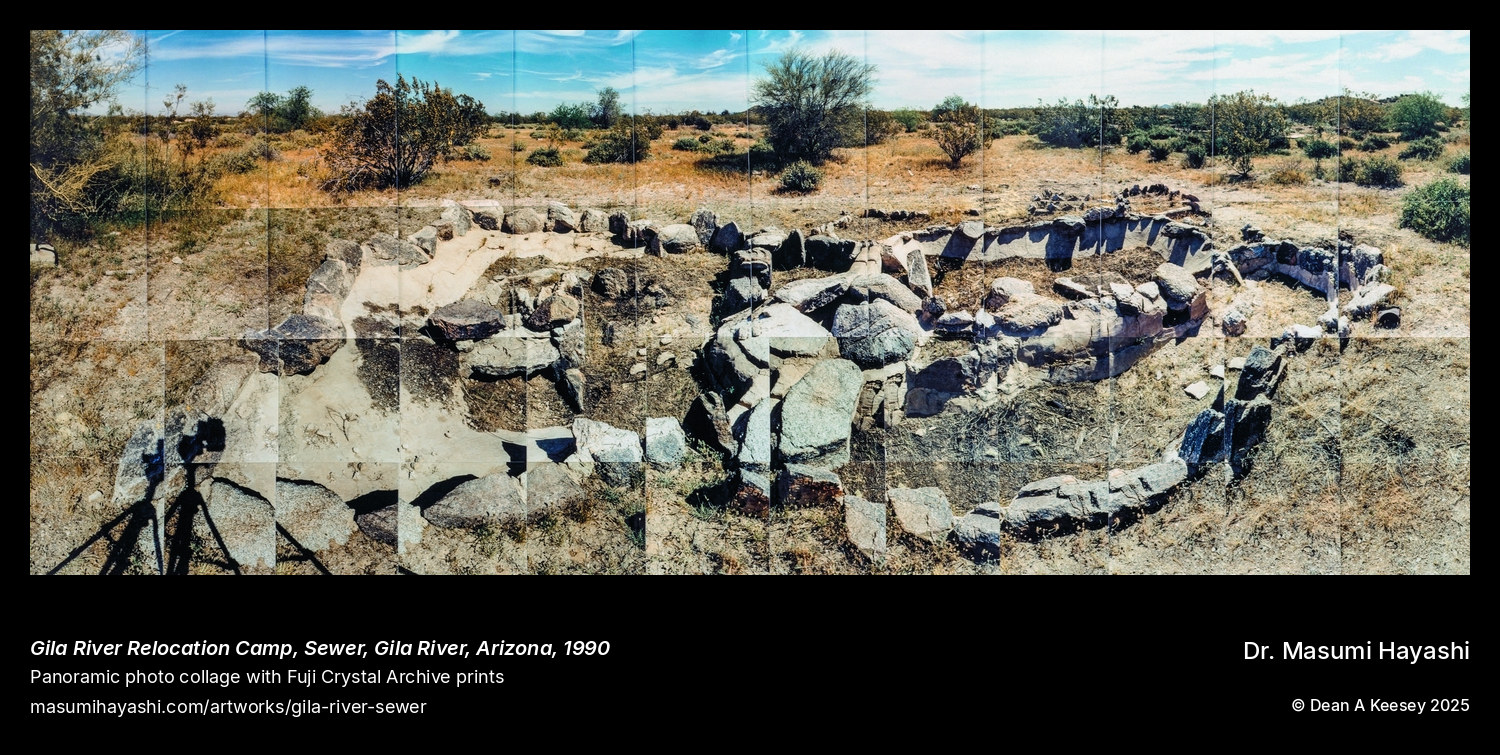
Gila River Relocation Camp, Sewer
Gila River, AZ, USA
Panoramic photo collage with Fuji Crystal Archive prints
1995
30 x 60
This panorama documents the sewer infrastructure at Gila River Relocation Center—the underground system built to serve a temporary city of 13,348 people, now exposed by time and desert erosion to mark the ground where Japanese Americans were imprisoned from 1942 to 1945. When the War Relocation Authority closed the camp and stripped it of valuable materials, the sewer system was left in place. Too costly to remove, too embedded to repurpose, the pipes and their exposed sections became among the most durable physical evidence of what was built here.
Created in 1995, the work focuses on infrastructure that most documentation ignores. Monuments are built to be seen; sewers are built to be invisible. Their presence in this photograph insists on the full material reality of mass incarceration—not only the barracks and mess halls and administrative buildings, but the subterranean systems that made sustained imprisonment possible. A camp requires waste disposal. This is what that looked like.
The panoramic format traces the sewer line across the Sonoran Desert terrain, the photo collage assembling a continuous record from dozens of individual frames. The technique makes visible what continuity conceals: each seam a separate moment of looking, the whole image constructed the same way the camp was constructed—assembled piece by piece on desert land through systematic effort.
Gila River’s location on Gila River Indian Community land lends the infrastructure its full historical weight. The federal government built this sewer system on tribal land leased without genuine consent, created it to serve an incarceration facility, and left it when the facility closed. The tribe received no benefit from constructed facilities; the sewer system remains as artifact of federal exploitation of both indigenous and Japanese American communities.
Hayashi was born at Gila River on December 31, 1945—six weeks after the camp’s official closure, on these same acres. Her photographs of the sewer infrastructure transform documentary evidence into something more intimate: the artist recording the physical systems of the place that first claimed her, the hidden infrastructure of her own origin.
This work documents Gila River, one of the concentration camps where Japanese Americans were incarcerated during World War II.
Part of the American Concentration Camps project
More from Japanese-American Internment Camps
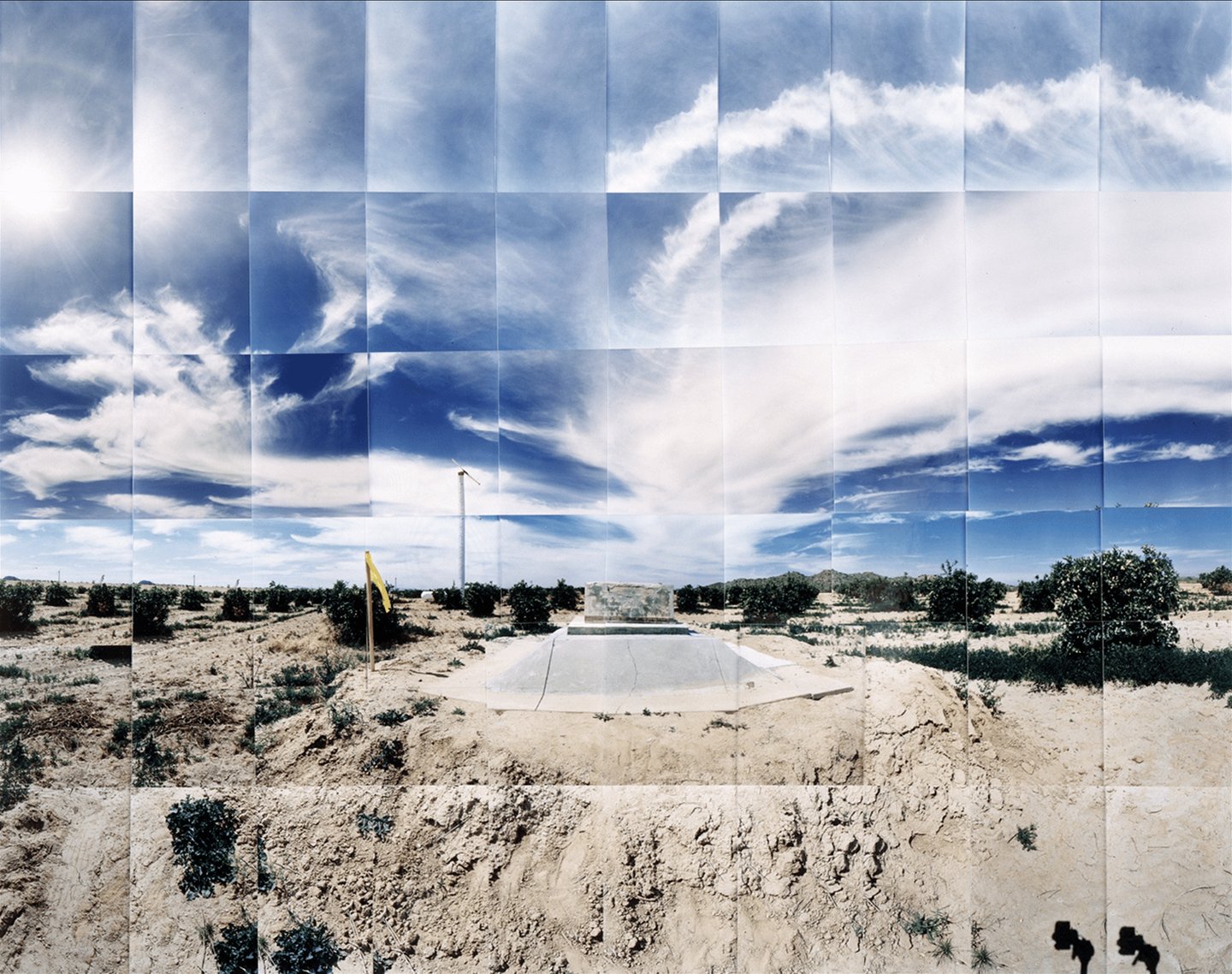
Gila River Relocation Camp, Dog Grave
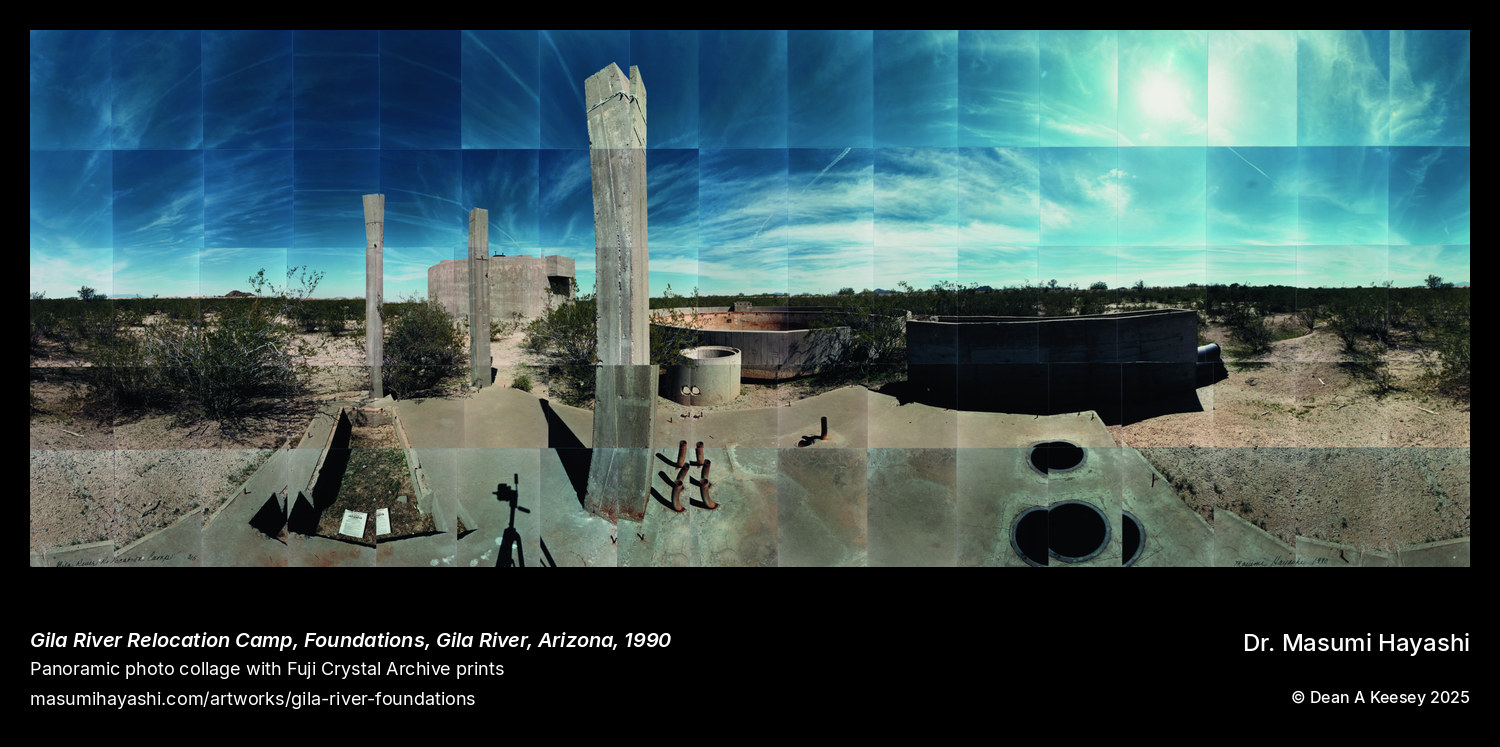
Gila River Relocation Camp, Foundations
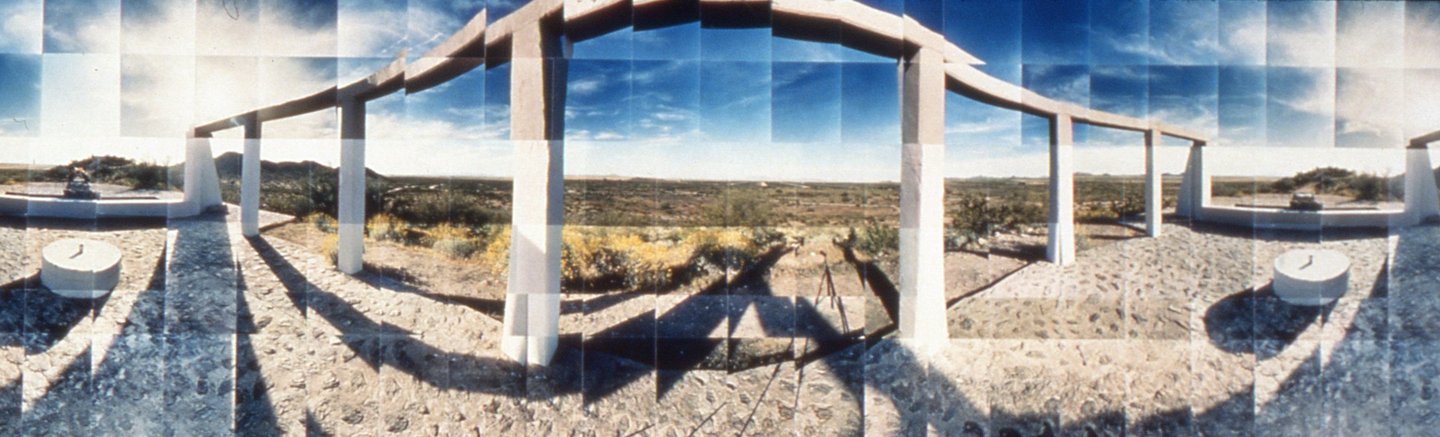
Gila River Relocation Camp, Monument
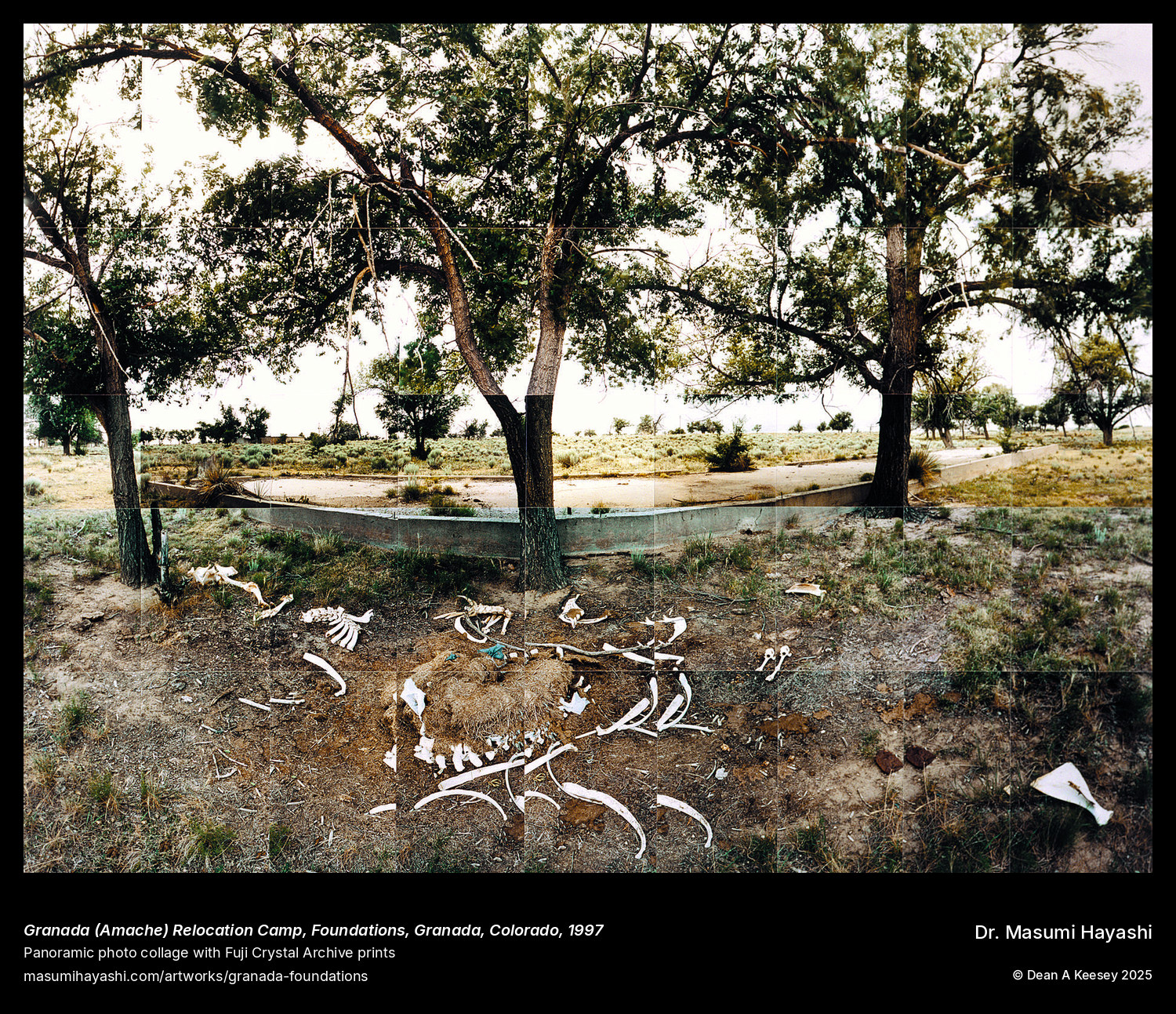
Granada (Amache) Relocation Camp, Foundations
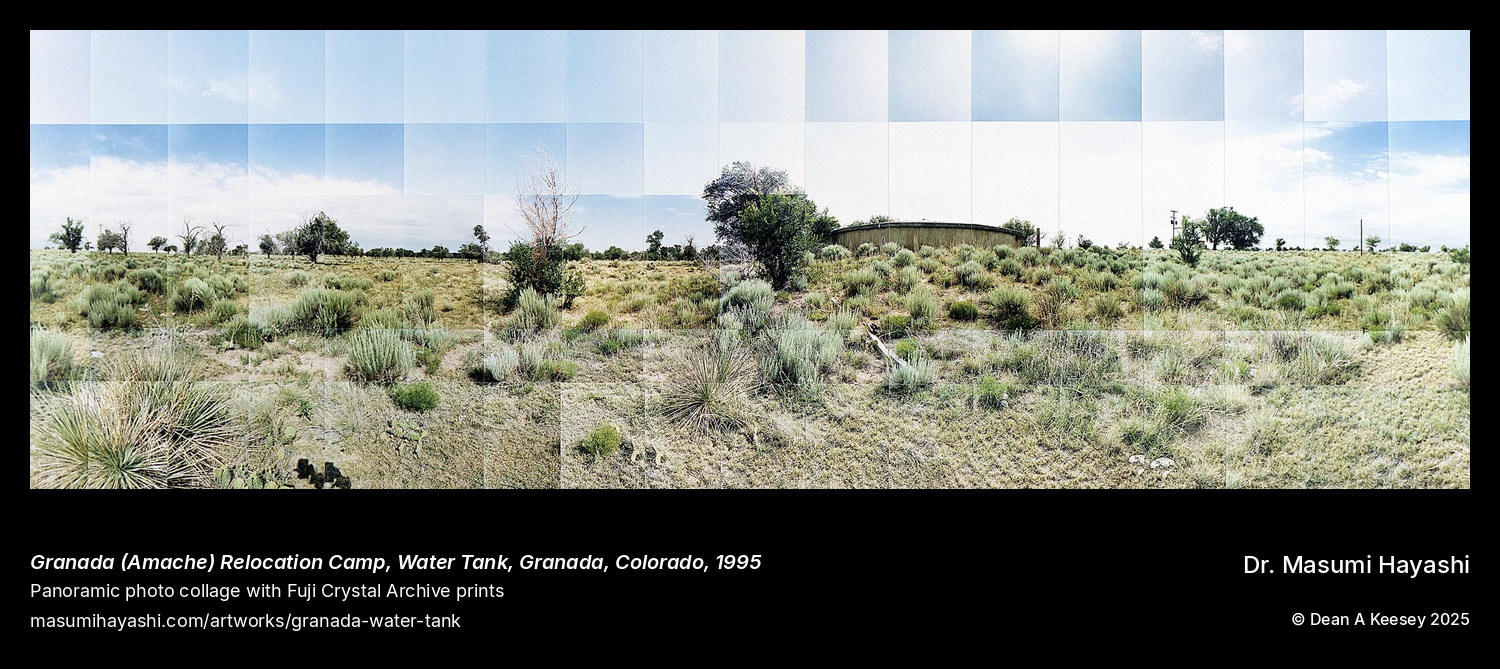
Granada (Amache) Relocation Camp, Water Tank