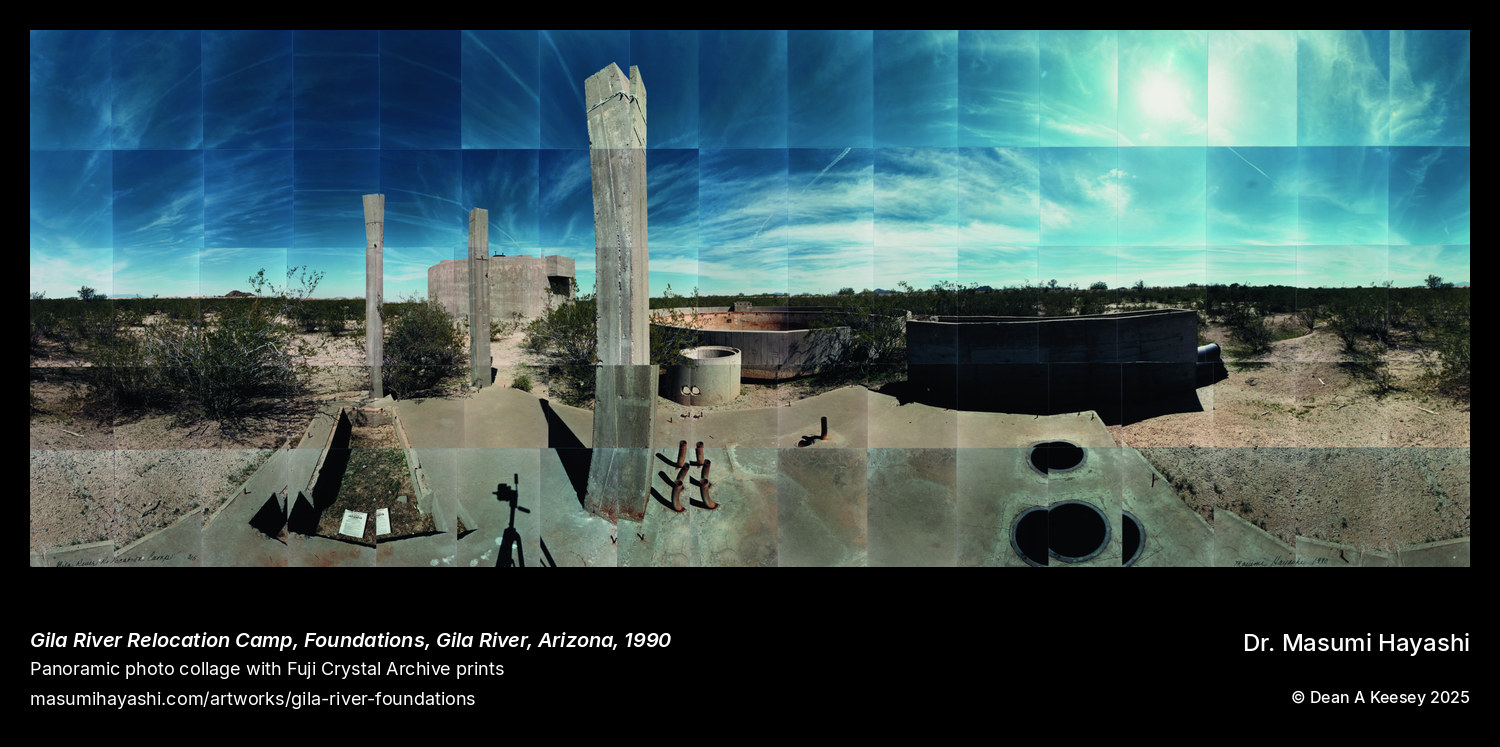
Gila River Relocation Camp, Foundations
Gila River, AZ, USA
Panoramic photo collage with Fuji Crystal Archive prints
1995
30 x 60
This horizontal panorama documents the concrete foundations at Gila River Relocation Center—the remnants left when the War Relocation Authority stripped the camp of its valuable infrastructure following closure in November 1945. Piping, wiring, and serviceable materials were removed and relocated; what remained were the foundations: mute concrete outlines of the barracks, mess halls, and latrines where 13,348 Japanese Americans lived under incarceration from 1942 to 1945.
Created in 1995, this work holds particular biographical weight. Masumi Hayashi was born at Gila River on December 31, 1945, six weeks after the camp’s official closure—her first geography these same desert acres, her birth record bound to a site of constitutional suspension. The foundations she photographed half a century later are the literal ground of her origin.
The panoramic format extends the foundations across the picture plane, the concrete slabs repeating in the desert until they exceed any single frame. The photo collage technique fragments and reassembles the terrain, each seam between images marking a discrete moment of looking—the artist moving across her birthplace, assembling it piece by piece into a whole the eye can hold.
What the WRA left behind after removing infrastructure tells its own story. The government’s calculation—strip what has value, leave the concrete—transformed the site from camp to ruin without fully erasing it. The foundations outline the geometry of mass incarceration: the block system, the regulated distances between structures, the planned efficiency of a carceral landscape.
For Gila River specifically, the foundations rest on Gila River Indian Community land, leased by the federal government without meaningful tribal consent. Two communities displaced by the same system of federal authority; the foundations mark the intersection point.
Hayashi returned to photograph her birthplace as an act of artistic and historical witness. The foundations remain because concrete resists the desert; this photograph remains because the artist chose to look, to assemble, and to ensure that what was done here stays visible.
This work documents Gila River, one of the concentration camps where Japanese Americans were incarcerated during World War II.
Part of the American Concentration Camps project
In the Collection of
Cleveland Museum of Art, Cleveland, OH
Donated by Dean A. Keesey (Masumi Hayashi Foundation), 2013. CMA Accession #2012.465. USPAP-appraised FMV $29,000.
Exhibition History
- Accused of No Crime: Japanese Incarceration in America — ReflectSpace Gallery, Glendale Central Library (2018)
More from Japanese-American Internment Camps
Gila River Relocation Camp, Dog Grave
Gila River Relocation Camp, Monument
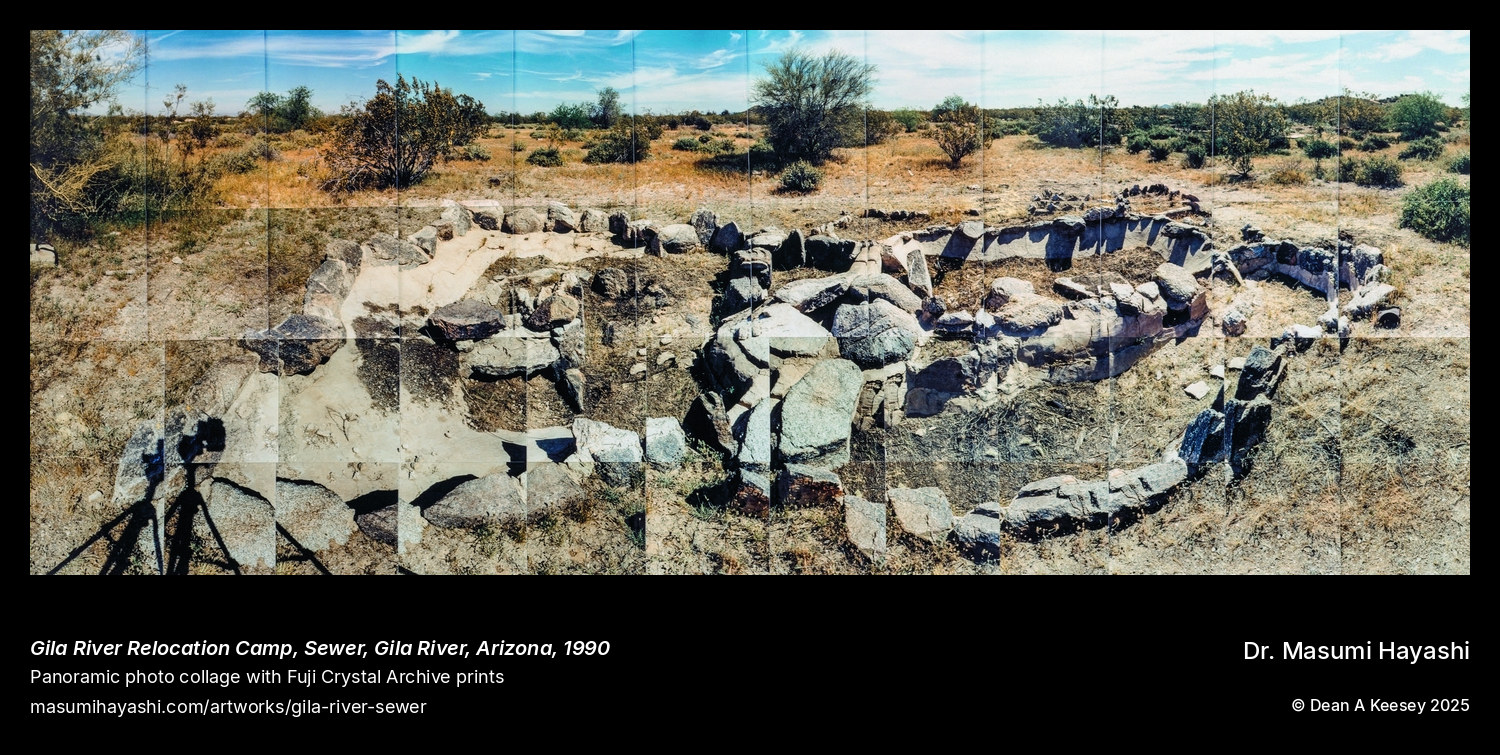
Gila River Relocation Camp, Sewer
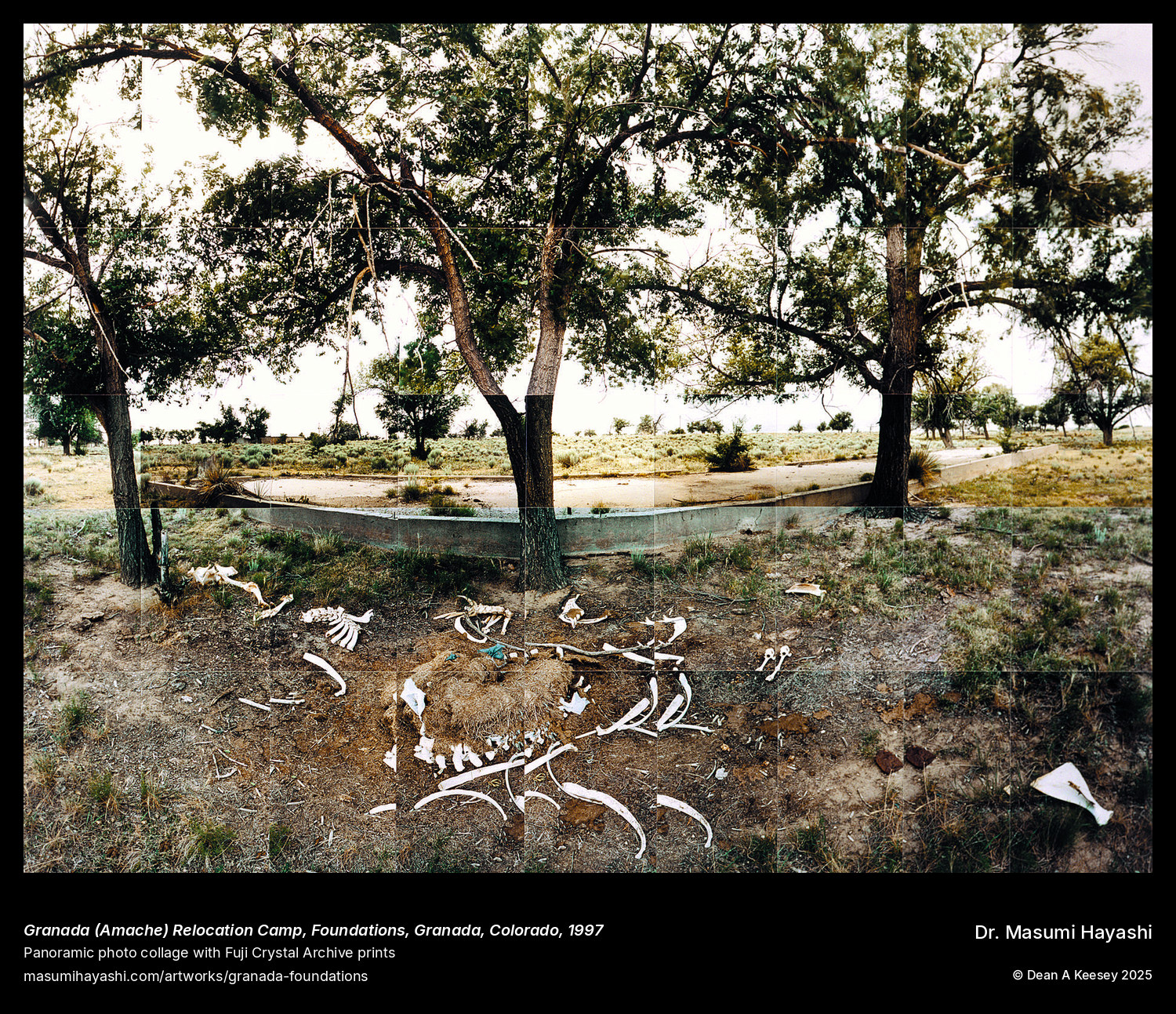
Granada (Amache) Relocation Camp, Foundations
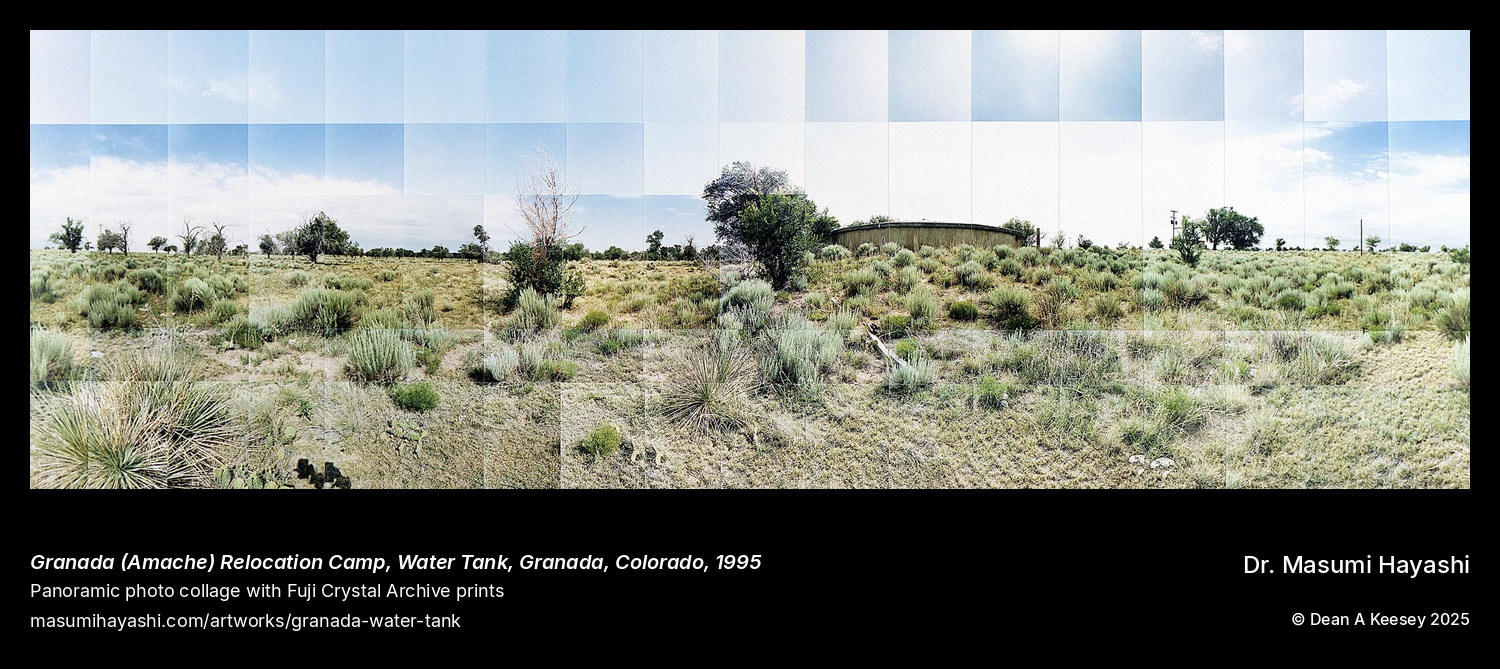
Granada (Amache) Relocation Camp, Water Tank