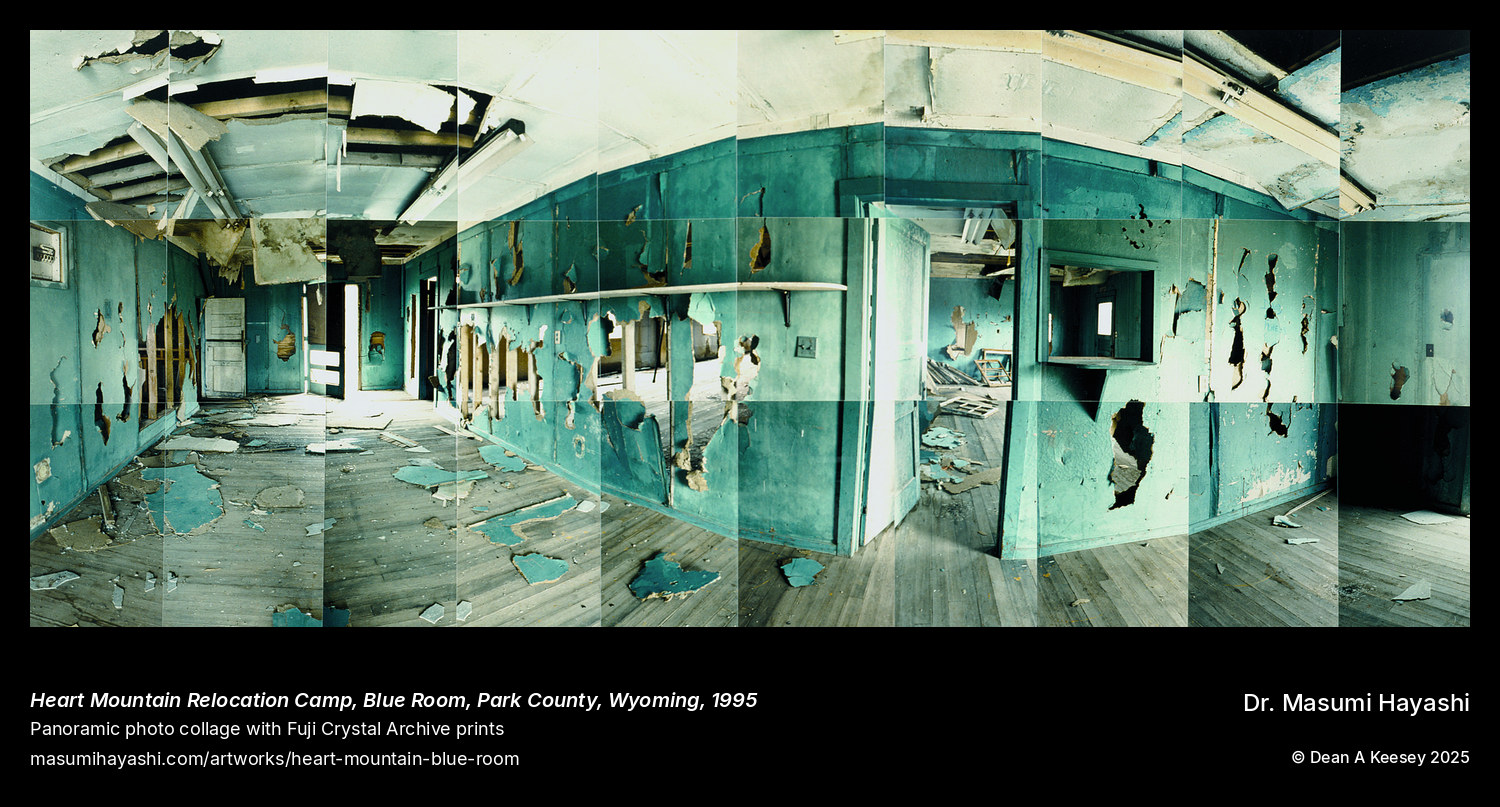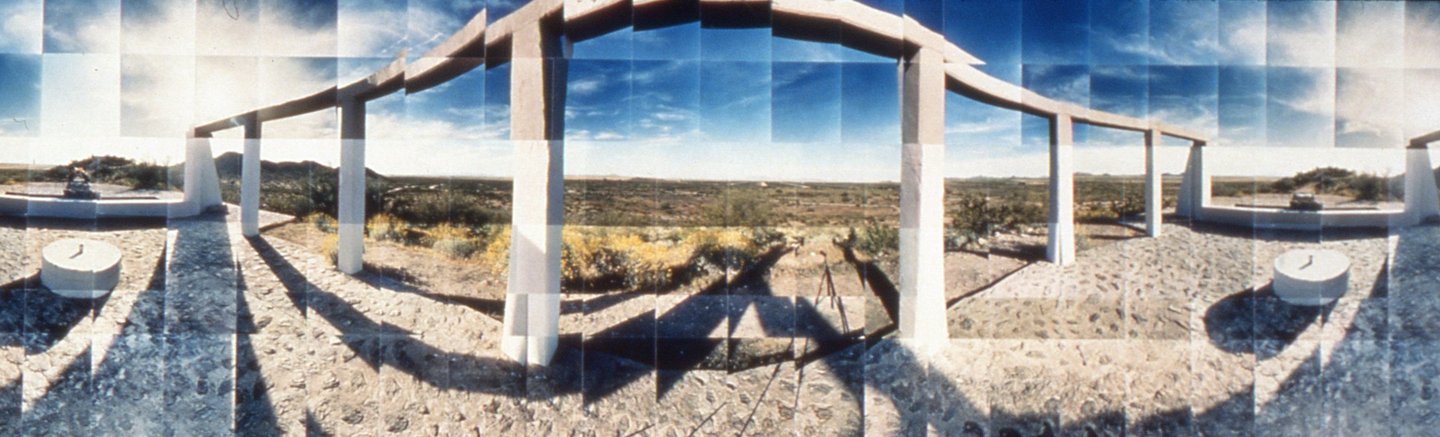
Gila River Relocation Camp, Monument
Gila River, AZ, USA
Panoramic photo collage with Fuji Crystal Archive prints
1995
31 x 75
This monumental 31-by-75-inch horizontal panorama documents the monument at Gila River Relocation Center—a memorial marking where 13,348 Japanese Americans were imprisoned on Gila River Indian Community land in Arizona’s Sonoran Desert from 1942 to 1945. The over-six-foot width captures the monument within its desert landscape, commemorative marker standing where a temporary city once confined thousands.
Created in 1995, the work documents formal recognition of historical trauma—the monument representing community determination to mark sites that official history preferred forgetting. Unlike camp infrastructure that decayed, monuments were deliberately constructed to ensure remembrance, the intentional memorial contrasting with accidental preservation of water tanks and sewer systems.
Gila River’s location on tribal land created particular irony: Japanese Americans imprisoned on land taken from Native Americans through earlier displacement, two histories of federal injustice intersecting in the same desert. The Gila River Indian Community’s cooperation with incarceration was hardly voluntary—the Bureau of Indian Affairs arranged the site without meaningful tribal consent.
The camp’s two units (Canal Camp and Butte Camp) together constituted Arizona’s fourth-largest population center during operation, internees drawn primarily from California’s Fresno and Sacramento areas. Summer temperatures exceeded 120 degrees; dust storms reduced visibility to yards; the desert environment itself constituted punishment.
The monument’s presence transforms the landscape from abandoned site to memorial space, the commemorative marker serving educational purpose for visitors seeking understanding. The horizontal format captures the monument’s desert context—the expanse of land that once contained thousands now empty except for memorial and scattered remnants.
The work documents not just historical injustice but community response: the determination to mark trauma sites, to ensure that American concentration camps remain visible in historical memory despite official preference for forgetting.
This work documents Gila River, one of the concentration camps where Japanese Americans were incarcerated during World War II.
Part of the American Concentration Camps project
More from Japanese-American Internment Camps
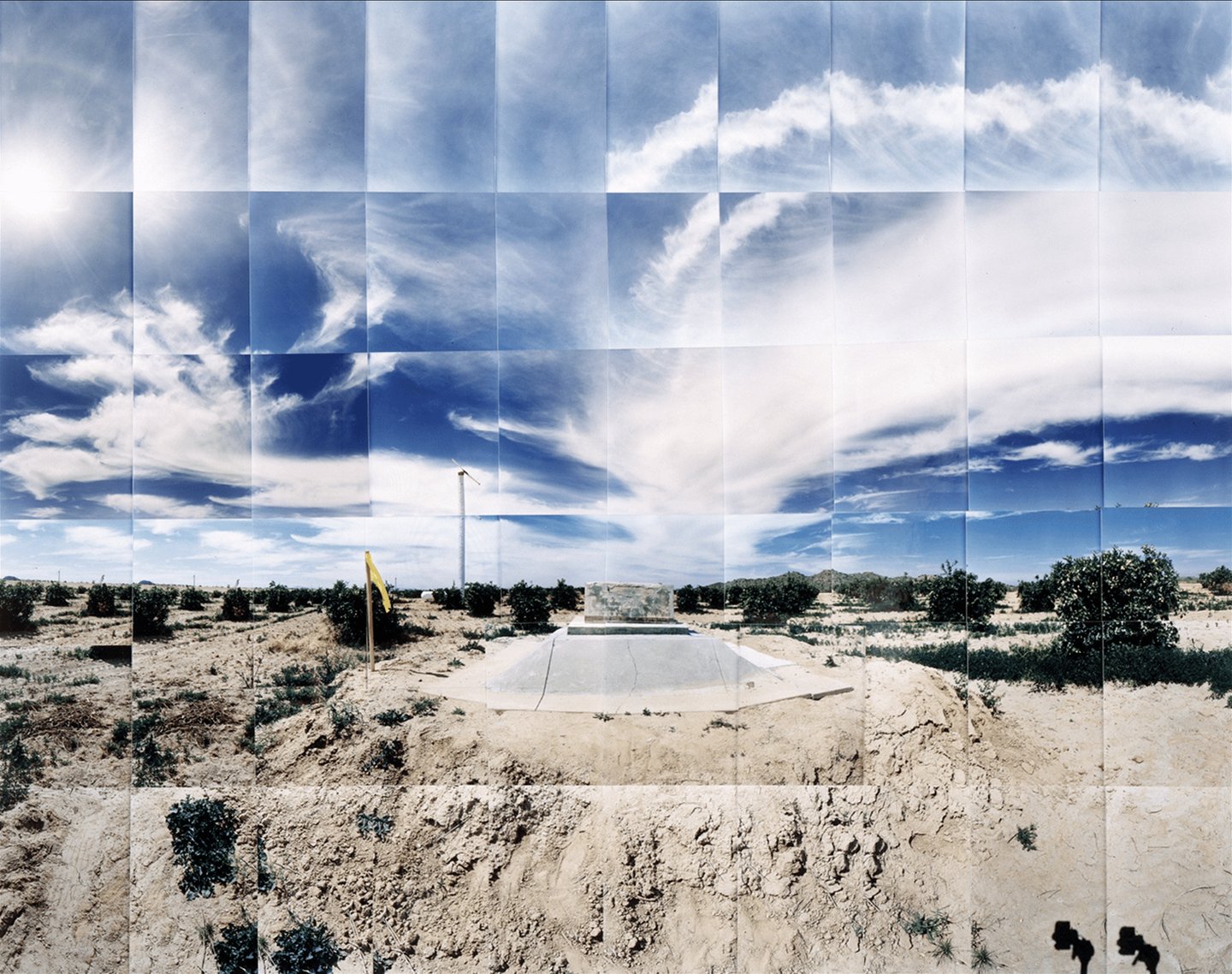
Gila River Relocation Camp, Dog Grave
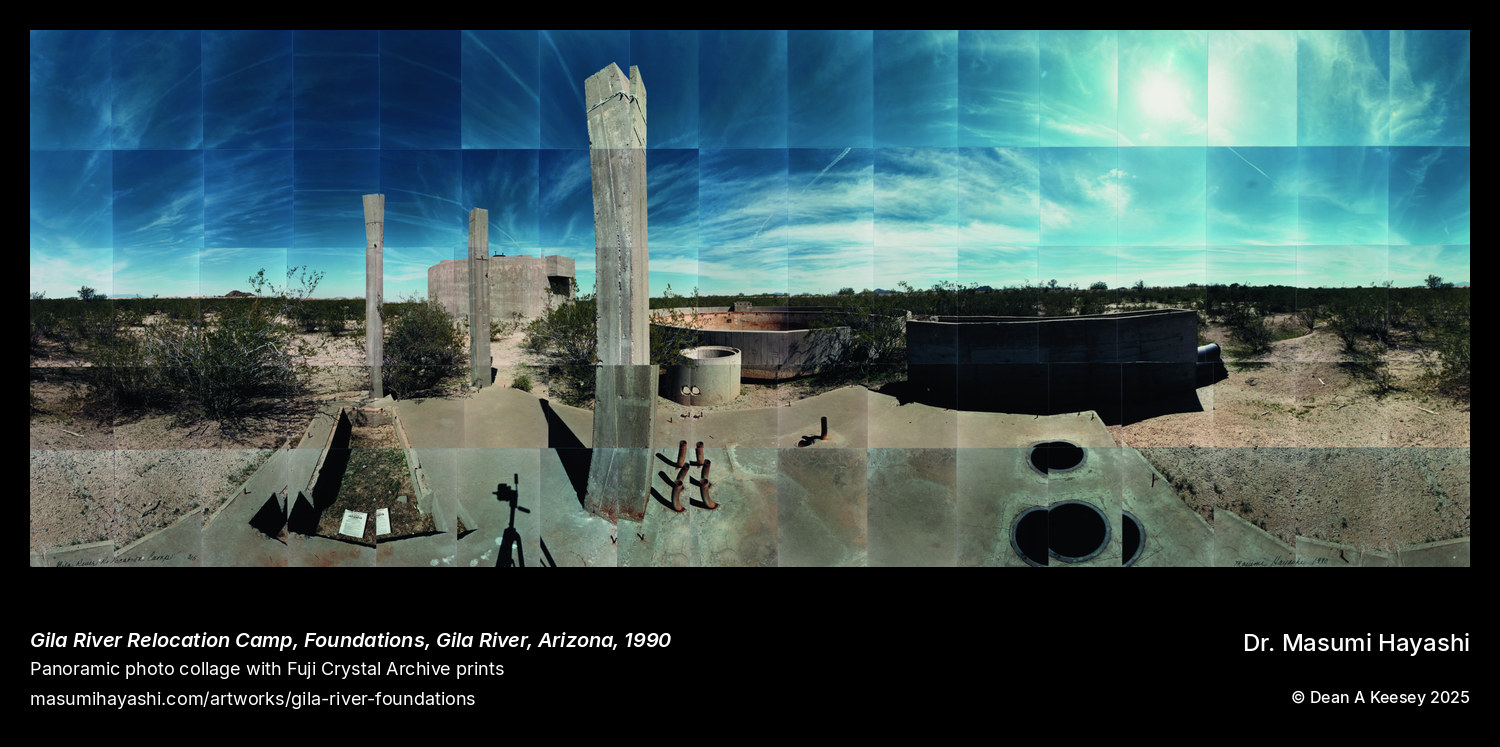
Gila River Relocation Camp, Foundations
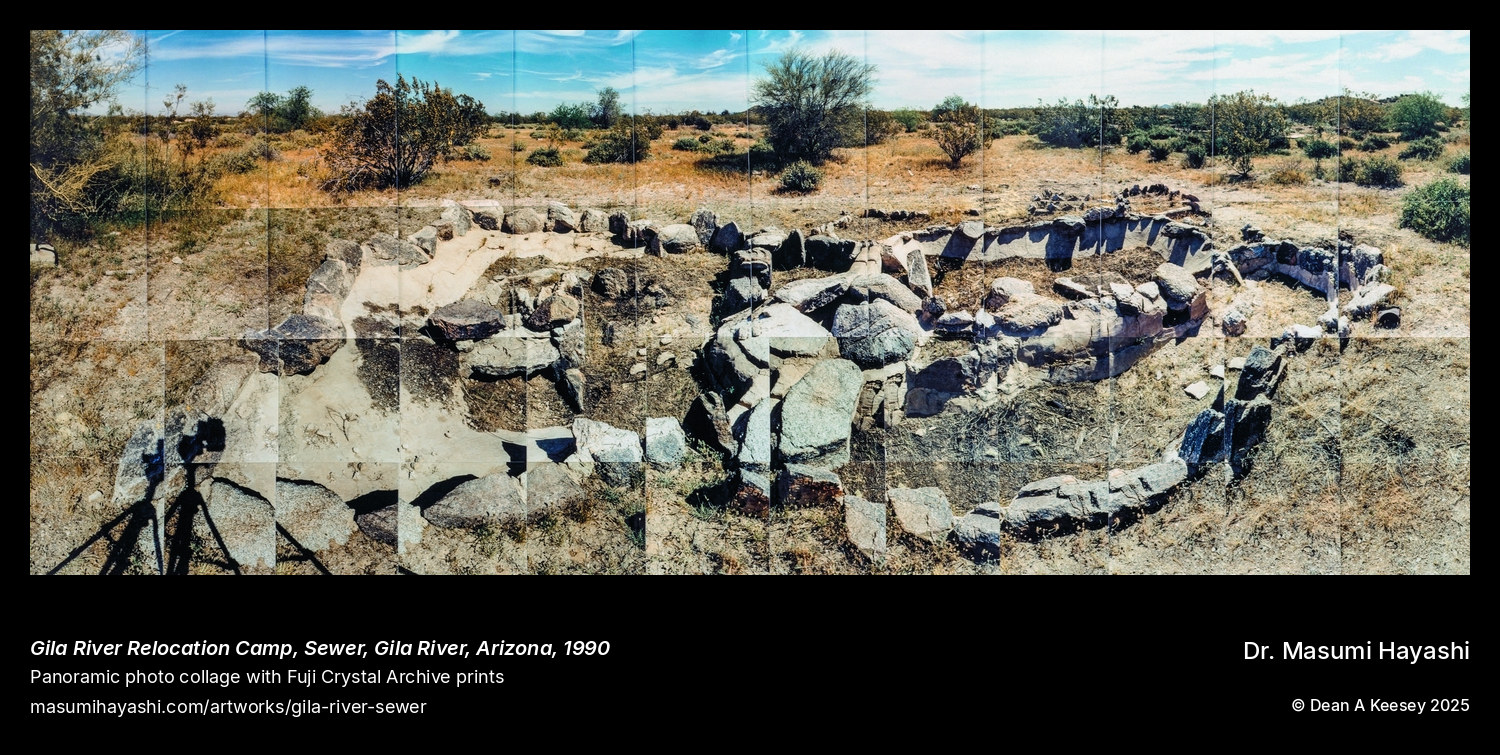
Gila River Relocation Camp, Sewer
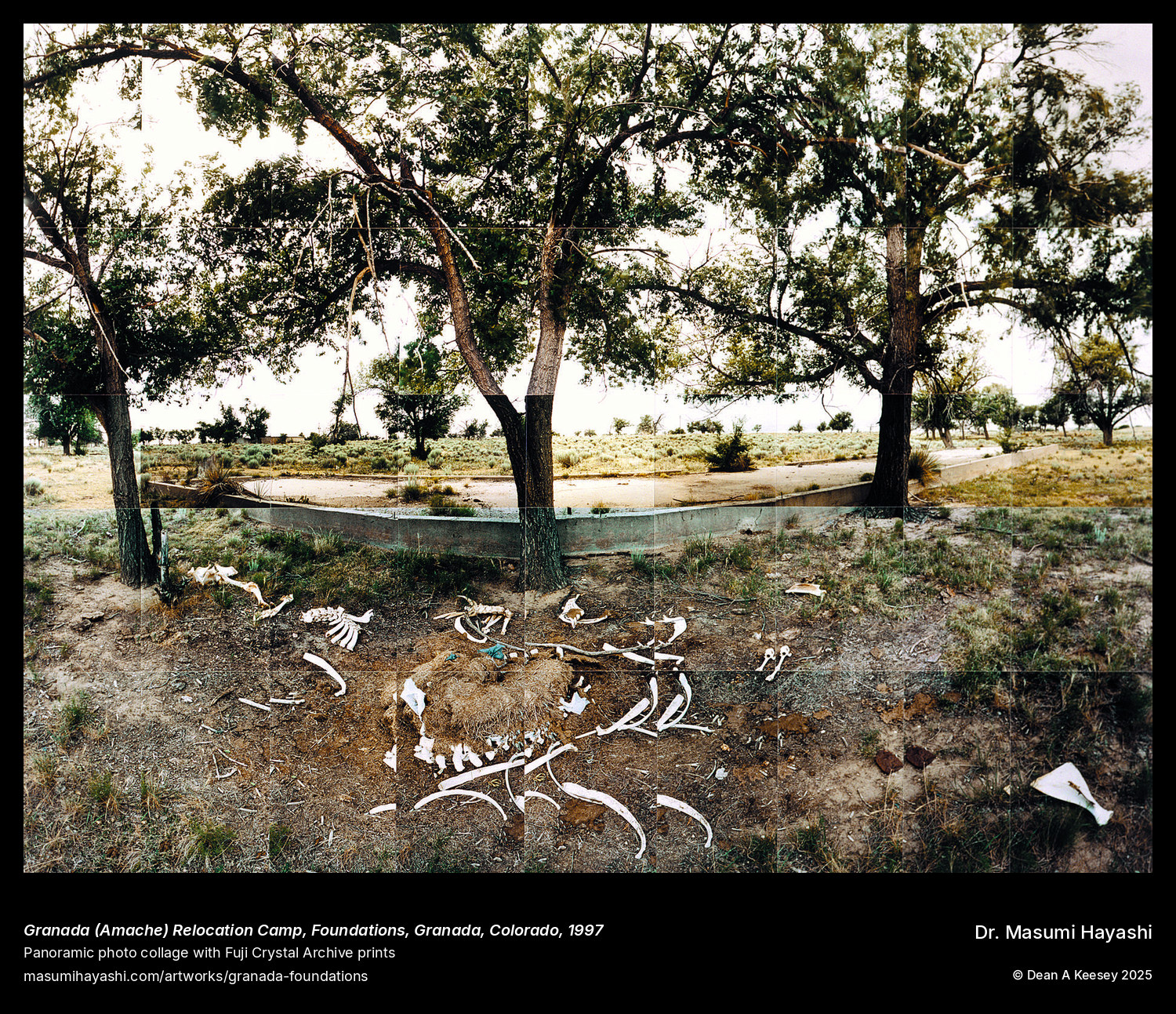
Granada (Amache) Relocation Camp, Foundations
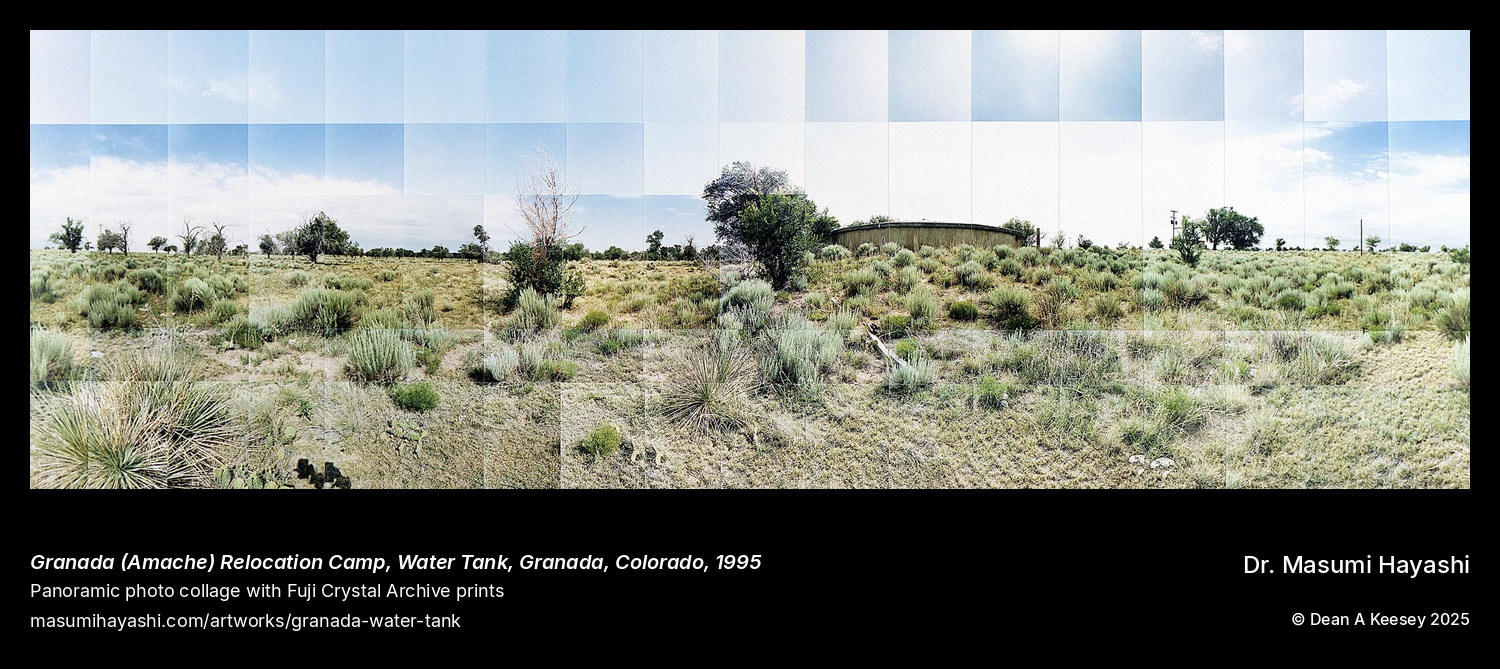
Granada (Amache) Relocation Camp, Water Tank