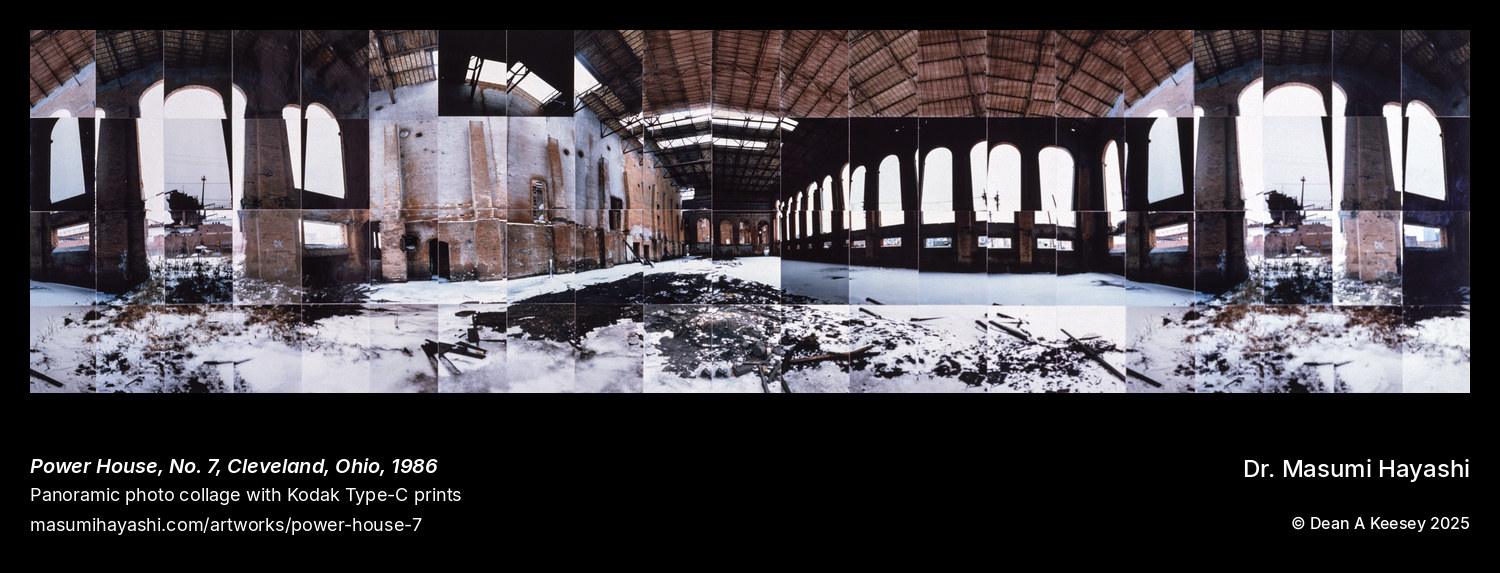
Power House, No. 7
Cleveland, OH, USA
Panoramic photo collage with Kodak Type-C prints
1986
19 x 66
This 19-by-66-inch horizontal panorama documents Power House No. 7 in Cleveland—the final work in Hayashi’s series on the city’s electrical generating infrastructure. The horizontal format, contrasting with the vertical orientation of the No. 3 and No. 6 studies, suggests different architectural characteristics or a shifted documentary perspective on similar industrial structures.
Created in 1986, the work completes Hayashi’s documentation of Cleveland’s power generation system. The format shift from vertical to horizontal may reflect this power house’s specific architecture—perhaps a lower profile or more sprawling layout—or a deliberate variation in documentary approach. At nearly five and a half feet wide yet under two feet tall, the composition emphasizes lateral extent rather than vertical aspiration.
The horizontal format allows this work to integrate with Hayashi’s predominantly horizontal post-industrial series while the subject matter connects to the vertical power house studies. This compositional flexibility demonstrates the photo collage technique’s adaptability: the same process of photographing, printing, and assembling could produce dramatically different formats depending on subject requirements.
Power House No. 7 may have served different industrial loads or operated under different conditions than its numbered companions. The numbering system—skipping from No. 3 to No. 6 to No. 7—implies a broader system of facilities, some perhaps already demolished or converted by the time of Hayashi’s documentation. Each surviving structure represented evidence of the larger infrastructure network.
Together, the three power house panoramas document the energy infrastructure that enabled Cleveland’s industrial production—a system of generating stations whose purpose disappeared with the factories they powered, leaving industrial monuments awaiting demolition or adaptive reuse.
More from Post-Industrial Landscapes
Briar Hill Plant no. 1, Youngstown, Ohio (3D)
Briar Hill Plant no. 2, Youngstown, Ohio
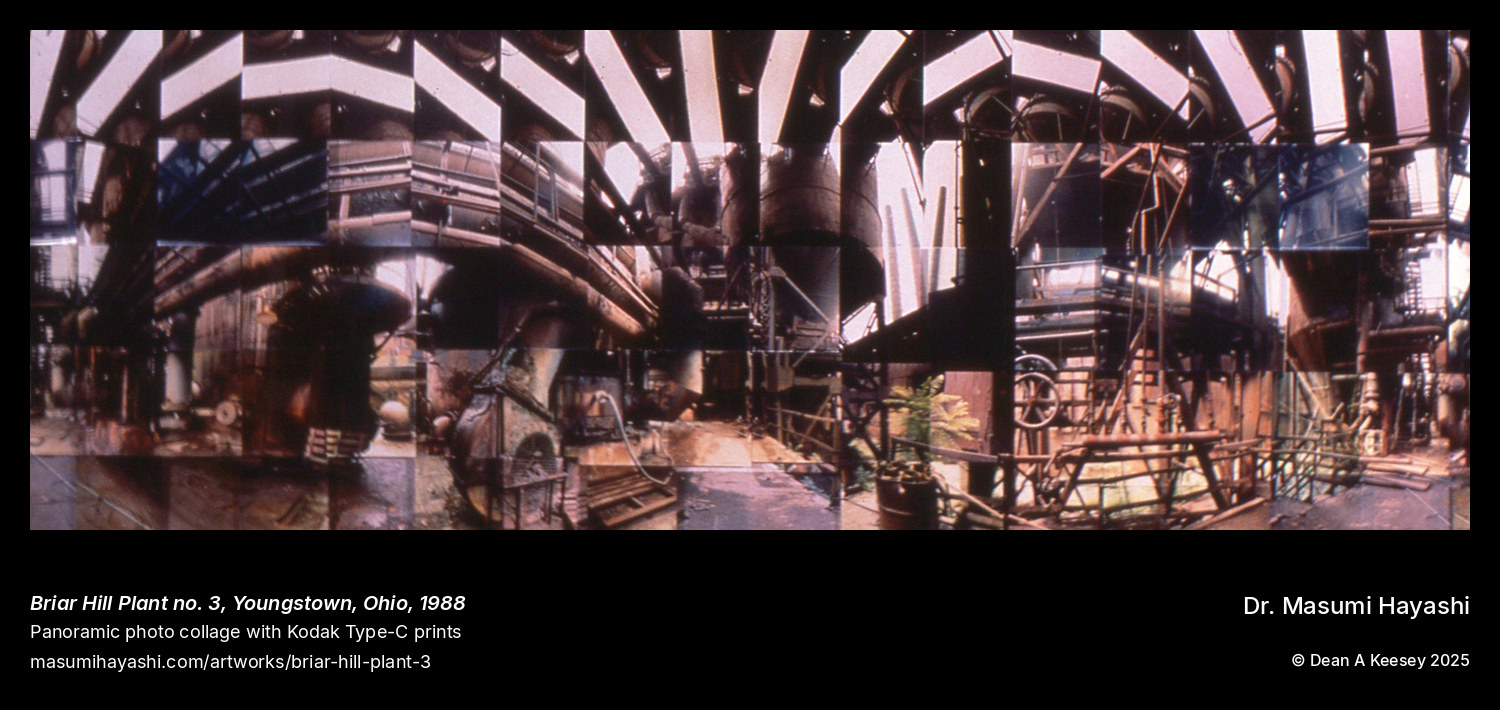
Briar Hill Plant no. 3, Youngstown, Ohio
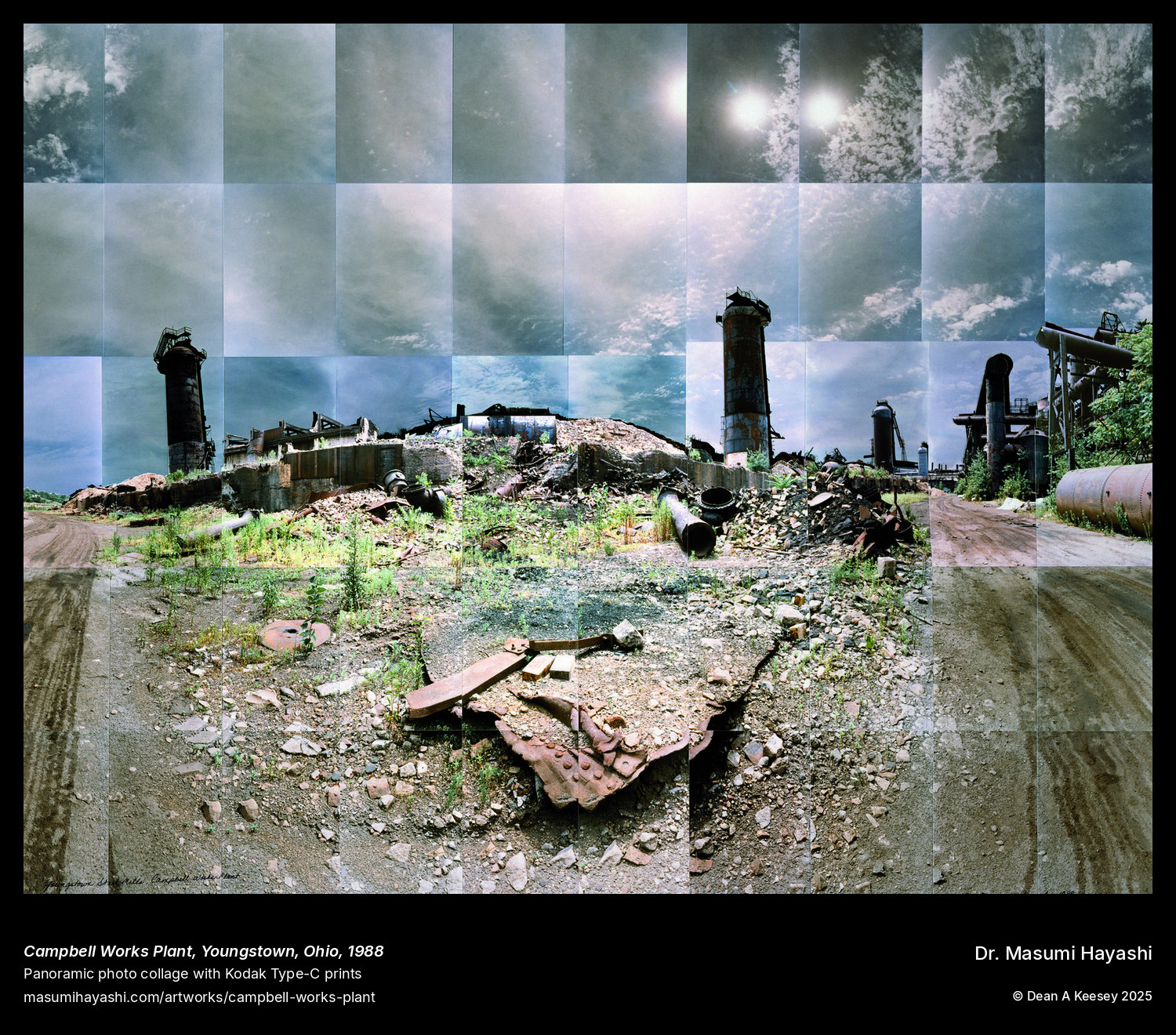
Campbell Works Plant, Youngstown, Ohio
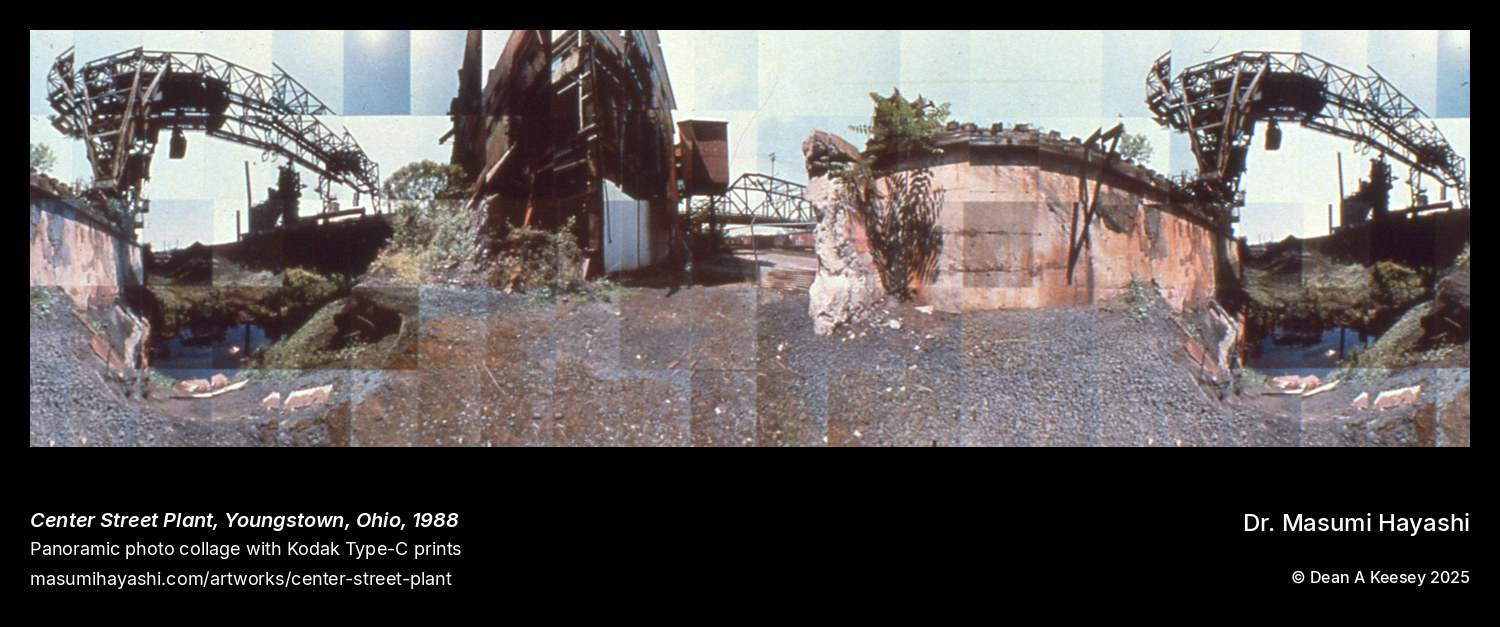
Center Street Plant, Youngstown, Ohio