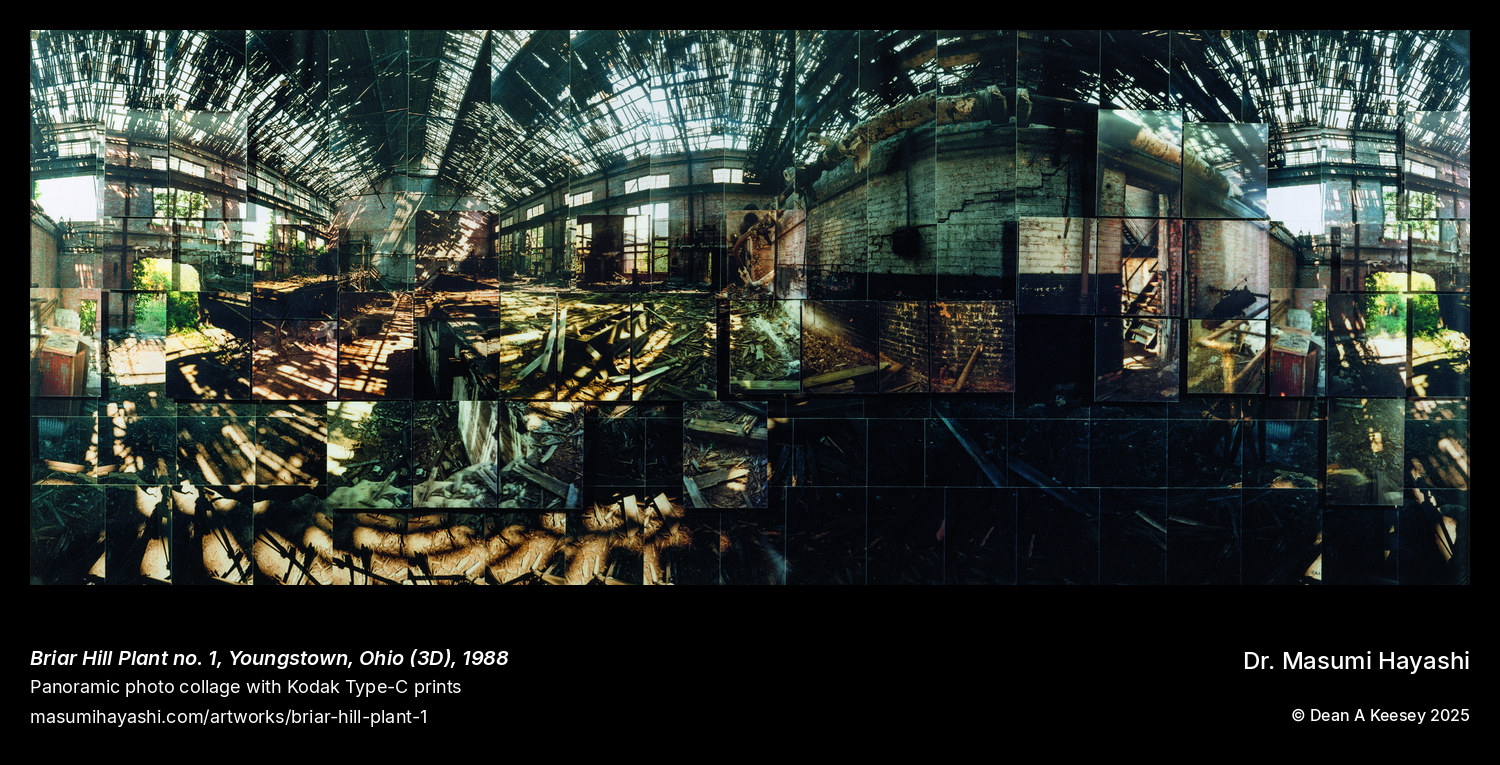
Briar Hill Plant no. 1, Youngstown, Ohio (3D)
Youngstown, OH, USA
Panoramic Photo Collage w/3d
1988
29 x 68
Briar Hill Plant survived Black Monday’s immediate shock when Campbell Works shuttered on September 19, 1977. The facility continued operating under increasingly precarious conditions as Youngstown Sheet & Tube underwent restructuring, bankruptcy proceedings, and ultimately liquidation through the early 1980s. Where Campbell experienced sudden closure, Briar Hill endured prolonged uncertainty—the extended agony of false hopes followed by ultimate failure, gradual departmental closures rather than overnight elimination.
This 1988 work incorporates three-dimensional elements into the panoramic collage—rust fragments, architectural salvage, or industrial artifacts from Briar Hill itself embedded in the composition. The physical materials extend documentation beyond optical recording to tangible evidence: literal pieces of the decaying mill preserved within the artwork. Rust from corroding steel structures serves as material metaphor—the decay of the steel industry embodied in decaying steel.
By 1988 when Hayashi photographed these ruins, Briar Hill had stood abandoned three to five years. Buildings remained structurally sound but weathering, machinery frozen in final operating positions, rust advancing across surfaces, vegetation colonizing spaces once filled with workers and molten metal. The ruins captured industrial infrastructure in transition—no longer productive yet not yet demolished, frozen between operational past and uncertain future.
Youngstown Sheet & Tube at its peak employed over 20,000 workers across Campbell Works, Briar Hill, Center Street, and McDonald Works, producing millions of tons of steel annually for automotive, construction, and industrial markets. Lykes Corporation’s 1969 acquisition initiated textbook asset-stripping: profits diverted to other ventures rather than mill modernization while foreign competitors and modernizing domestic producers advanced. When closure announcements came, communities that had generated those profits absorbed the devastation.
The nearly six-foot panoramic width captures Briar Hill’s lateral extent—multiple structures, rail lines, industrial yards visible in unified composition. The format enables comprehensive documentation that single dramatic images couldn’t achieve. Hayashi’s decision to create three separate Briar Hill works recognized that understanding deindustrialization required multiple perspectives documenting complex industrial sites’ full scope rather than relying on isolated iconic imagery.
More from Post-Industrial Landscapes
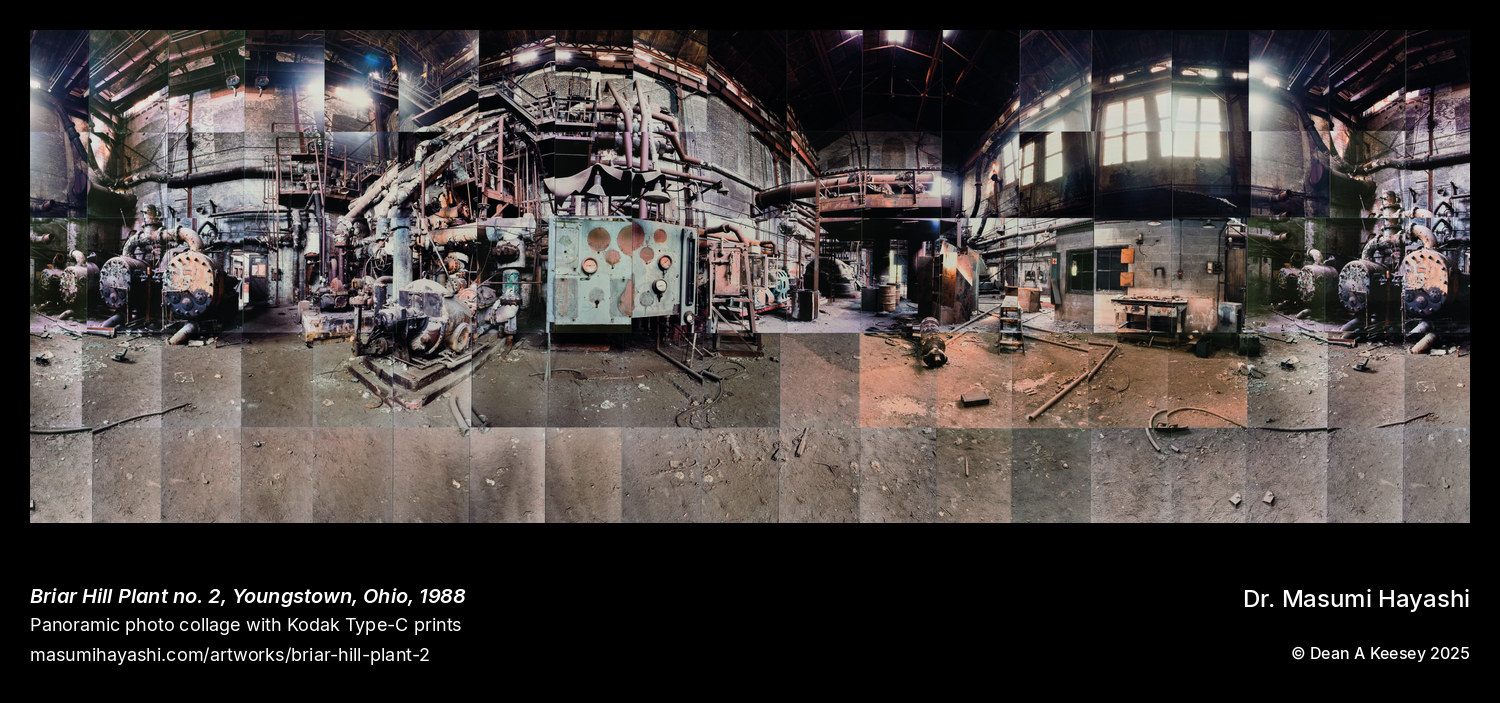
Briar Hill Plant no. 2, Youngstown, Ohio
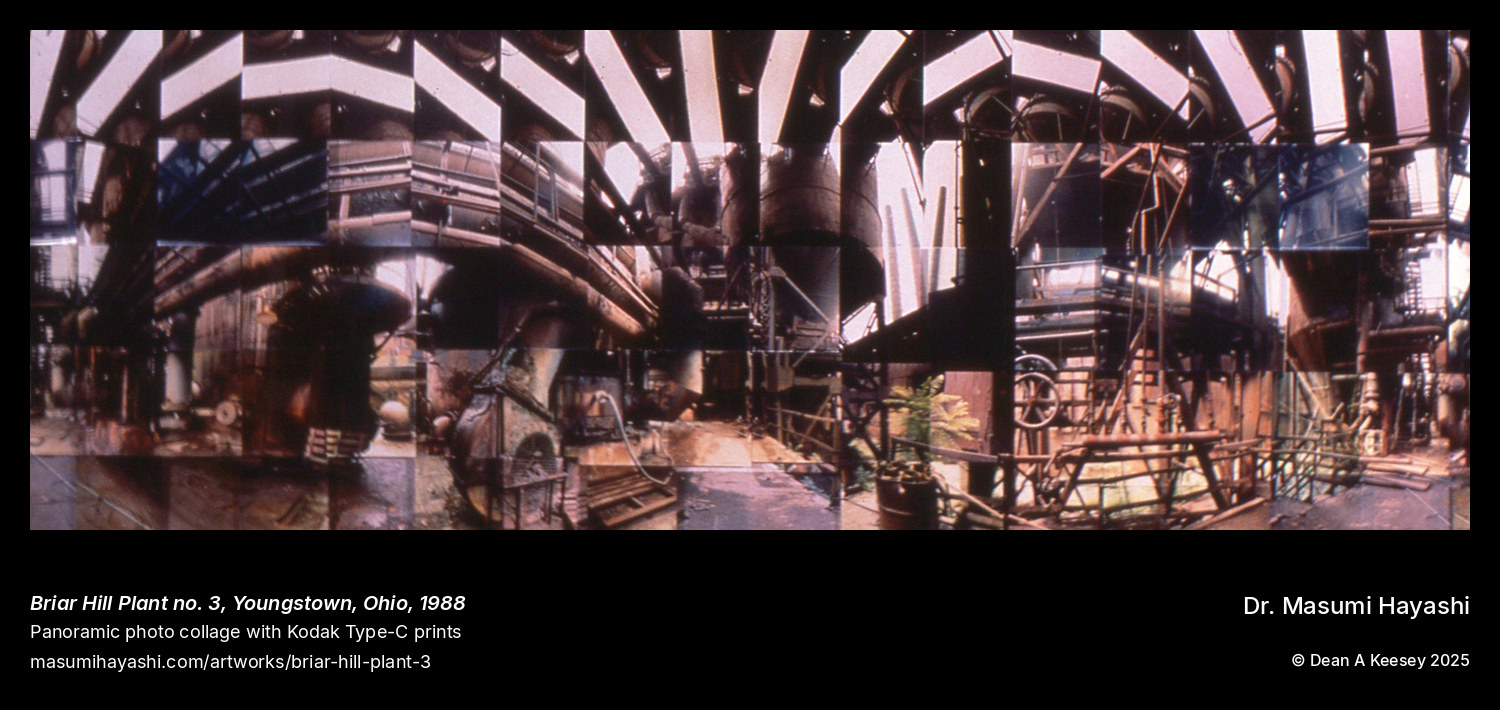
Briar Hill Plant no. 3, Youngstown, Ohio
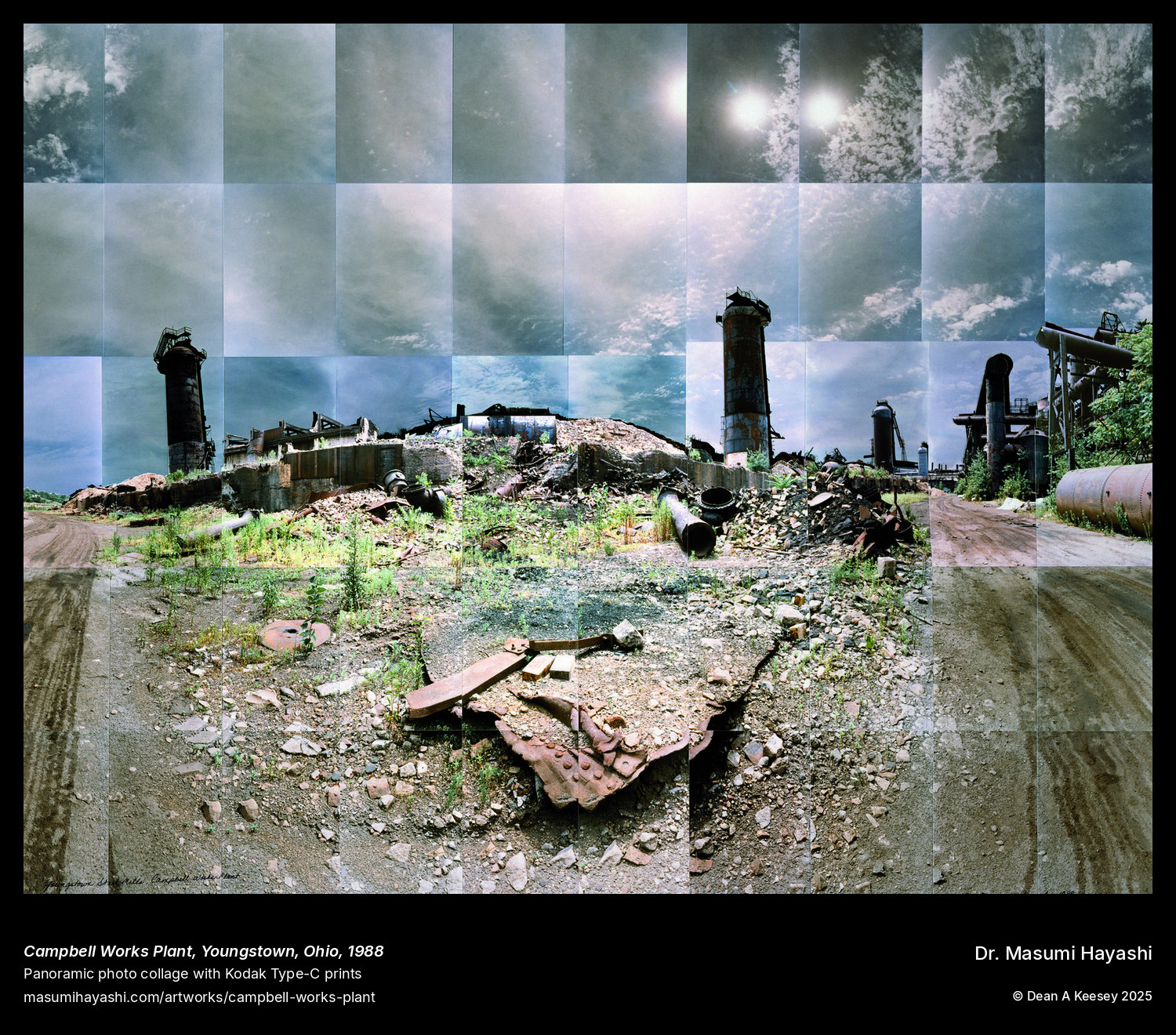
Campbell Works Plant, Youngstown, Ohio
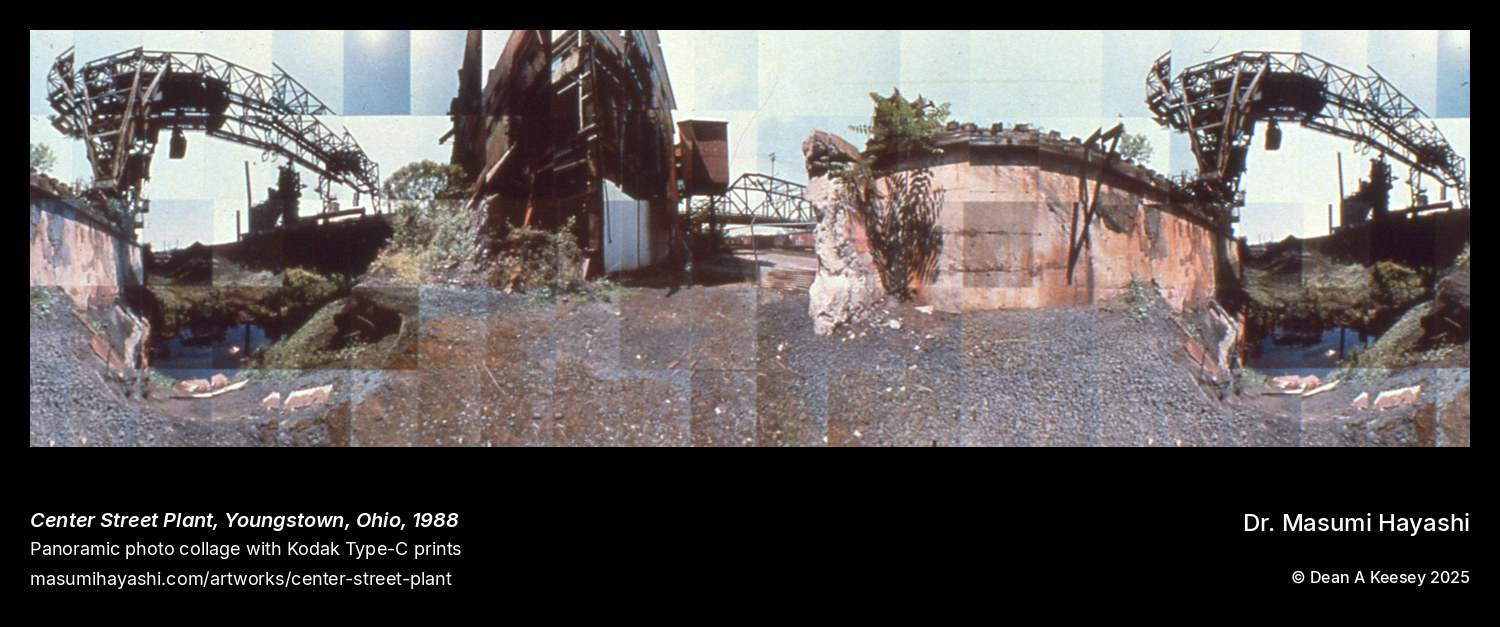
Center Street Plant, Youngstown, Ohio
Century Freeway, No. 1, Los Angeles, California