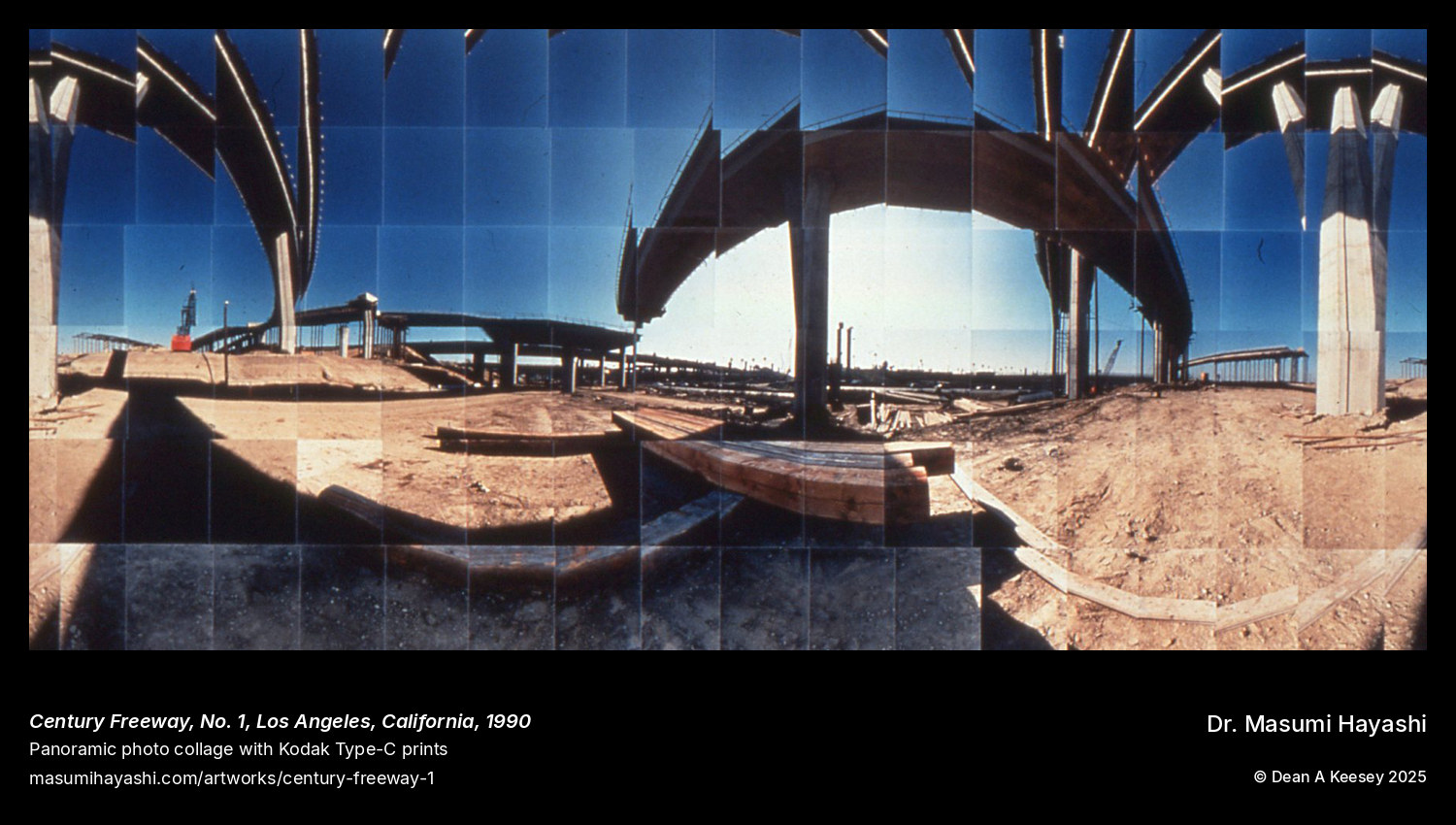
Century Freeway, No. 1, Los Angeles, California
Los Angeles (I-105), CA, USA
Panoramic Photo Collage
1990
26 x 56
This opening work in Hayashi’s seven-part Century Freeway documentation marks her expansion from Rust Belt deindustrialization to a different kind of post-industrial landscape: communities destroyed not by economic forces but by deliberate government policy. Interstate 105 displaced over 25,000 residents—predominantly Black and Latino South Los Angeles families—across three decades of planning battles, legal challenges, and ultimately irreversible neighborhood demolition.
Created in 1990, a year before the main six-work documentation surge, this preliminary work captured the freeway corridor at approximately 85-90% completion. Construction equipment remained active across the landscape. Final details were incomplete. Communities that had fought the freeway for decades now lived surrounded by the elevated structures that would permanently transform their neighborhoods.
The Century Freeway’s route carved through Watts, Willowbrook, Lennox—neighborhoods characterized by majority-minority populations, lower property values, and limited political representation. These communities shared vulnerabilities that made them targets for freeway routing while white suburbs received highways routed around their neighborhoods. The pattern exemplified what environmental justice scholars would later identify as infrastructure-driven environmental racism.
Unlike Campbell Works’ sudden Black Monday announcement or Love Canal’s chemical disaster, Century Freeway displacement occurred incrementally across decades. Properties condemned but construction delayed. Residents facing years of uncertainty—sell to Caltrans at depressed prices or stay in neighborhoods marked for demolition? Community fabric dissolving as families relocated, businesses closed, social networks dissolved.
Hayashi’s systematic seven-work approach applied the same comprehensive methodology she used for Cleveland’s Power Houses and Youngstown’s steel mills—recognizing that understanding displacement required multiple perspectives across the entire 17.3-mile corridor, not single dramatic imagery that could be dismissed as exceptional rather than systematic.
More from Post-Industrial Landscapes
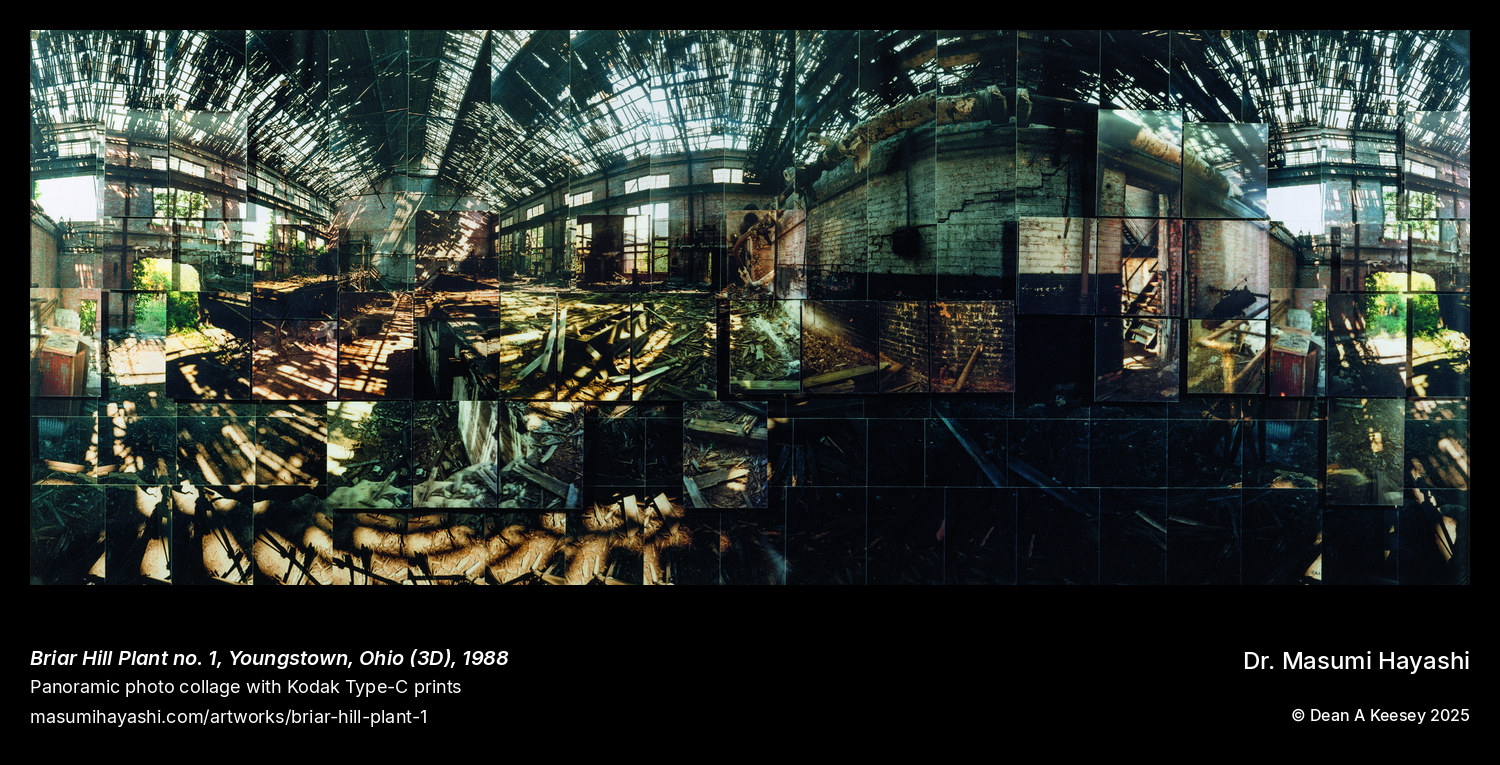
Briar Hill Plant no. 1, Youngstown, Ohio (3D)
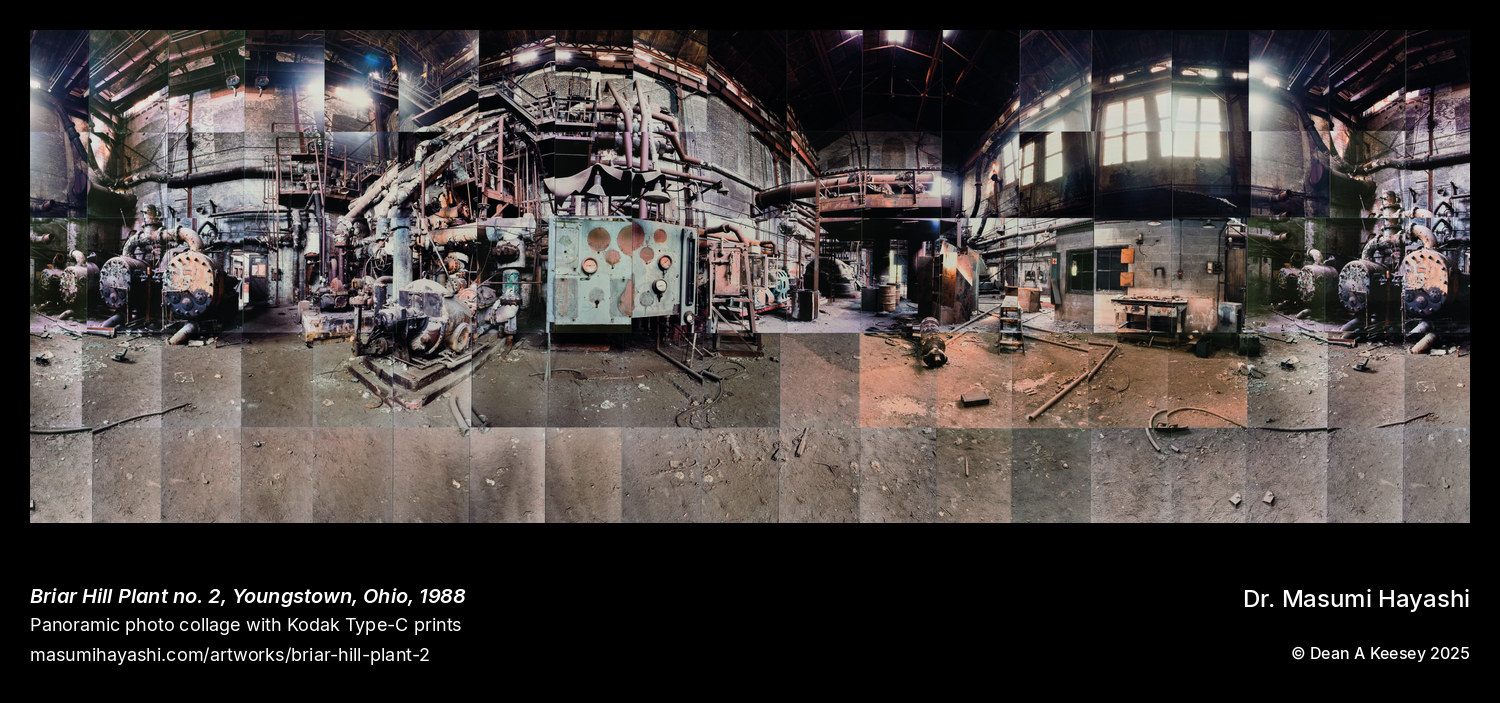
Briar Hill Plant no. 2, Youngstown, Ohio
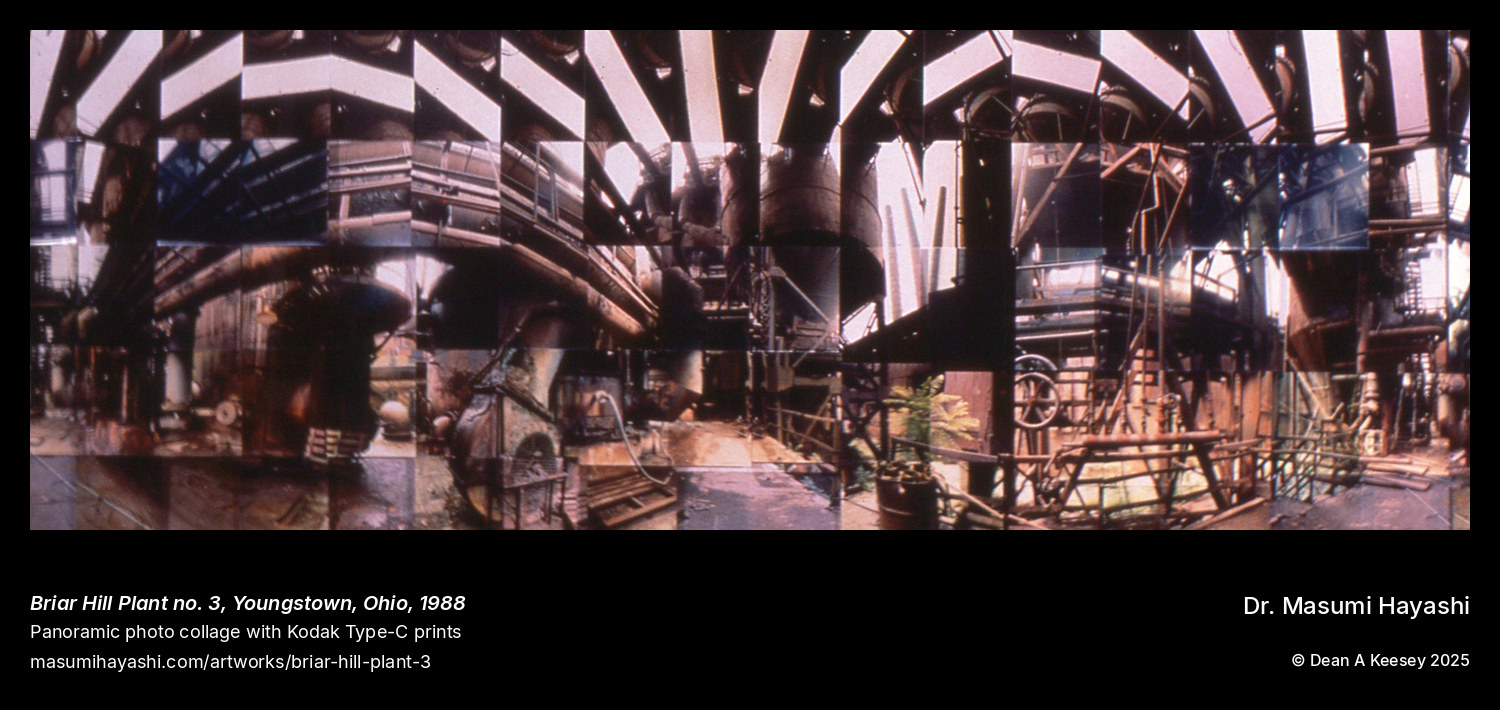
Briar Hill Plant no. 3, Youngstown, Ohio
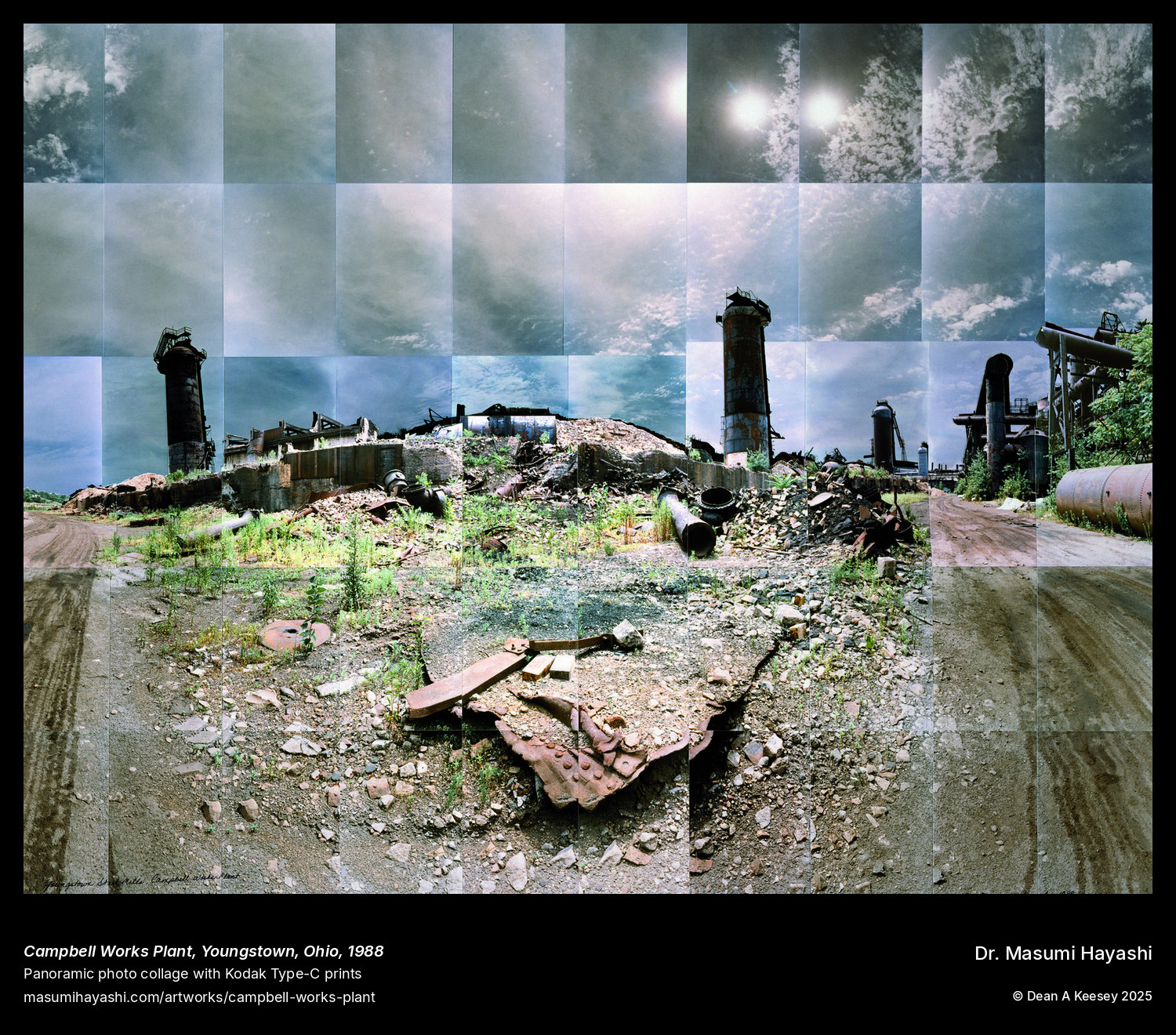
Campbell Works Plant, Youngstown, Ohio
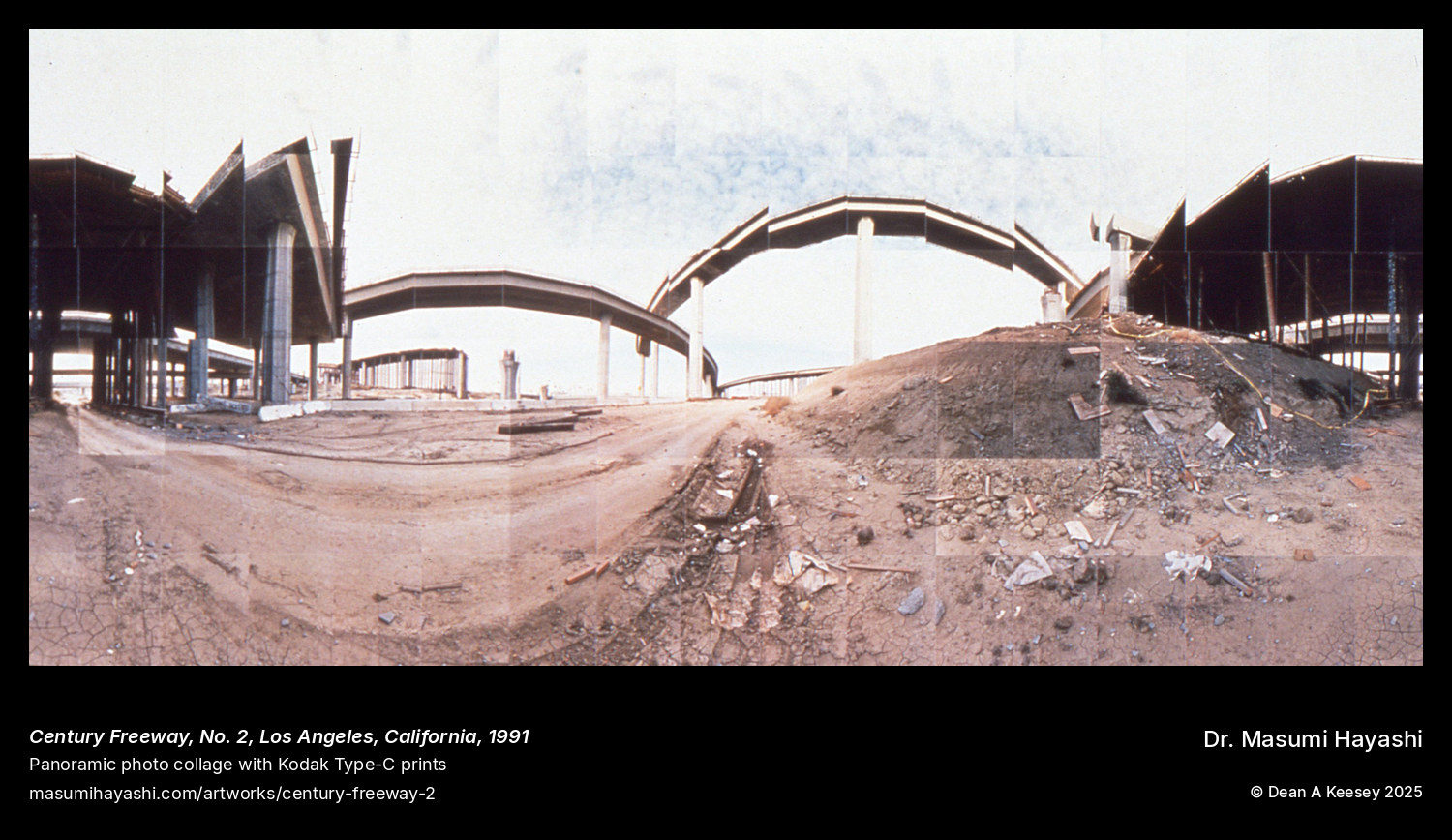
Century Freeway, No. 2, Los Angeles, California