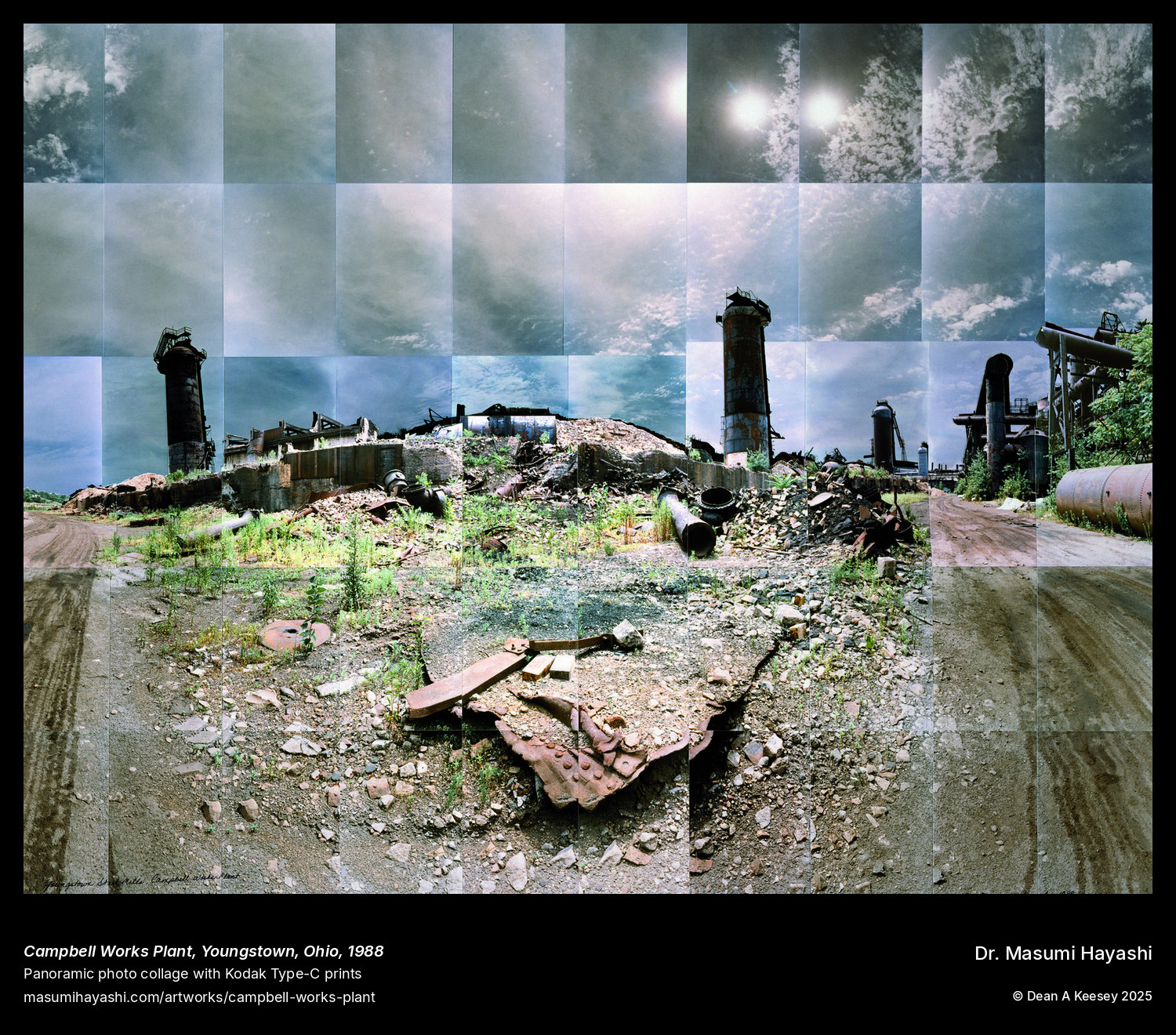
Campbell Works Plant, Youngstown, Ohio
Youngstown, OH, USA
Panoramic Photo Collage
1988
29 x 37
September 19, 1977. “Black Monday.” Youngstown Sheet & Tube announced Campbell Works’ immediate closure without warning, eliminating 5,000 jobs. Workers arrived for shifts to find gates locked. Families lost income, health insurance, pensions overnight. The announcement shocked the Mahoning Valley—steel production had anchored the region’s economy and identity for seven decades. The belief that steel was permanent shattered in a single corporate decision prioritizing financial engineering over manufacturing operations and community obligations.
Campbell Works became emblematic of American deindustrialization not because it was the only closure but because it proved even profitable facilities could be shuttered when parent corporations maximized short-term financial gains. Lykes Corporation had acquired Youngstown Sheet & Tube in 1969 and spent eight years extracting cash for other ventures rather than modernizing mills. The textbook asset-stripping diverted profits to debt service and corporate ventures while steel production infrastructure deteriorated. When closure announcements came, they arrived as economic violence against communities that had generated those profits.
The ripple effects devastated the region. Forty to fifty thousand jobs disappeared within four years as Campbell’s closure triggered failures across suppliers, service businesses, and supporting industries. U.S. Steel followed with McDonald Works and Youngstown Works closures. The Mahoning Valley lost half its manufacturing employment before 1981. Youngstown transformed from Steel Valley to Rust Belt symbol—a transformation Hayashi documented eleven years later through ruins frozen between abandonment and demolition.
By 1988 when Hayashi photographed the site, Campbell Works had stood abandoned long enough for nature to reclaim industrial spaces—vegetation colonizing buildings, rust advancing across steel structures, materials weathering—yet structures remained substantially intact. She captured iconic ruins at their peak architectural preservation before systematic demolition erased physical evidence.
The relatively square format emphasizes vertical monumentality: blast furnaces 100-200 feet tall dominating the facility’s skyline. These structures demanded compositional strategies different from the extreme horizontal panoramas suited to infrastructure documentation. Hayashi’s systematic approach distinguished her work from isolated dramatic images—documenting Campbell Works alongside Briar Hill (three works), Center Street, and Cleveland facilities to create comprehensive regional archive revealing deindustrialization’s scope.
More from Post-Industrial Landscapes
Briar Hill Plant no. 1, Youngstown, Ohio (3D)
Briar Hill Plant no. 2, Youngstown, Ohio
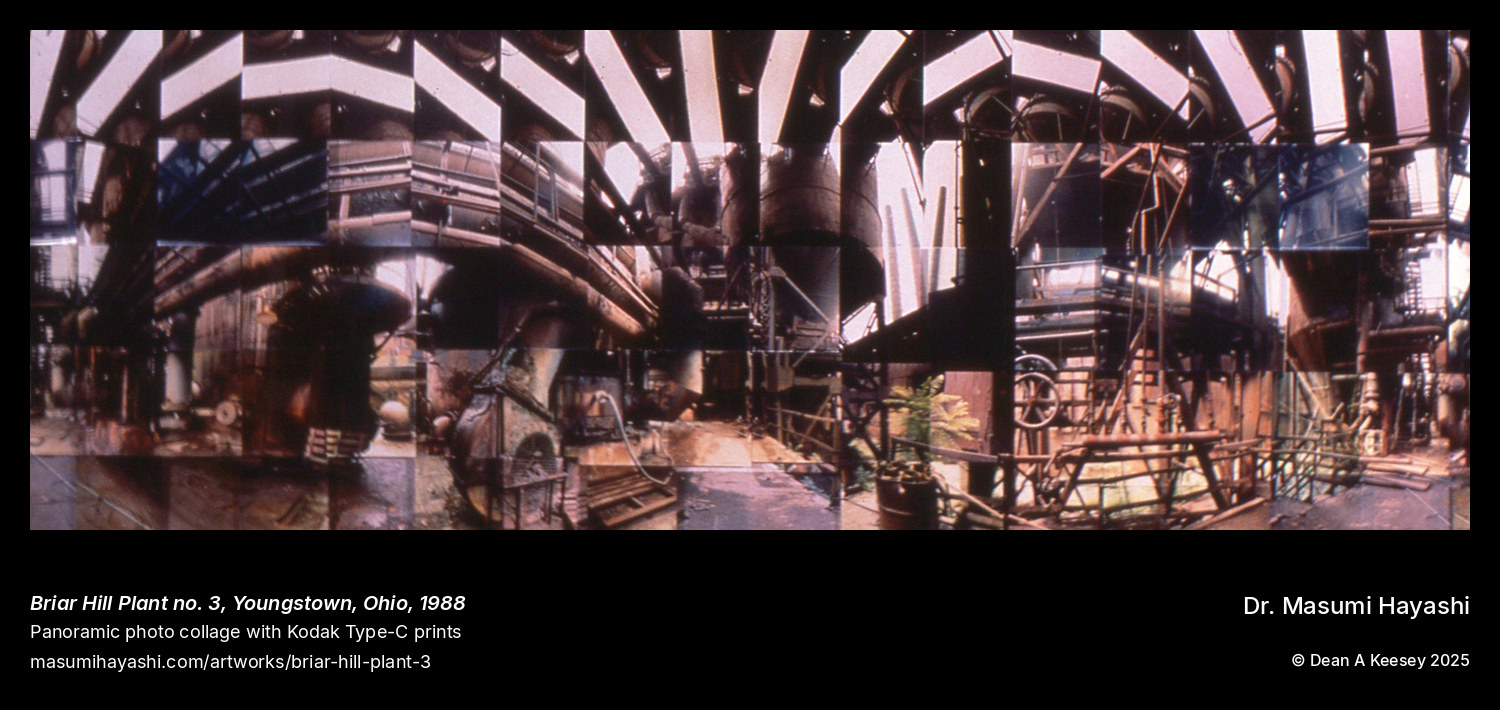
Briar Hill Plant no. 3, Youngstown, Ohio
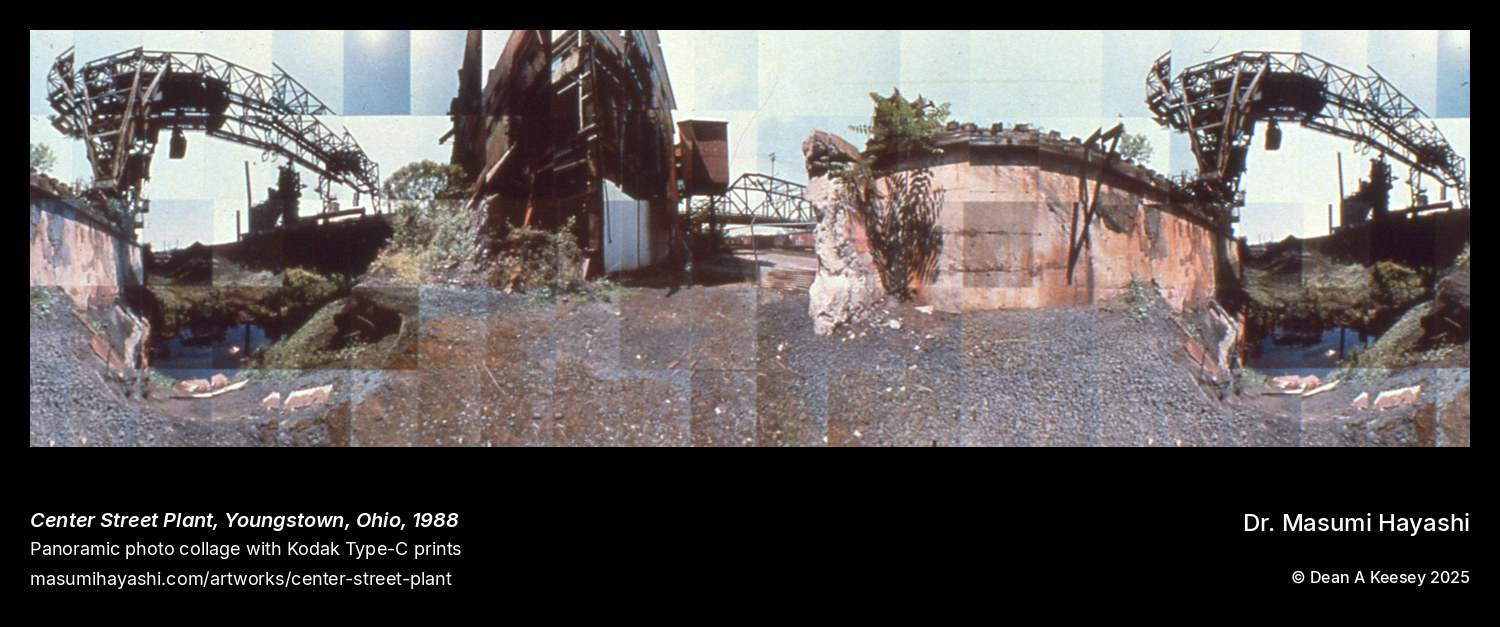
Center Street Plant, Youngstown, Ohio
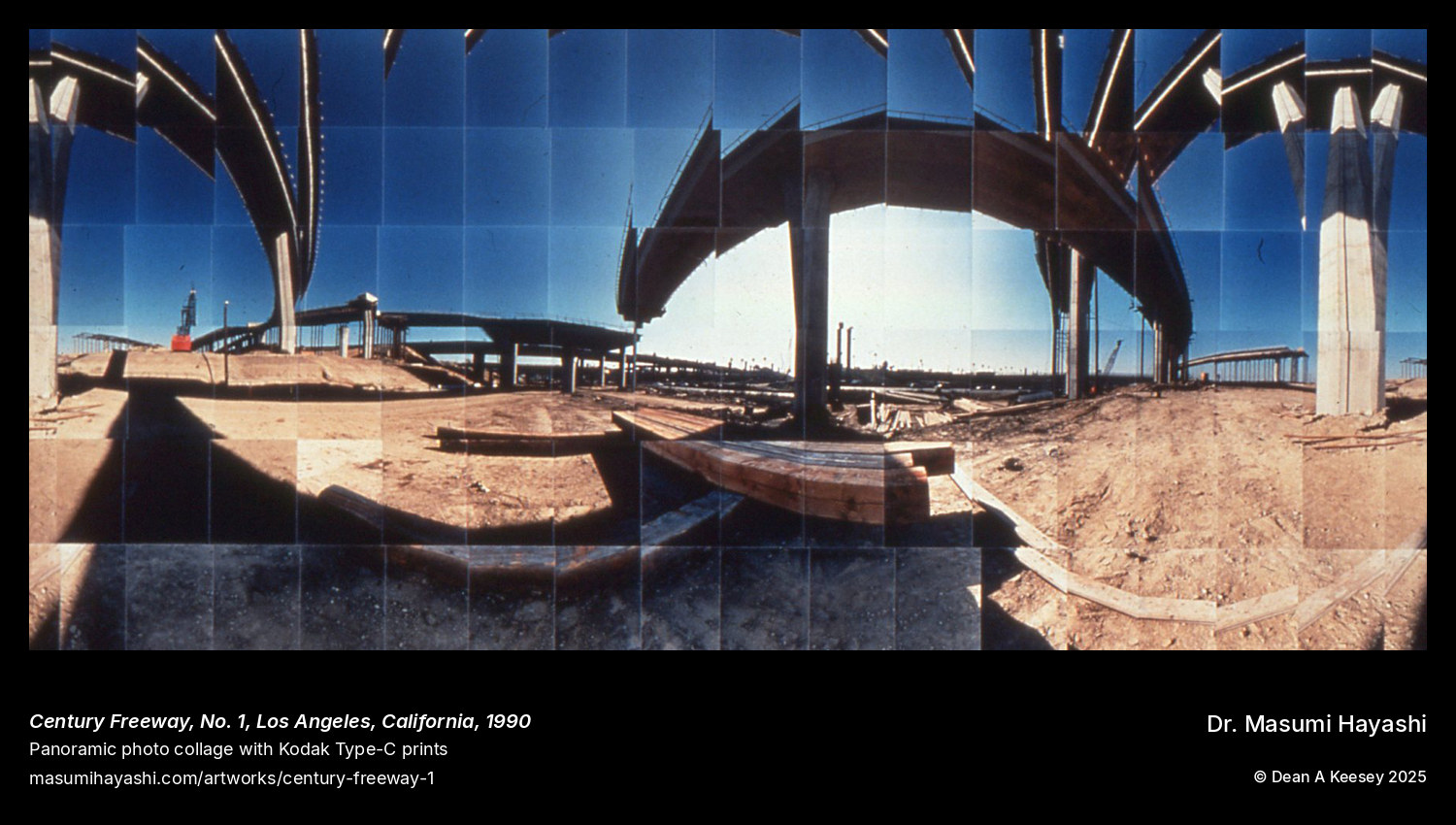
Century Freeway, No. 1, Los Angeles, California