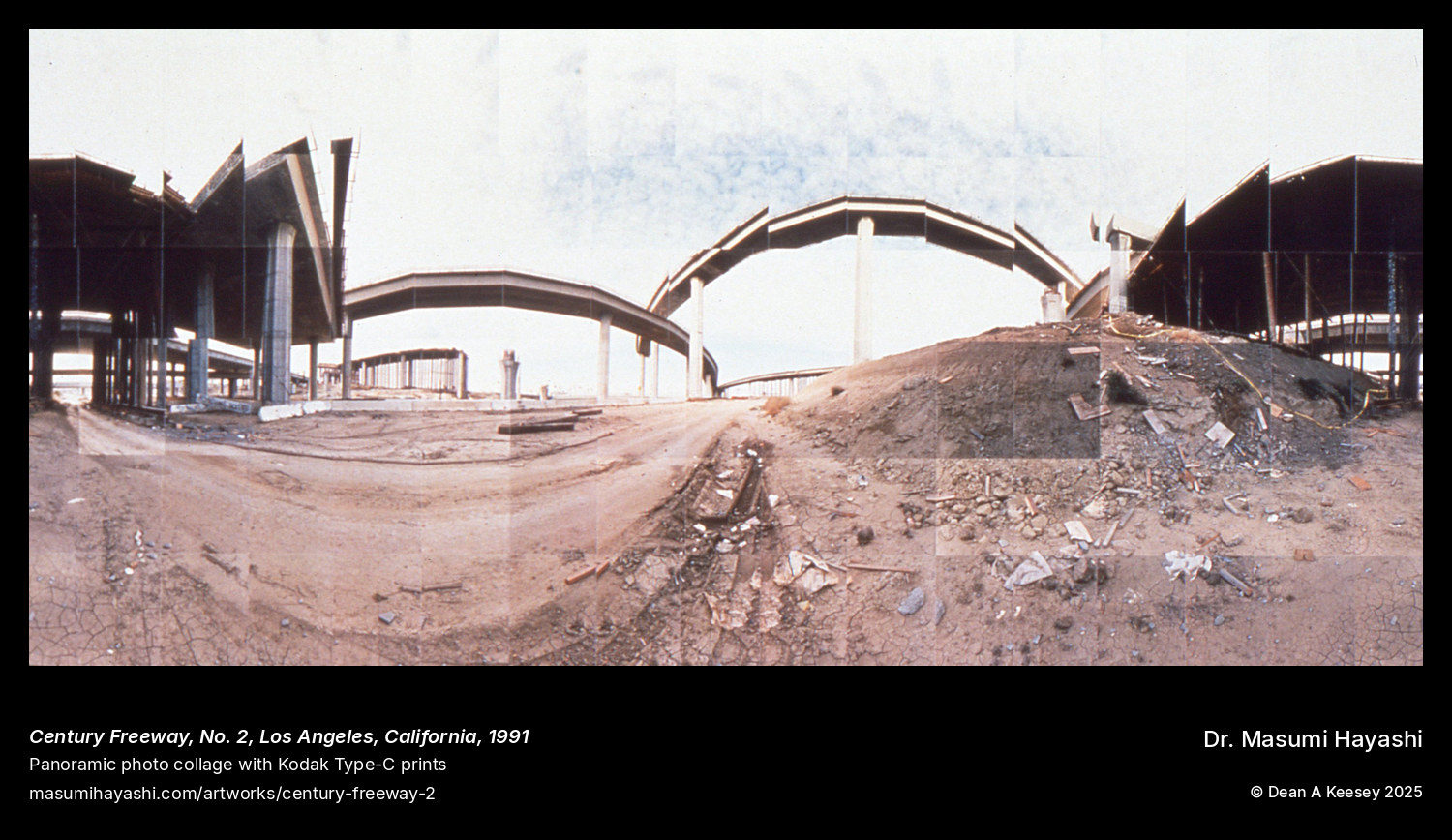
Century Freeway, No. 2, Los Angeles, California
Los Angeles (I-105), CA, USA
Panoramic Photo Collage
1991
28 x 59
Interstate 105—the Century Freeway—represents one of the most controversial infrastructure projects in American urban history. Hayashi’s 1991 documentation captures the freeway corridor two years before its October 1993 opening, after 25,000 predominantly Black and Latino South Los Angeles residents had been displaced across three decades of planning battles, legal challenges, and ultimately wholesale neighborhood demolition.
The freeway’s history embodies environmental racism in transportation planning. The 17.3-mile corridor cut through Watts, Willowbrook, Lennox—communities selected because their populations were majority-minority, their property values lower, their political representation limited. Alternative routes that would have affected white suburbs were rejected. The benefits of improved mobility flowed to suburban commuters; the costs of displacement, noise pollution, and community destruction fell on urban minorities.
Community resistance crystallized in the landmark 1972 lawsuit that halted construction for a decade, forcing comprehensive environmental review and unprecedented mitigation requirements: 3,400 replacement housing units, a $240 million housing fund, and transit integration (the Metro Green Line in the freeway median). These requirements acknowledged—for the first time in freeway construction history—that neighborhood displacement demanded meaningful remediation beyond cash payments.
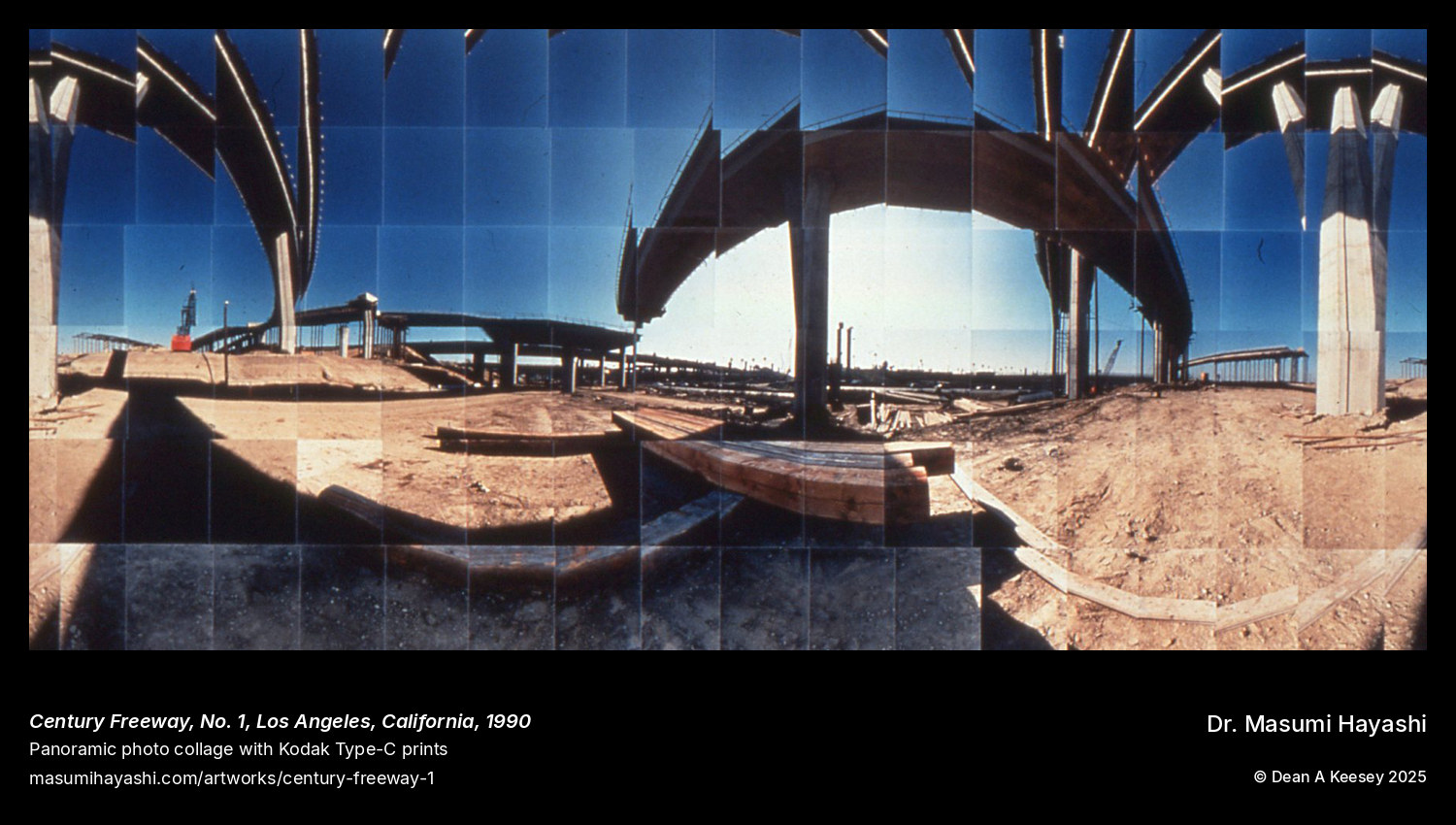
By 1991 when Hayashi photographed this location, freeway structures dominated the landscape. Vacant lots and demolished blocks surrounded the construction corridor. Isolated remaining structures awaited final demolition. Promised replacement housing remained incomplete despite legal settlement requirements. Communities would never recover their pre-freeway character.
Including Century Freeway in her Post-Industrial Landscapes series expanded Hayashi’s concept beyond economic abandonment to encompass government-directed urban demolition—recognizing that corporate decisions and governmental policies, despite different mechanisms, produced comparable community devastation.
More from Post-Industrial Landscapes
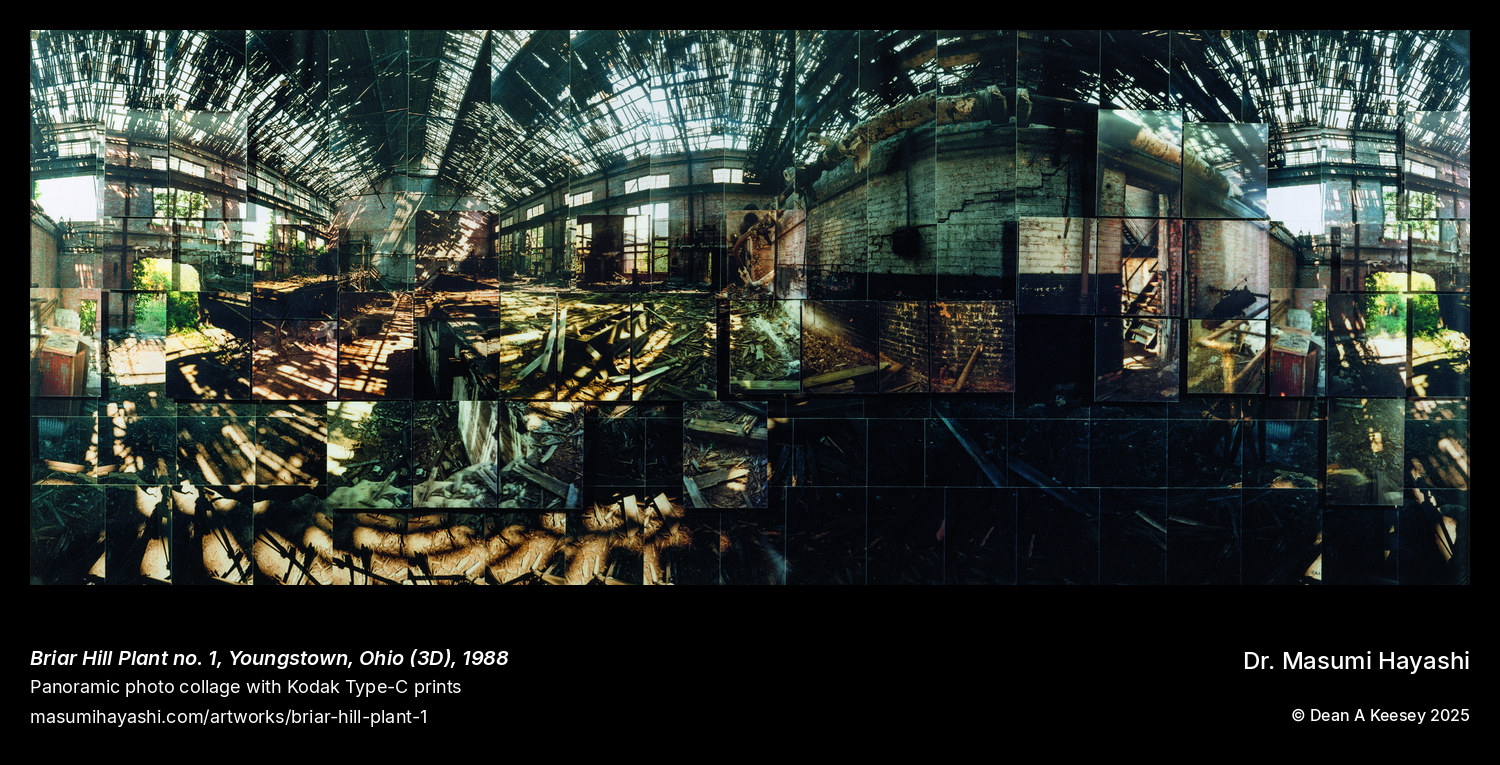
Briar Hill Plant no. 1, Youngstown, Ohio (3D)
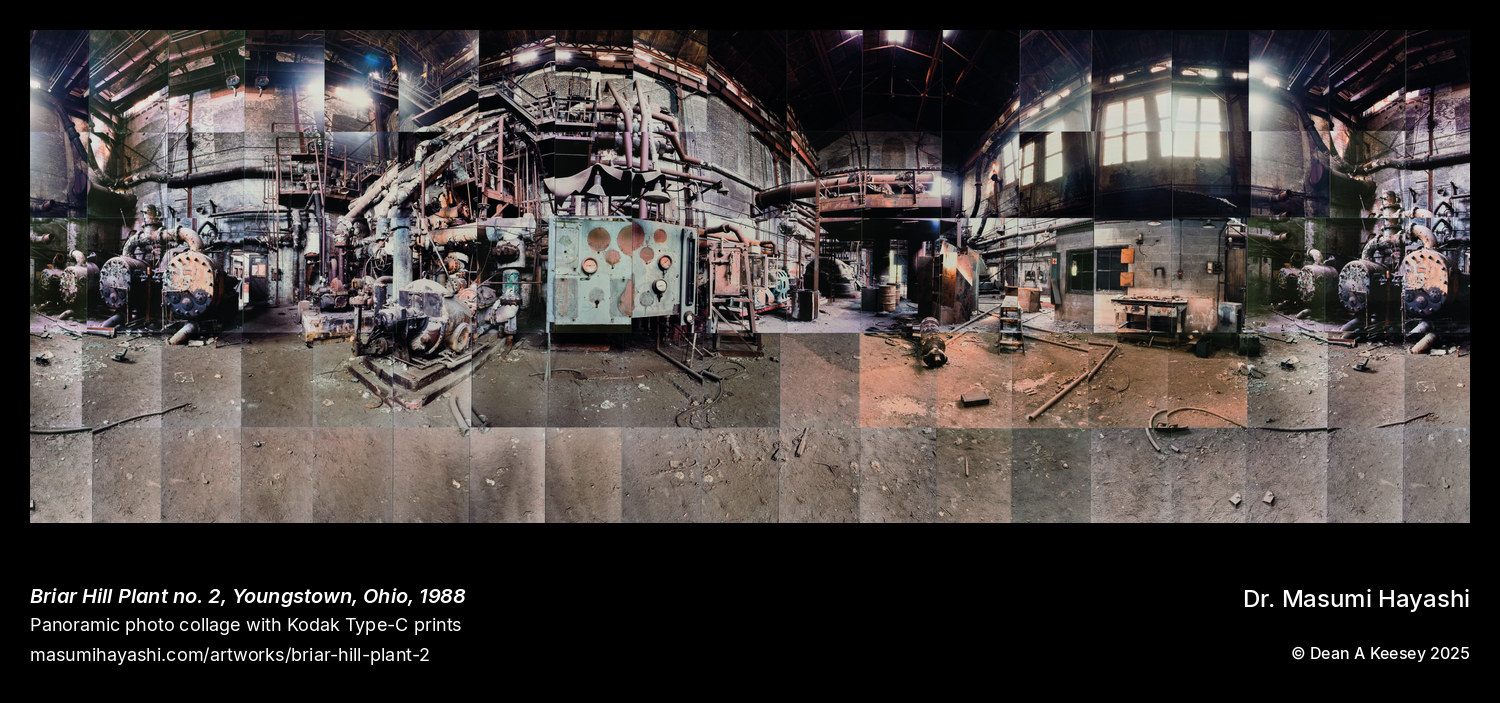
Briar Hill Plant no. 2, Youngstown, Ohio
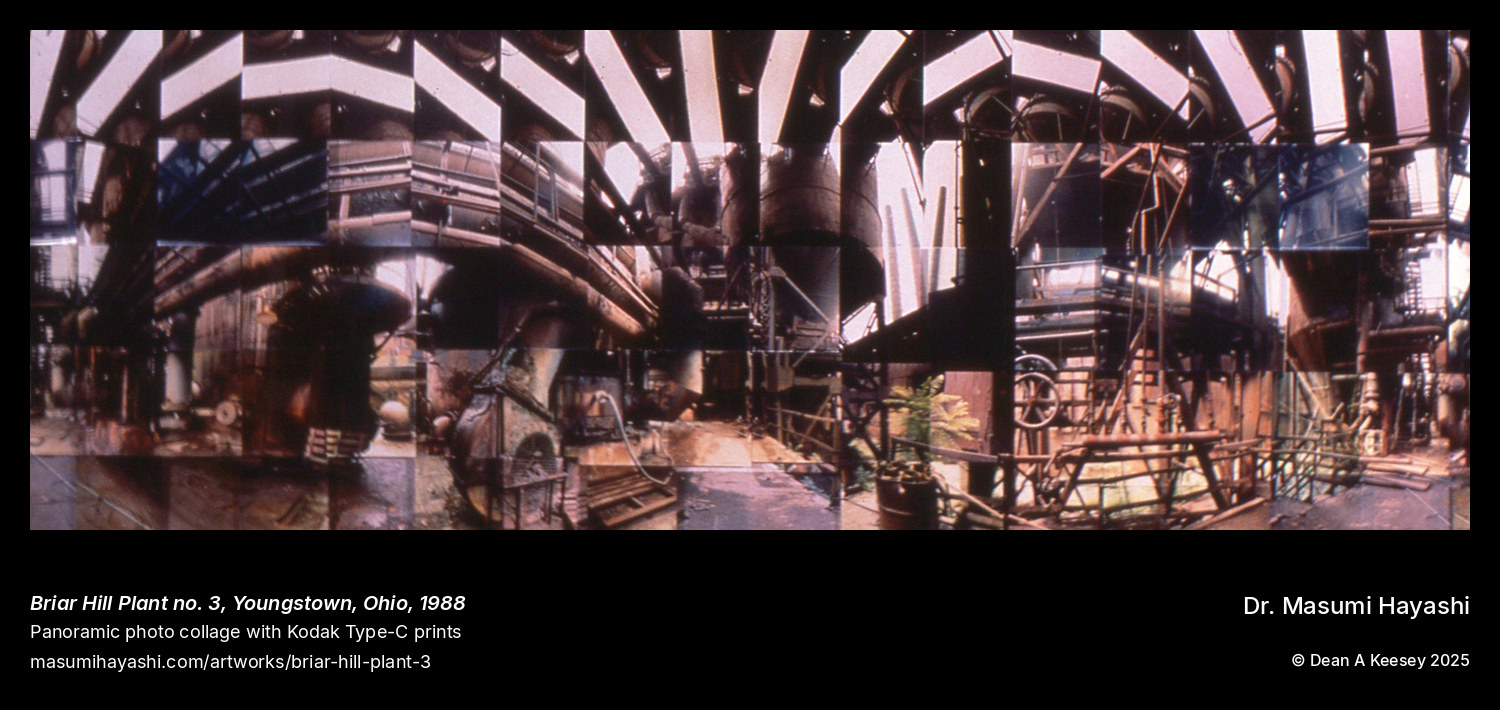
Briar Hill Plant no. 3, Youngstown, Ohio
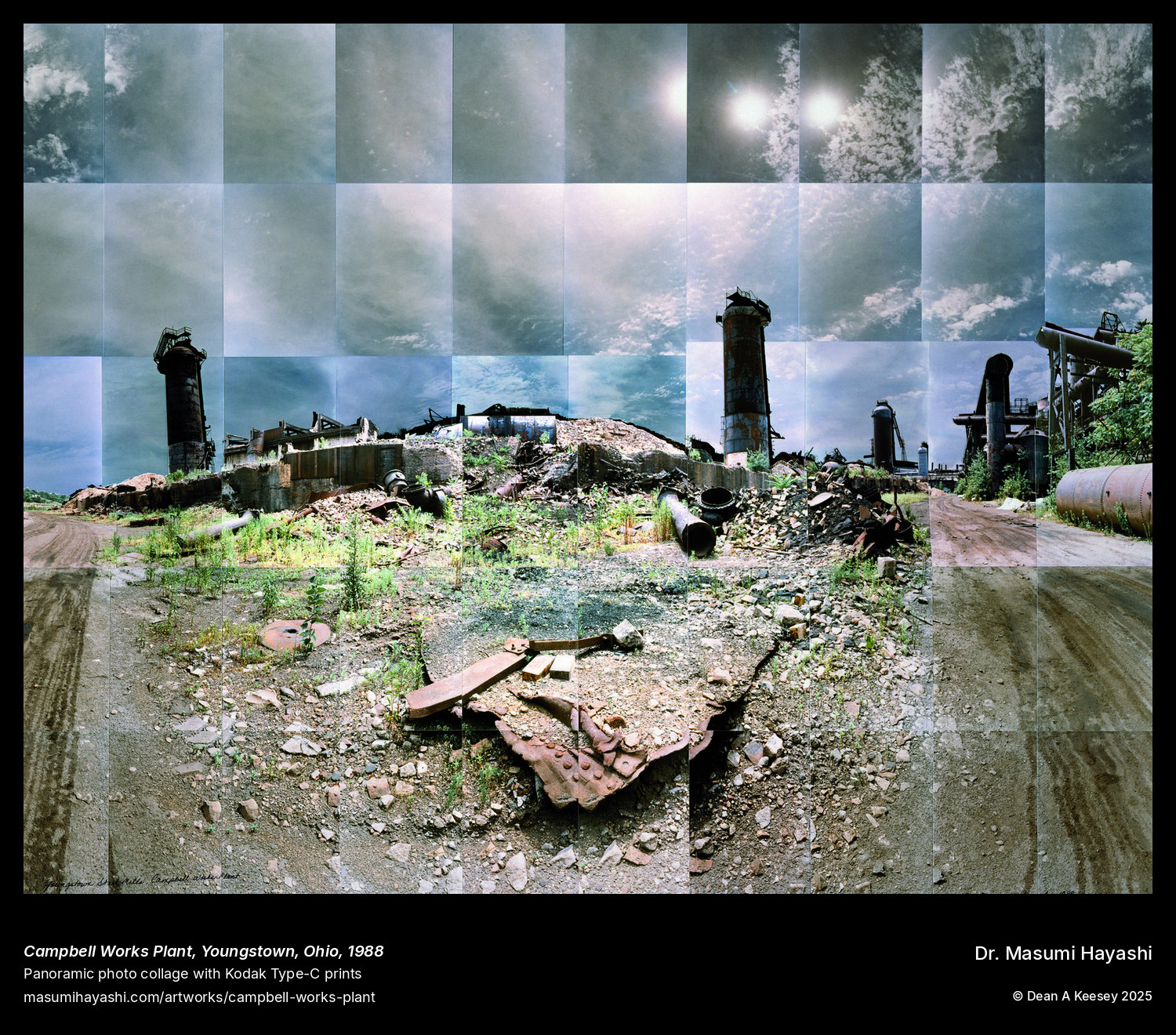
Campbell Works Plant, Youngstown, Ohio
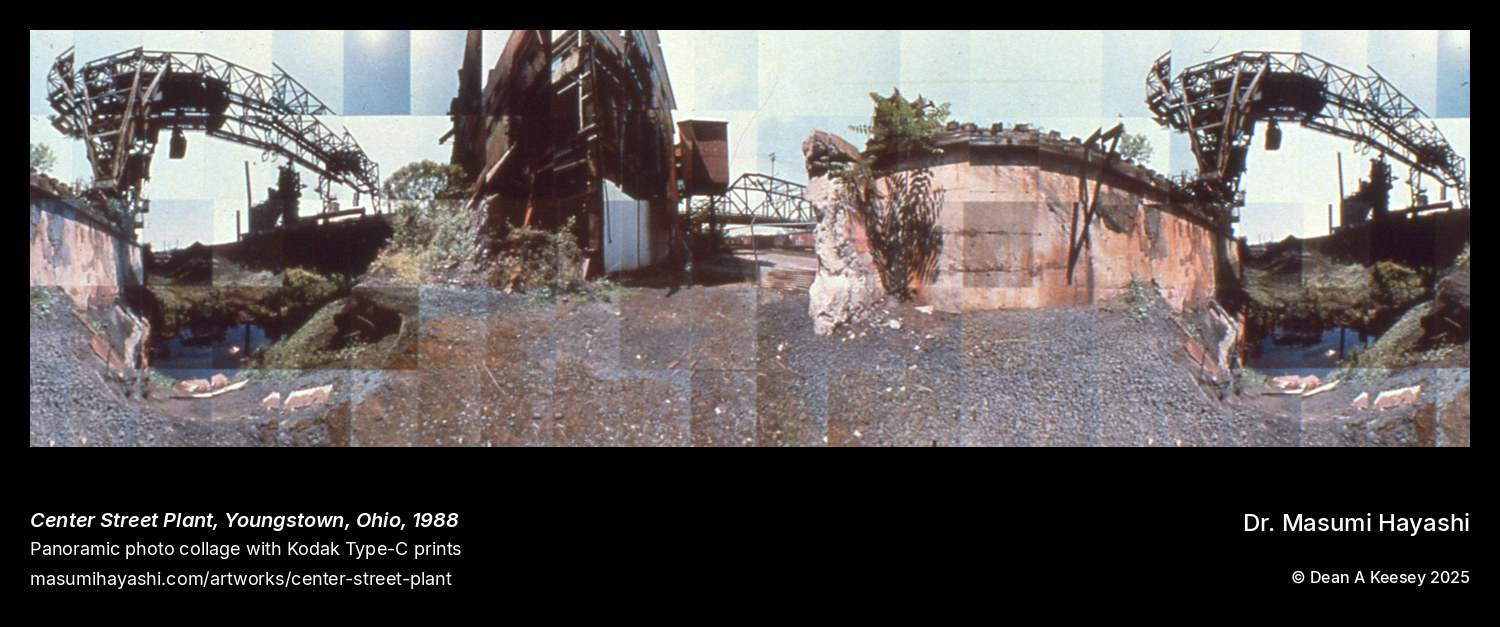
Center Street Plant, Youngstown, Ohio