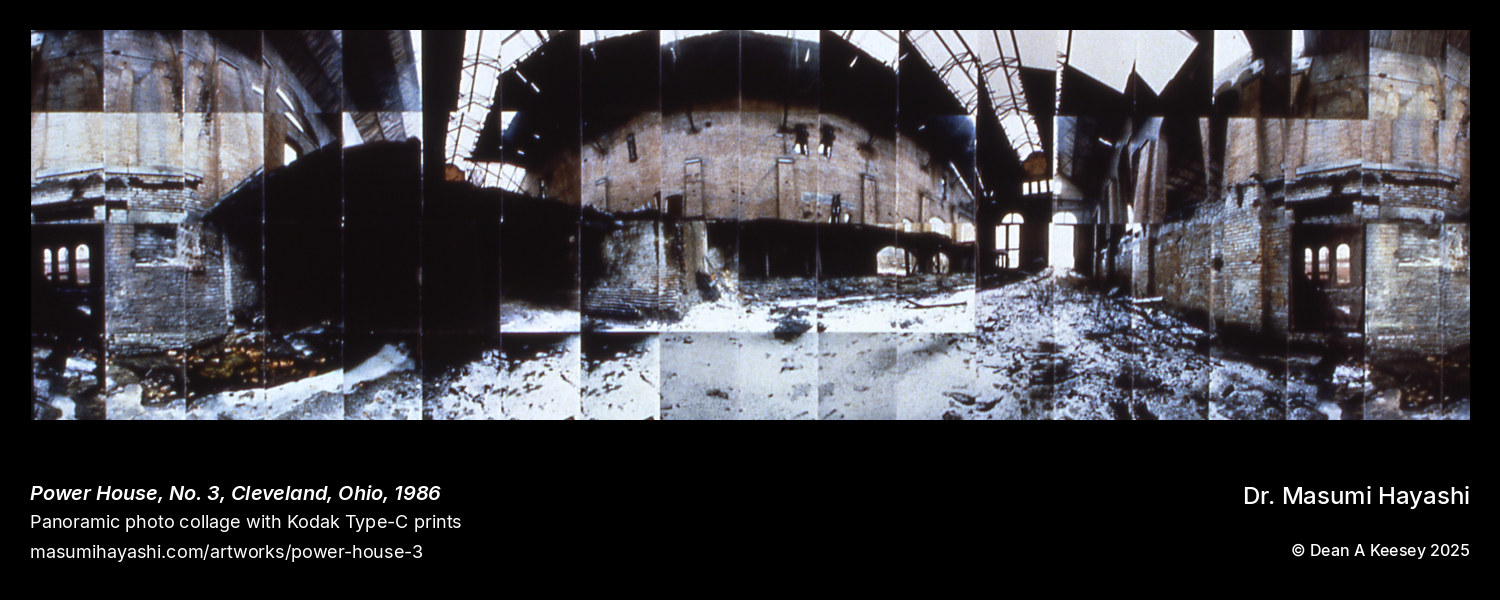
Power House, No. 3
Cleveland, OH, USA
Panoramic photo collage with Kodak Type-C prints
1986
65 x 20
This dramatic vertical panorama at 65-by-20 inches documents Power House No. 3 in Cleveland—an electrical generating station that provided power to the city’s industrial operations and represented the infrastructure enabling manufacturing production. The unusual vertical orientation, over five feet tall yet barely twenty inches wide, emphasizes the power house’s soaring architecture.
Created in 1986, the work inaugurates Hayashi’s systematic documentation of Cleveland’s post-industrial landscape. The power house represents infrastructure one step removed from direct production—not the steel mills or factories themselves but the electrical generation that made industrial production possible. This supporting infrastructure proved as vulnerable to deindustrialization as the mills it served.
The extreme vertical format distinguishes this work from the horizontal panoramas characterizing most of Hayashi’s production. The power house’s architecture—smokestacks, turbine halls, and coal-handling structures rising skyward—demanded vertical documentation. The narrow width concentrates attention on the structure’s height, creating almost tower-like proportions that emphasize the building’s aspiration toward industrial sublime.
Power houses of this era represented significant architectural investment: functional structures designed with attention to aesthetic effect, their brick and steel construction demonstrating industrial confidence that utilitarian buildings could also express civic pride. The photo collage technique fragments this vertical architecture while preserving its dramatic upward thrust.
This power house series—documenting multiple facilities across Cleveland—reveals Hayashi’s interest in infrastructure that mediated between natural resources and industrial production. The power houses converted coal into electricity, enabling the manufacturing that defined Cleveland’s identity, their obsolescence marking the end of the industrial era they had powered.
More from Post-Industrial Landscapes
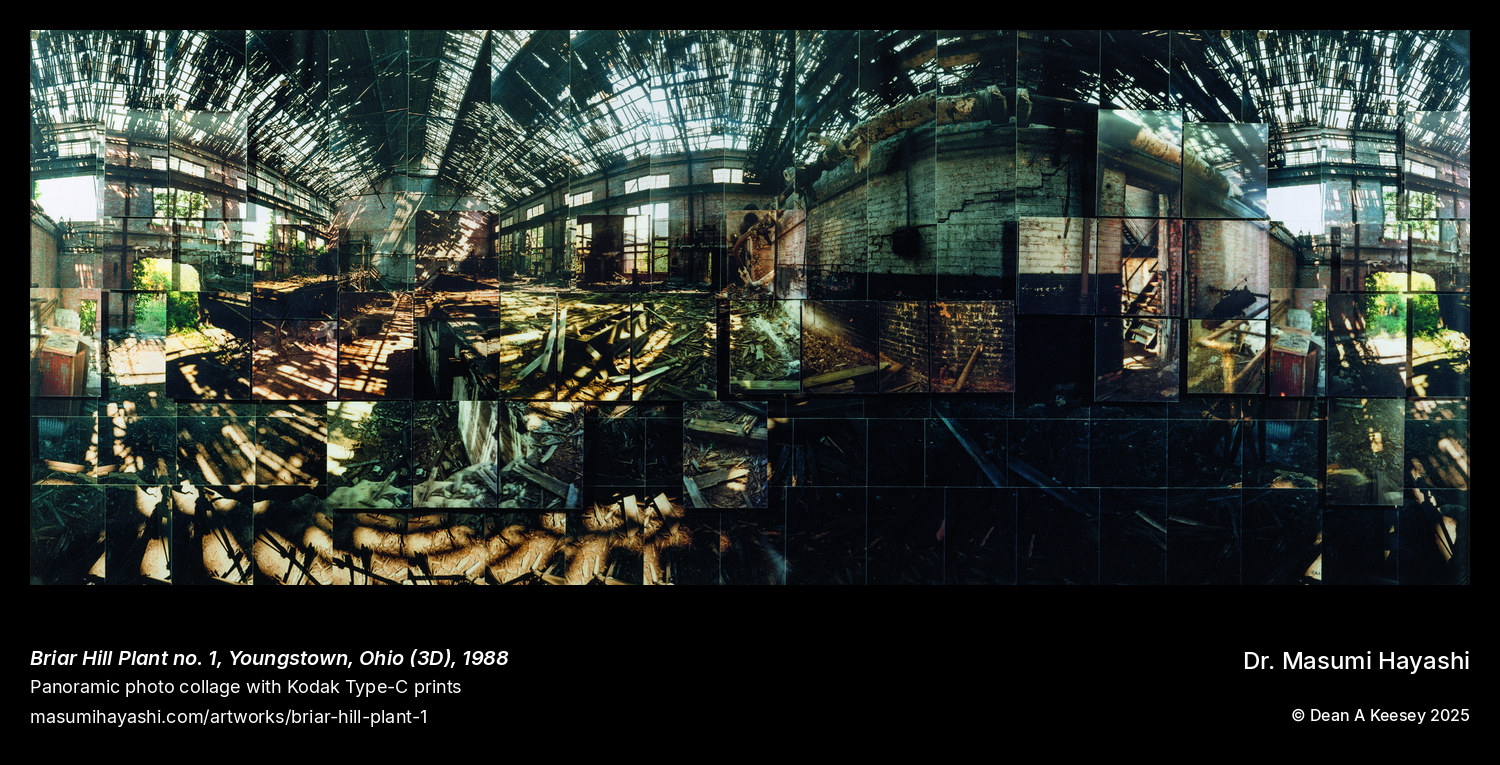
Briar Hill Plant no. 1, Youngstown, Ohio (3D)
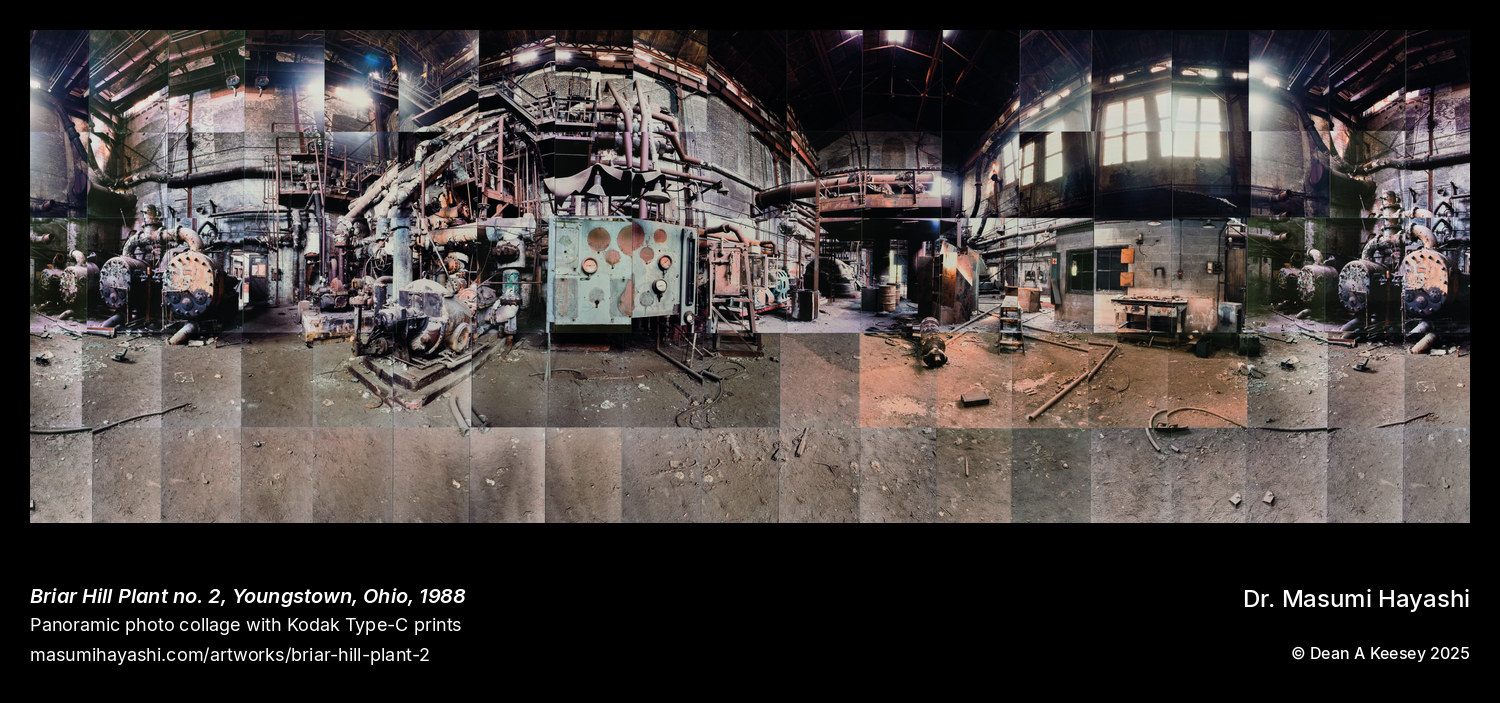
Briar Hill Plant no. 2, Youngstown, Ohio
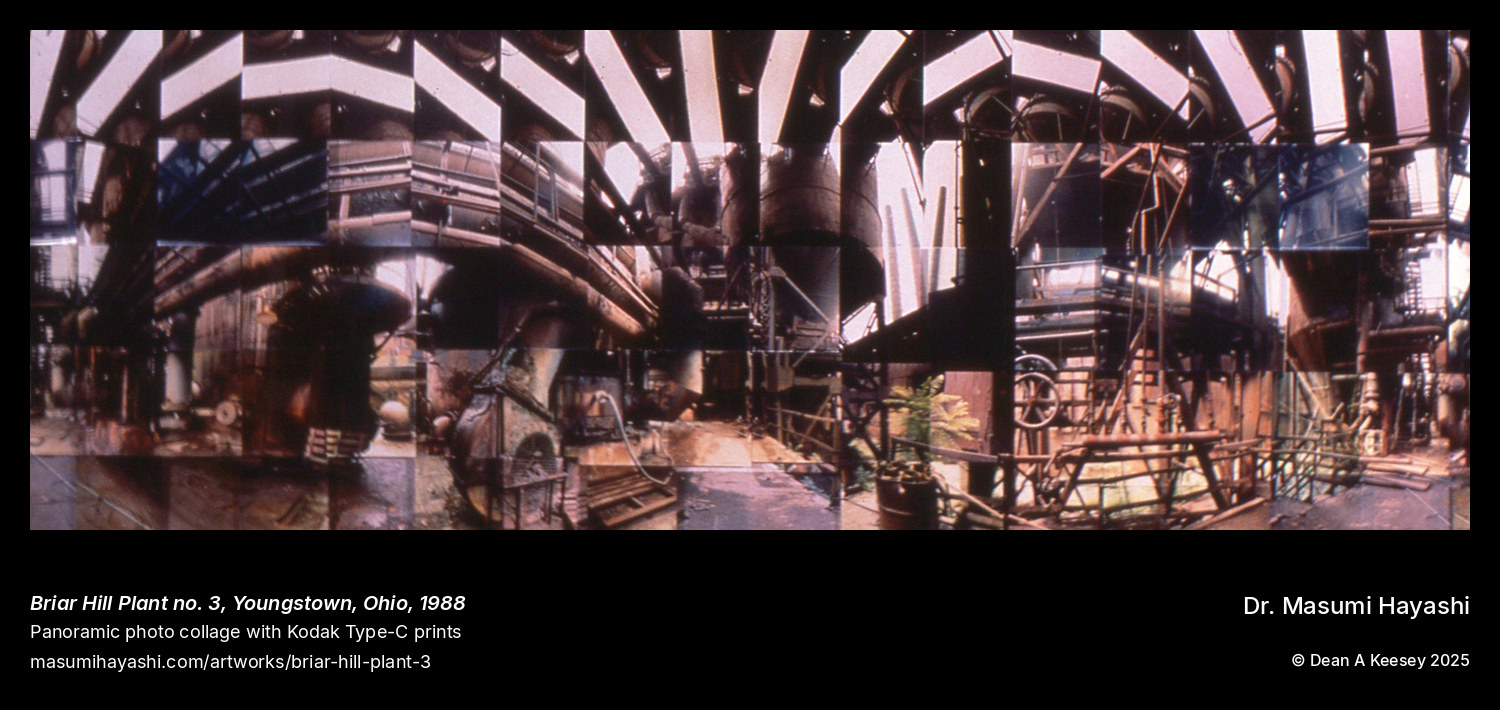
Briar Hill Plant no. 3, Youngstown, Ohio
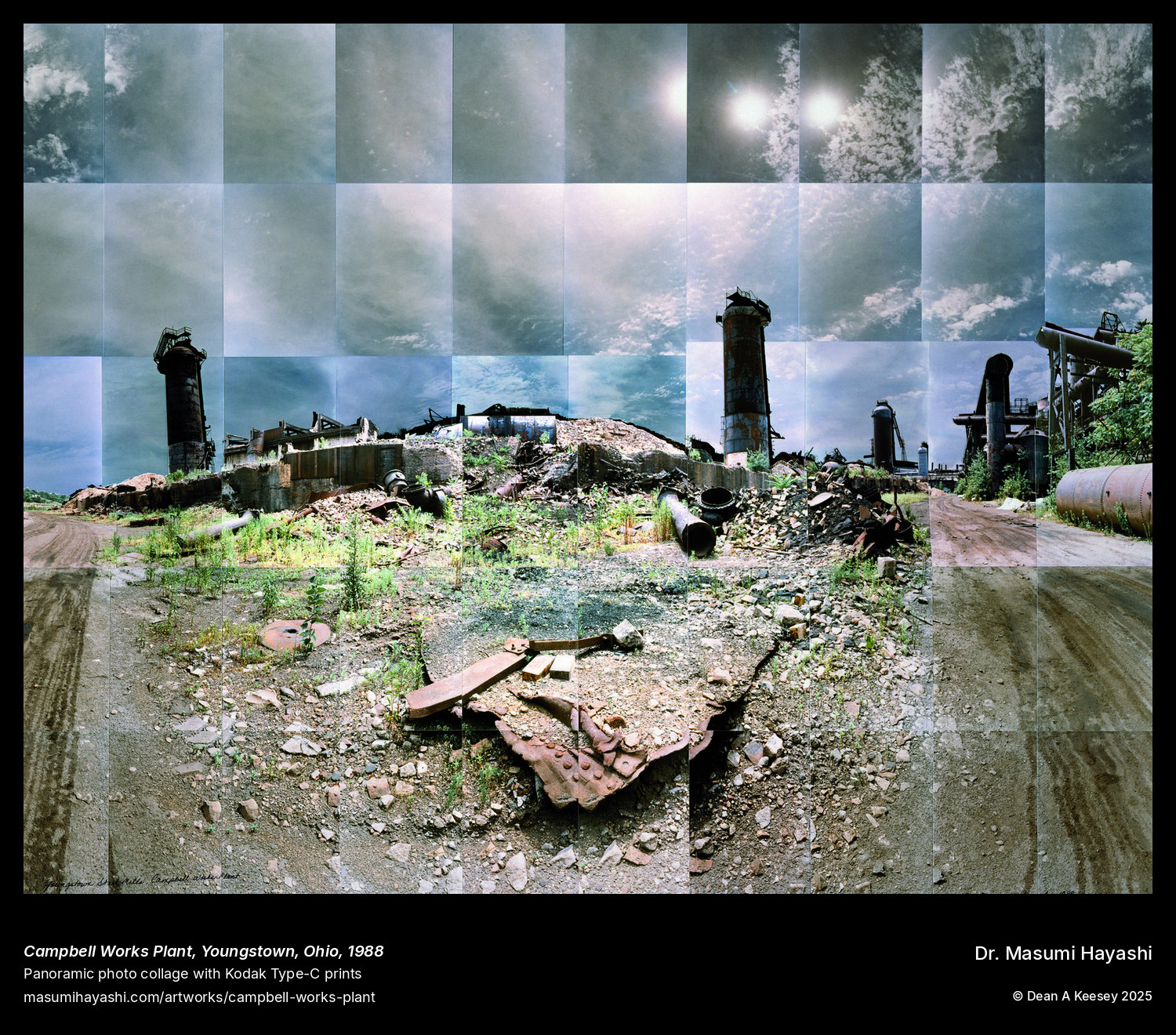
Campbell Works Plant, Youngstown, Ohio
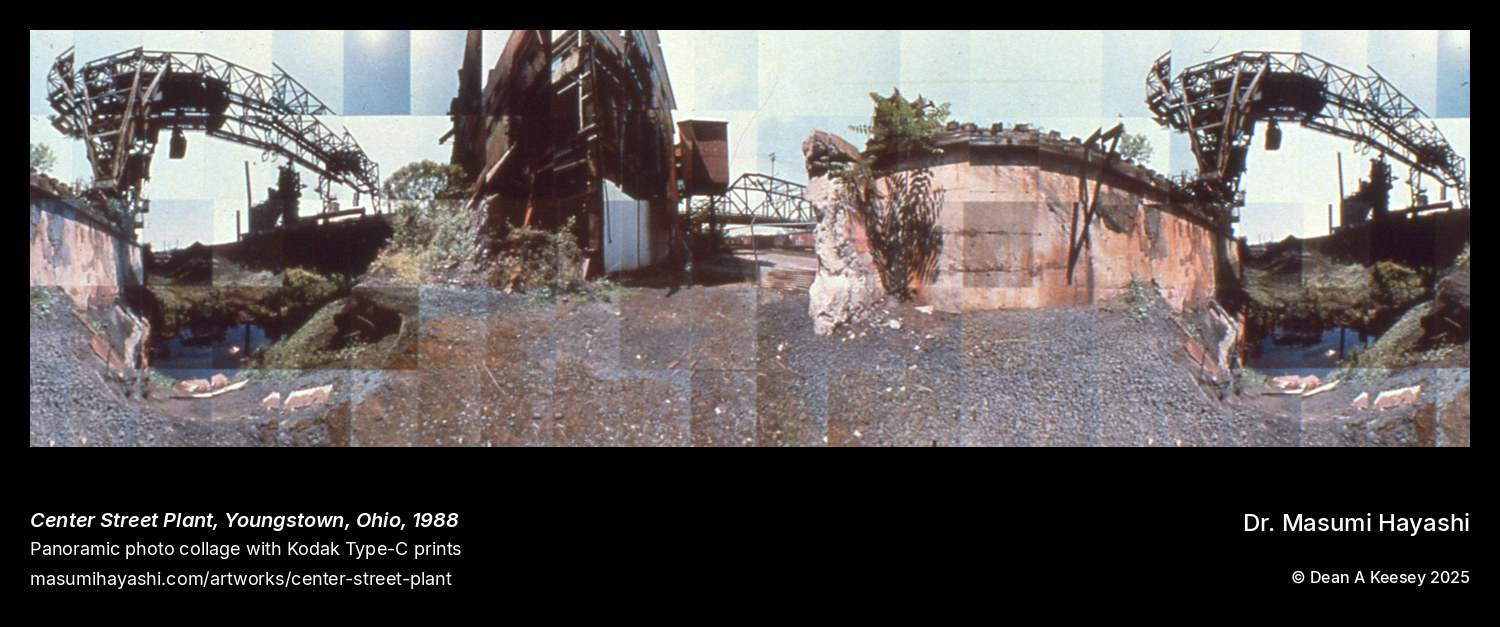
Center Street Plant, Youngstown, Ohio