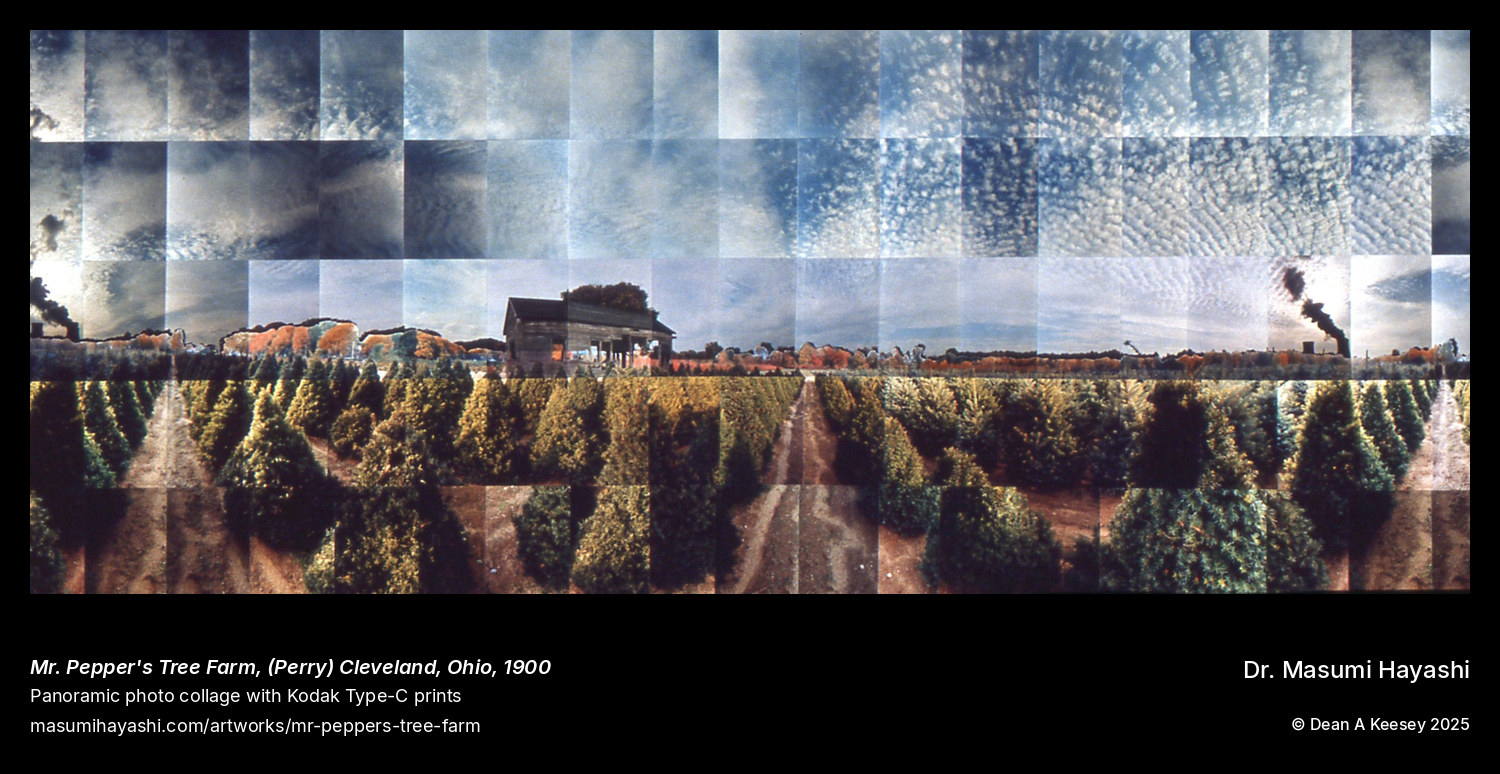
Mr. Pepper's Tree Farm
(Perry) Cleveland, OH, USA
Panoramic photo collage with Kodak Type-C prints
1900
33 x 76
This 33-by-76-inch horizontal panorama documents Mr. Pepper’s Tree Farm in Perry, a suburban community east of Cleveland along Lake Erie’s shore. The six-foot-plus width creates an immersive view of cultivated landscape that contrasts with the industrial ruins dominating Hayashi’s Cleveland work, revealing another dimension of the region’s post-industrial transition.
The work represents Hayashi’s documentation of landscapes at the urban-rural boundary where Cleveland’s industrial economy gave way to agricultural and recreational uses. Perry’s Lake Erie location made it both a farming community and summer retreat, its tree farms and orchards serving the region’s horticultural needs while providing escape from the industrial city.
The tree farm’s orderly rows create natural geometry that parallels the industrial structures Hayashi documented elsewhere—human organization of landscape for productive purpose, whether manufacturing steel or growing trees. The photo collage technique captures this cultivated order while fragmenting it into the multiple perspectives that characterize Hayashi’s vision.
Mr. Pepper’s Tree Farm represents the economic activities that persisted beyond heavy industry: agricultural enterprises serving regional markets, small businesses rooted in local community rather than global competition. As Cleveland’s industrial base collapsed, such businesses offered alternative economic models—smaller scale, locally owned, connected to the land rather than to distant corporate headquarters.
The panorama’s scale matches the expansive Lake Erie landscape, the horizontal format suited to documenting fields and orchards stretching toward the lake’s horizon. This work expands Hayashi’s post-industrial documentation beyond urban decay to include the agricultural landscapes that bordered and survived Cleveland’s industrial collapse.
In the Collection of
ARTneo, Cleveland, OH
Donated by Dean A. Keesey (Masumi Hayashi Foundation), 2017. USPAP-appraised FMV $20,000.
More from Post-Industrial Landscapes
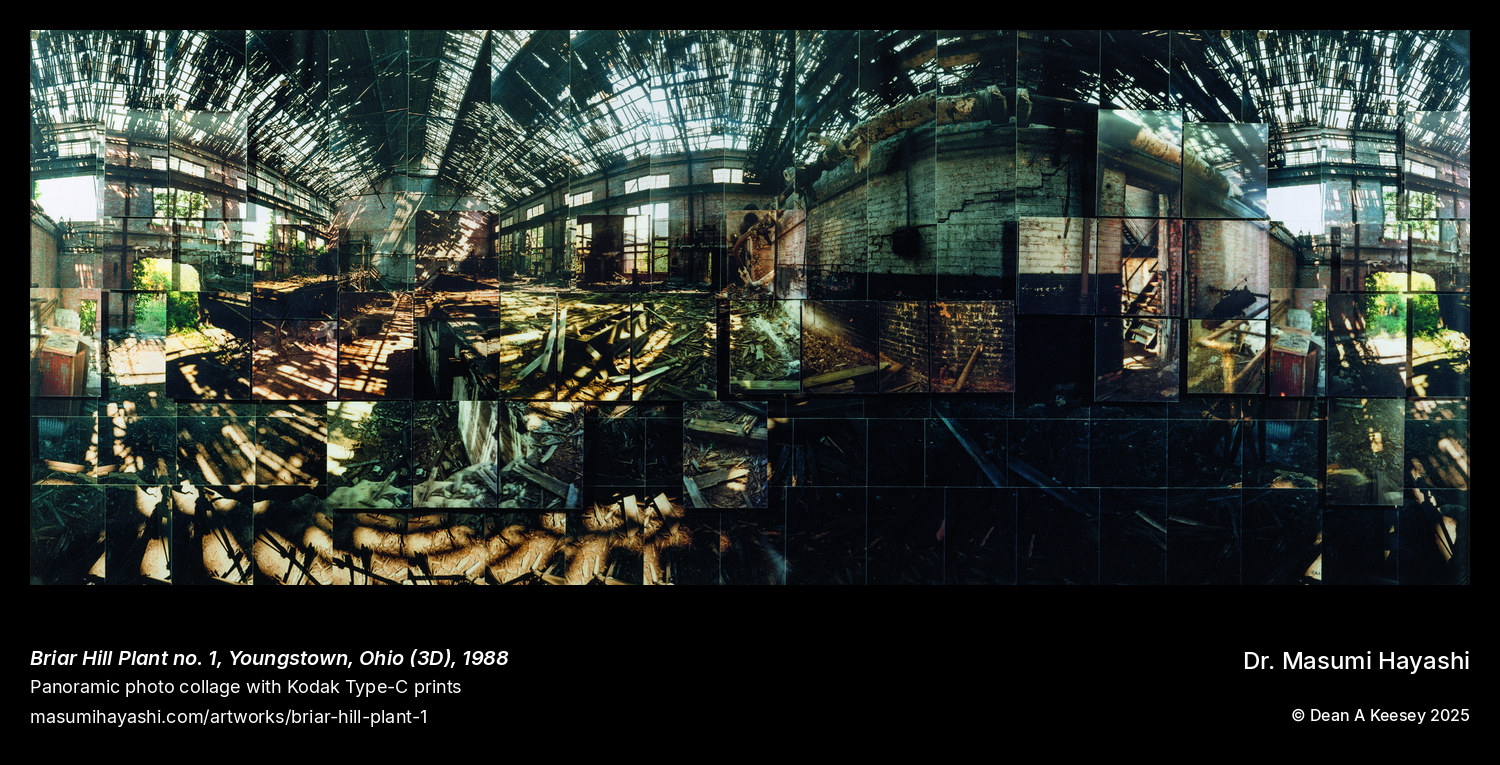
Briar Hill Plant no. 1, Youngstown, Ohio (3D)
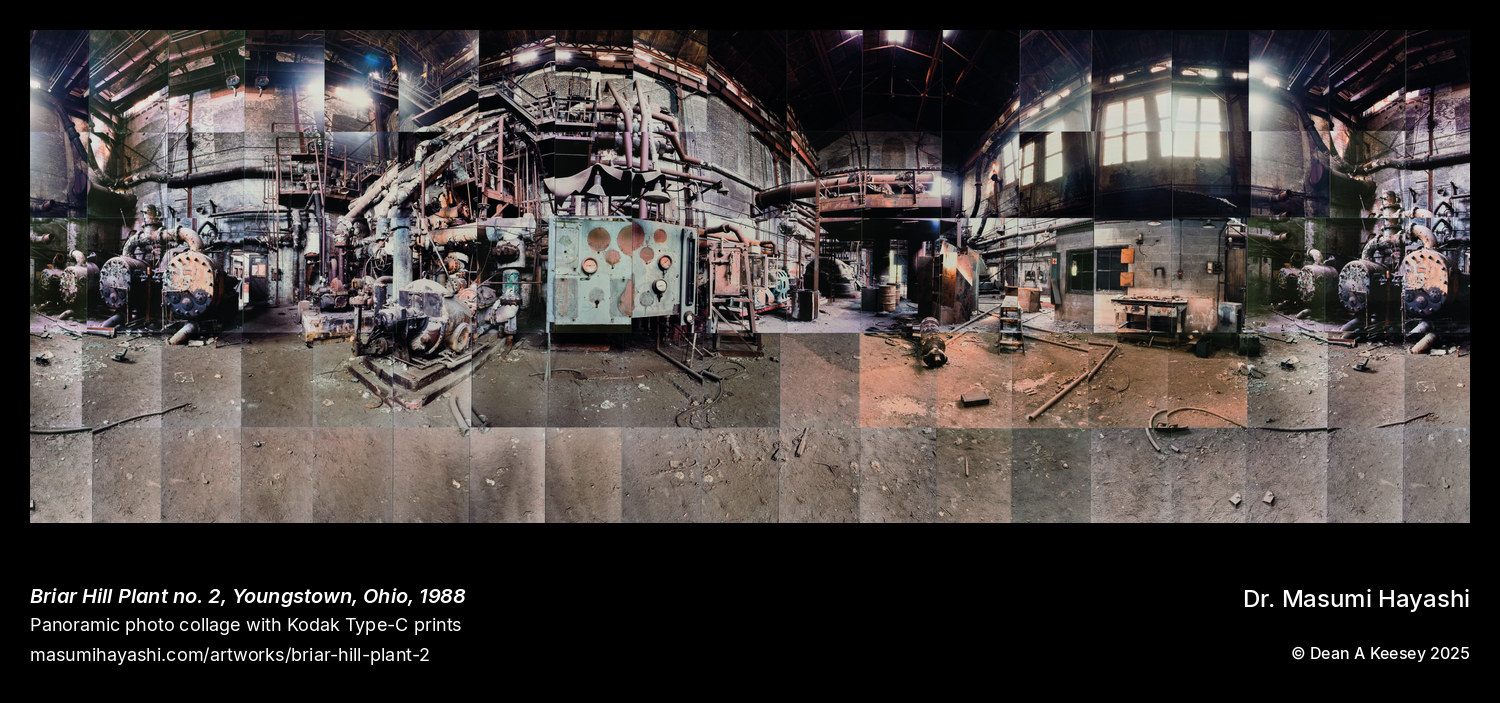
Briar Hill Plant no. 2, Youngstown, Ohio
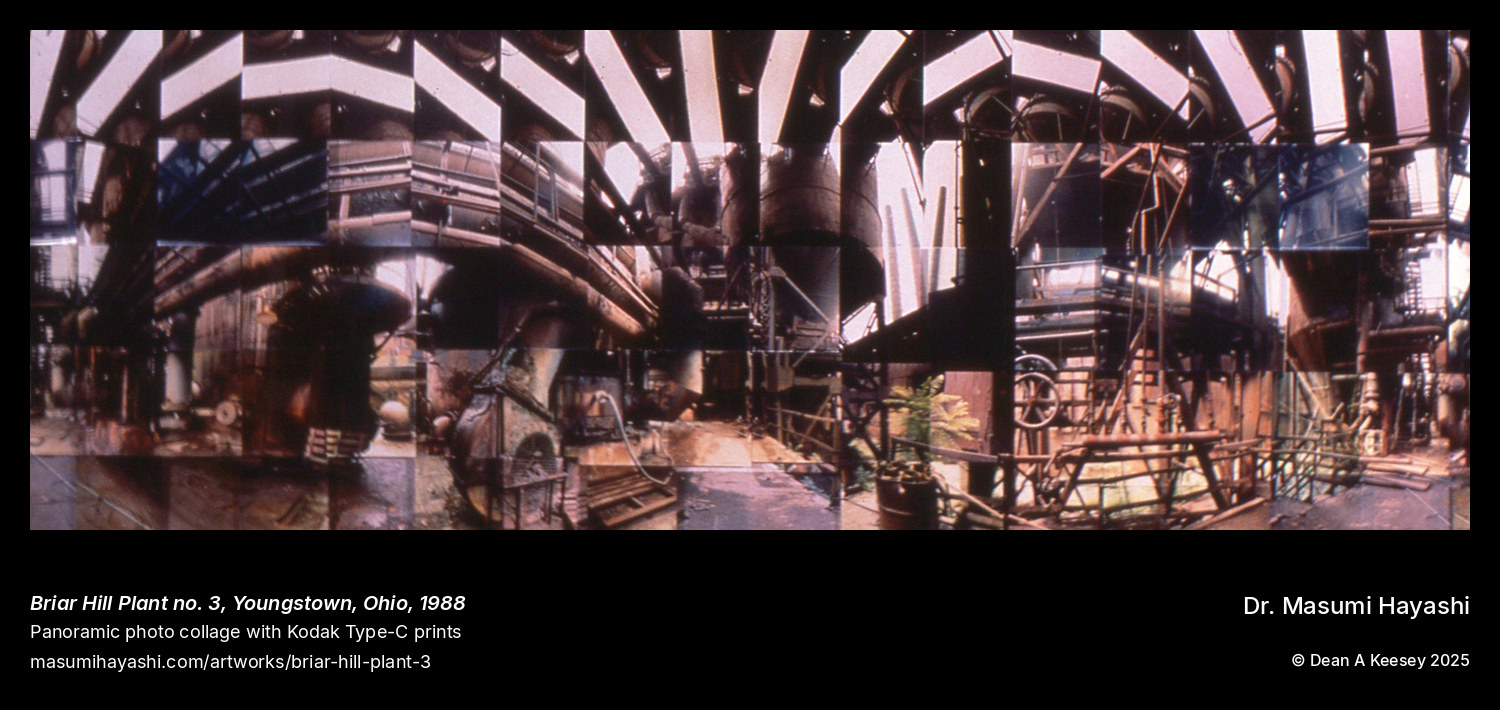
Briar Hill Plant no. 3, Youngstown, Ohio
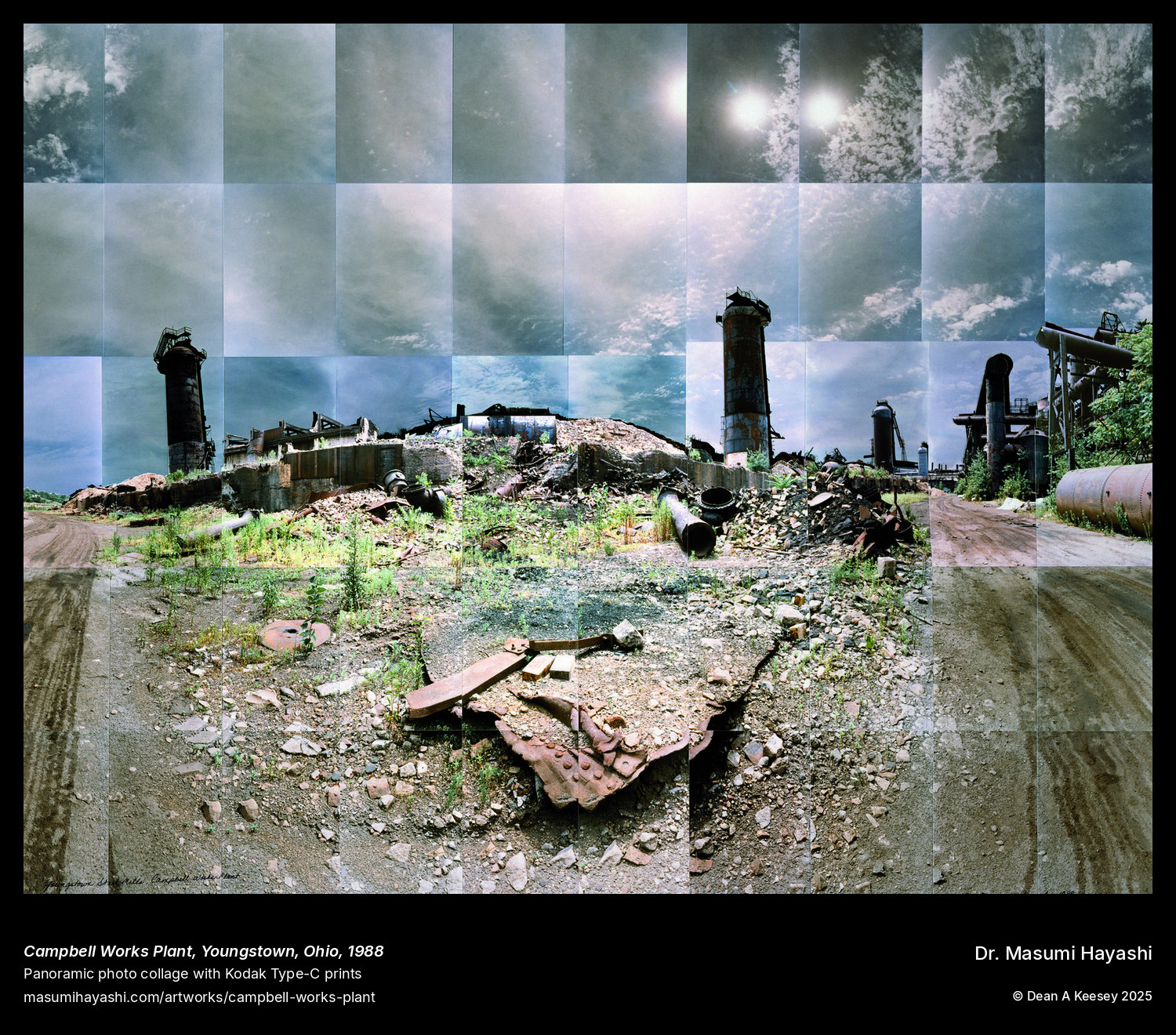
Campbell Works Plant, Youngstown, Ohio
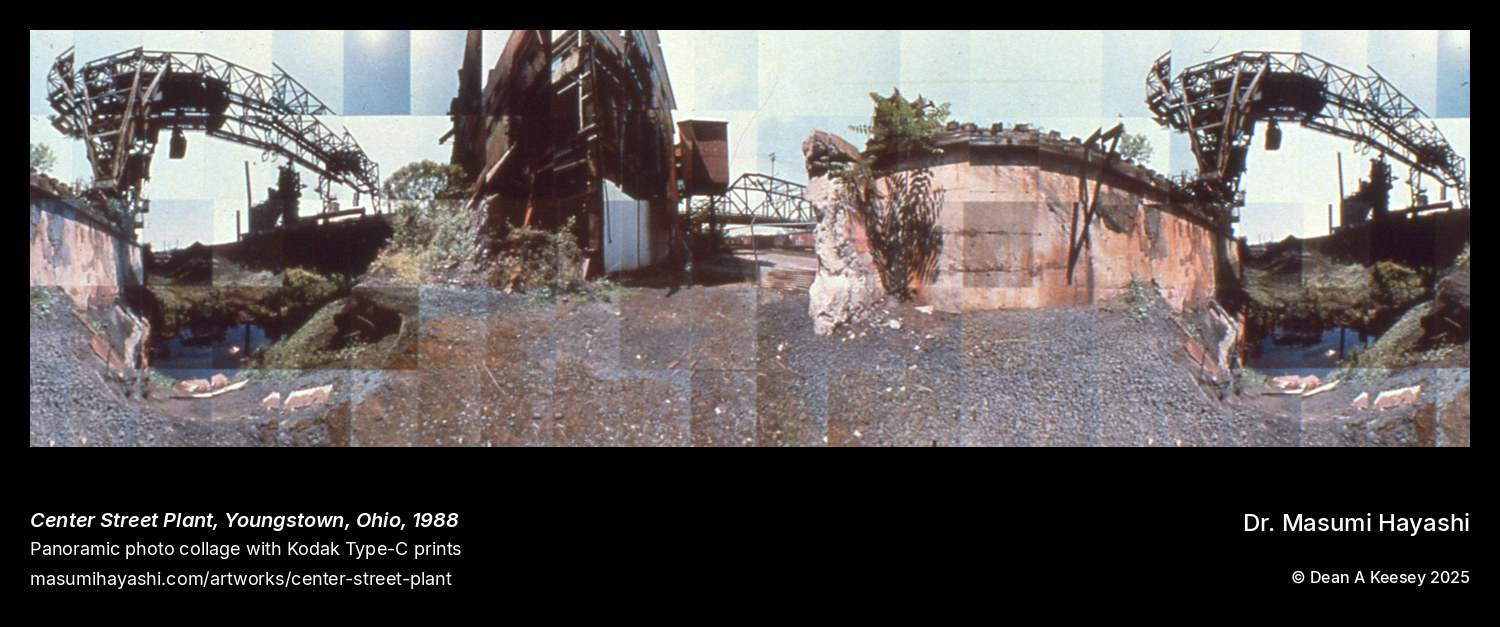
Center Street Plant, Youngstown, Ohio