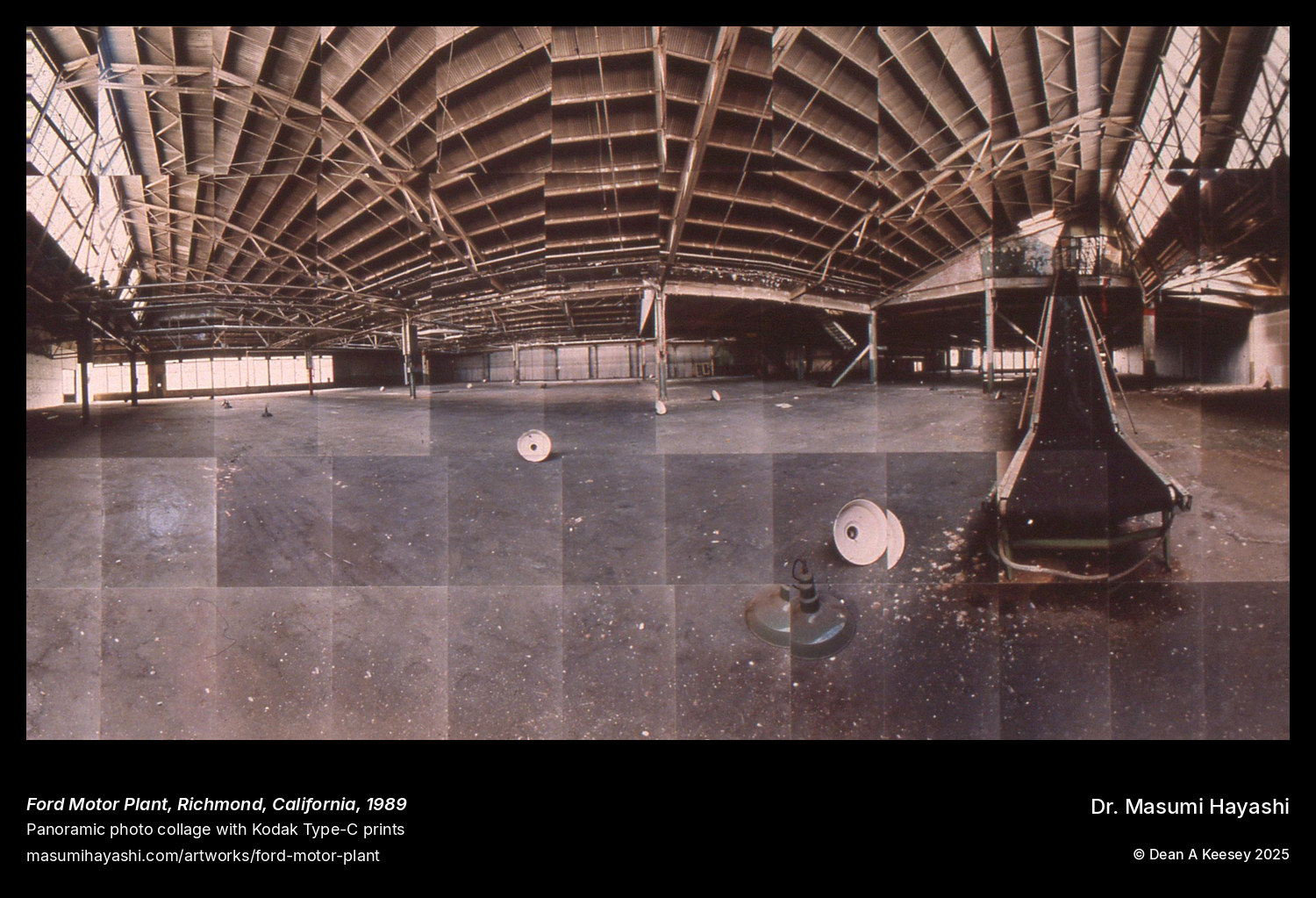
Ford Motor Plant
Richmond, CA, USA
Panoramic photo collage with Kodak Type-C prints
1989
26 x 43
This 26-by-43-inch horizontal panorama documents the Ford Motor Plant in Richmond, California—one of the automaker’s West Coast assembly facilities that represented industrial expansion beyond Detroit before manufacturing rationalization closed plants across America. The moderate dimensions suit documentation of a single industrial complex rather than a sprawling landscape.
Created in 1989, the work represents a geographic expansion of Hayashi’s post-industrial documentation beyond Cleveland’s Rust Belt to California’s parallel experience of manufacturing decline. The Richmond plant, built during Ford’s mid-century expansion, embodied the same industrial logic that had shaped Cleveland—centralized mass production serving regional markets—and faced the same pressures as corporate restructuring transformed American manufacturing.
The Ford plant’s location in Richmond placed it within the Bay Area’s complex industrial geography: a working-class city dominated by heavy industry, including the nearby Kaiser Shipyards that had produced World War II vessels. The automobile plant represented peacetime manufacturing that succeeded wartime production, only to face its own obsolescence as the industry contracted.
The horizontal format captures the plant’s linear industrial architecture—the assembly line logic made manifest in long, low buildings designed for efficient production rather than aesthetic effect. The photo collage technique fragments this utilitarian geometry, revealing the formal qualities of structures built purely for function.
Richmond’s industrial landscape has continued transforming since Hayashi’s documentation, the waterfront now hosting a mix of remaining industry, brownfield redevelopment, and the Kaiser Shipyard National Memorial. This panorama preserves the Ford plant during its operational twilight, documenting California’s participation in America’s post-industrial transition.
More from Post-Industrial Landscapes
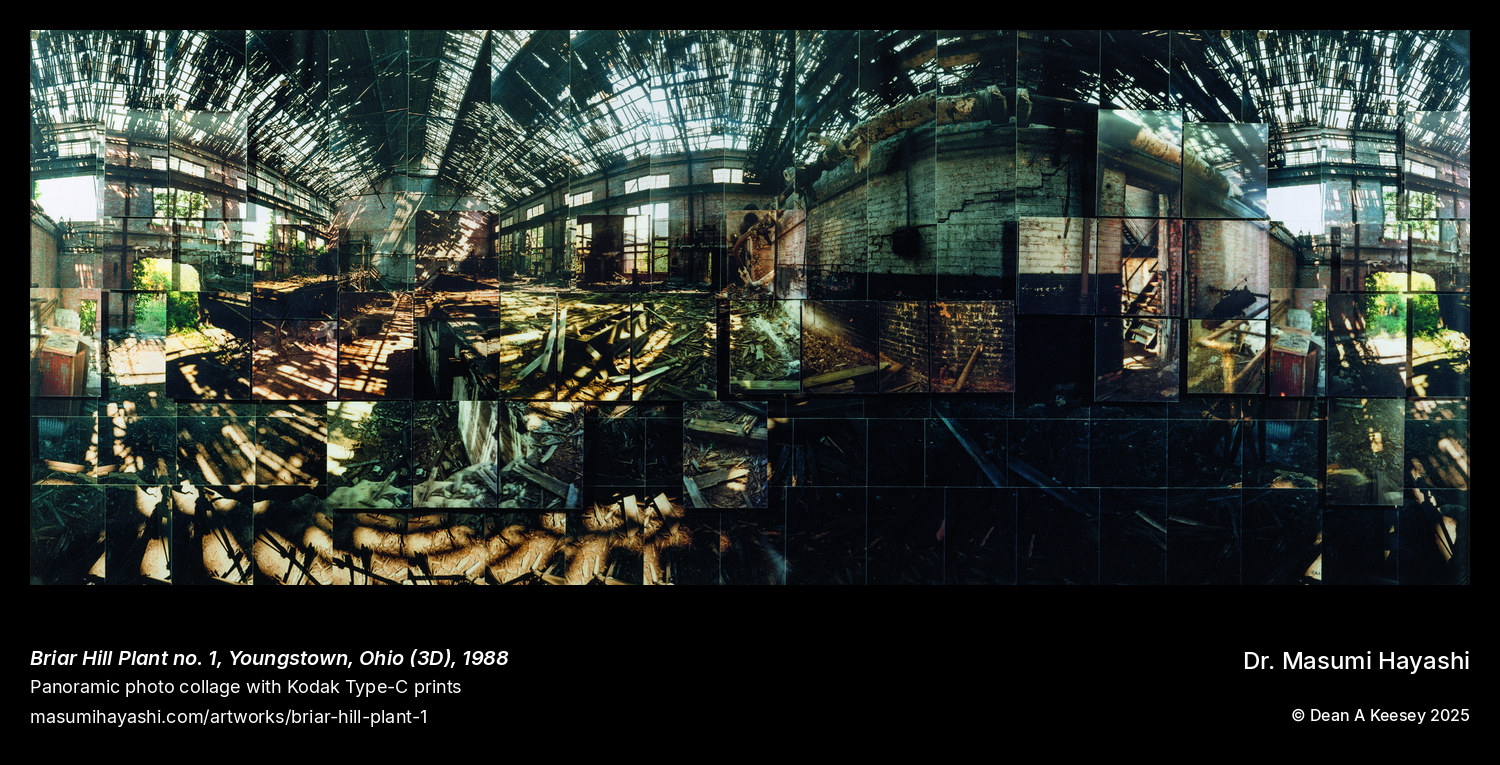
Briar Hill Plant no. 1, Youngstown, Ohio (3D)
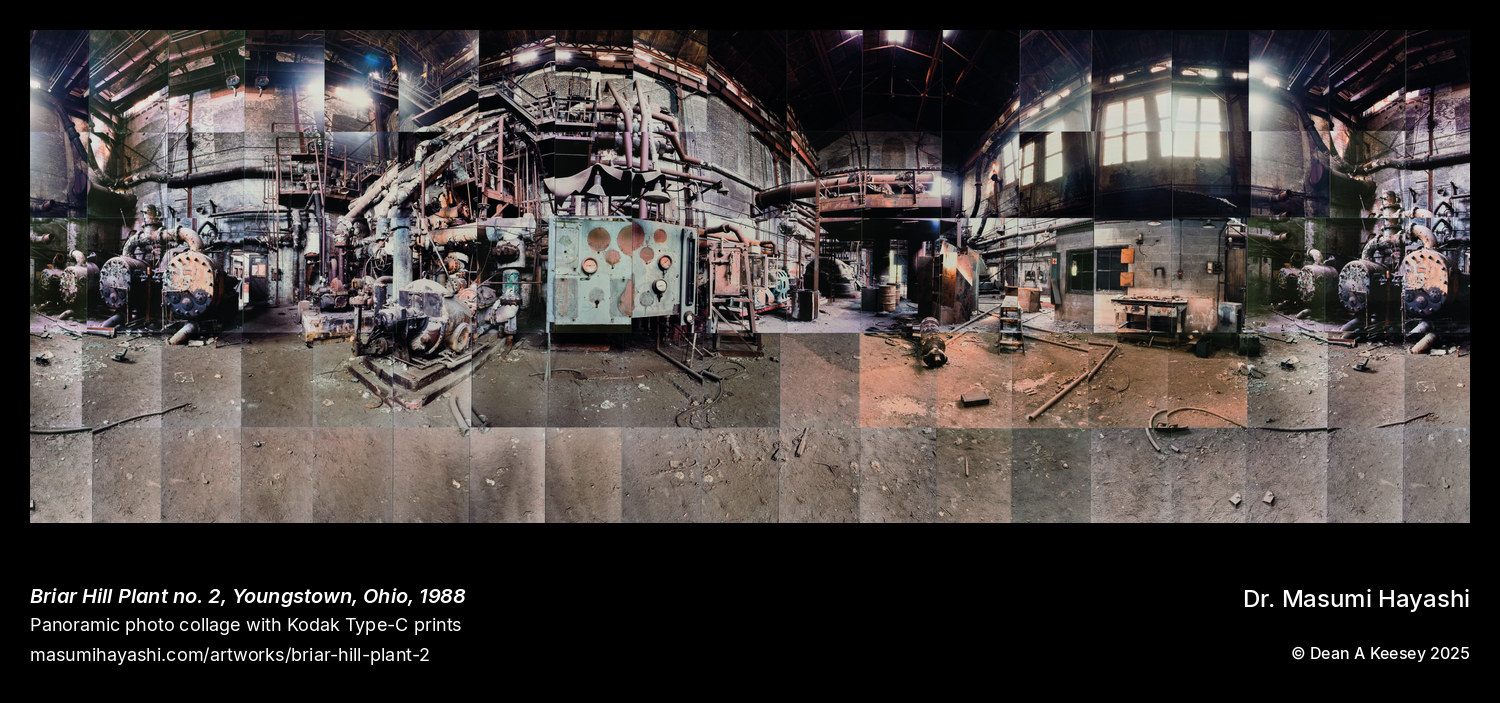
Briar Hill Plant no. 2, Youngstown, Ohio
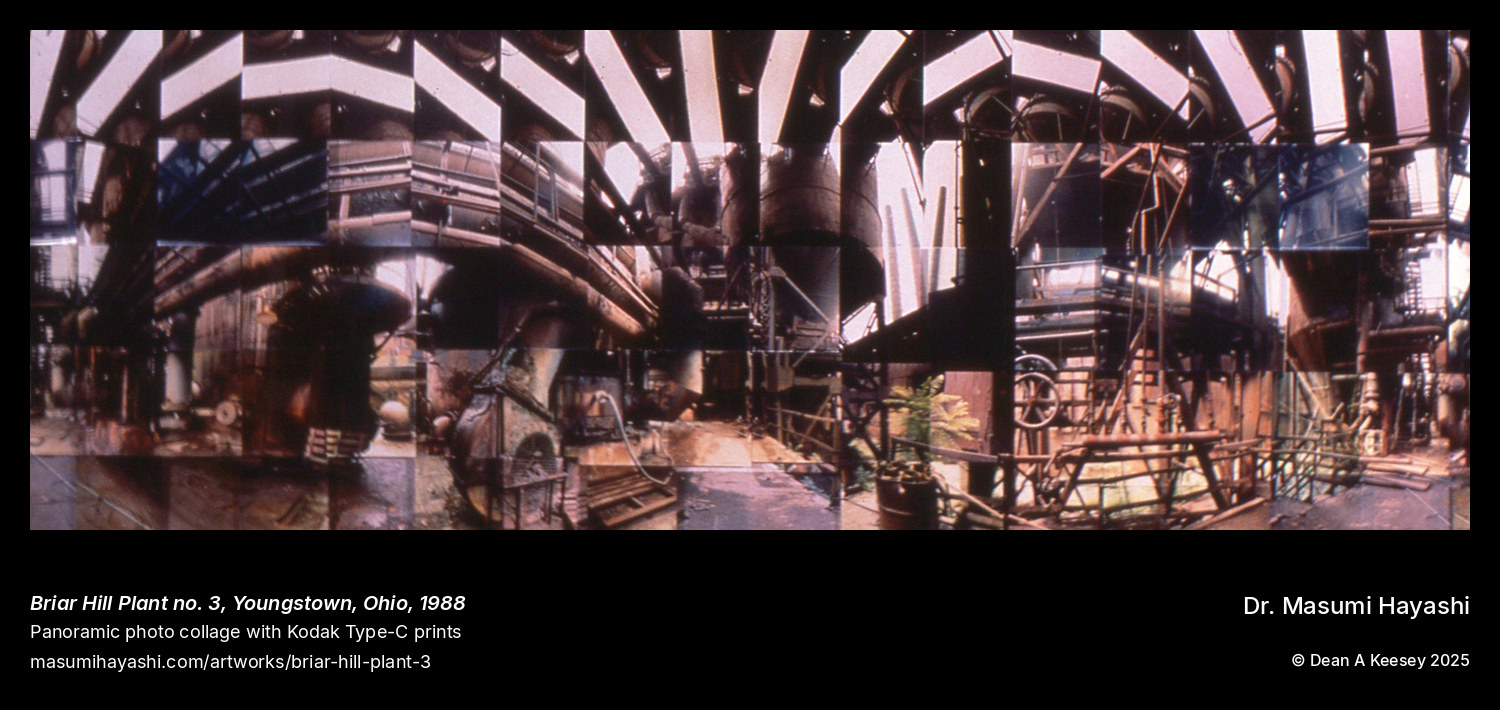
Briar Hill Plant no. 3, Youngstown, Ohio
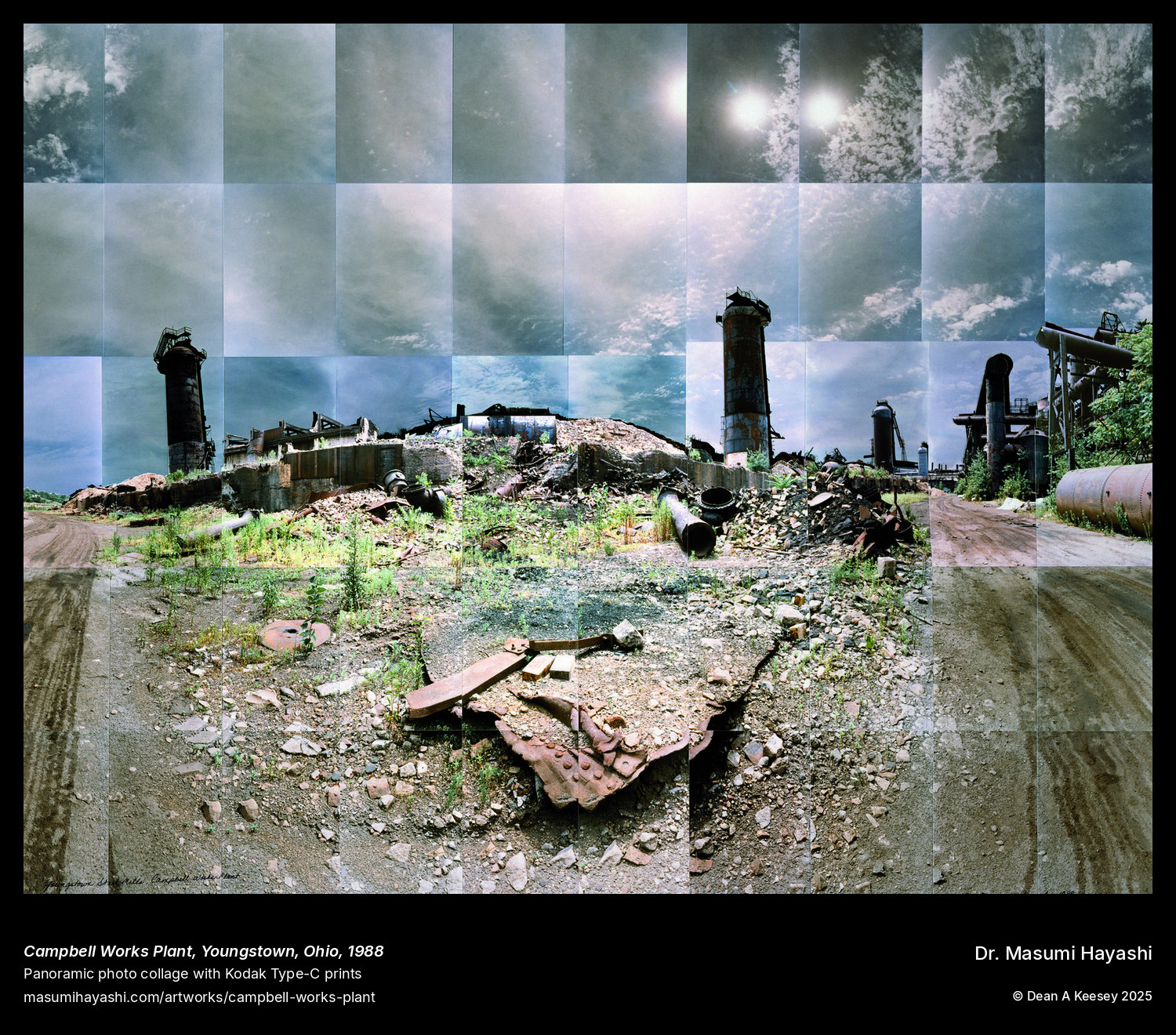
Campbell Works Plant, Youngstown, Ohio
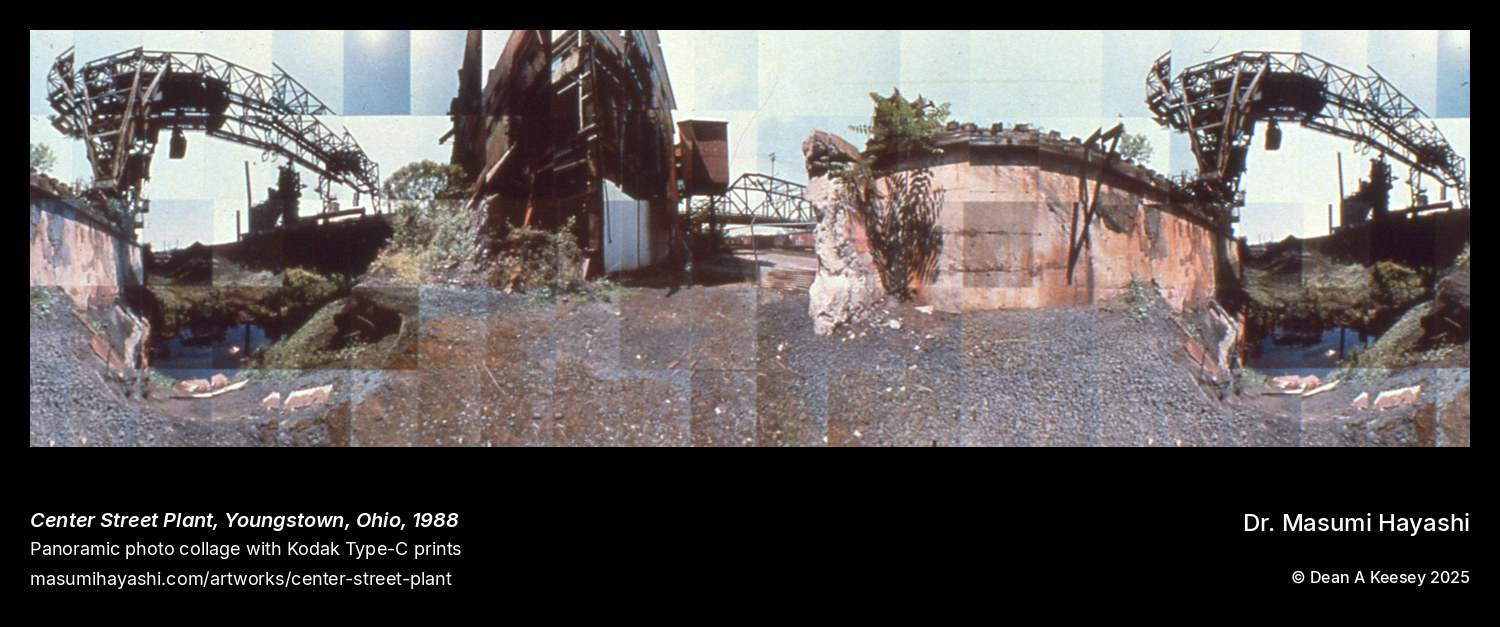
Center Street Plant, Youngstown, Ohio