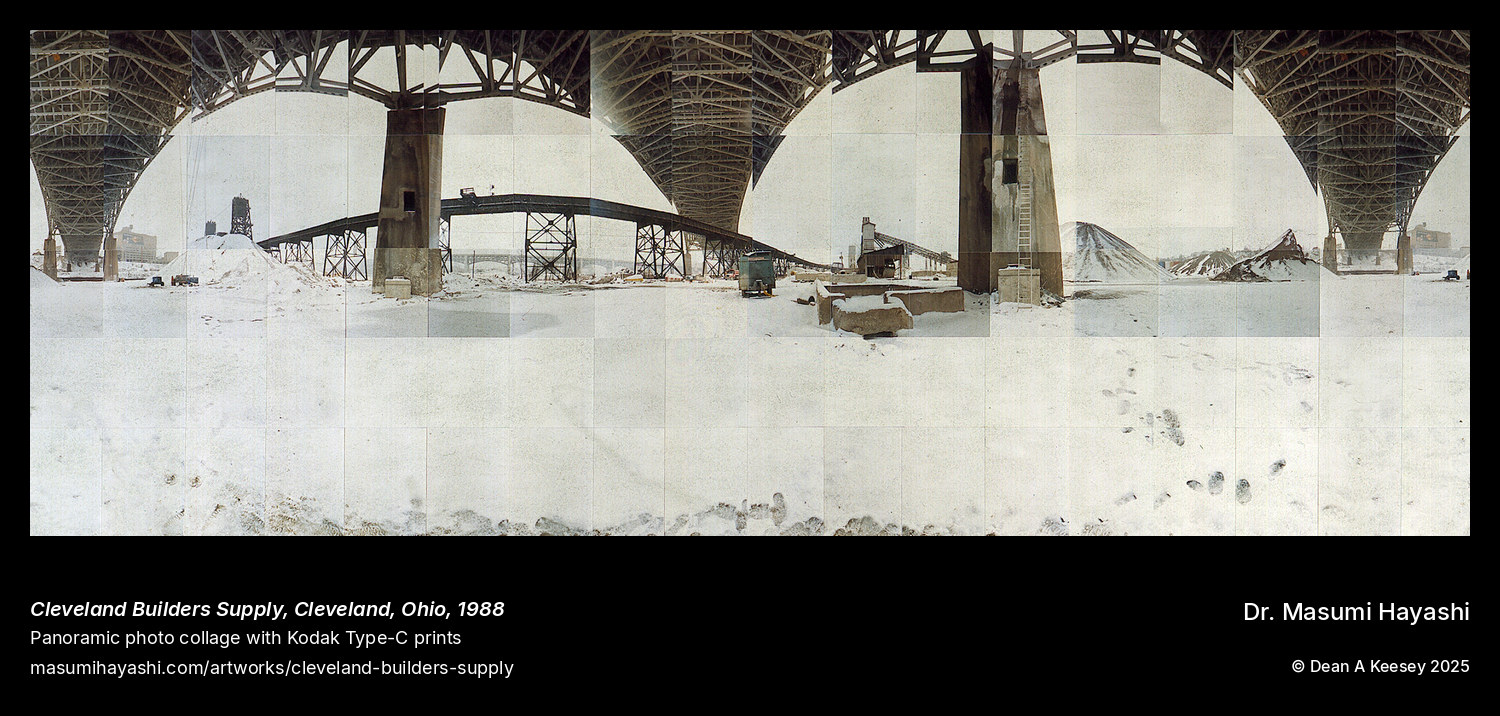
Cleveland Builder's Supply, Cleveland, Ohio
Cleveland, OH, USA
Panoramic Photo Collage
1988
27 x 71
Cleveland Builder’s Supply documents the commercial infrastructure that supported Cleveland’s construction industry—not the dramatic steel mills or monumental power houses, but the building materials suppliers whose warehouses, lumber yards, and loading docks facilitated the city’s physical growth throughout the twentieth century.
These businesses occupied substantial sites: warehouses storing inventory for construction trades, lumber yards staging materials under covered sheds, loading docks receiving deliveries and dispatching orders to contractors. The architecture expressed industrial pragmatism—corrugated metal siding, concrete block walls, gravel yards—every design choice prioritizing functionality over aesthetics. When these businesses closed, their utilitarian facilities remained distinctive: large boxy structures with loading docks and expansive yards, clearly industrial but not manufacturing plants.
The 1988 documentation captures Cleveland’s transitional moment. The acute deindustrialization crisis of the early-to-mid 1980s had stabilized. Mayor Voinovich promoted the “Comeback City” narrative. Downtown saw investment. Yet this recovery remained fragile and unevenly distributed. Building materials suppliers depended on robust construction activity—new factories, warehouses, commercial buildings, residential development—but Cleveland’s population had dropped from 914,000 in 1950 to 574,000 in 1990. Demand for construction materials declined accordingly.
By photographing commercial and light-industrial infrastructure alongside monumental steel mills, Hayashi created more complete historical record than selectively documenting only the most visually dramatic ruins. Power houses closed because steel mills shut down—primary industry collapse. Building materials suppliers closed because construction declined—cascading secondary effects. Together, these works document both direct industrial job losses and the rippling impacts through supporting commercial sectors.
Cleveland Builder’s Supply likely no longer exists in its 1988 form—demolished, repurposed, or radically altered over subsequent decades. Hayashi’s documentation may represent the only comprehensive photographic record of this facility.
More from Post-Industrial Landscapes
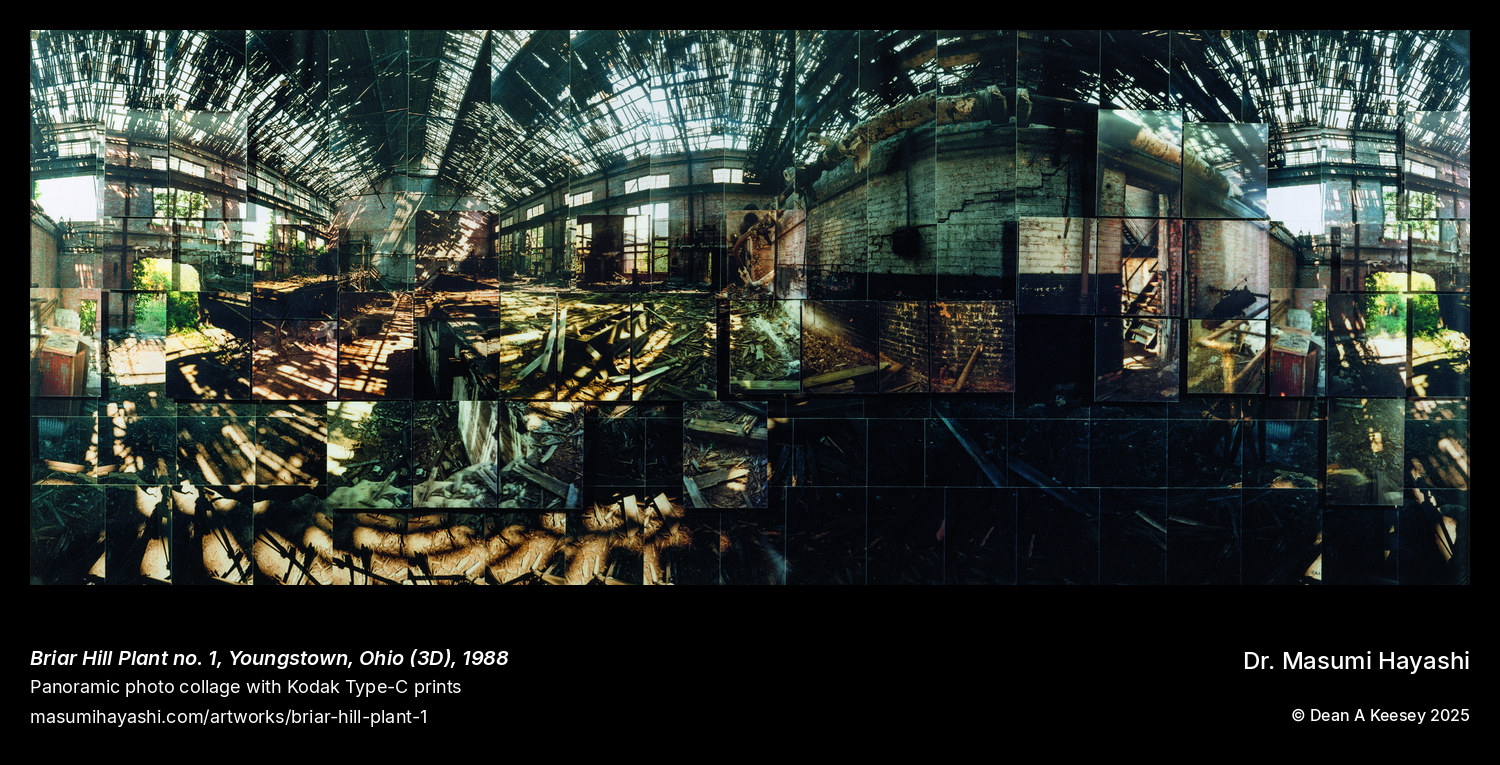
Briar Hill Plant no. 1, Youngstown, Ohio (3D)
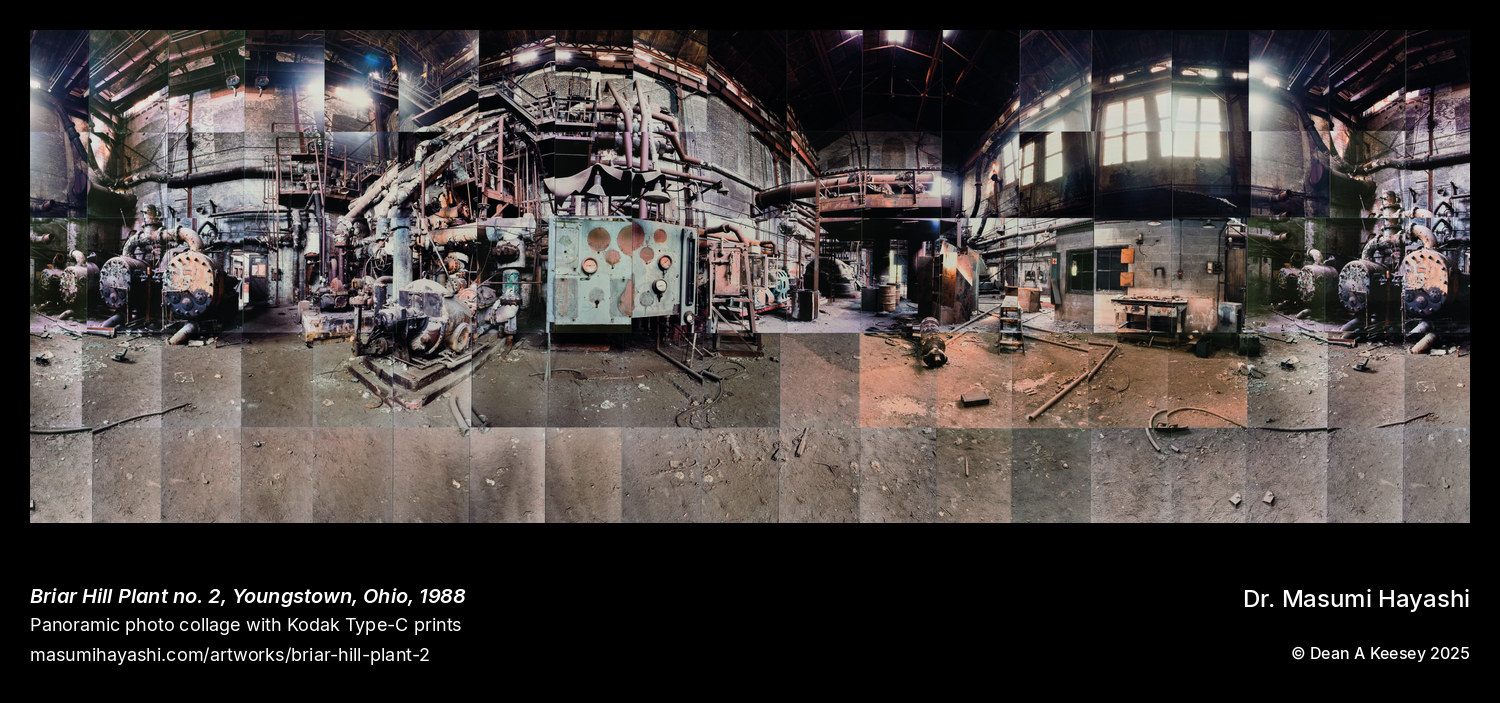
Briar Hill Plant no. 2, Youngstown, Ohio
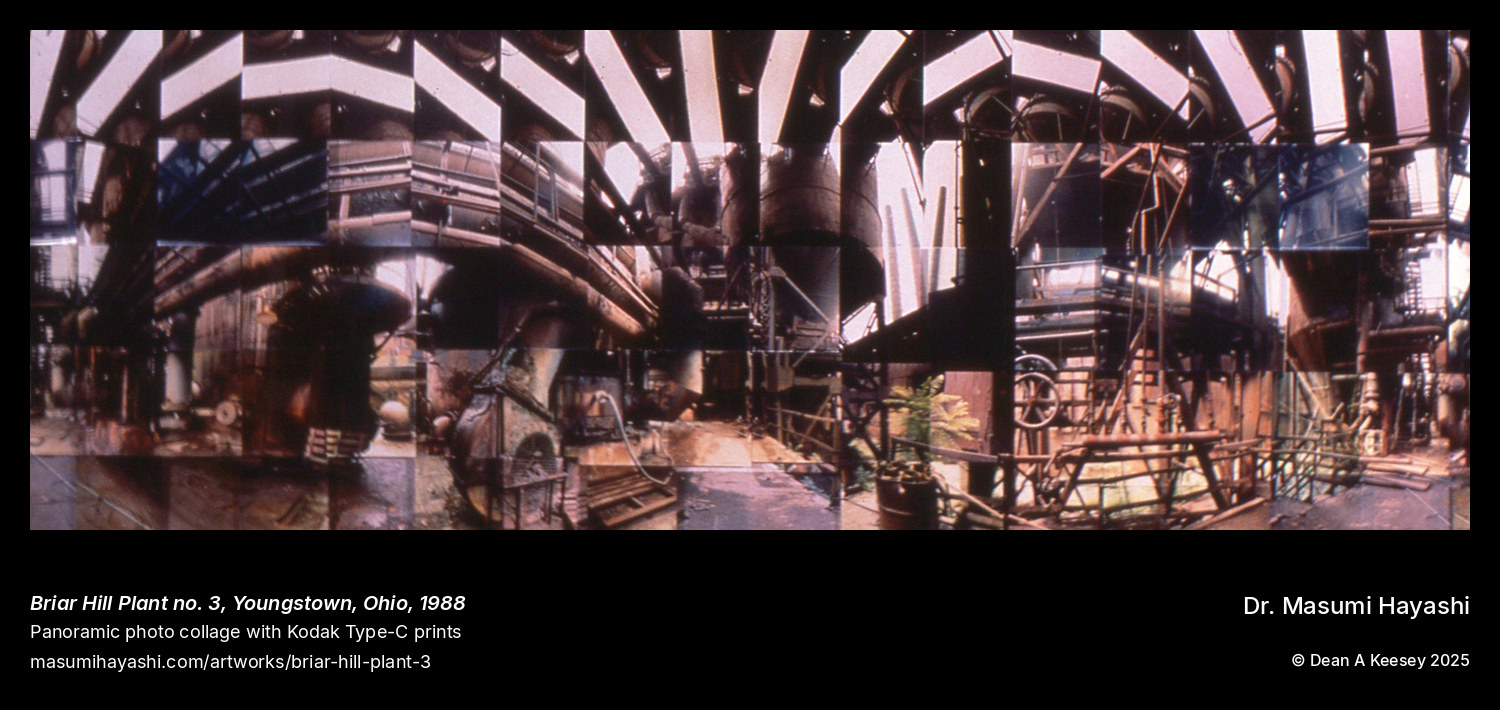
Briar Hill Plant no. 3, Youngstown, Ohio
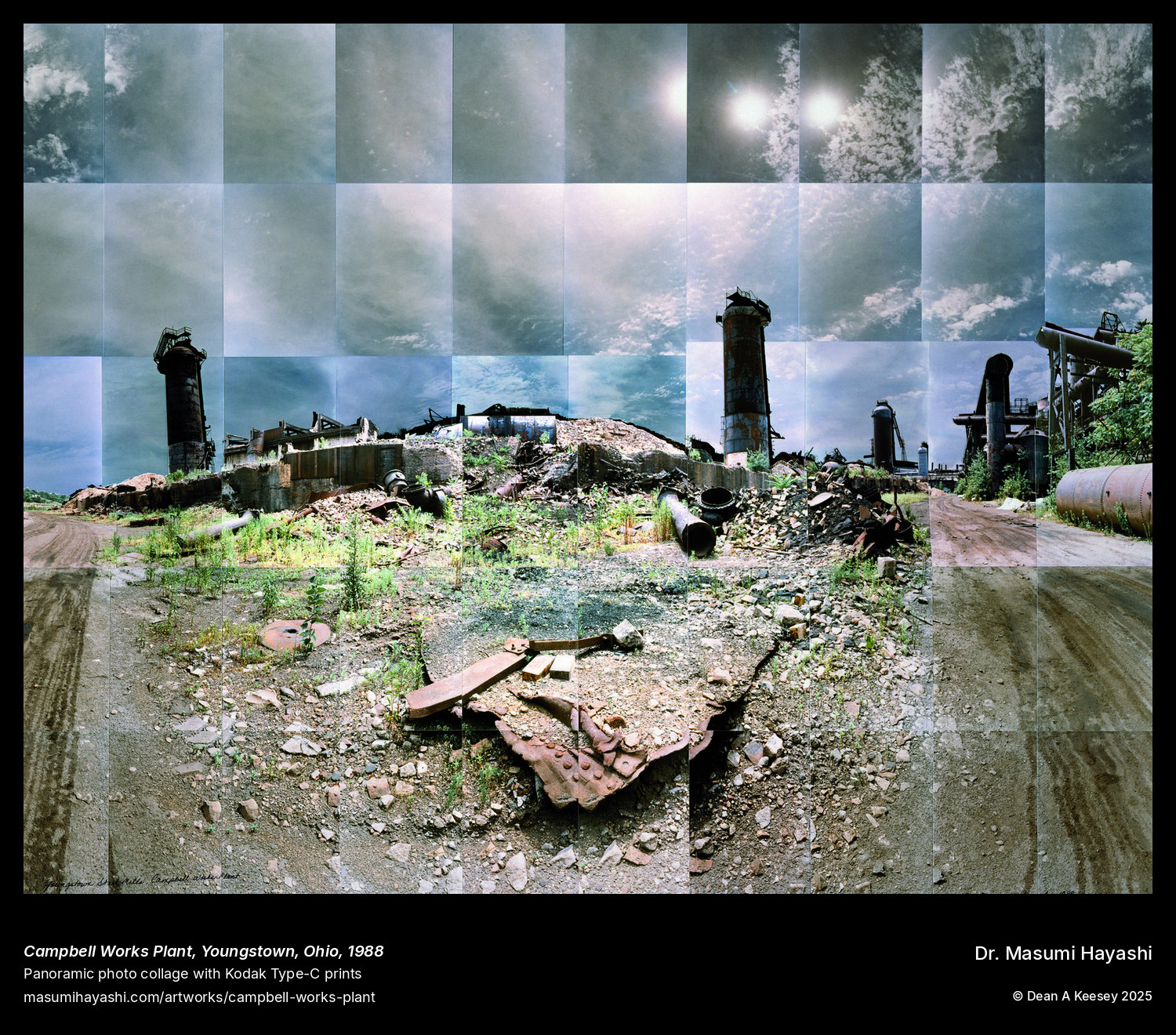
Campbell Works Plant, Youngstown, Ohio
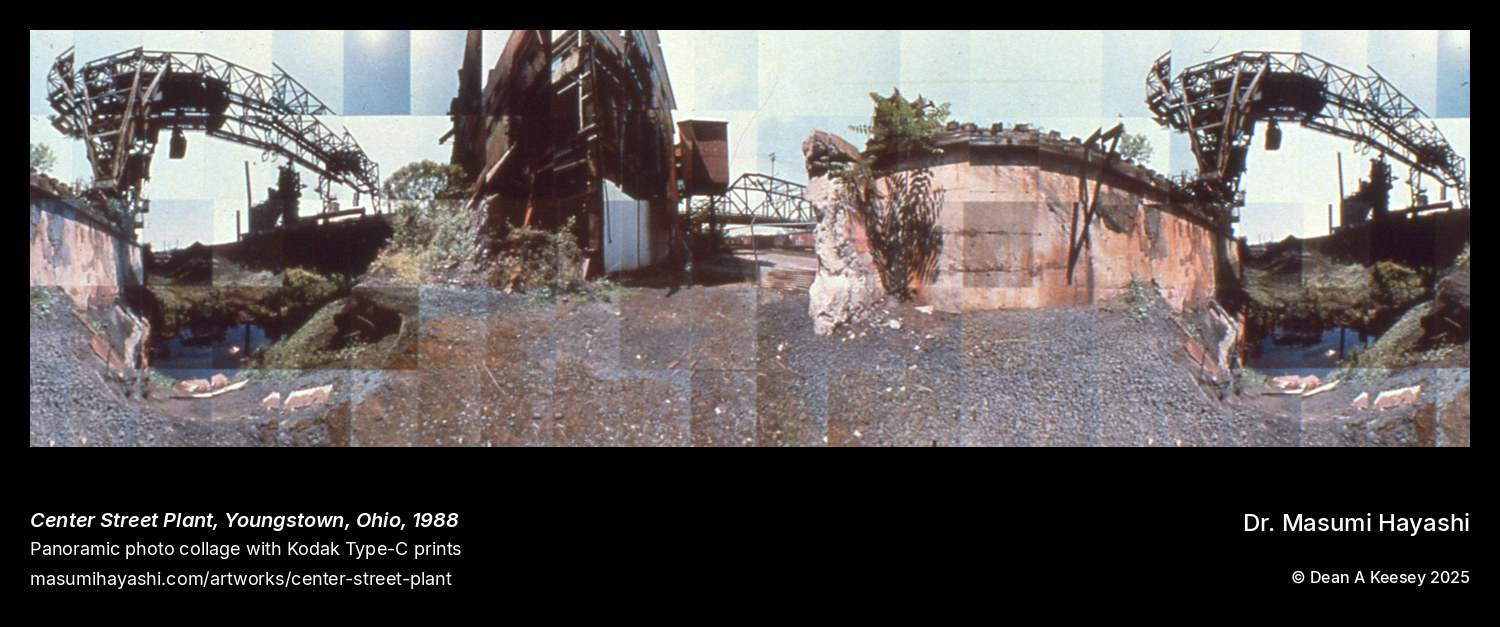
Center Street Plant, Youngstown, Ohio