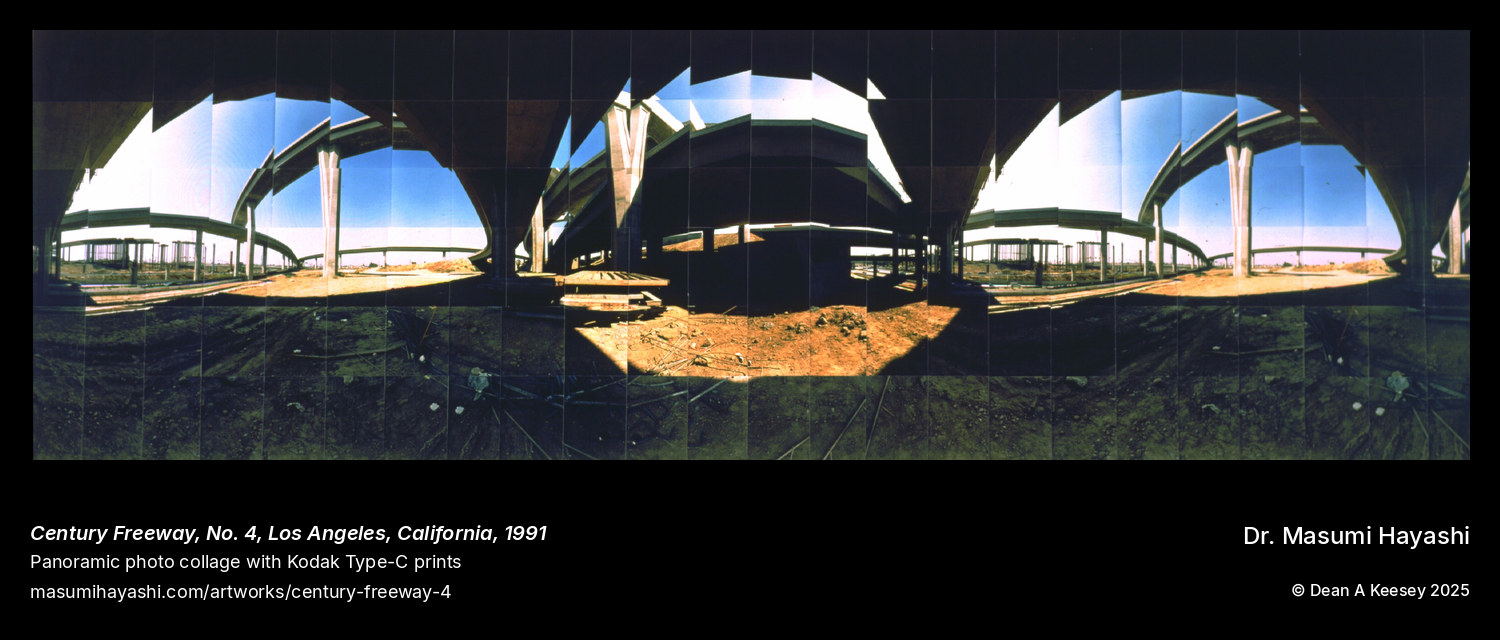
Century Freeway, No. 4, Los Angeles, California
Los Angeles (I-105), CA, USA
Panoramic Photo Collage
1991
28 x 79
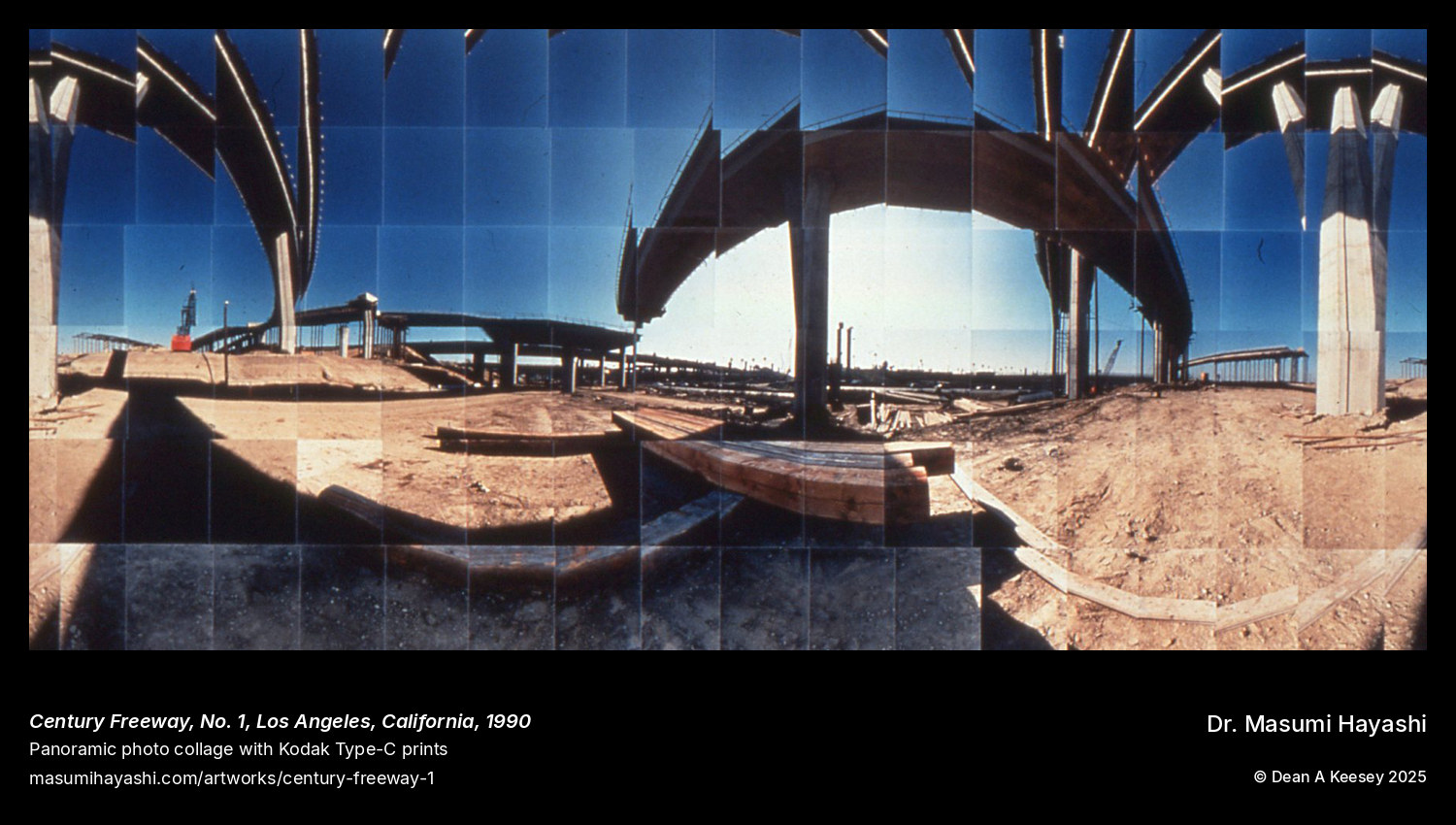
The fourth work in Hayashi’s seven-location Century Freeway documentation occupies the series midpoint—neither dramatic opening statement nor culminating synthesis, but sustained systematic coverage demonstrating documentary commitment regardless of each location’s individual visual drama.
Middle-series works face specific challenges. By the fourth location, danger exists of documentary repetition: elevated freeway structures similar across the corridor, demolished neighborhoods creating consistent landscapes of absence, construction zones sharing common characteristics. Success requires finding distinctive elements at each location rather than formulaic compositions. Yet comprehensive documentation demands systematic coverage—prioritizing evidentiary completeness over entertainment value.
The 28×79-inch format balances competing needs. The 28-inch height provides sufficient vertical information to capture elevated structures towering above ground level, the relationship between street-level displacement and overhead infrastructure. The 79-inch width—nearly six and a half feet—creates significant lateral sweep, documenting freeway corridor’s extent across multiple intersection points and neighborhood sections within a single composition.
Century Freeway became canonical case study in environmental justice scholarship. Minority neighborhoods disproportionately selected for freeway routing. White suburbs receiving freeways routed around communities rather than through them. Benefits accruing to suburban commuters, costs imposed on urban minorities. Transportation planners’ “objective” routing decisions encoding racial and class biases.
Hayashi’s documentation implicitly engages these environmental justice critiques. Photographing Century Freeway inherently documents structural racism embedded in urban infrastructure planning—the physical manifestation of policy decisions that systematically devalued minority communities while serving suburban convenience.
More from Post-Industrial Landscapes
Briar Hill Plant no. 1, Youngstown, Ohio (3D)
Briar Hill Plant no. 2, Youngstown, Ohio
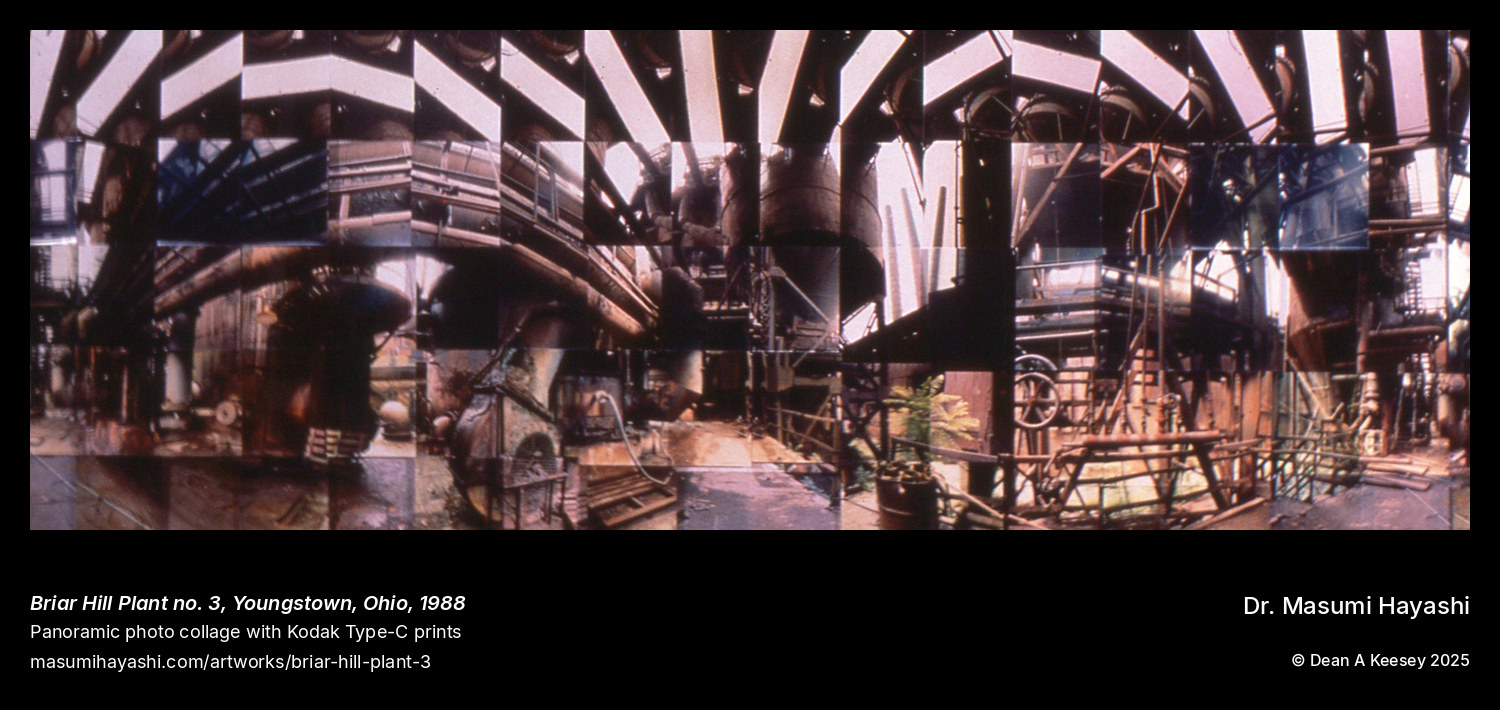
Briar Hill Plant no. 3, Youngstown, Ohio
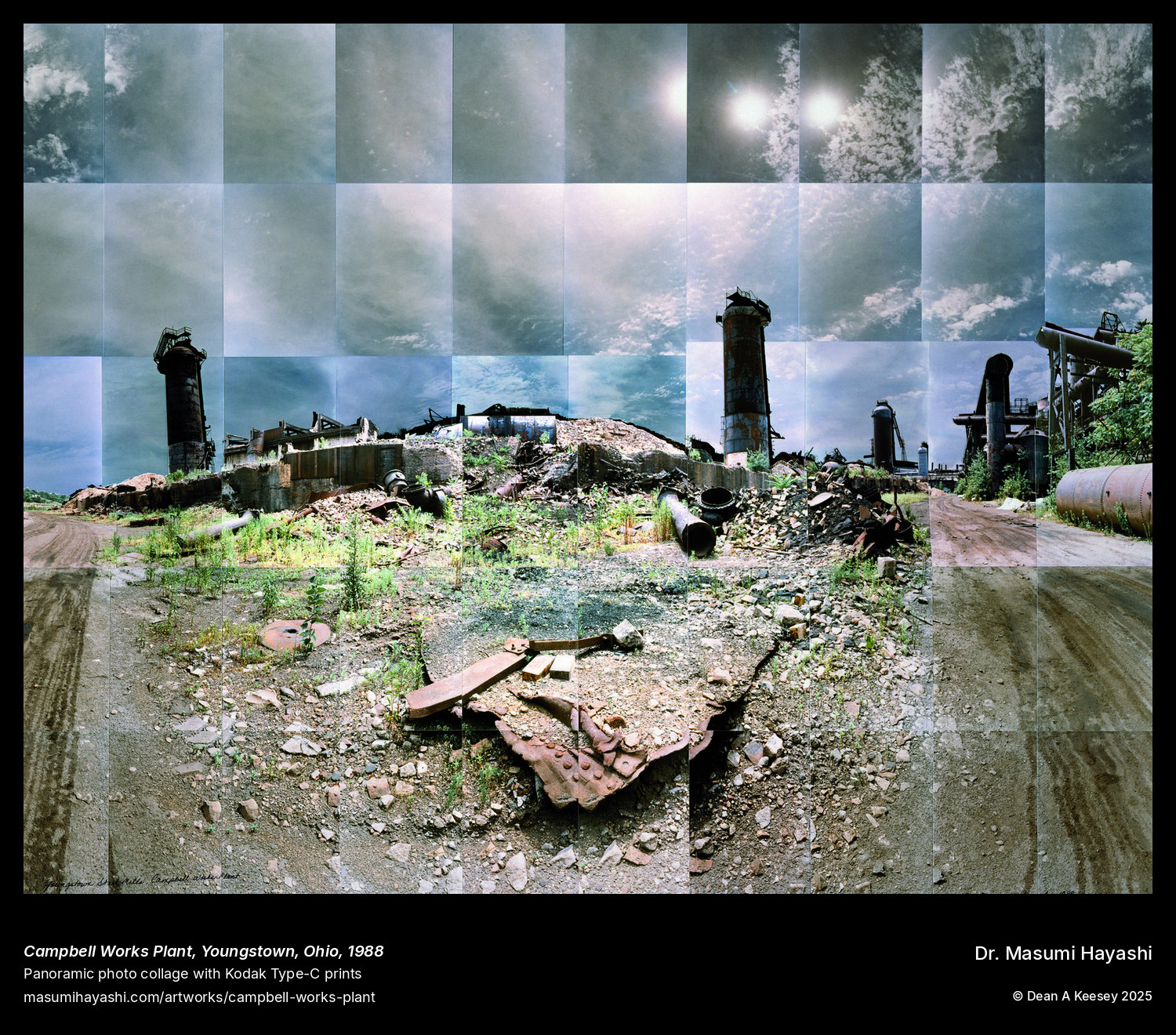
Campbell Works Plant, Youngstown, Ohio
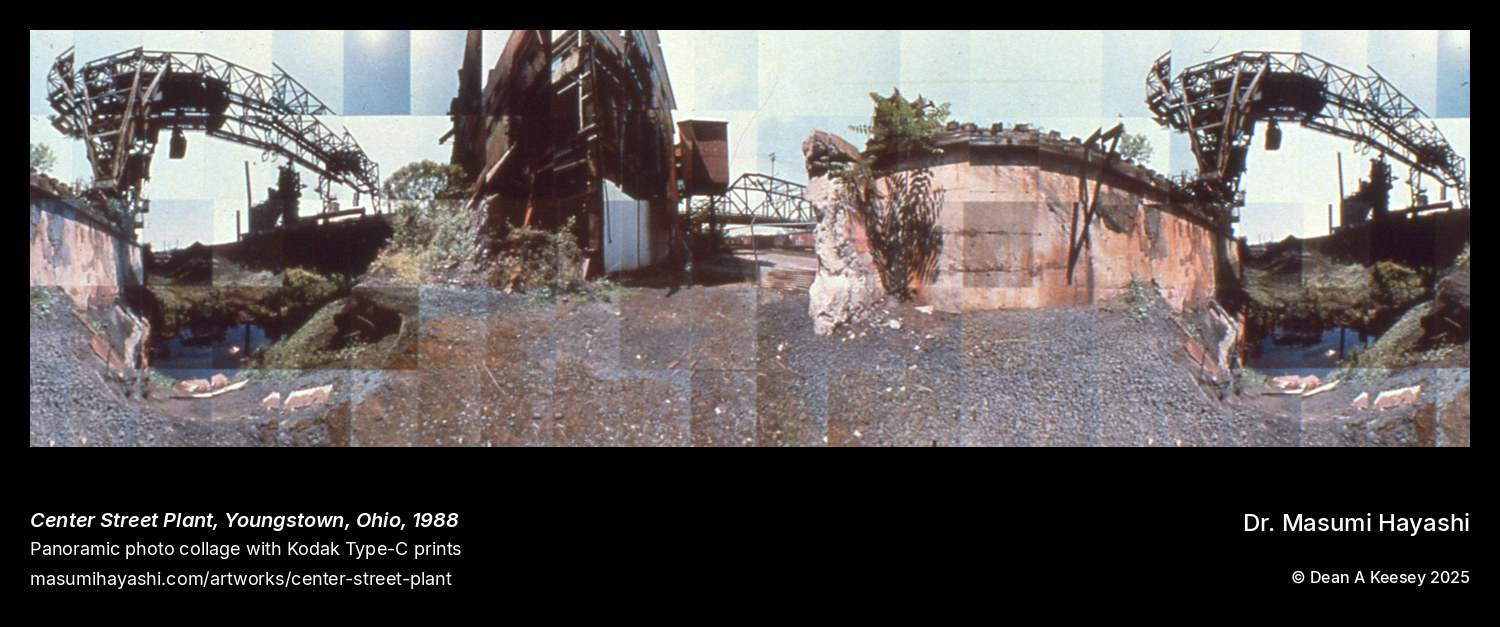
Center Street Plant, Youngstown, Ohio