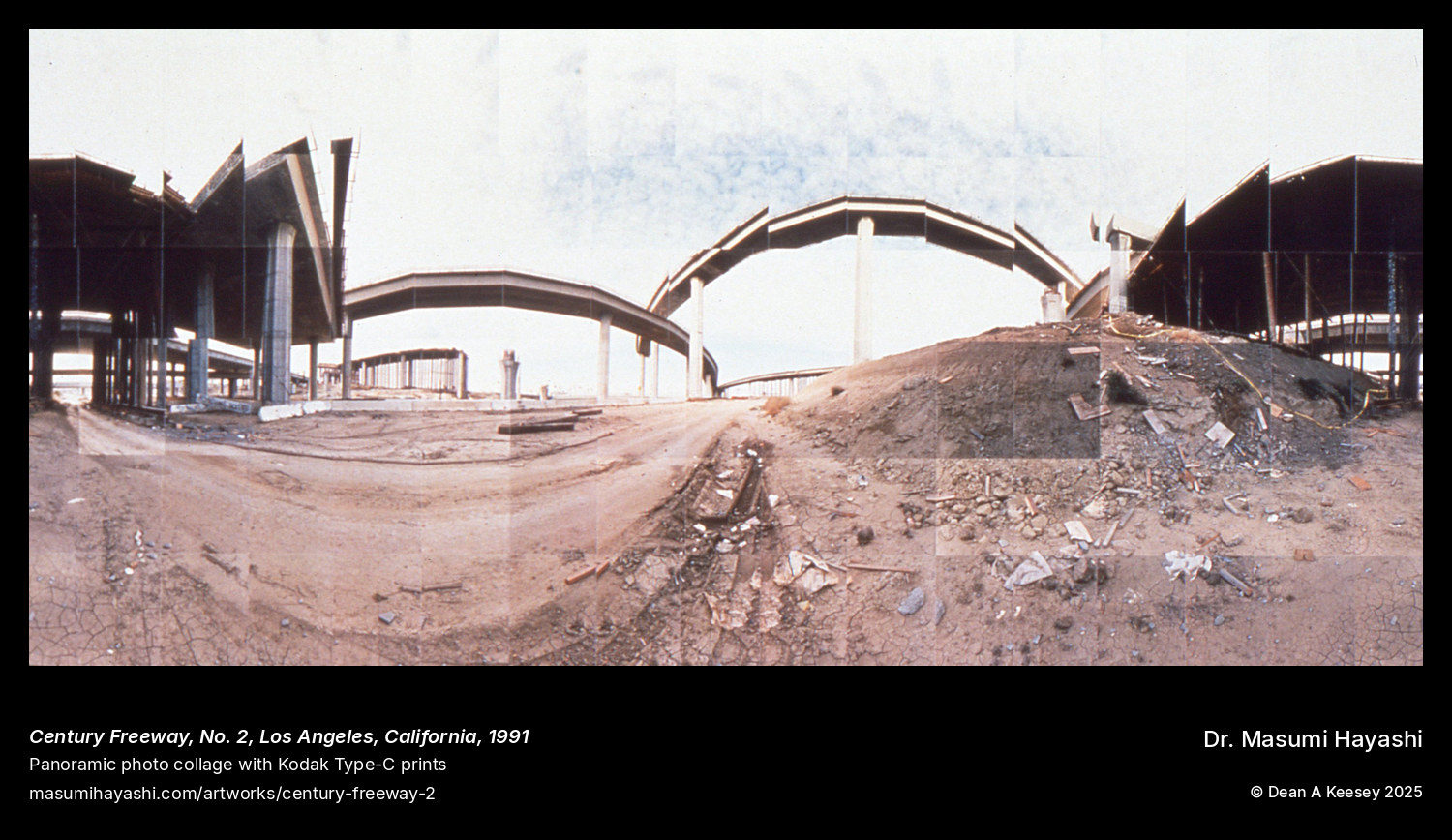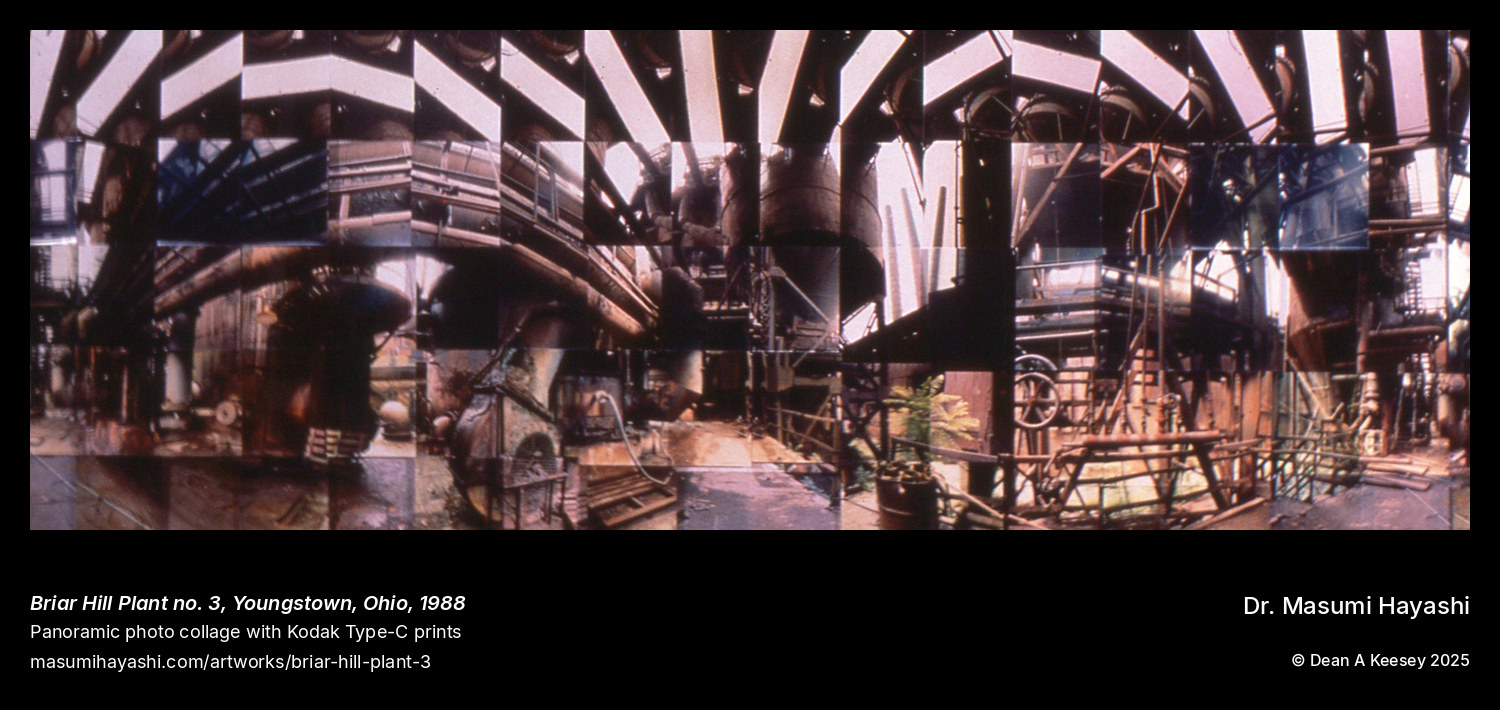
Briar Hill Plant no. 3, Youngstown, Ohio
Youngstown, OH, USA
Panoramic Photo Collage
1988
29 x 68
Briar Hill Plant no. 3 concludes Hayashi’s systematic three-work documentation of the Youngstown Sheet & Tube facility. The comprehensive visual record matters because the ruins she photographed in 1988 no longer exist—demolished for environmental remediation and redevelopment. These photographs preserve evidence of industrial infrastructure that shaped working-class lives and regional identity for generations before sudden obsolescence erased physical traces.
The work incorporates three-dimensional elements—rust samples, architectural fragments, machine parts, or paint chips preserving the facility’s material history. The technique extends documentation beyond optical recording to physical evidence. These aren’t merely images of Briar Hill but actual pieces of the facility creating direct material connections between viewers and the demolished site. The embedded artifacts authenticate the photographic testimony while serving as relics of lost industrial culture.
Briar Hill operated as integrated steel production facility: blast furnaces producing molten iron from ore, coke, and limestone; basic oxygen furnaces converting iron to steel; rolling mills processing steel into sheets and coils; supporting infrastructure including power plants, rail yards, and maintenance shops. The Mahoning River location provided water for industrial processes, rail access for raw materials and finished products, proximity to other Youngstown Sheet & Tube facilities enabling coordinated production across multiple sites.
When Hayashi documented these ruins, Briar Hill embodied Youngstown’s prolonged trauma beyond Black Monday’s immediate shock. Where Campbell Works experienced sudden closure creating instant crisis, Briar Hill endured slow death: restructuring efforts, worker buyout attempts, gradual departmental closures, false hopes followed by ultimate failure. The extended uncertainty tortured workers with years of job insecurity before final layoffs confirmed the industry’s complete regional collapse.
The facility’s workforce built careers, earned livelihoods, formed communities around steel production. Hayashi’s documentation preserves visual and material memory of that workplace for displaced workers and their families—evidence of industrial life existing now primarily in photographs and personal recollections. The images preserve something of what they lost when Youngstown transformed from Steel Valley to national symbol of deindustrialization’s human costs.
More from Post-Industrial Landscapes
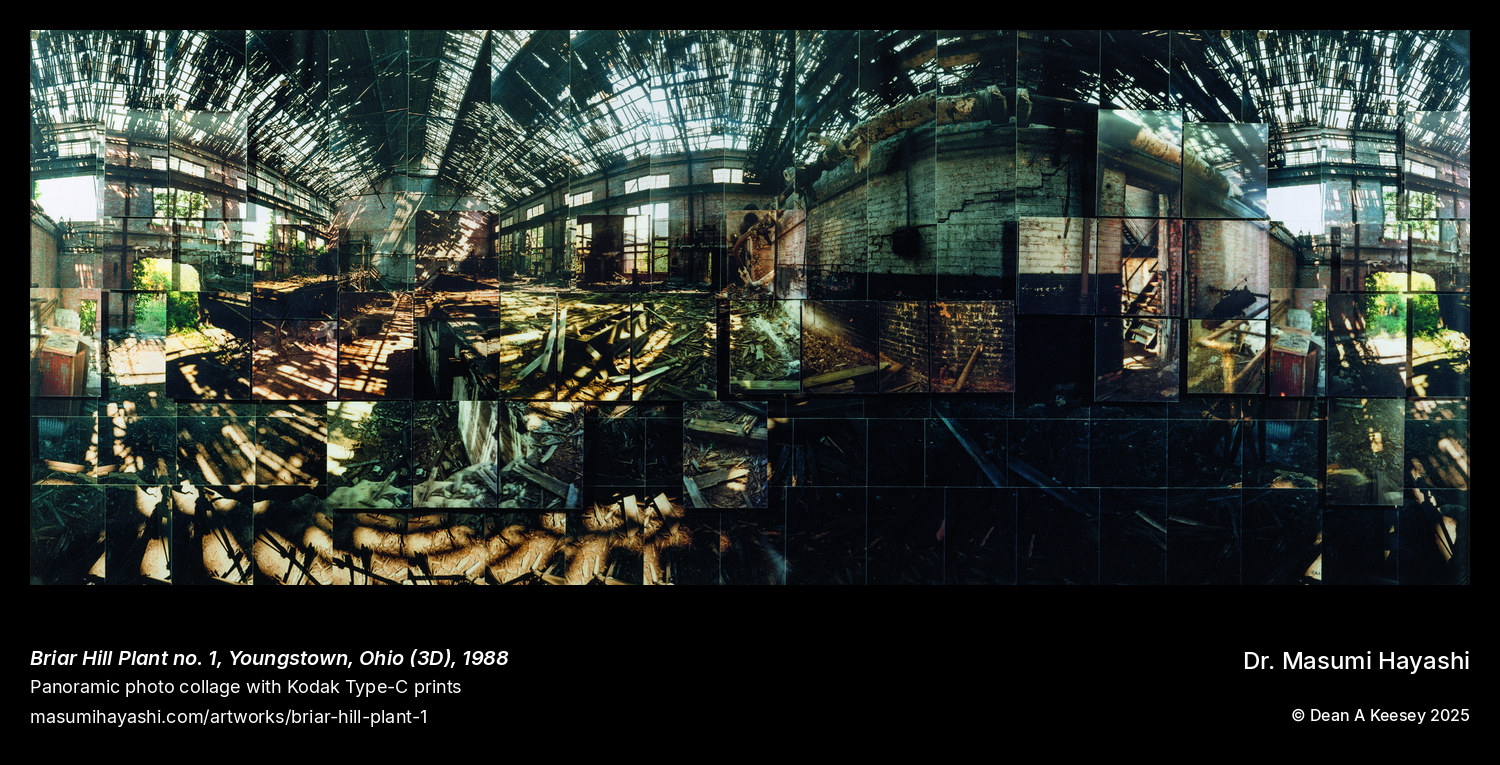
Briar Hill Plant no. 1, Youngstown, Ohio (3D)
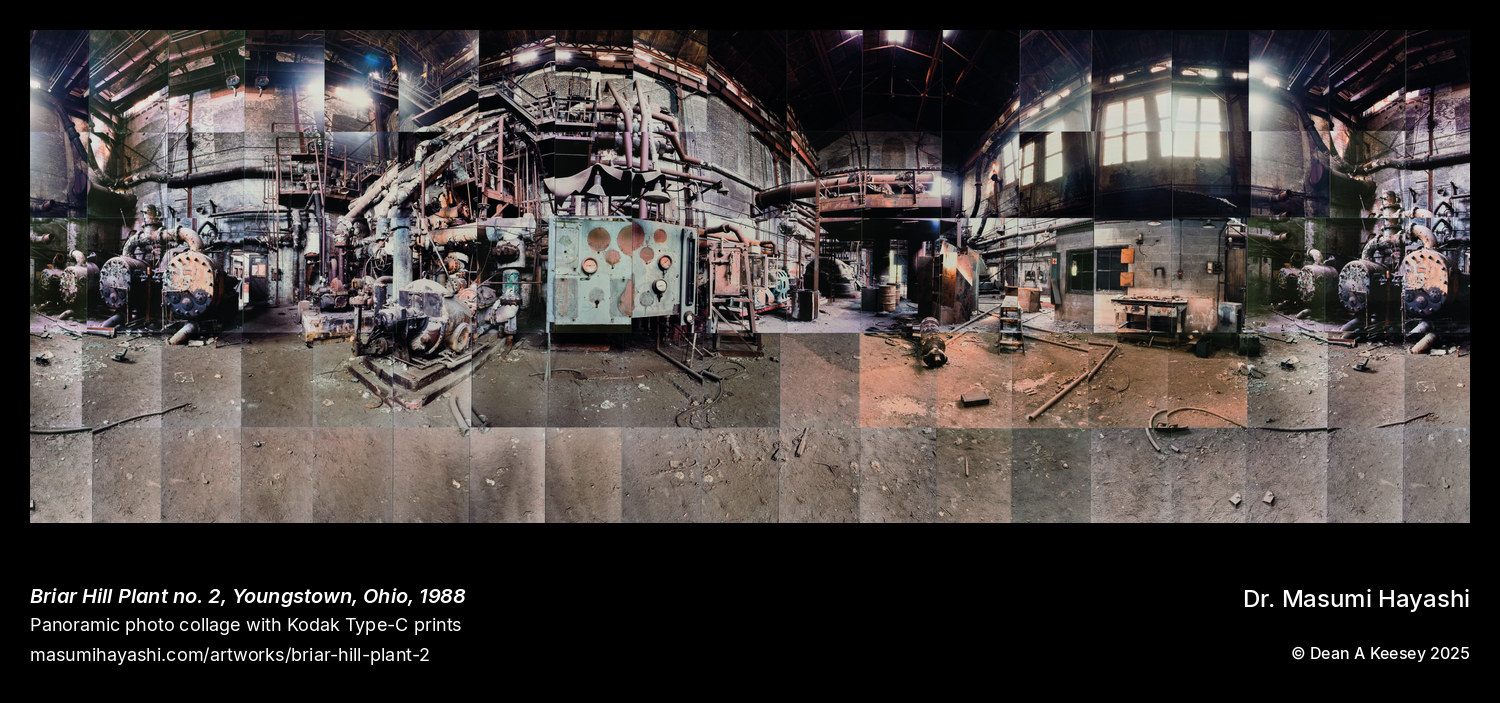
Briar Hill Plant no. 2, Youngstown, Ohio
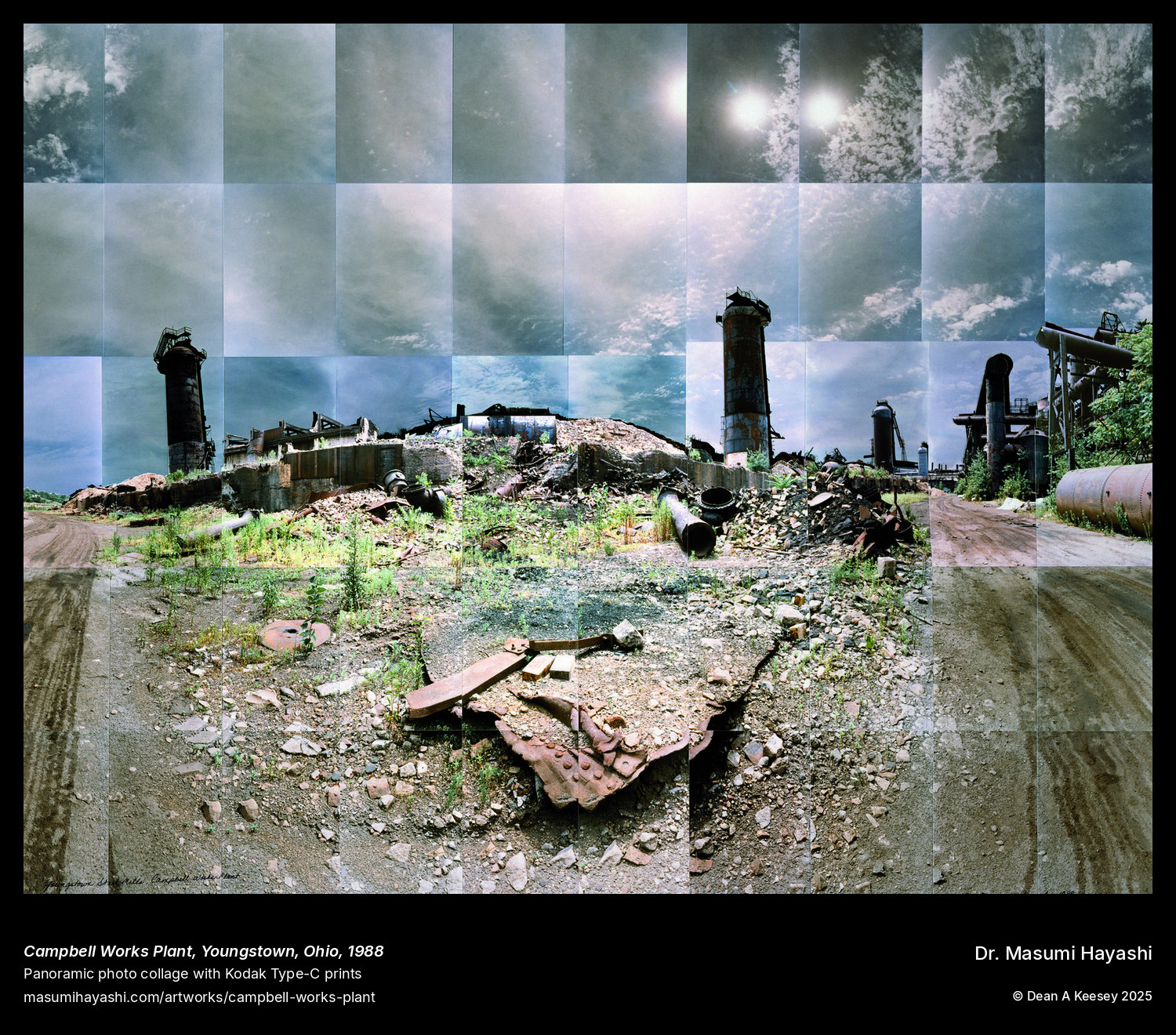
Campbell Works Plant, Youngstown, Ohio
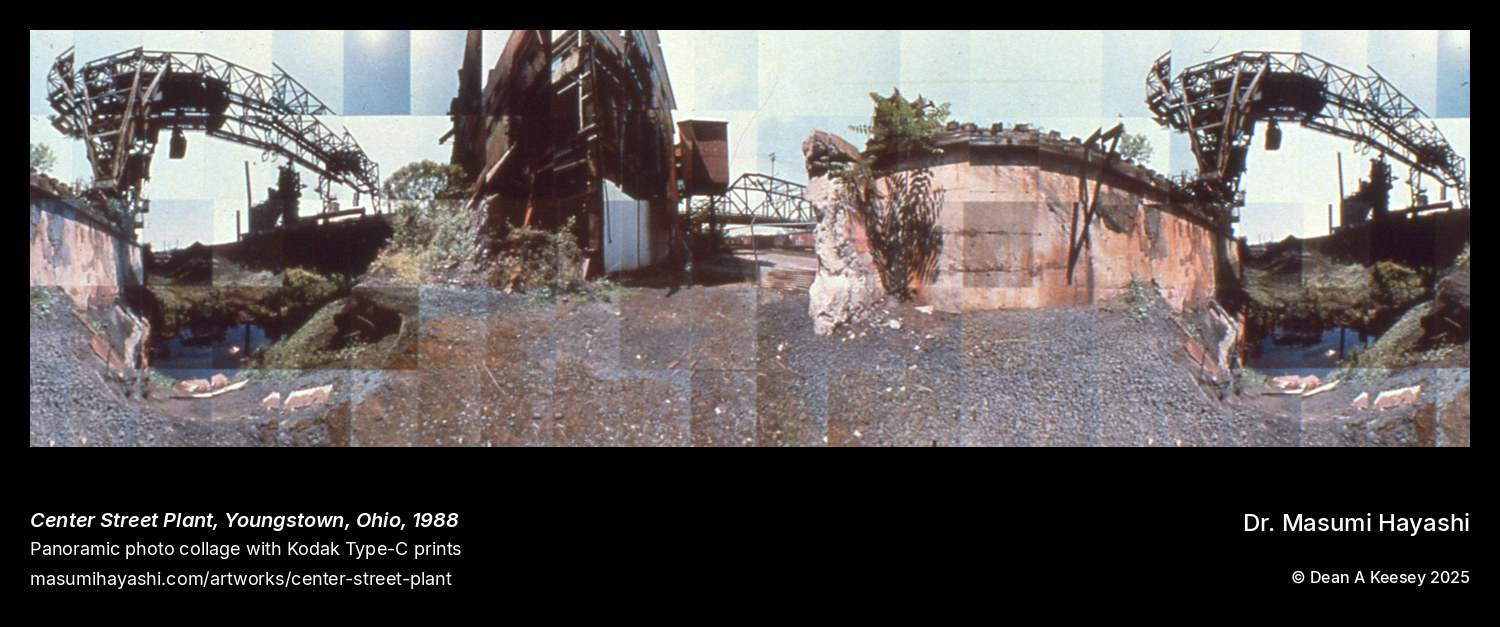
Center Street Plant, Youngstown, Ohio
Century Freeway, No. 1, Los Angeles, California