Sachsenhausen Concentration Camp, Pathology Room
Oranienburg, n/a, Germany
Panoramic photo collage with Kodak Type-C prints
1997
10 x 10
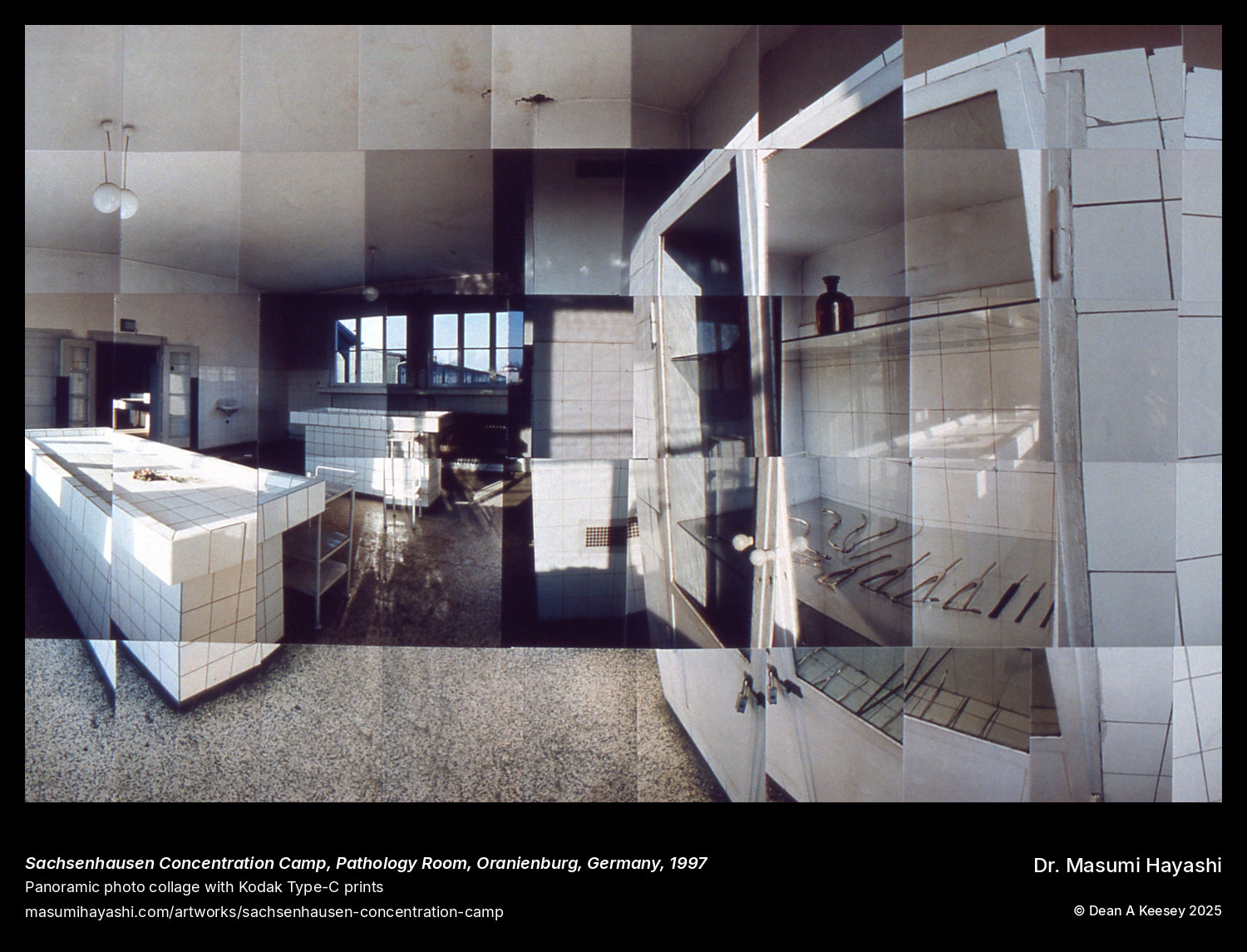
This intimate 10-by-10-inch square panorama documents the pathology room at Sachsenhausen concentration camp near Berlin—the space where Nazi doctors conducted autopsies on murdered prisoners and performed the medical experiments that made concentration camp physicians infamous. The small square format forces intimate confrontation with evidence of medical atrocity.
Created in 1997, the work represents Hayashi’s documentation of Nazi genocide alongside her documentation of Japanese American incarceration. Sachsenhausen served as both a concentration camp and an administrative center for the entire camp system, its proximity to Berlin making it showcase and headquarters for Nazi imprisonment infrastructure.
The pathology room represents the perversion of medical science that characterized Nazi camps: physicians who conducted lethal experiments, performed forced sterilizations, and selected prisoners for death using medical criteria. The pathology facilities processed the results of this medical criminality, documenting deaths while concealing their true causes.
The compact format matches the small interior space while creating intensity appropriate to its commemorative weight. Unlike the expansive horizontal panoramas of camp landscapes, this intimate square demands close viewing—the viewer drawn near to evidence of atrocity that larger formats might aesthetically distance.
Sachsenhausen became a Soviet special camp after liberation, then an East German memorial, and finally a reunified German memorial site. The pathology room survives as physical evidence of medical participation in genocide, the examining tables and equipment preserved as testimony to crimes committed in the name of science.