Fort Funston
San Francisco, CA, USA
Panoramic photo collage with Fuji Crystal archive prints
1989
26 x 90
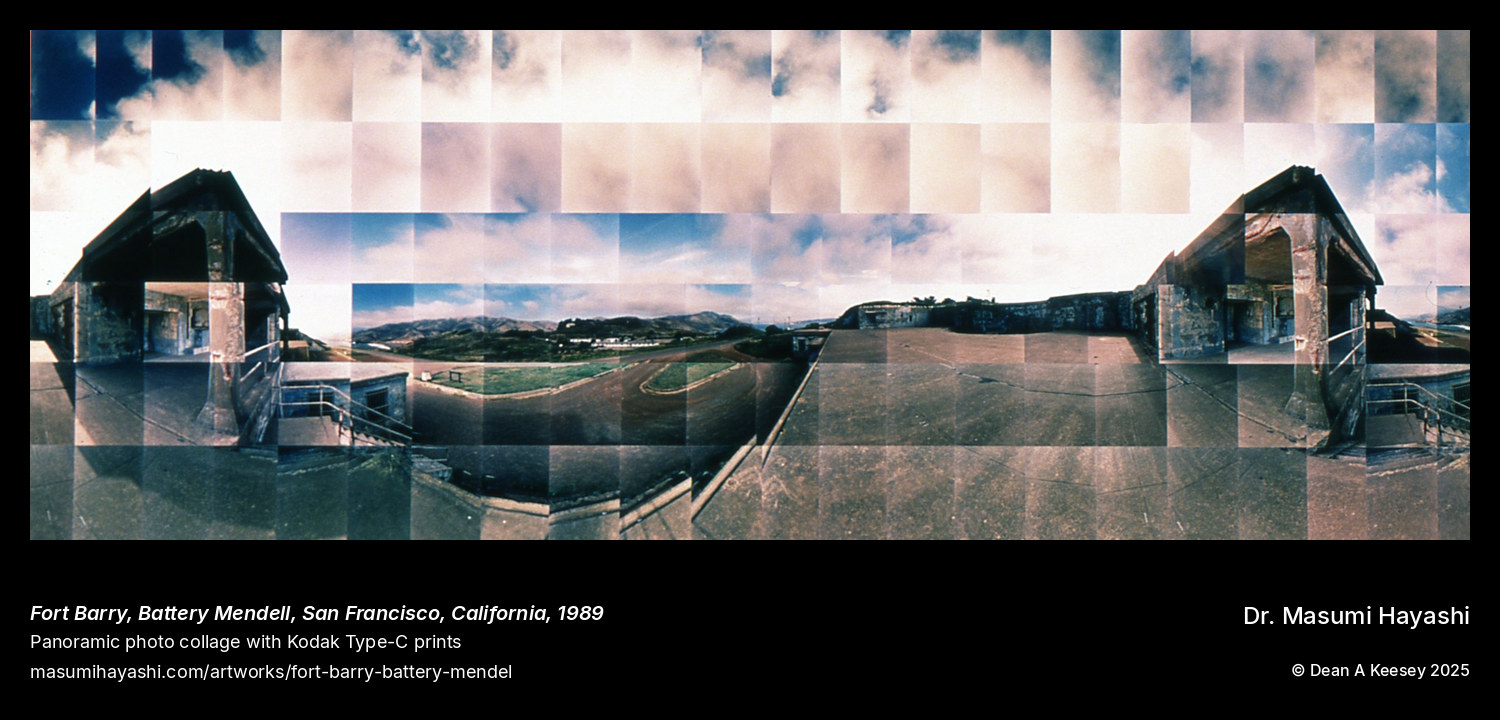
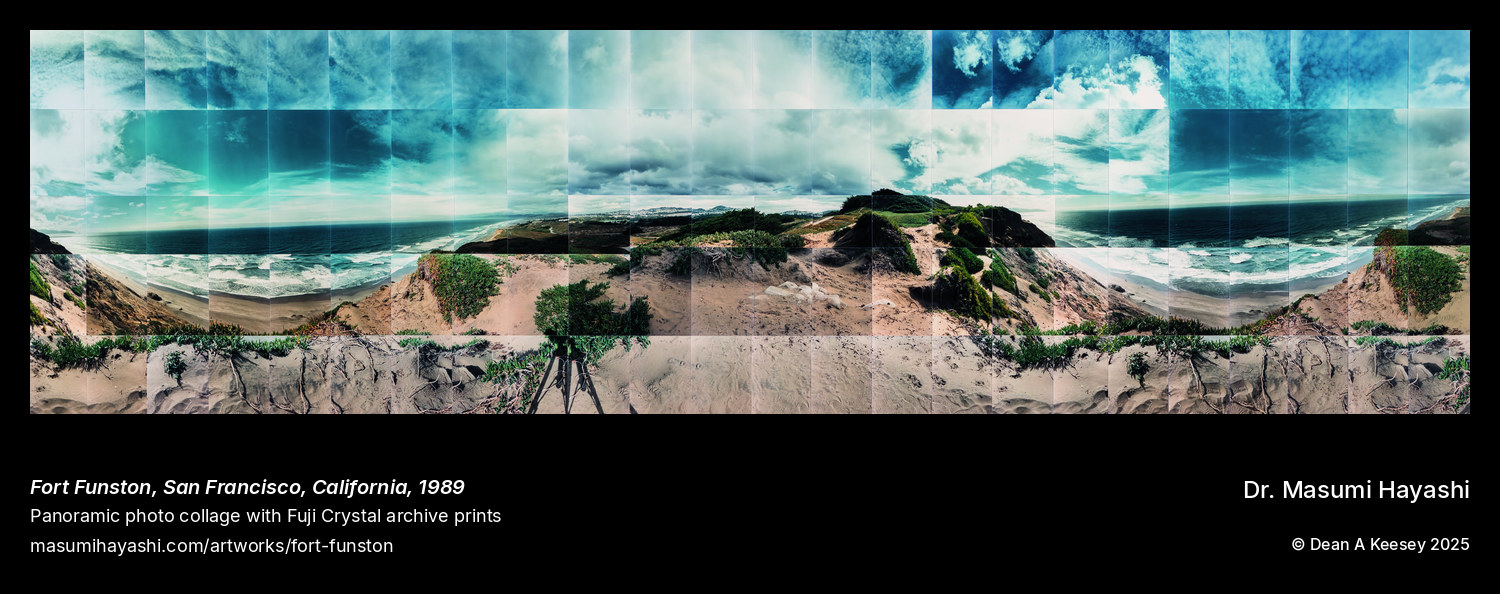
This monumental 26-by-90-inch horizontal panorama documents Fort Funston on San Francisco’s Pacific coast—the military installation that once housed batteries defending the southern approaches to the Golden Gate. The seven-and-a-half-foot width captures the sweeping landscape where coastal bluffs meet ocean, military remnants punctuating terrain now popular for hang gliding and beach walking.
Created in 1989, the work documents the intersection of military heritage and natural landscape that characterizes Golden Gate National Recreation Area’s southern extent. Fort Funston’s gun batteries, observation posts, and support structures have been partially dismantled, partially preserved, and partially reclaimed by dune vegetation, creating a palimpsest of military and natural history.
The extreme horizontal format emphasizes the coastal landscape’s vastness, the composition stretching nearly eight feet to capture the relationship between cliff, beach, and Pacific horizon. The fortifications that once bristled with guns now serve as vantage points for civilian recreation, their original purpose largely forgotten by hikers and hang glider pilots.
Fort Funston’s batteries formed the southern anchor of San Francisco’s coastal defense system, their guns sited to interlock with those at Fort Barry and other Marin Headlands positions. The coordinated defense network assumed naval attack scenarios that World War II’s emphasis on carrier aviation and amphibious assault would soon render obsolete.
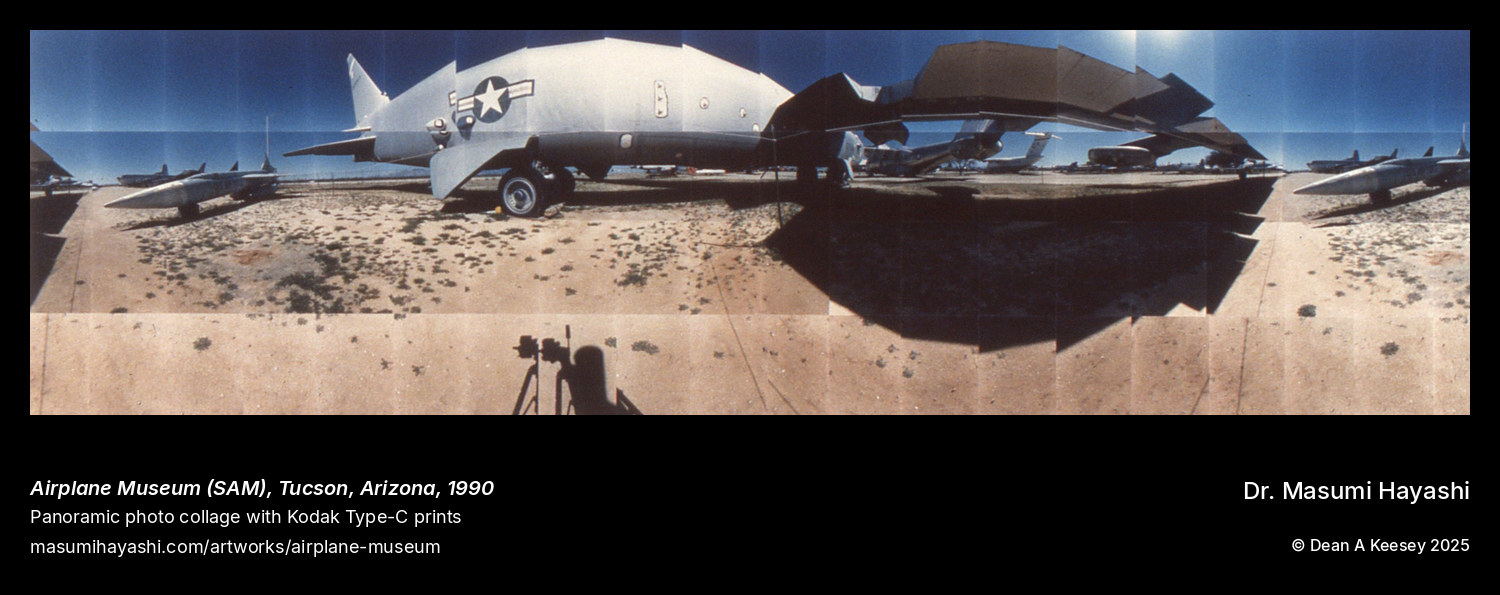
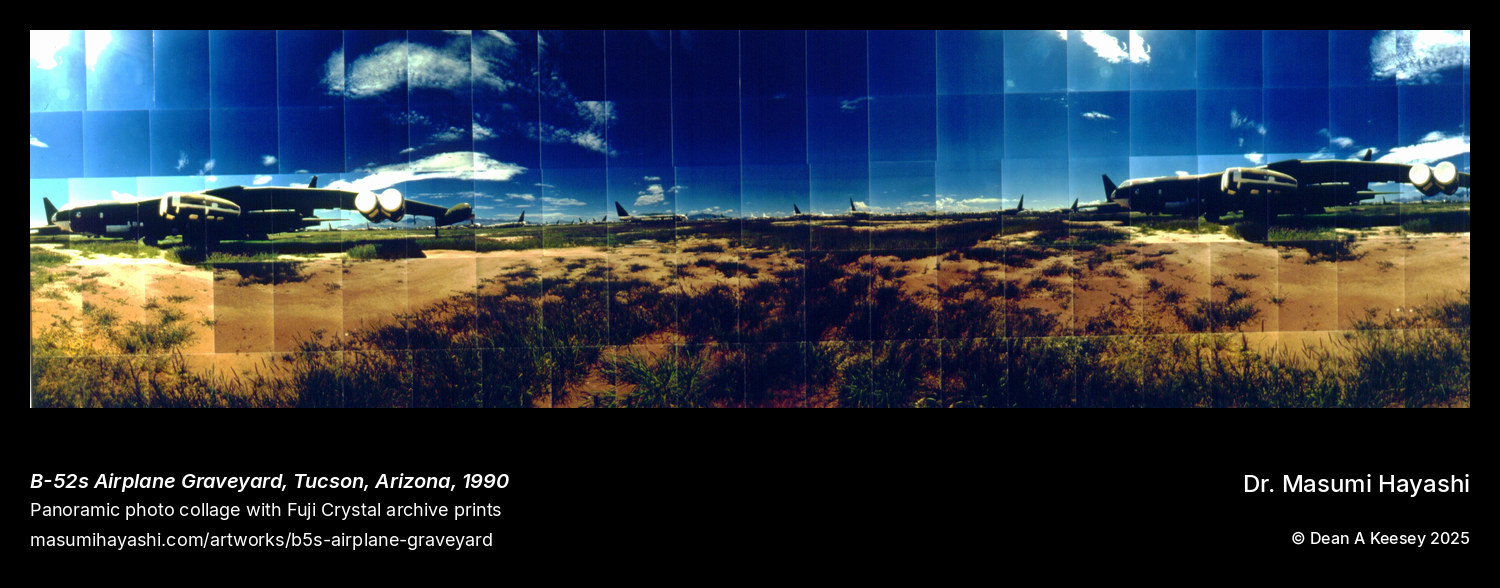
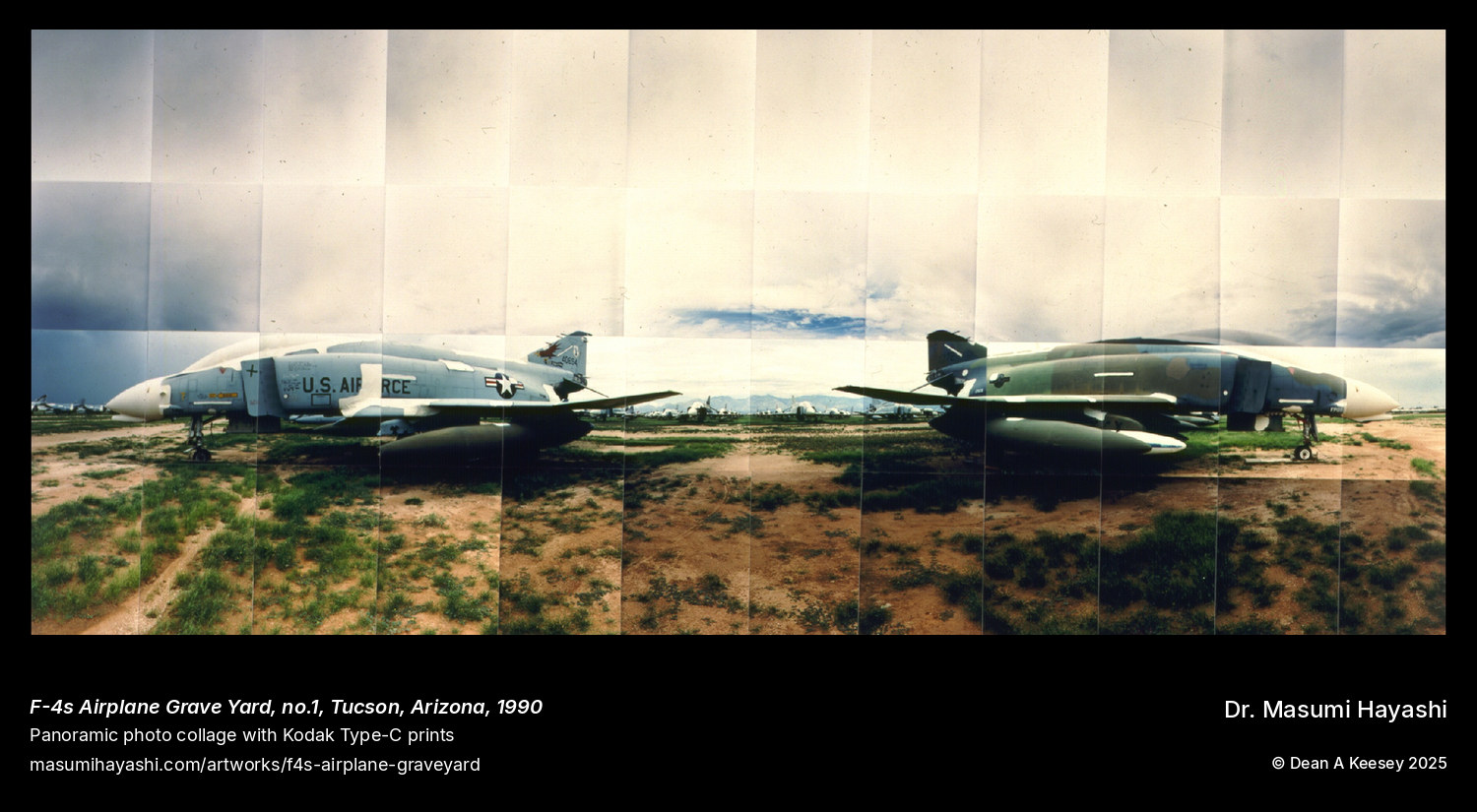
The photo collage technique fragments this coastal landscape while revealing the remnant military structures scattered through natural terrain. The assembled composition documents a site where recreational present has largely displaced military past, the fortifications becoming geological features rather than functional installations.