Pima Air Museum
Tucson, AZ, USA
Panoramic photo collage with Kodak Type-C prints
1990
27 x 61
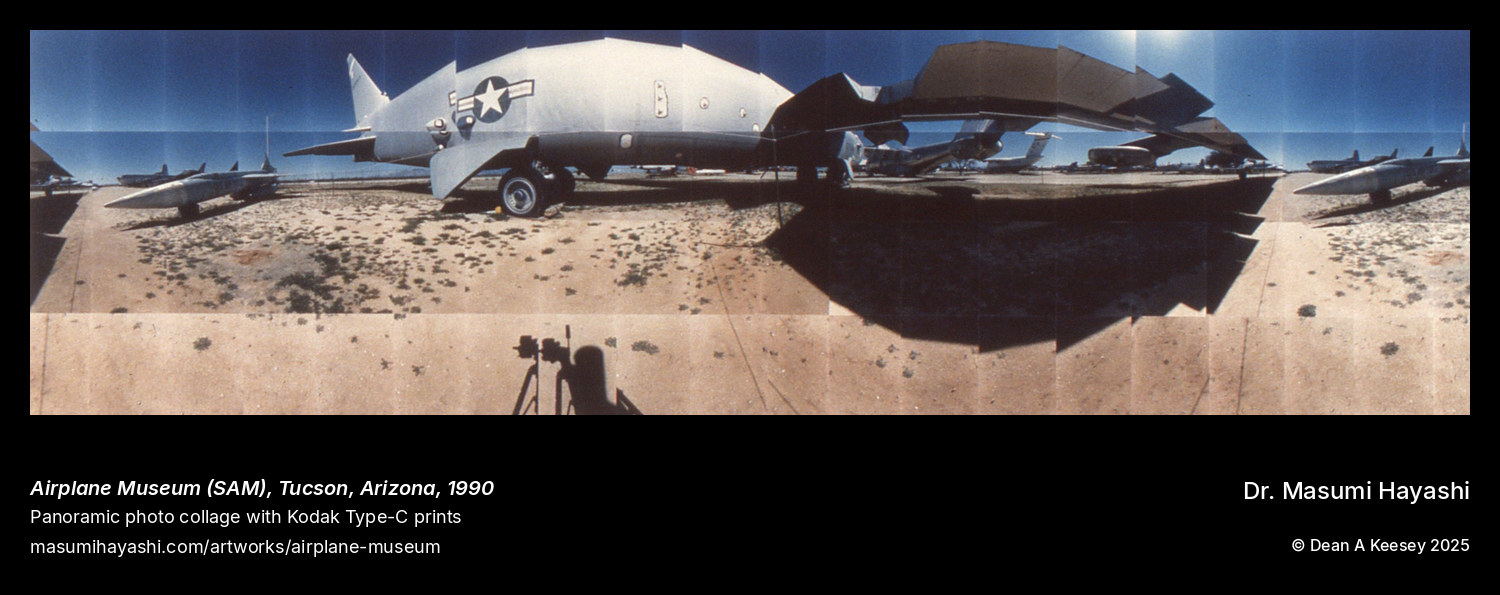
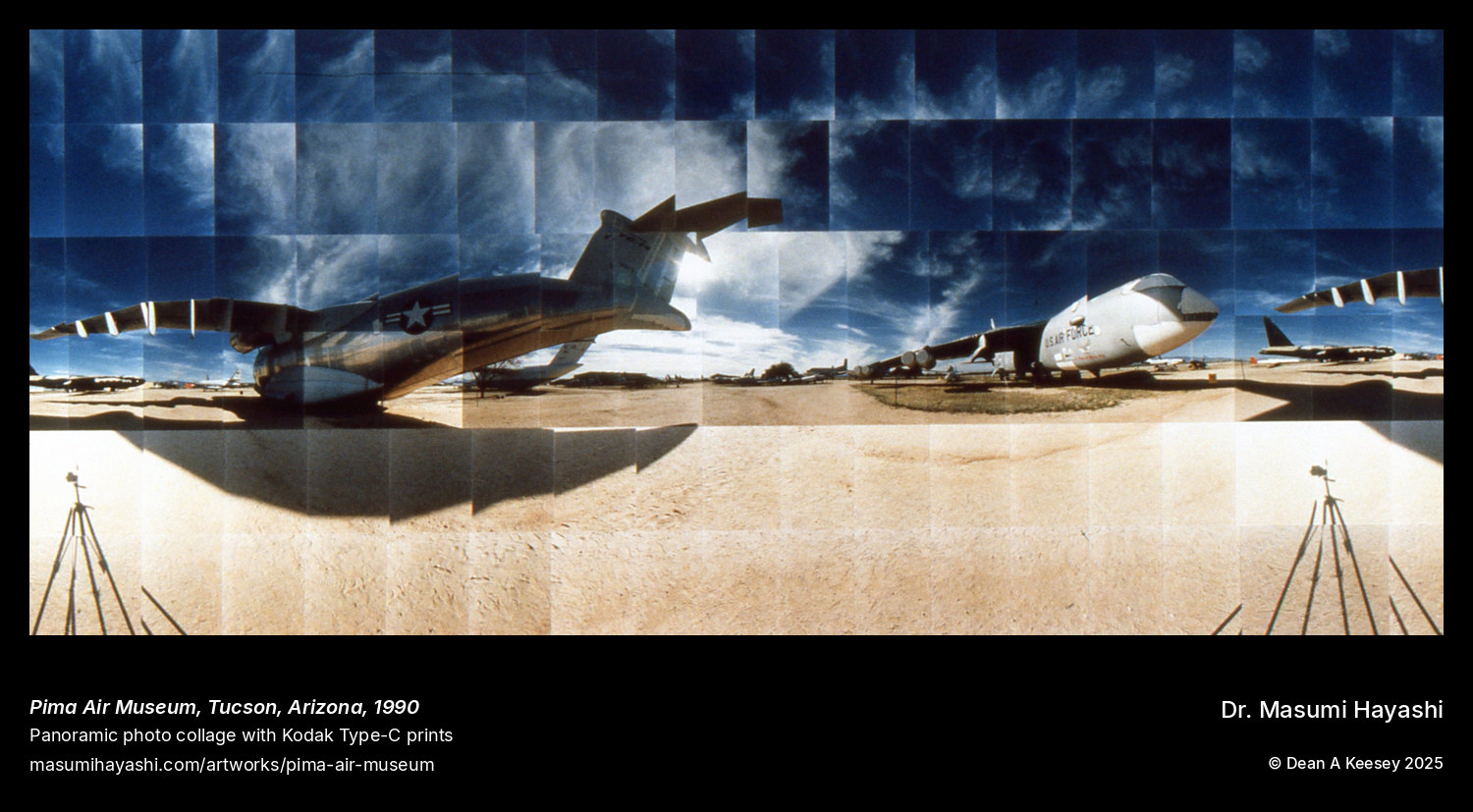
This 27-by-61-inch horizontal panorama documents the Pima Air and Space Museum in Tucson—one of the world’s largest aviation museums, housing over 400 aircraft on 80 acres adjacent to Davis-Monthan Air Force Base. The five-foot width captures the museum’s extensive outdoor displays where desert climate preserves aircraft that humidity would destroy.
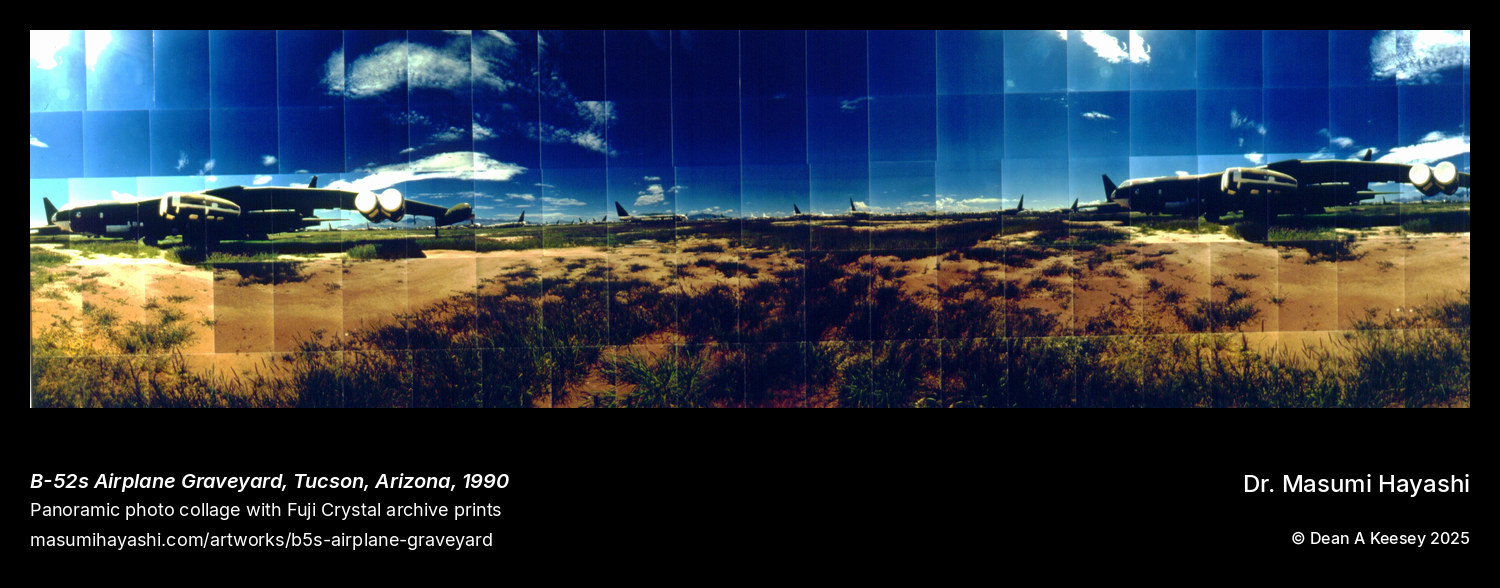
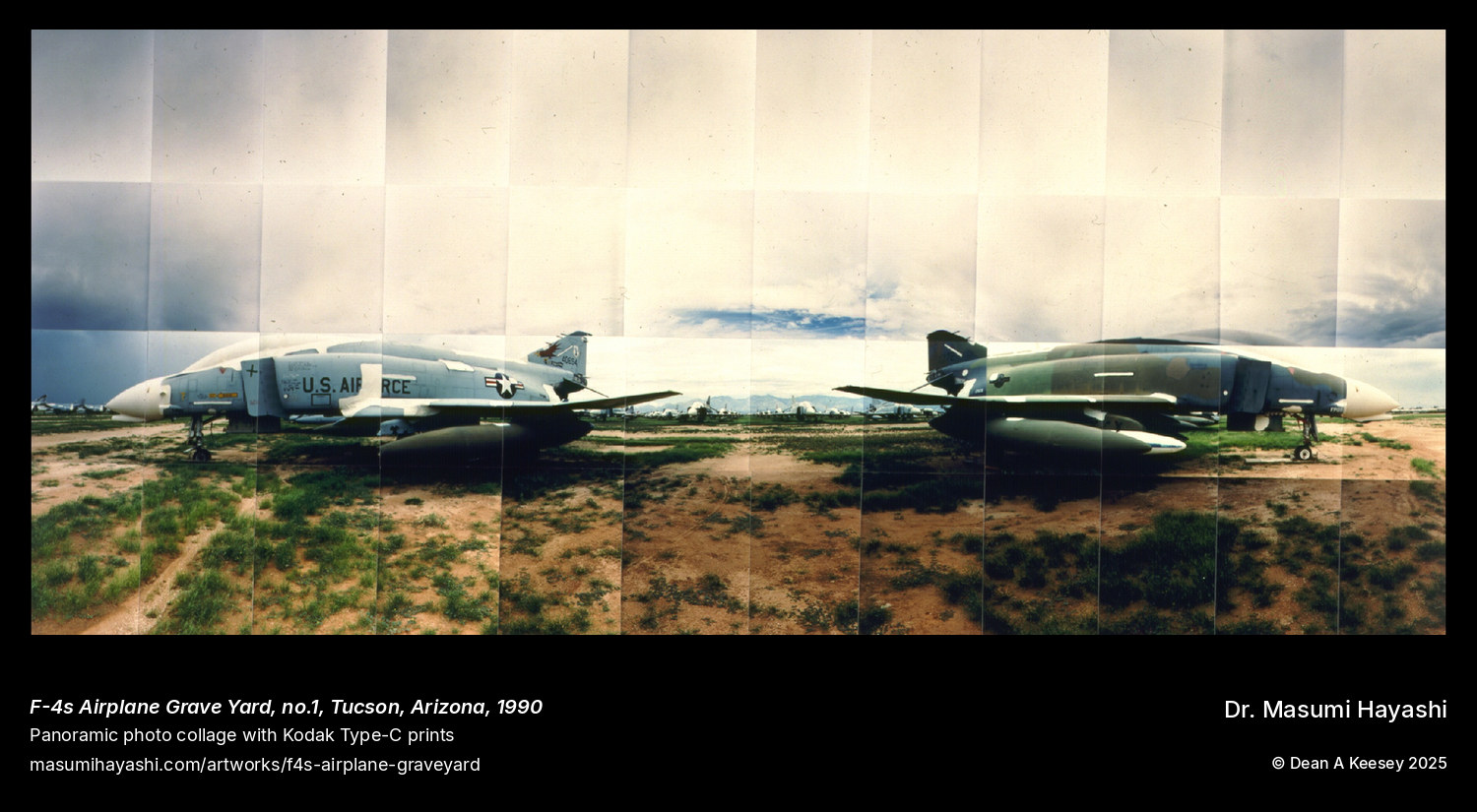
Created in 1990, the work documents one of several Tucson-area facilities where Hayashi systematically photographed military aviation heritage. Pima Air Museum’s collection spans aviation history from World War II through contemporary military aircraft, representing the full range of American air power and its evolution over decades.
The museum’s location adjacent to Davis-Monthan’s boneyard creates synergies: aircraft can move between storage and display, and visitors experience both preserved heritage and pending disposition in a single visit. The desert landscape that makes long-term storage possible also creates dramatic display settings, aircraft silhouettes sharp against Sonoran skies.
The horizontal format suits documentation of aircraft displays, the machines arrayed across the museum grounds requiring wide compositional approaches. The photo collage technique captures multiple aircraft from varying perspectives, the assembled composition revealing the collection’s extent and variety.
Aviation museums simultaneously celebrate engineering achievement and military power, their displays evoking both national pride and the destruction these machines were designed to inflict. This panorama documents the ambiguous heritage that military aviation museums preserve, the beautiful machines and their deadly purposes presented for public contemplation.