Nike Missile Site
San Francisco, CA, USA
Panoramic photo collage with Kodak Type-C prints
1990
22 x 78
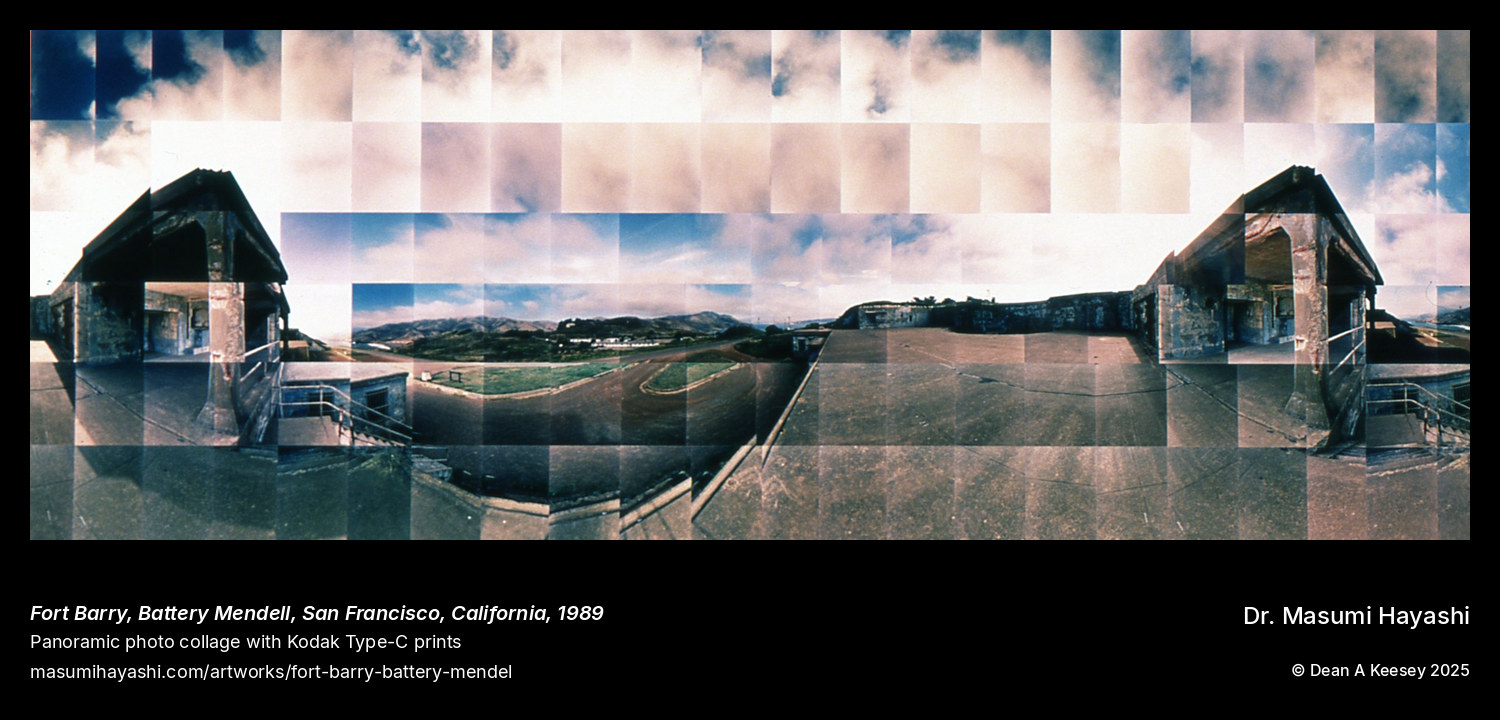
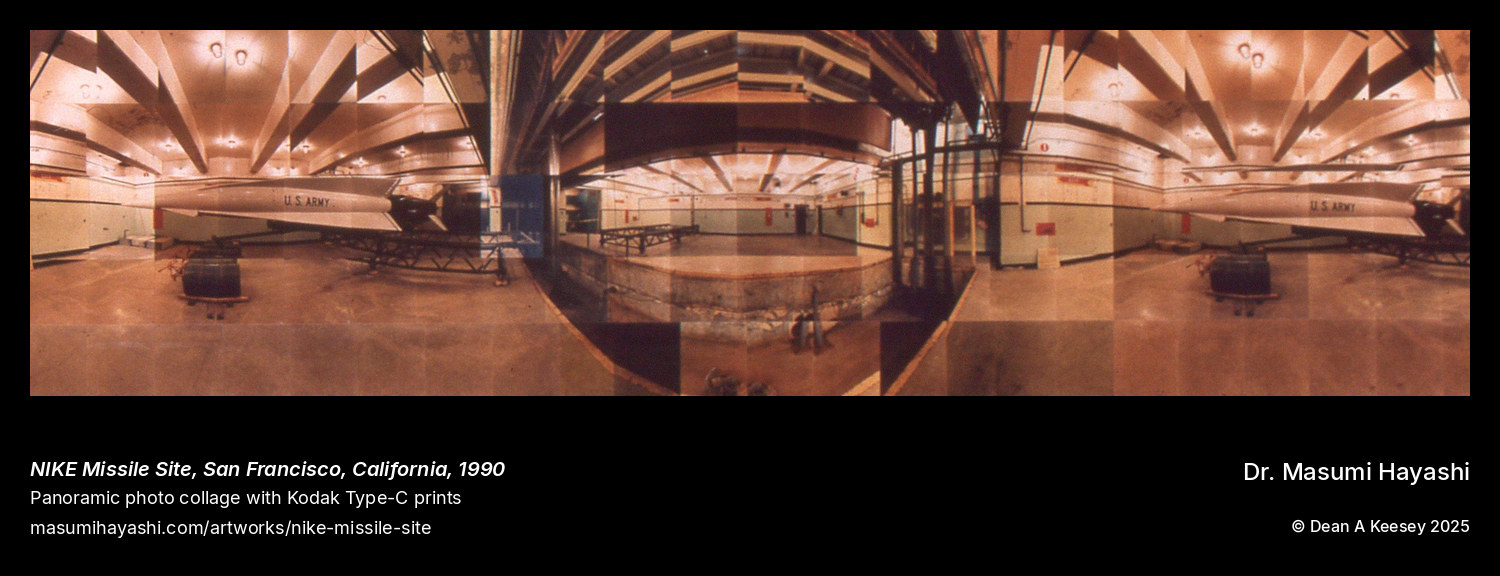
This 22-by-78-inch horizontal panorama documents a Nike missile site in San Francisco—one of the surface-to-air missile batteries that ringed American cities during the Cold War, ready to intercept Soviet bombers carrying nuclear weapons. The six-and-a-half-foot width captures the launch and control facilities designed to protect urban populations from atomic attack.
Created in 1990, the work documents Cold War infrastructure that San Francisco Bay Area residents once viewed as essential to survival, now preserved as historical artifact. The Nike Ajax and later Nike Hercules missiles represented a defensive strategy based on shooting down approaching bombers—an approach that intercontinental ballistic missiles would soon render obsolete.
Nike sites in the Bay Area protected the population center and the Naval facilities dotting the bay. The missiles could carry either conventional or nuclear warheads, the latter option representing a grim calculus: detonating nuclear weapons above one’s own cities to prevent ground bursts that would cause greater destruction.
The horizontal format captures the site’s layout: separate areas for missile storage, launch, and radar control connected by access roads and surrounded by security fencing. The photo collage technique fragments this military installation while revealing the spatial relationships essential to its function.
The Nike system’s obsolescence transformed these sites from active defenses to historical curiosities. The Golden Gate National Recreation Area now includes restored Nike sites where visitors can see the missiles and control equipment that once stood between Soviet attack and American cities. This panorama documents one node in the defensive network that Cold War anxiety created.