Alcatraz Penitentiary, Hydro Therapy Room, San Francisco, California (Version 2)
San Francisco, CA, USA
Panoramic Photo Collage
1998
56 x 55
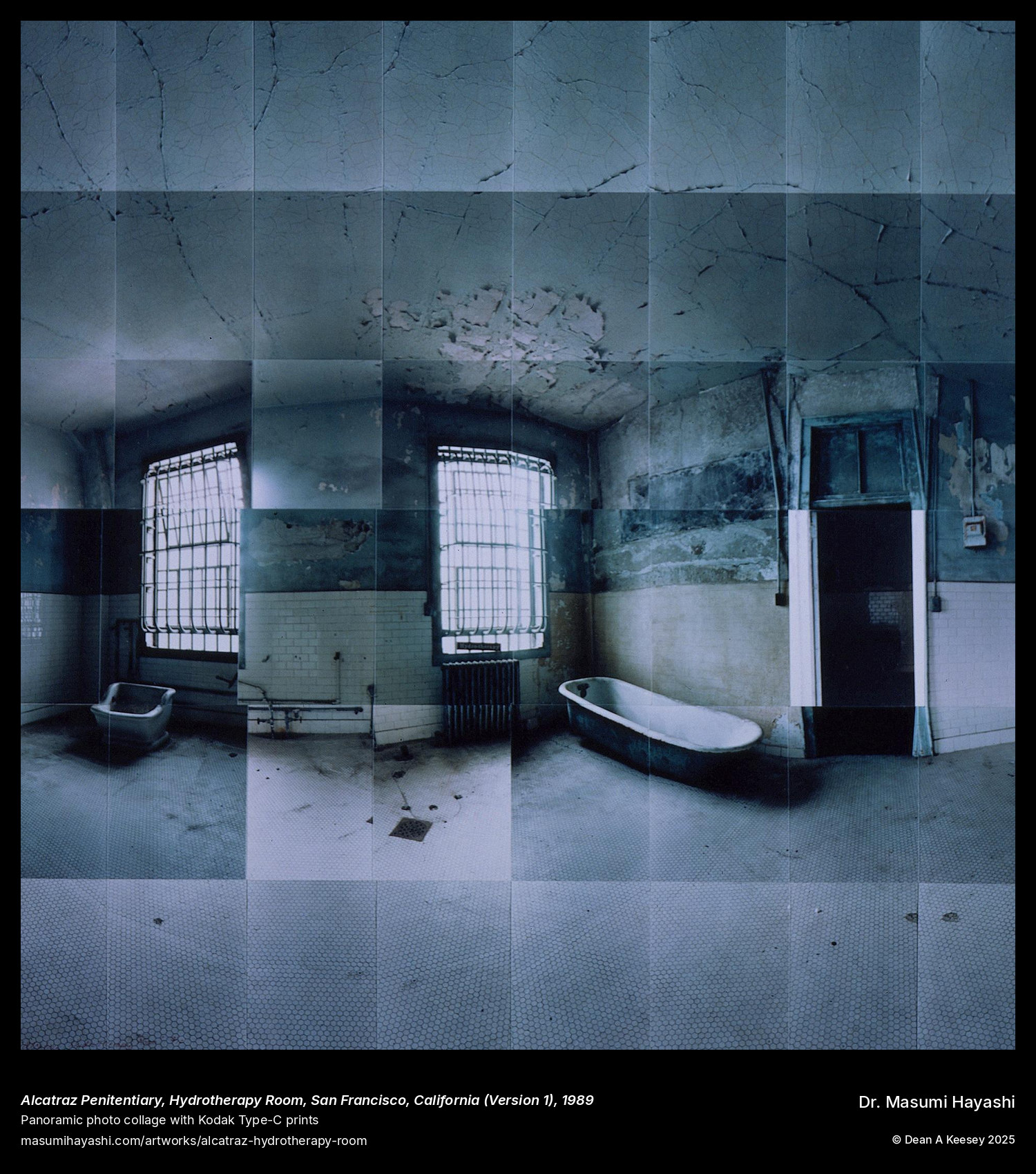
Nine years later, Hayashi returned to the same tiled room. Larger format this time—56 by 55 inches, nearly four and a half feet square. Different film. More detail. The same architecture of institutional violence, now documented with the precision that comes from technical mastery and nine years of photographing spaces where the state exercised power over captive bodies.
The room hasn’t changed. White tiles. Visible plumbing. Industrial drains. The spatial logic of hydrotherapy as punishment remains legible: small enclosed space, total control over temperature and pressure, medical terminology providing cover for what prisoners experienced as torture. Extreme cold approaching hypothermic temperatures. Scalding heat. High-pressure spray sustained past the point of therapy into the realm of institutional discipline.
What changes between 1989 and 1998 is not the space but the scale of documentation. Version 1 was 31 by 32 inches—compact, contained, suited to an emerging artist working during her MFA year. Version 2 is monumental, demanding substantial wall space, asserting that this history requires physical presence to match its moral weight. The larger format doesn’t reveal different information about the room. It insists on a different kind of attention.
Both versions document the same fundamental tension: Progressive-era medical rhetoric meeting punitive prison practice. Water treatment claiming therapeutic benefit while functioning as disciplinary response. Architecture designed for efficiency and control, not healing. By 1998 (35 years post-closure), the abandoned equipment and deteriorating tiles continue to testify. The room outlasts its function. The evidence remains.
More from Abandoned Prisons
Alcatraz Penitentiary, Cellblock, San Francisco, California
Alcatraz Penitentiary, Hydro Therapy Room, San Francisco, California (Version 1)
Alcatraz Penitentiary, Shower Room, San Francisco, California
Cincinnati Workhouse, Cincinnati, Ohio
Eastern State Penitentiary, Chapel, Philadelphia, Pennsylvania