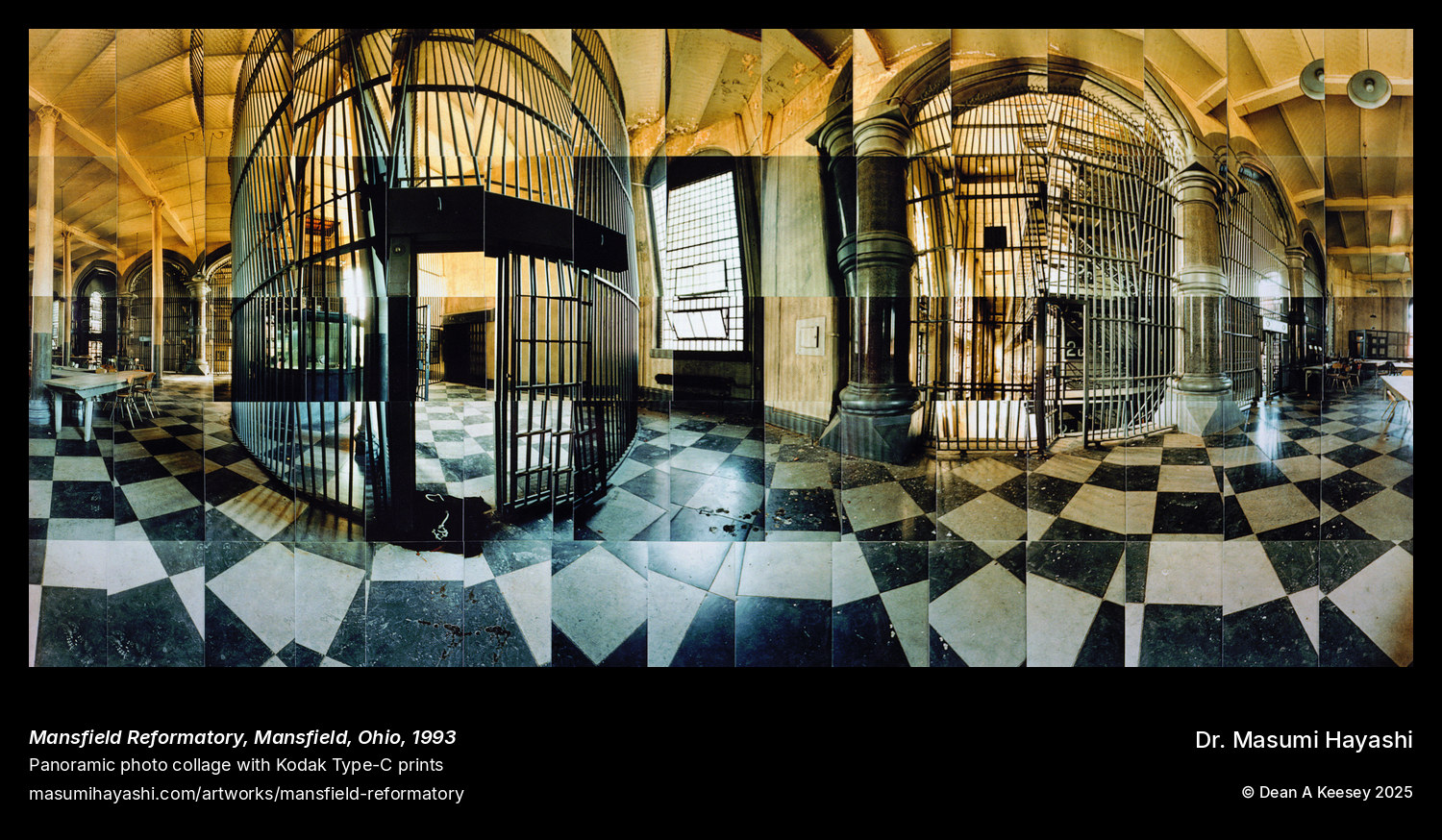
Mansfield Reformatory, Mansfield, Ohio
Mansfield, OH, USA
Panoramic Photo Collage
1993
24 x 49
Progressive-era optimism built in stone and steel. Ohio State Reformatory opened 1896 claiming to rehabilitate young first-time offenders through religious instruction, vocational training, military discipline. Gothic Revival fortress architecture suggesting moral elevation. Chapel, library, educational facilities promising genuine reform. The world’s tallest free-standing steel cellblock—six tiers rising fifteen stories—demonstrating architectural ambition.
The ideals collapsed under their own contradictions. Spaces designed for 1,500 prisoners holding over 2,400 by mid-century. Overcrowded maximum-security warehousing replacing rehabilitation rhetoric. The towering cellblock creating oppressive vertical power dynamics, unprecedented scale serving confinement not reformation. By 1990 closure, federal courts intervened citing constitutional violations. Reformatory ideals completely failed.
Hayashi’s 24-by-49-inch vertical format emphasizes the architecture’s verticality—Gothic towers, the towering cellblock expressing institutional power through sheer height. Photographed in 1993, three years post-closure, during critical preservation moment when the infrastructure deteriorated rapidly without maintenance and the facility’s future remained uncertain.
The contradiction is visible in the architecture itself. Gothic grandeur advertising humanitarian progress. Institutional monumentality suggesting benevolent authority. Religious and educational spaces implying genuine commitment to transformation. Underneath: brutal overcrowding, chronic underfunding, systematic failure of stated purpose. Beautiful architecture promising uplift, delivering punishment. Reformatory rhetoric concealing punitive reality.
This is Ohio’s carceral geography documented by an artist working within her home state—80 miles from Columbus, 65 miles from Cleveland. Mansfield establishing sustained prison documentation Hayashi would continue with later Ohio Penitentiary works. The same state. The same failed promises. The same architecture of control dressed in the language of reform.