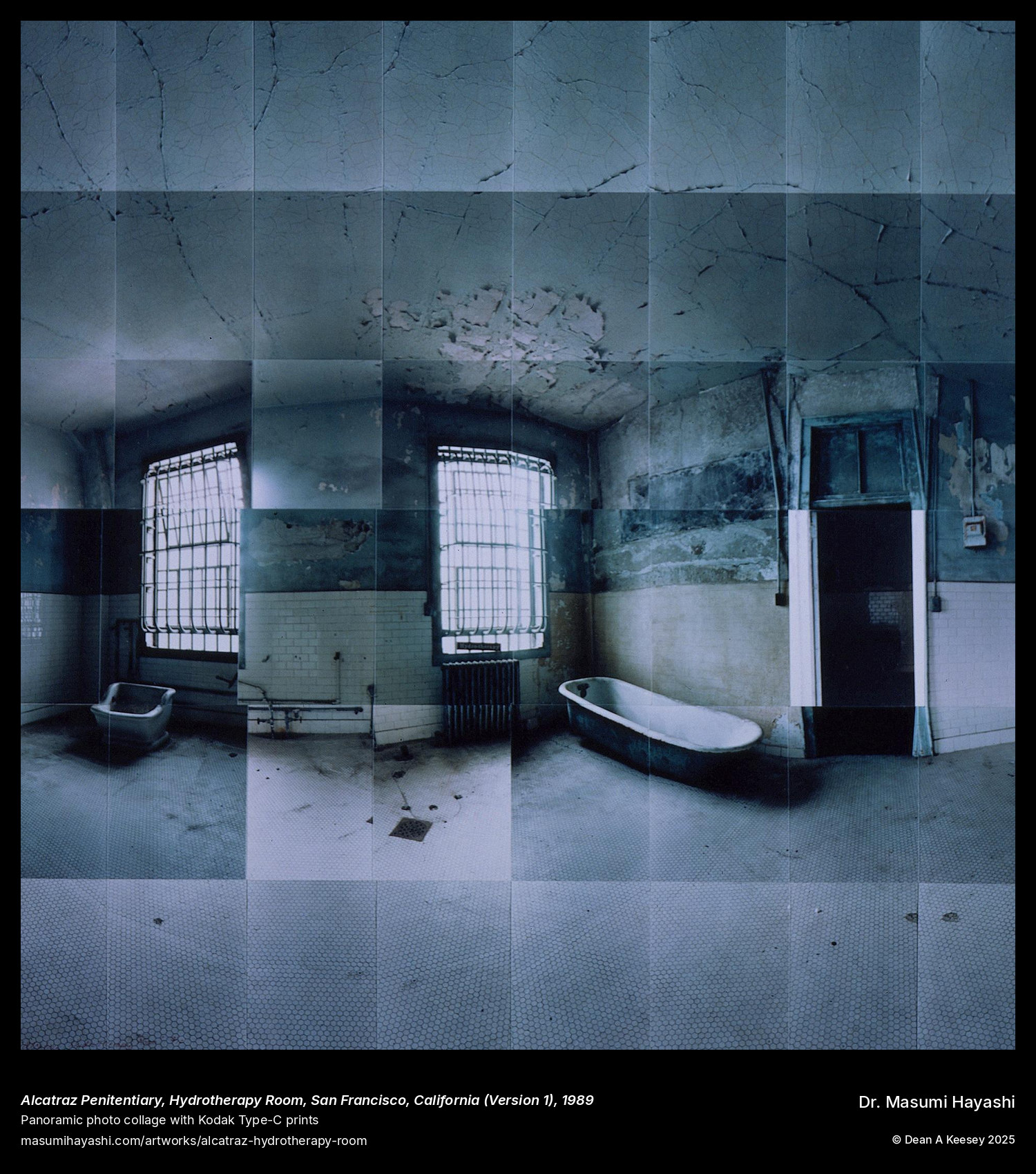
Alcatraz Penitentiary, Hydro Therapy Room, San Francisco, California (Version 1)
San Francisco, CA, USA
Panoramic Photo Collage
1989
31 x 32
The tiles are white. The plumbing is visible. The drains are built for volume. This is where water became weapon.
Alcatraz called it hydrotherapy. Prison administrators borrowed the term from Progressive-era psychiatry, claiming therapeutic benefits—cold water to calm violent prisoners, hot baths to relieve tension. But temperature is a matter of degree. Cold water can approach hypothermic. Hot water can scald. High-pressure spray, sustained long enough, stops being therapy and becomes something else entirely. The line between treatment and torture ran through this tiled room.
The architecture tells the story. Walls designed for easy cleaning after sessions. Specialized plumbing for precise temperature control—hot enough to burn, cold enough to shock. Drainage systems built to handle water in quantity. Fixtures chosen for durability, not comfort. This was medical efficiency in service of institutional control, therapeutic terminology legitimizing what prisoners experienced as punishment.
Twenty-six years after closure, the room sits empty. Tiles cracking. Equipment abandoned. But the spatial logic remains readable: a small room, tightly controlled, where prisoners entered vulnerable and guards controlled every variable. Where the body could be subjected to extremes under medical supervision, where pain could be administered systematically and called treatment.
The nearly square format—31 by 32 inches—contains the space as the space contained bodies. Compact. Bounded. A single institutional room where Progressive-era reform ideals met the practical realities of maximum-security imprisonment, and medicine provided cover for institutional violence.
More from Abandoned Prisons
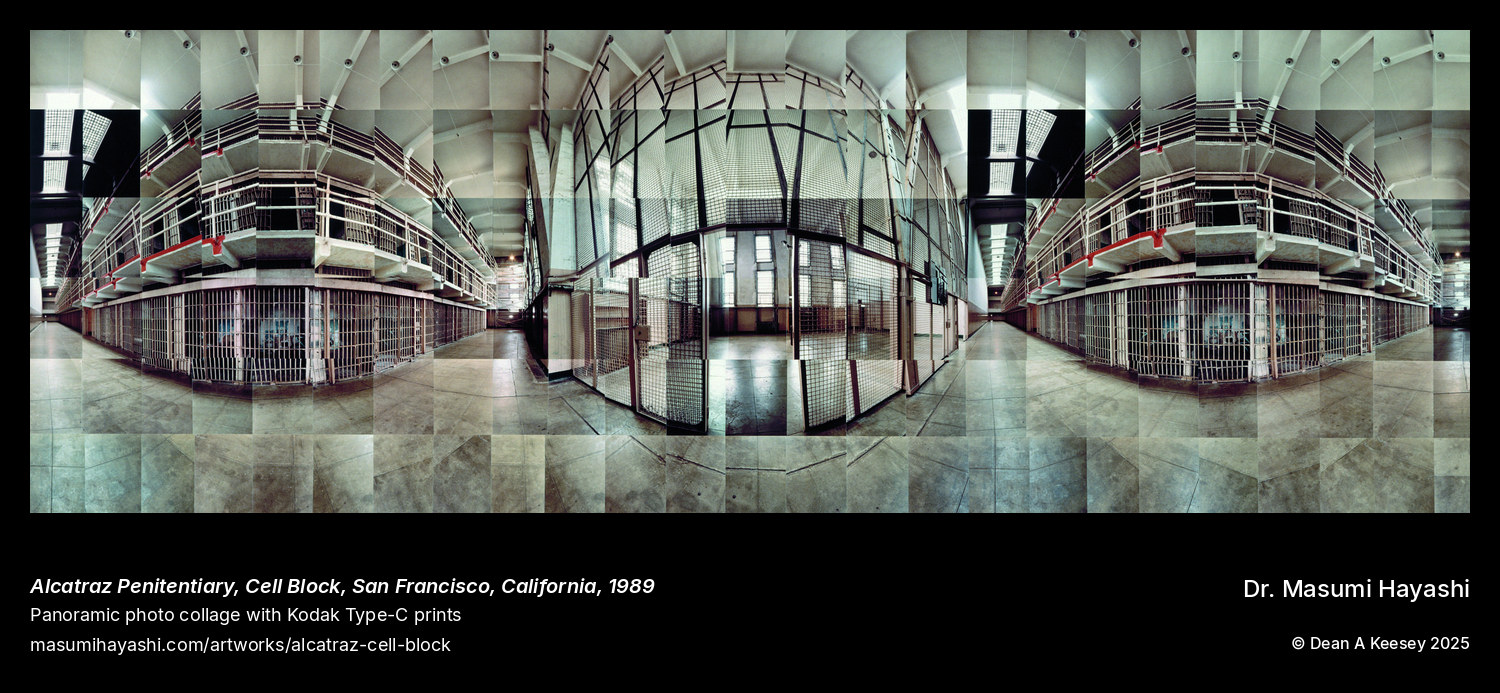
Alcatraz Penitentiary, Cellblock, San Francisco, California
Alcatraz Penitentiary, Hydro Therapy Room, San Francisco, California (Version 2)
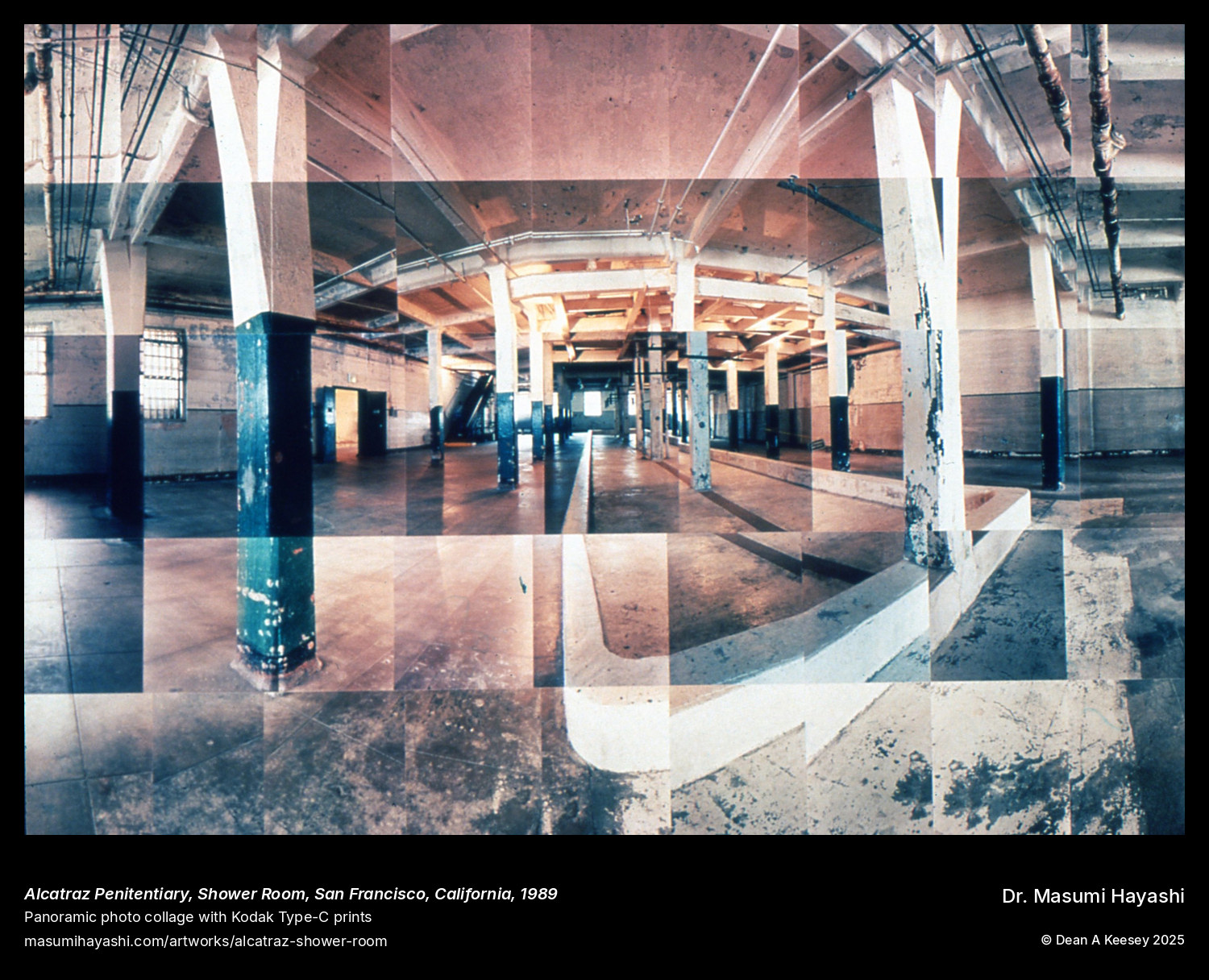
Alcatraz Penitentiary, Shower Room, San Francisco, California
Cincinnati Workhouse, Cincinnati, Ohio
Eastern State Penitentiary, Chapel, Philadelphia, Pennsylvania