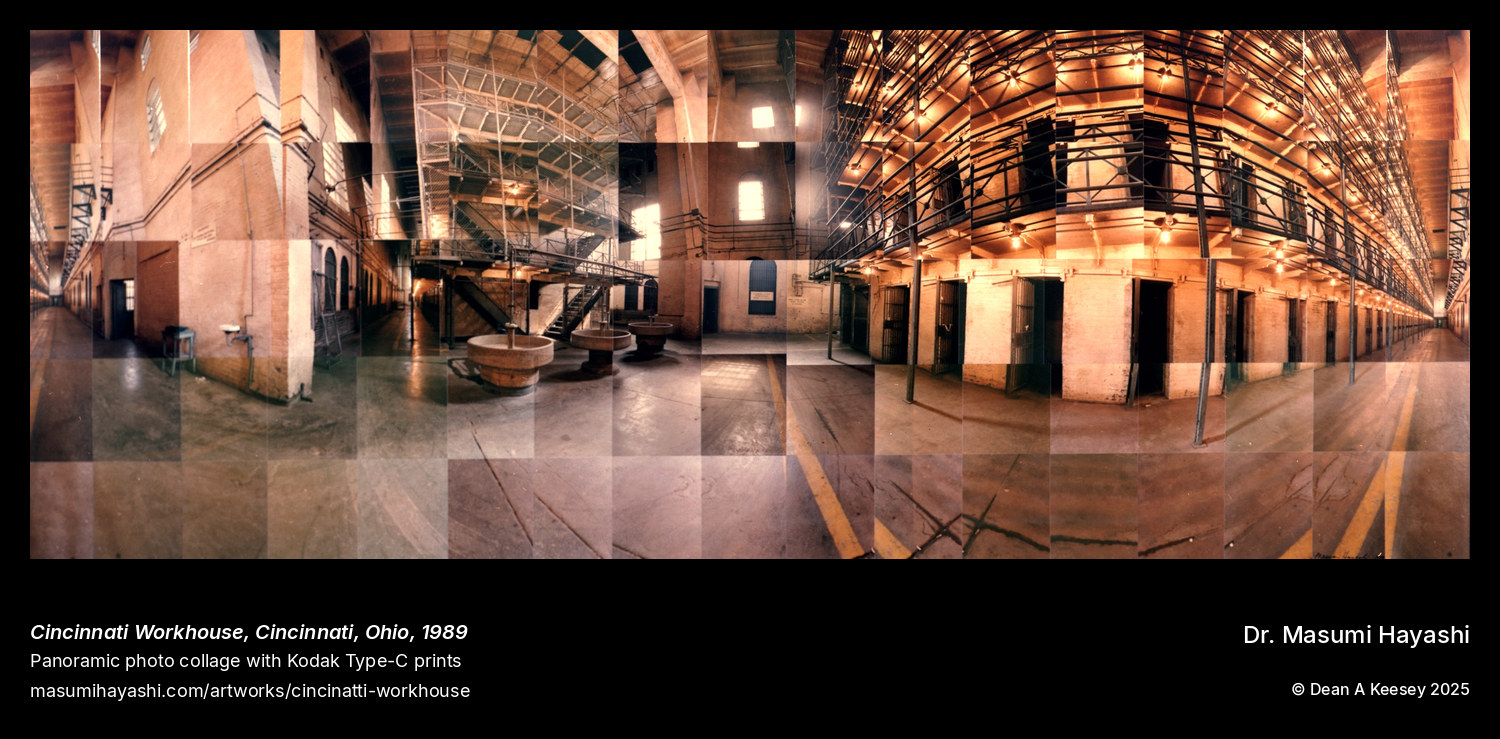
Cincinnati Workhouse, Cincinnati, Ohio
Cincinnati, OH, USA
Panoramic photo collage
1980
26 x 61
The Progressive era claimed to reform through labor. Cincinnati’s workhouse put that theory into brick and steel—a multi-story fortress for people whose crime was being poor.
Prostitution arrests. Vagrancy. Public drunkenness. Inability to pay fines. These offenses sent you to the workhouse, where detention combined with forced labor under the rhetoric of rehabilitation. The claim: teaching work ethic to “idle” populations, providing vocational training, reforming behavior through disciplined labor. The reality: extracting unpaid work from captive bodies, criminalizing poverty and homelessness, managing marginalized communities through incarceration rather than social services.
The populations tell the story. Economically disadvantaged people criminalized for survival. Women arrested for “moral” violations. African Americans subjected to discriminatory enforcement. Homeless individuals imprisoned for existing without shelter. The workhouse didn’t rehabilitate. It punished poverty while harvesting its labor.
Hayashi’s vertical format—26 by 61 inches, approximately five feet tall—emphasizes the building’s multi-story organization. Cellblock tiers stacked upward. Stairwells connecting work floors. Vertical architecture expressing institutional power over bodies deemed economically and morally deficient. The compressed width creates upward movement through deteriorating space, the format itself enacting the hierarchical organization of forced labor.
This is municipal carceral architecture—not federal penitentiary but city-run labor extraction facility. Progressive-era reform rhetoric meeting the practical need to warehouse and work people whose poverty made them criminal in the eyes of administrators who called punishment rehabilitation.