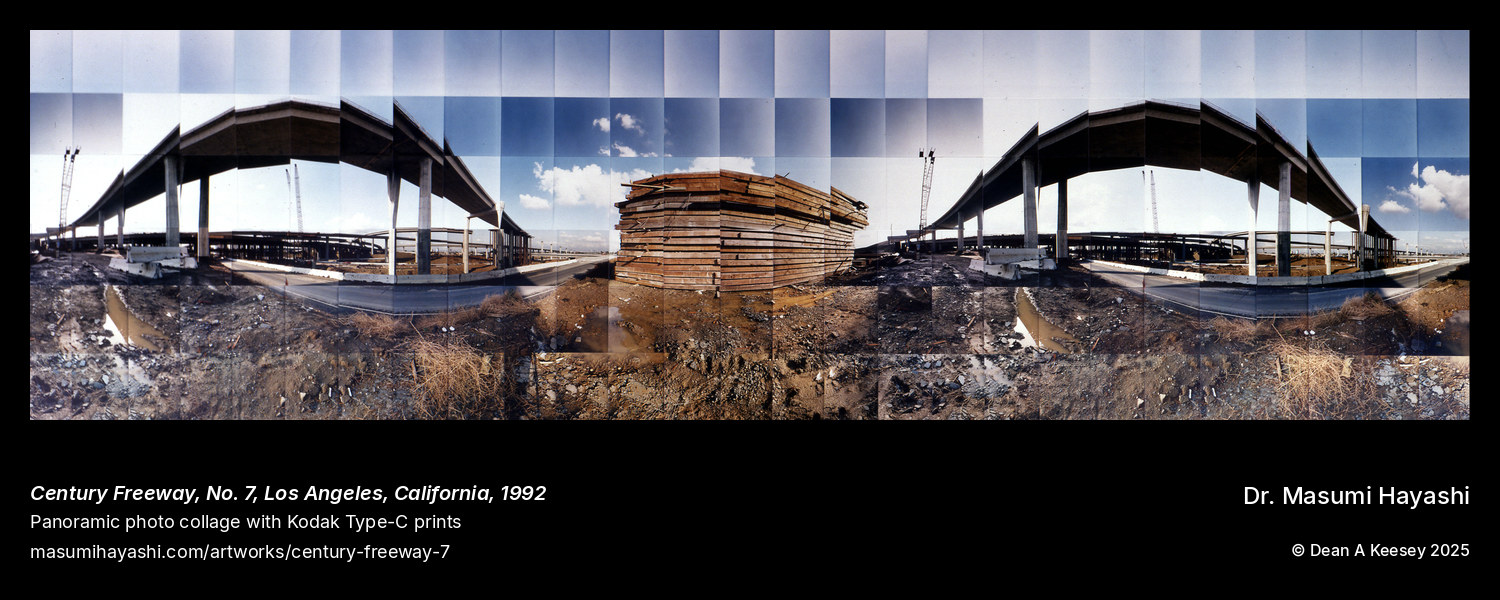
Century Freeway, No. 7, Los Angeles, California
Los Angeles (I-105), CA, USA
Panoramic Photo Collage
1992
28 x 79
Created in 1992—one year after the initial six-work documentation surge—this concluding work in Hayashi’s Century Freeway series captures the displacement landscape at its most complete stage. Elevated structures finished. Demolished neighborhoods fully cleared. Final construction details underway. Communities permanently transformed with no possibility of restoration. Just twelve to eighteen months remained before the controversial October 1993 opening.
The one-year gap between No. 1-6 (1991) and No. 7 (1992) enabled Hayashi to document construction progression. Earlier works captured the corridor at 90% completion; this final statement documents 95-98% completion, preserving the moment before operational normalization obscured displacement trauma. Once traffic flowed, the freeway would become infrastructure rather than wound.
As likely documentation of the western terminus near LAX, this work captures where the freeway reached its destination—connecting displaced South Los Angeles communities to the airport and affluent westside neighborhoods the freeway served. The geographic contrast underscores environmental justice dimensions: minority working-class residents bore displacement burdens so suburban commuters could reach coastal destinations more efficiently.
The format matches No. 4 exactly—28×79 inches—creating formal continuity between middle-series and concluding works. Seven-work structure mirrors Hayashi’s Power House documentation in Cleveland, suggesting deliberate methodology: seven locations providing sufficient variation to establish patterns, manageable scope for production while maintaining quality, symbolic completeness.
This work represents Hayashi’s final documentary statement on Century Freeway’s infrastructure-driven displacement—the culmination of comprehensive seven-location visual evidence of environmental racism in American transportation planning. The series provides documentation largely absent from official records: not construction progress but community destruction, not engineering achievement but three decades of displacement trauma.
More from Post-Industrial Landscapes
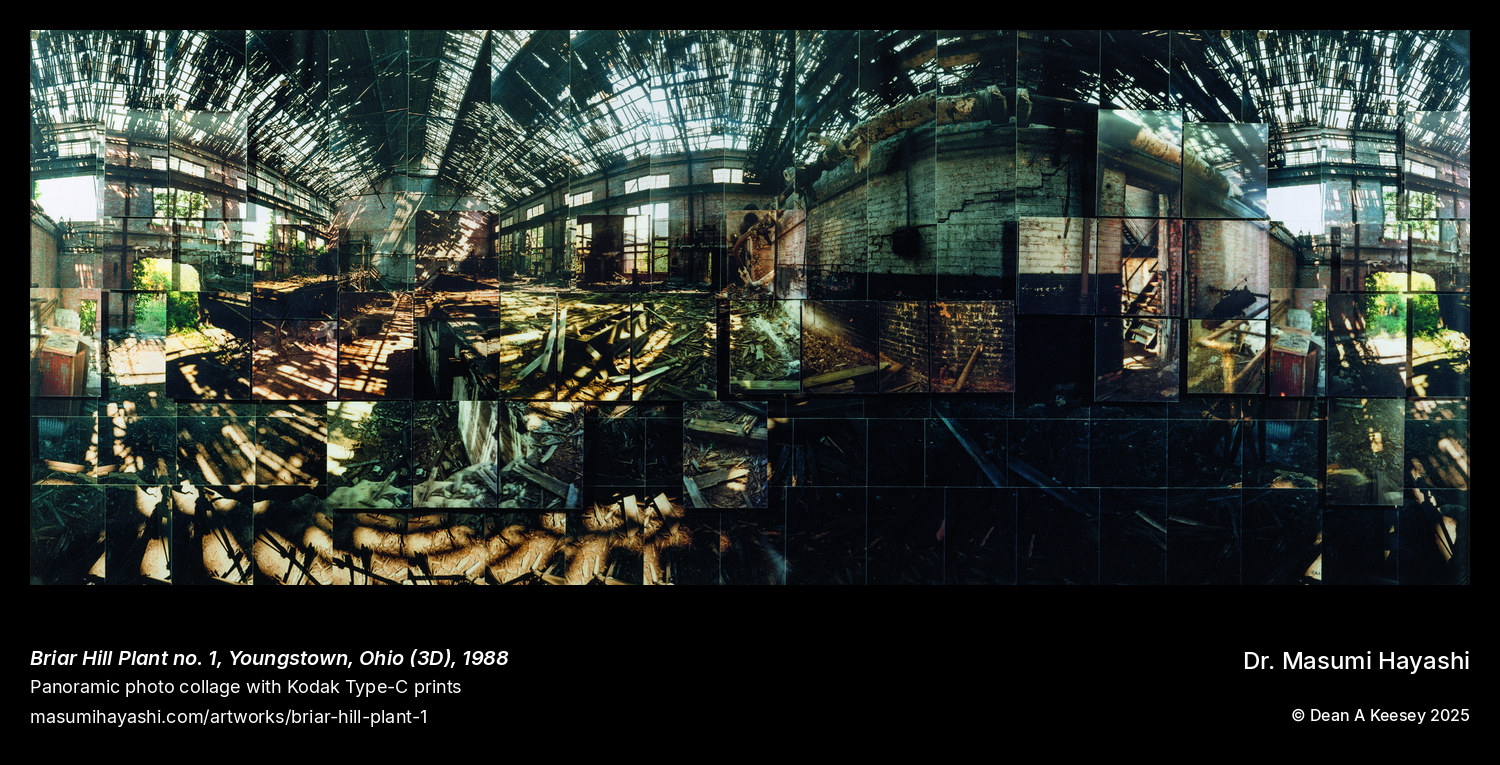
Briar Hill Plant no. 1, Youngstown, Ohio (3D)
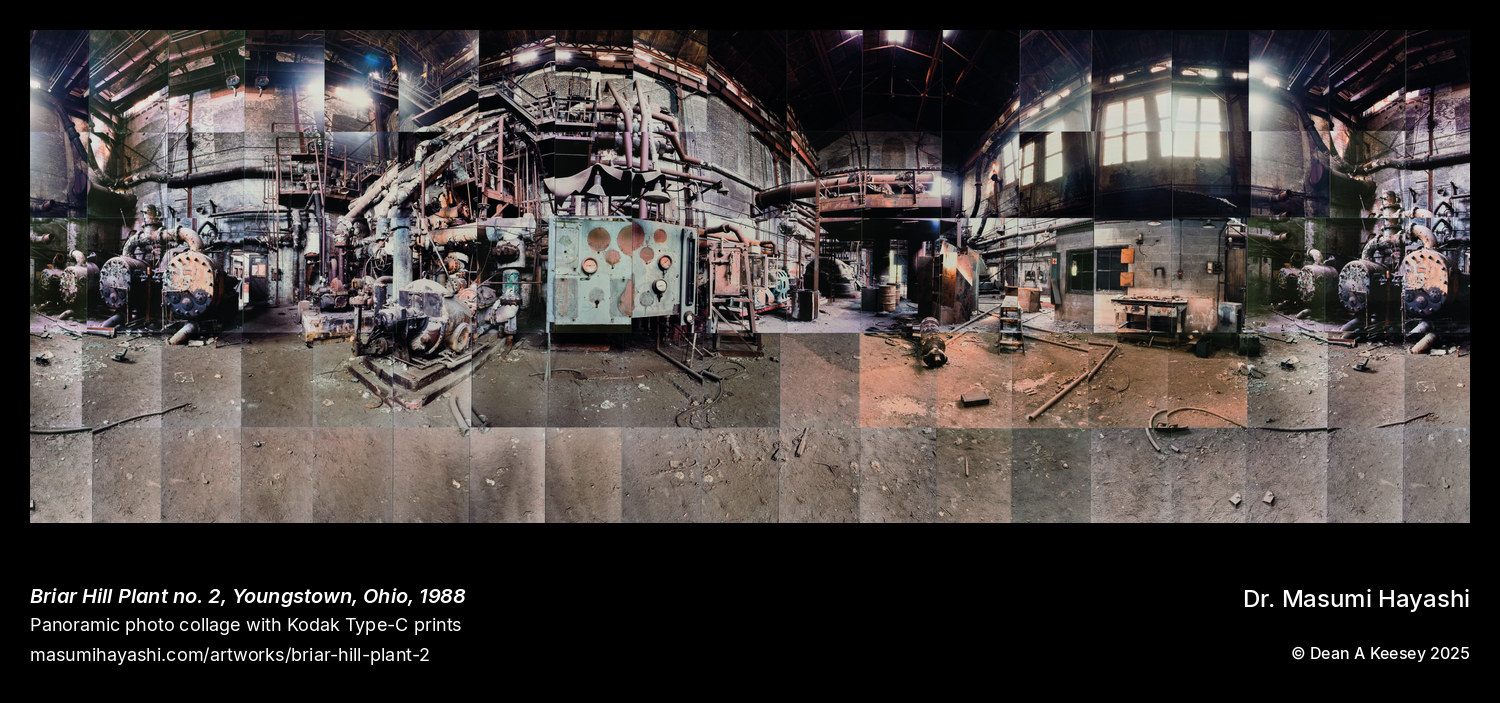
Briar Hill Plant no. 2, Youngstown, Ohio
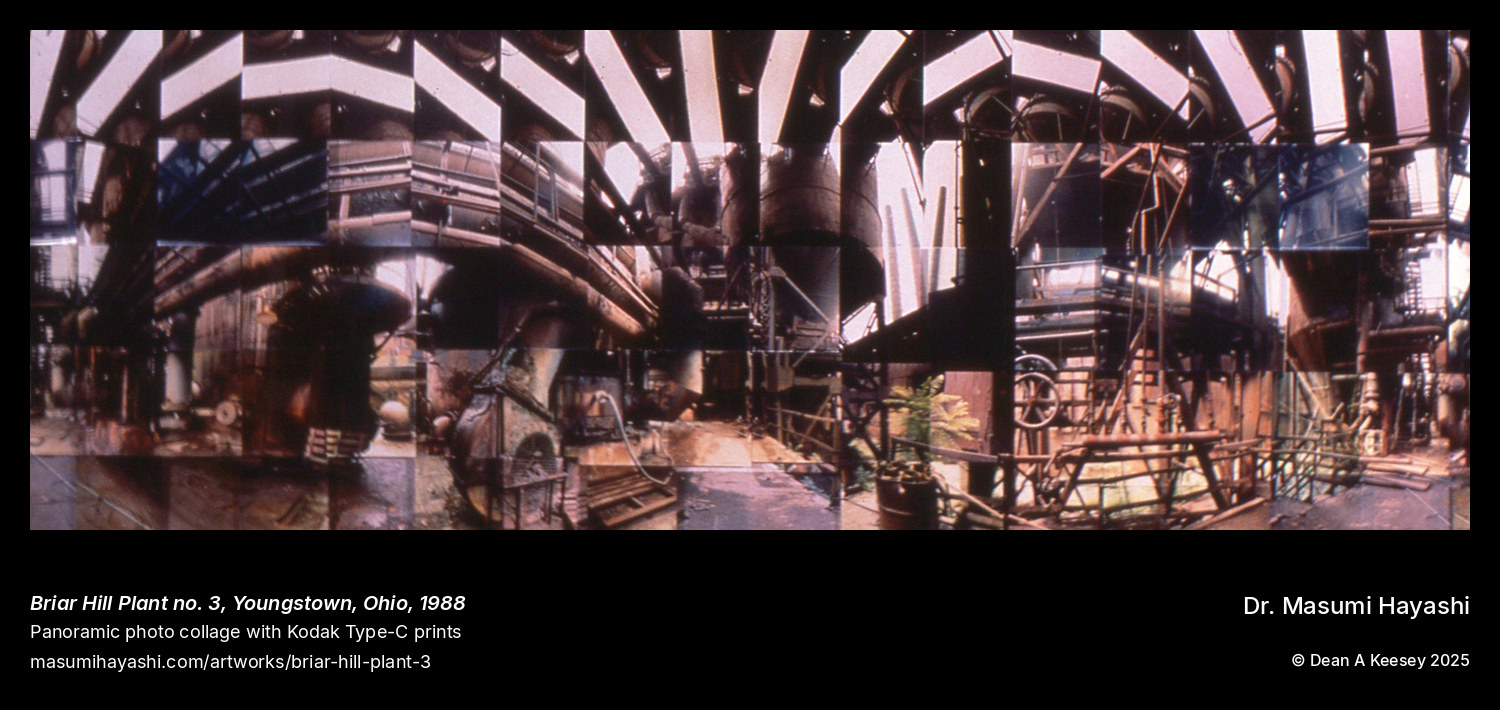
Briar Hill Plant no. 3, Youngstown, Ohio
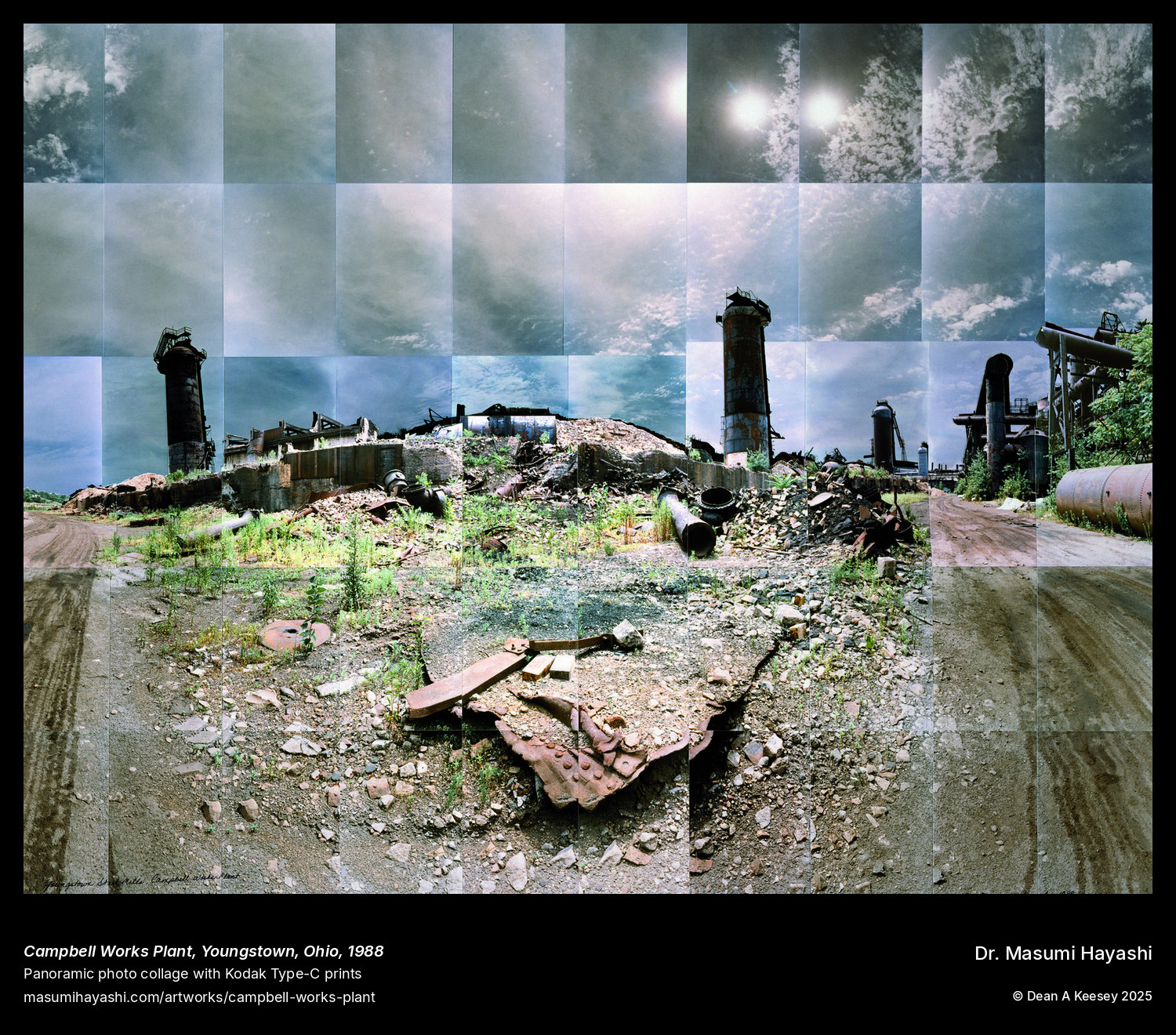
Campbell Works Plant, Youngstown, Ohio
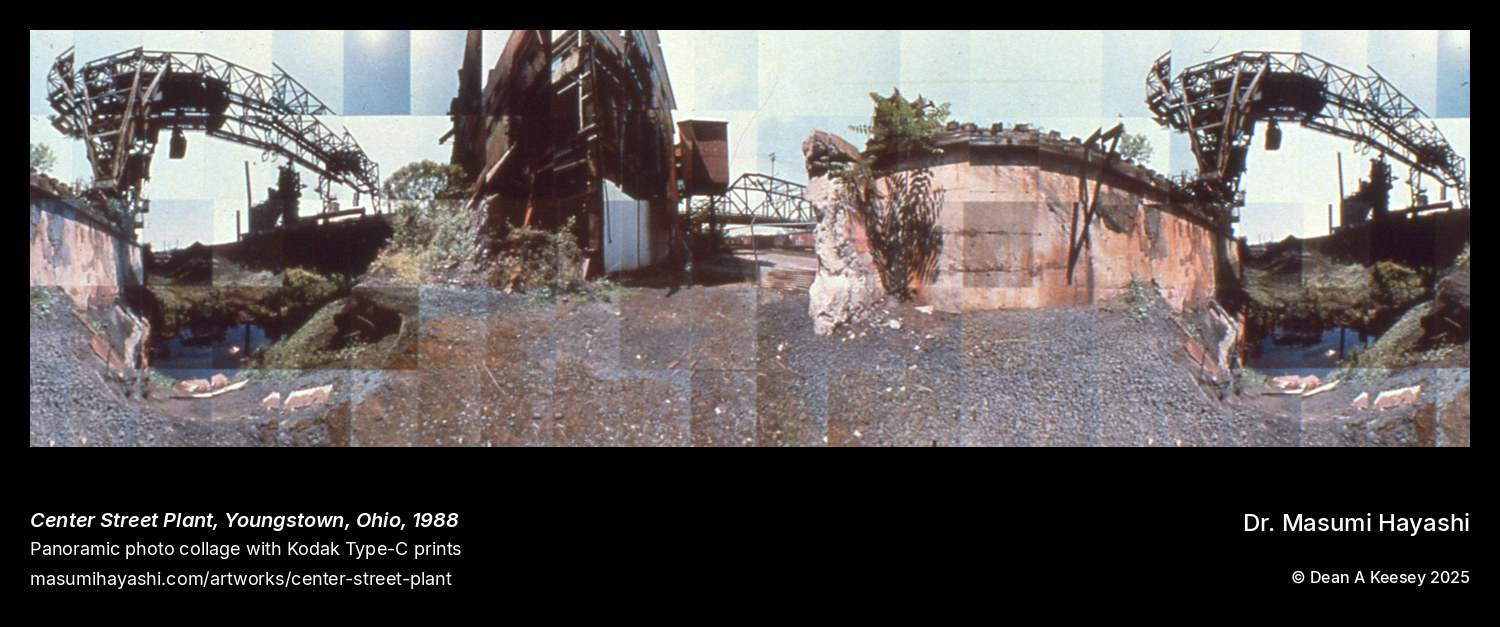
Center Street Plant, Youngstown, Ohio