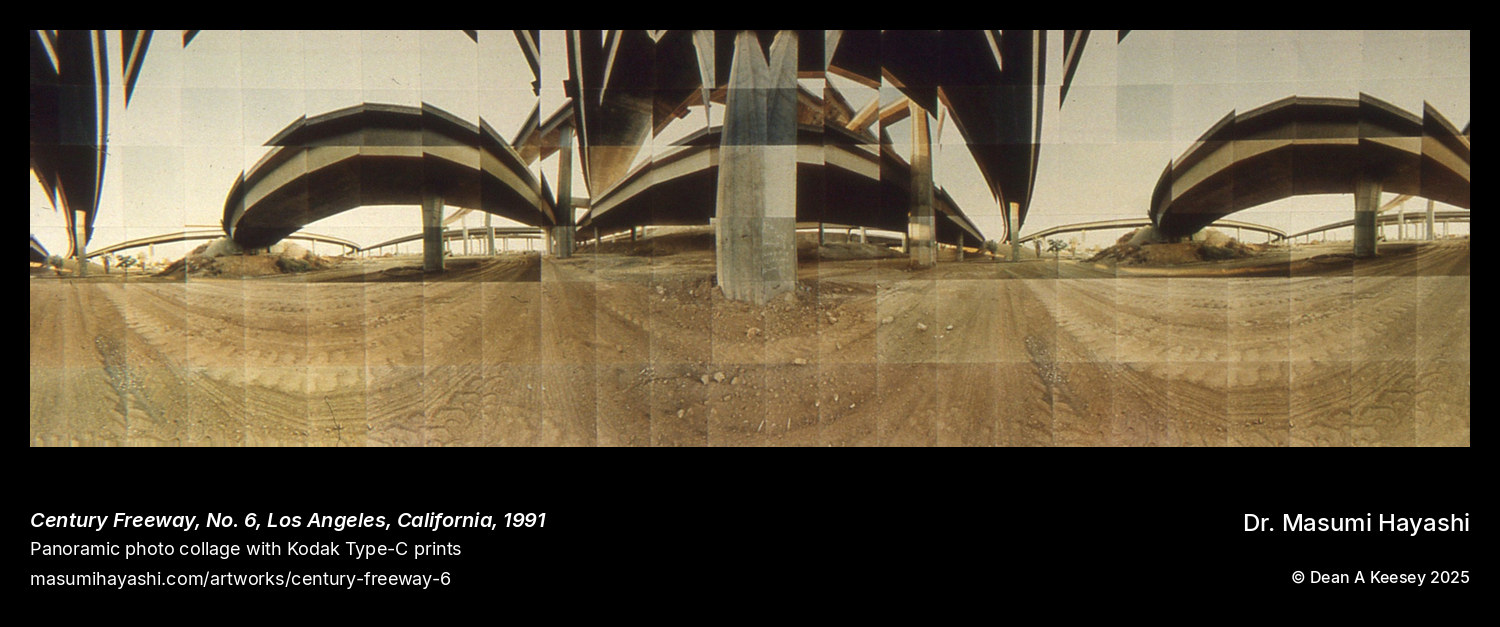
Century Freeway, No. 6, Los Angeles, California
Los Angeles (I-105), CA, USA
Panoramic Photo Collage
1991
26 x 88
At nearly seven and a half feet wide, this work employs one of the most extreme horizontal formats in Hayashi’s entire catalog—matched only by Ernie’s in the Flats among Post-Industrial Landscapes pieces. The extraordinary lateral sweep documents extensive corridor sections where displaced communities once thrived, capturing multiple city blocks of demolished neighborhoods replaced by elevated freeway infrastructure.
The penultimate work in the seven-part series, Century Freeway No. 6 demonstrates sustained documentary commitment through the near-completion phase. By the sixth location, Hayashi had refined her understanding of what visual elements effectively communicated displacement—what compositions captured infrastructure’s impact, which perspectives revealed the corridor’s systematic destruction of neighborhood after neighborhood.
By 1991, Interstate 105 construction stood approximately 90-95% complete. Most elevated structures were finished. Final roadway paving and striping were underway. The Metro Green Line median construction—transit mitigation promised in the landmark 1979 consent decree—was progressing. Landscaping and aesthetic treatments had begun. Two years remained before the October 1993 opening.
The extreme horizontal format suited the subject: freeway corridors emphasize lateral extension—miles of elevated structures cutting through communities. Displaced neighborhood sections required compositional sweep capable of capturing block after block of demolished homes. The 3.4:1 width-to-height ratio mirrors the corridor’s horizontal linearity slicing through the urban landscape.
This format choice created display challenges—88 inches requires substantial wall space, limiting collectors to institutions or collectors with generous exhibition areas. Yet the monumental scale serves documentary purposes: creating immersive viewing experience that communicates the freeway’s relentless extension across South Los Angeles, neighborhood after neighborhood, community after community.
More from Post-Industrial Landscapes
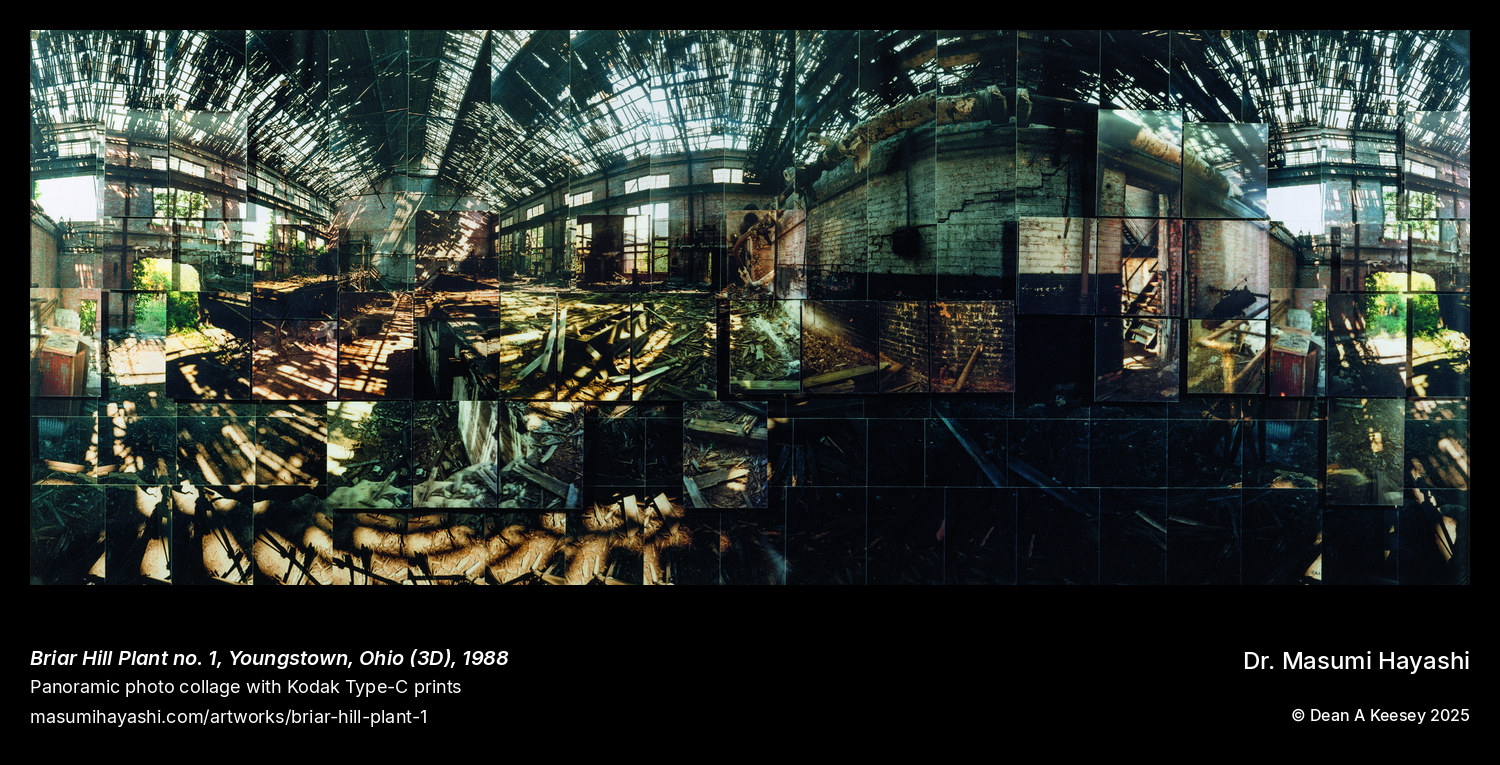
Briar Hill Plant no. 1, Youngstown, Ohio (3D)
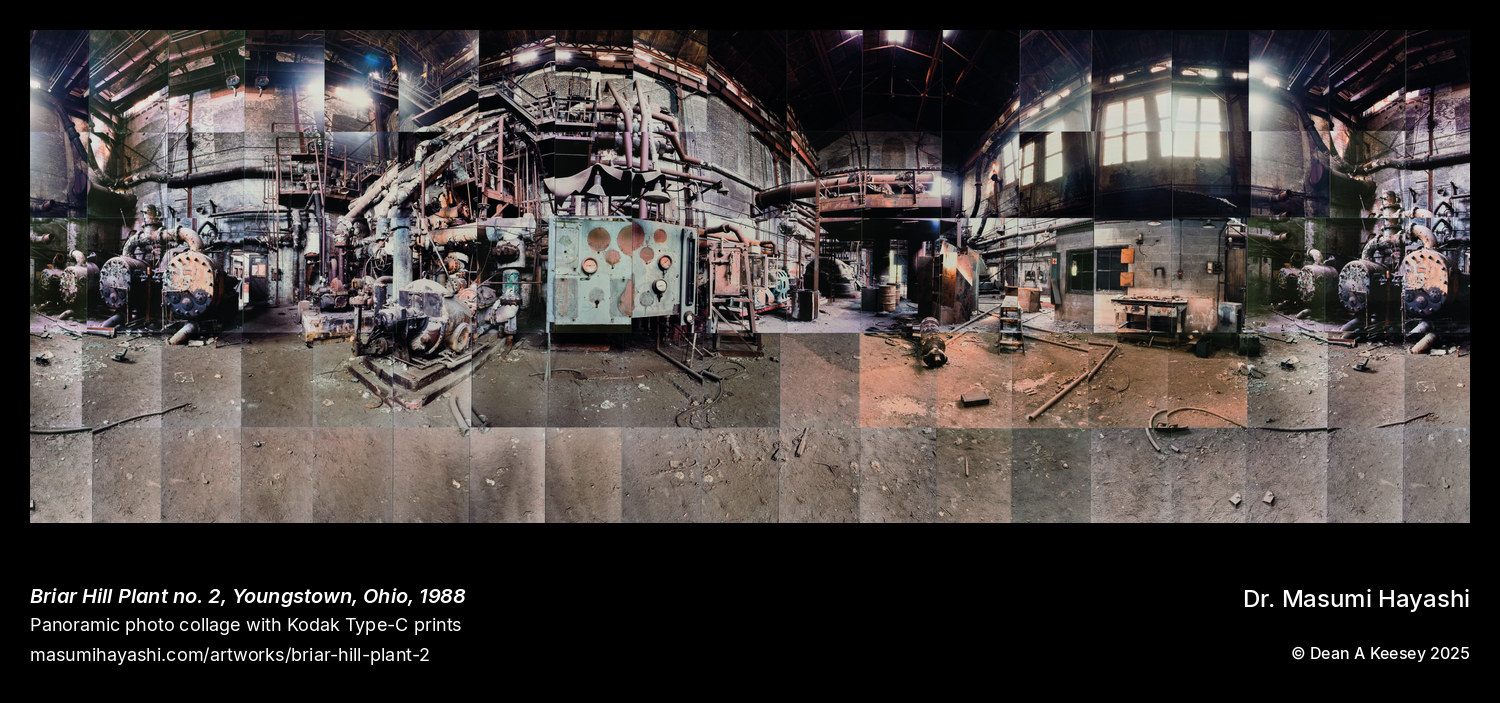
Briar Hill Plant no. 2, Youngstown, Ohio
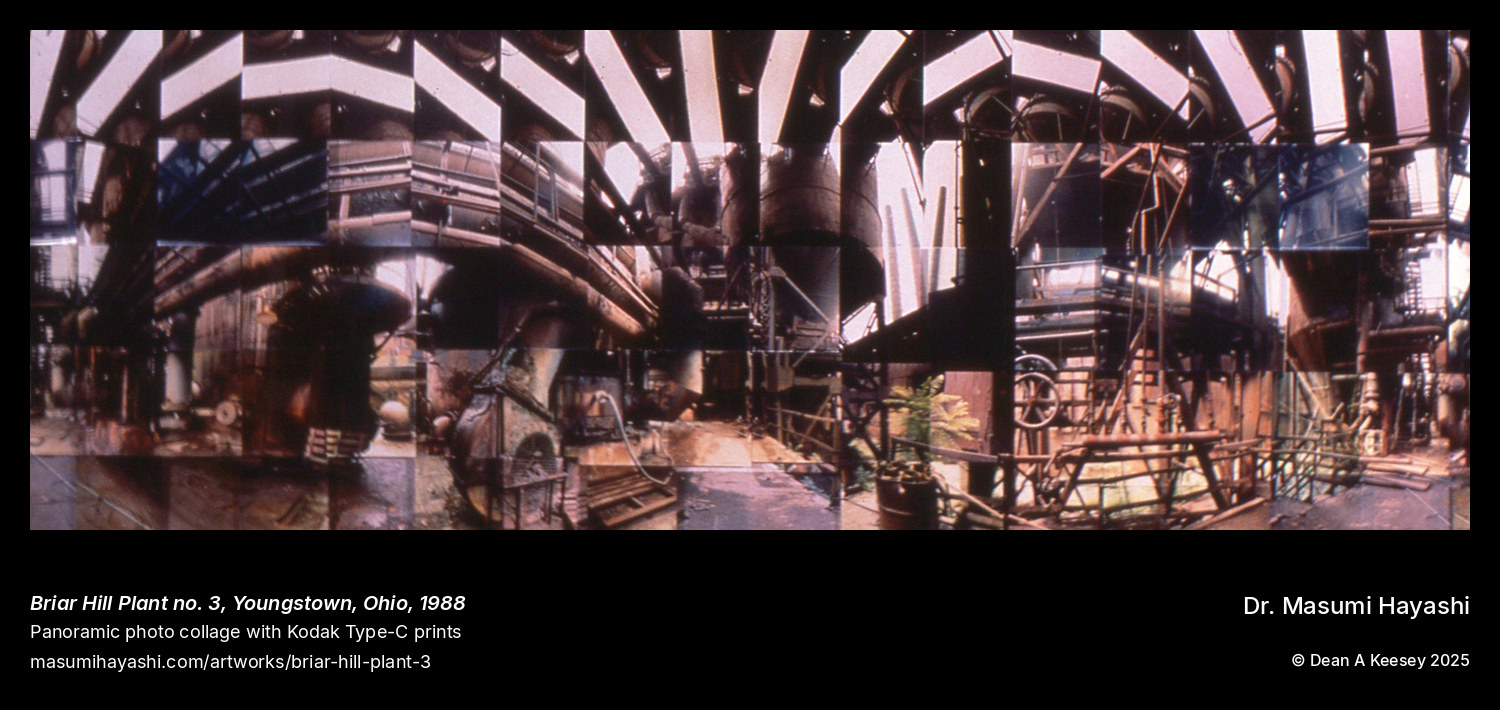
Briar Hill Plant no. 3, Youngstown, Ohio
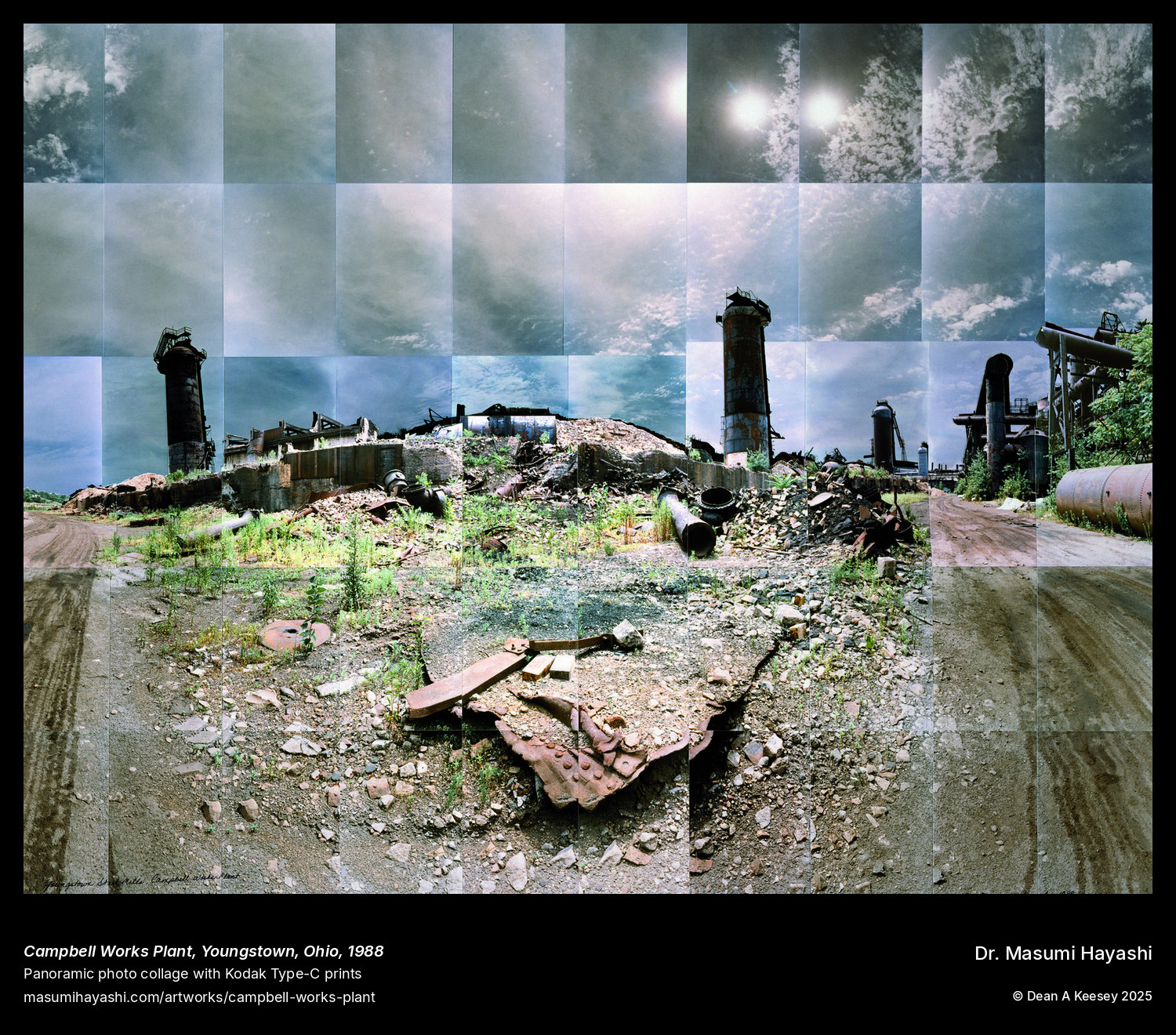
Campbell Works Plant, Youngstown, Ohio
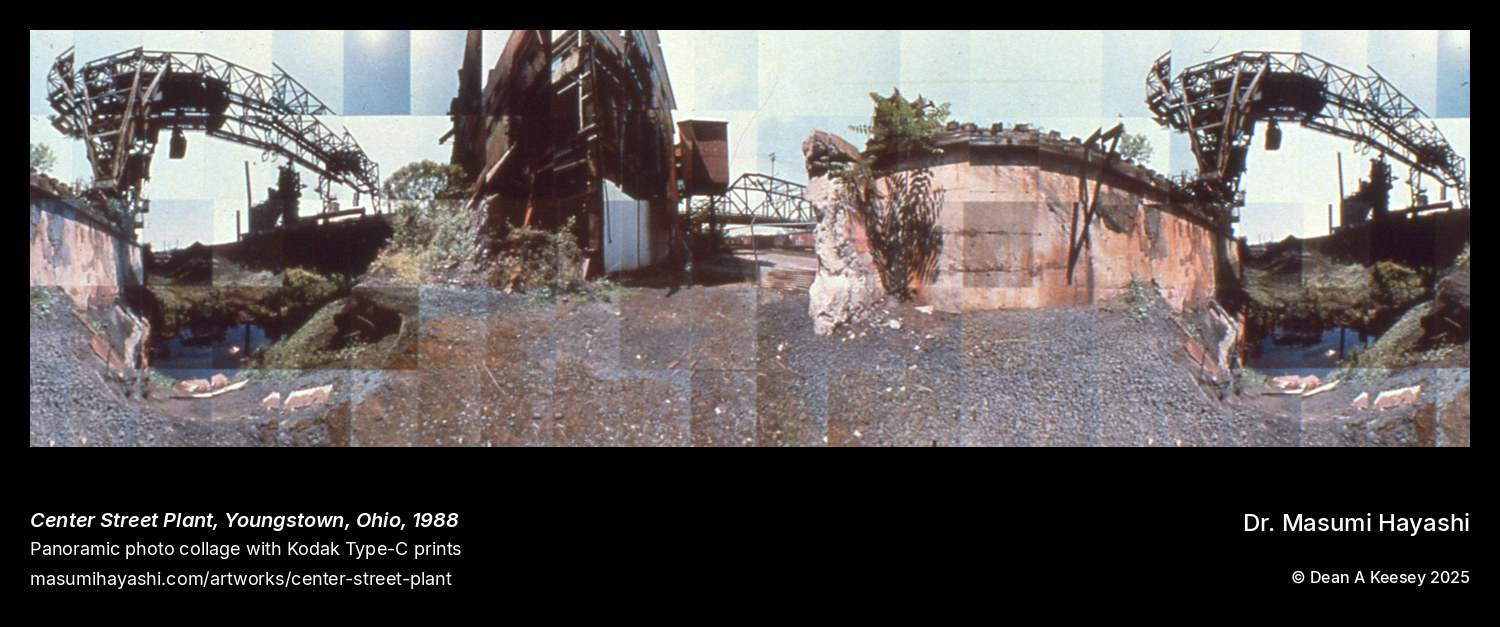
Center Street Plant, Youngstown, Ohio