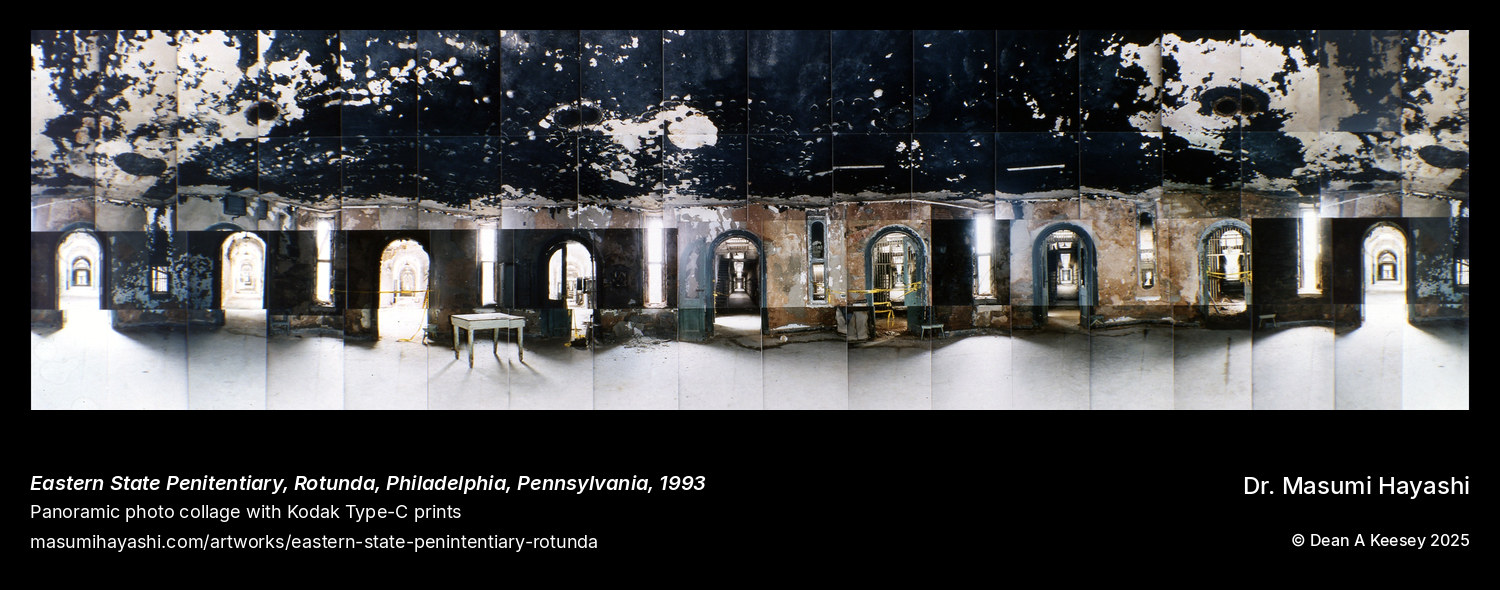
Eastern State Penitentiary, Rotunda, Philadelphia, Pennsylvania
Philadelphia, PA, USA
Panoramic Photo Collage
1993
22 x 56
The panopticon principle made architecture. Seven cellblock wings extending like spokes from this central hub. Few guards monitoring many prisoners from elevated positions. The crucial element: prisoners never knowing when they were actually being observed. This uncertainty created self-surveillance psychology. Compliance induced through architectural arrangement rather than constant physical monitoring. The space itself becoming instrument of control.
Eastern State’s rotunda embodied Jeremy Bentham’s vision with Gothic grandeur. Tall central space with skylight. Elevated guard positions enabling downward surveillance of radiating corridors. Single guard positions monitoring multiple wings simultaneously. Operational efficiency married to psychological manipulation—the architecture designed to make prisoners police themselves through the mere possibility of observation.
The irony is visible in the ruins. Gothic Revival splendor meant to inspire awe and moral reflection. Imposing structure suggesting benevolent institutional authority. Beautiful design advertising humanitarian progress while housing systematic psychological torture. By 1993 (22 years post-closure), the deteriorating rotunda testified to nineteenth-century reform ideals that promised transformation through isolation and delivered insanity instead.
Hayashi’s vertical format—22 by 56 inches—emphasizes upward movement through the central surveillance space. The compressed width focuses attention on vertical architecture and the power dynamics built into every sight line, every elevated position, every radiating corridor calculated for maximum observational control.
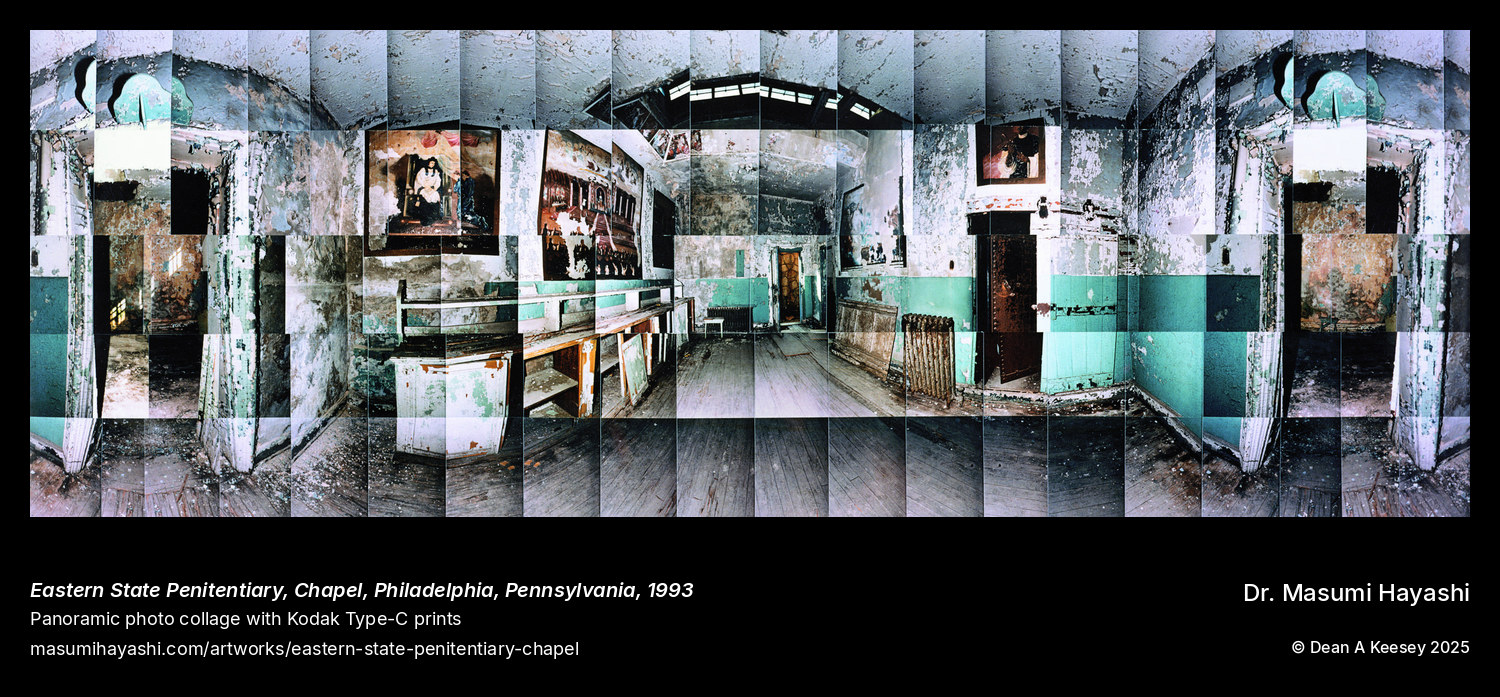
Three 1993 Eastern State photographs: Chapel’s collapsed roof exposing failed reformation philosophy. Infirmary’s horizontal wards documenting minimal healthcare under punitive conditions. Rotunda’s vertical surveillance hub embodying panopticon control. Different spaces, different formats, unified institutional purpose: power exercised through architecture over captive bodies and minds.
More from Abandoned Prisons
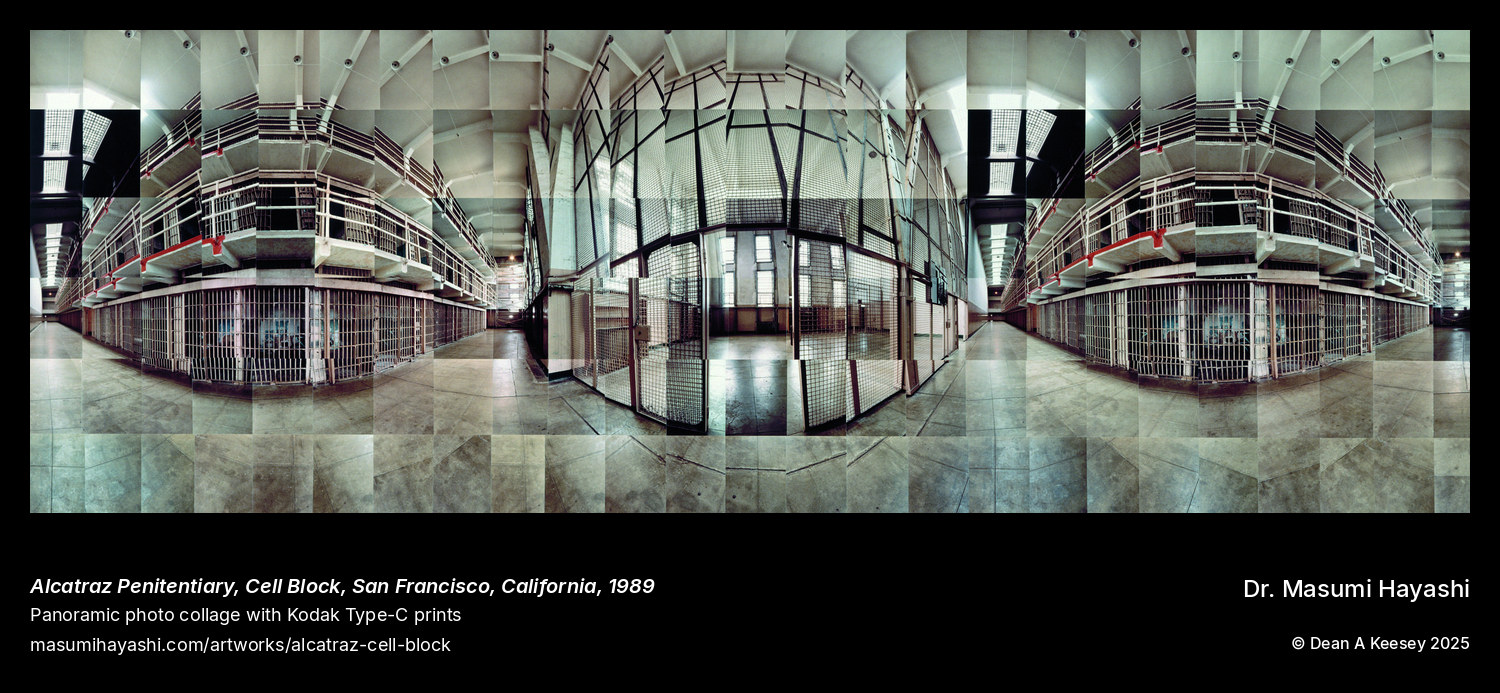
Alcatraz Penitentiary, Cellblock, San Francisco, California
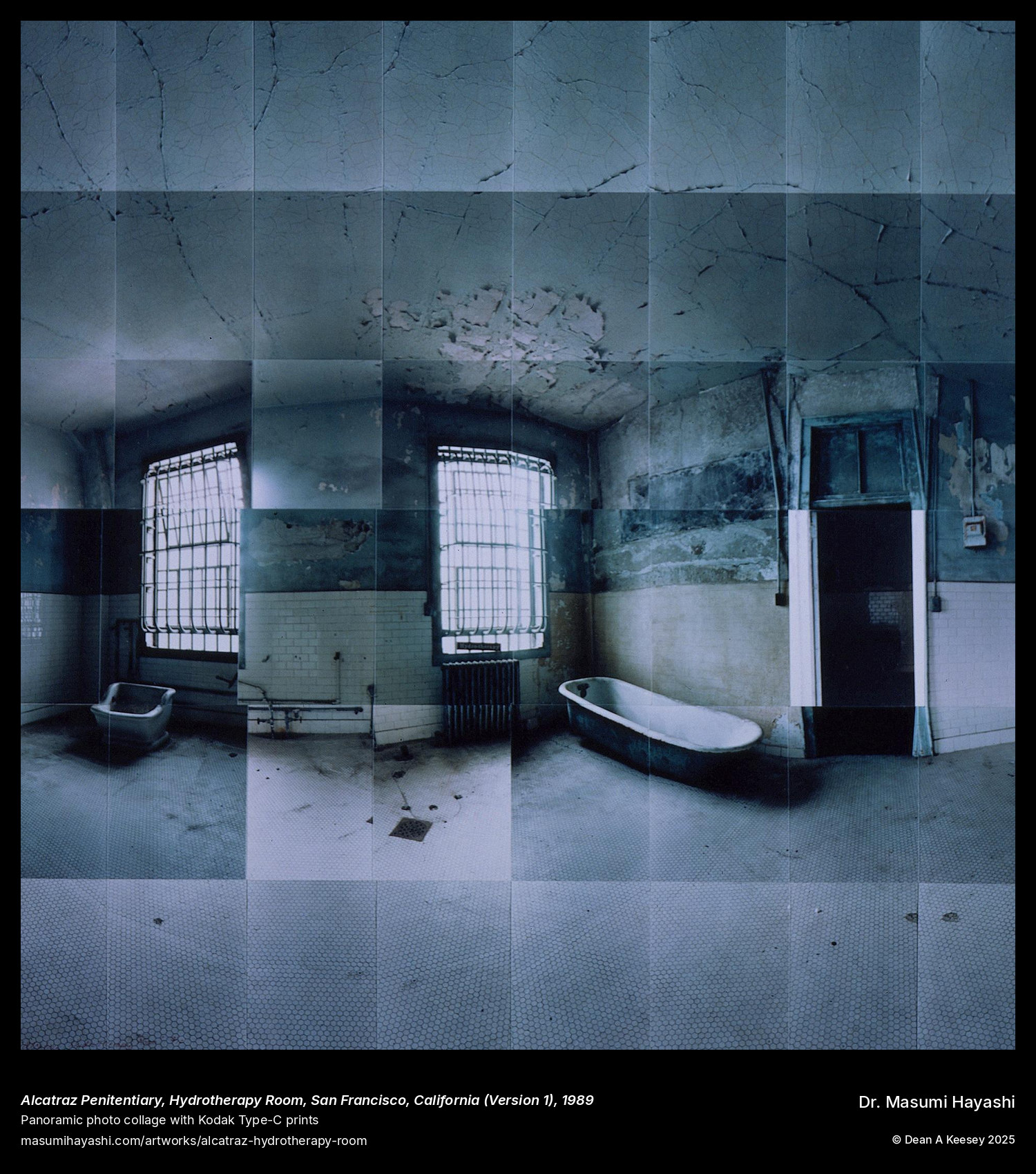
Alcatraz Penitentiary, Hydro Therapy Room, San Francisco, California (Version 1)
Alcatraz Penitentiary, Hydro Therapy Room, San Francisco, California (Version 2)
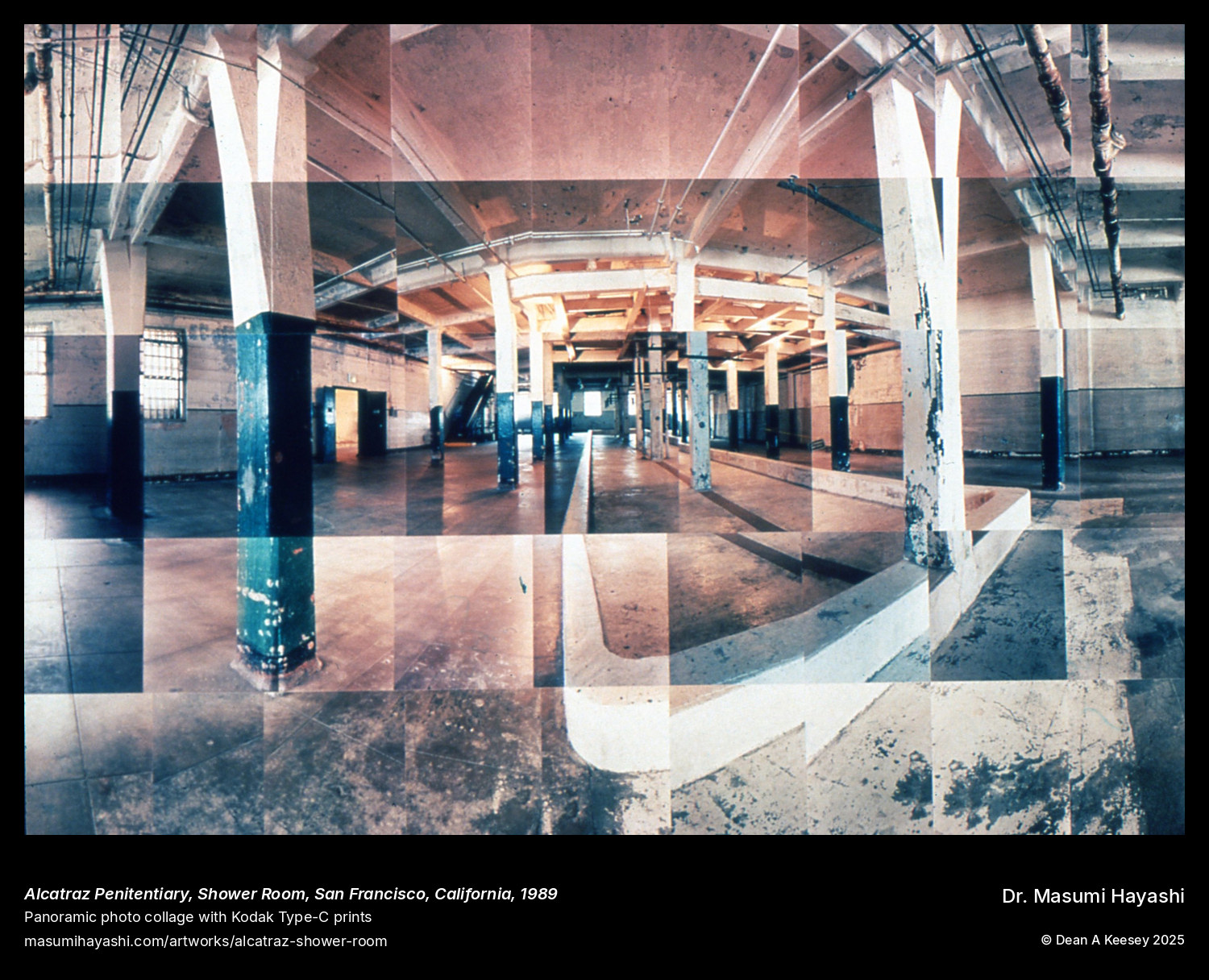
Alcatraz Penitentiary, Shower Room, San Francisco, California
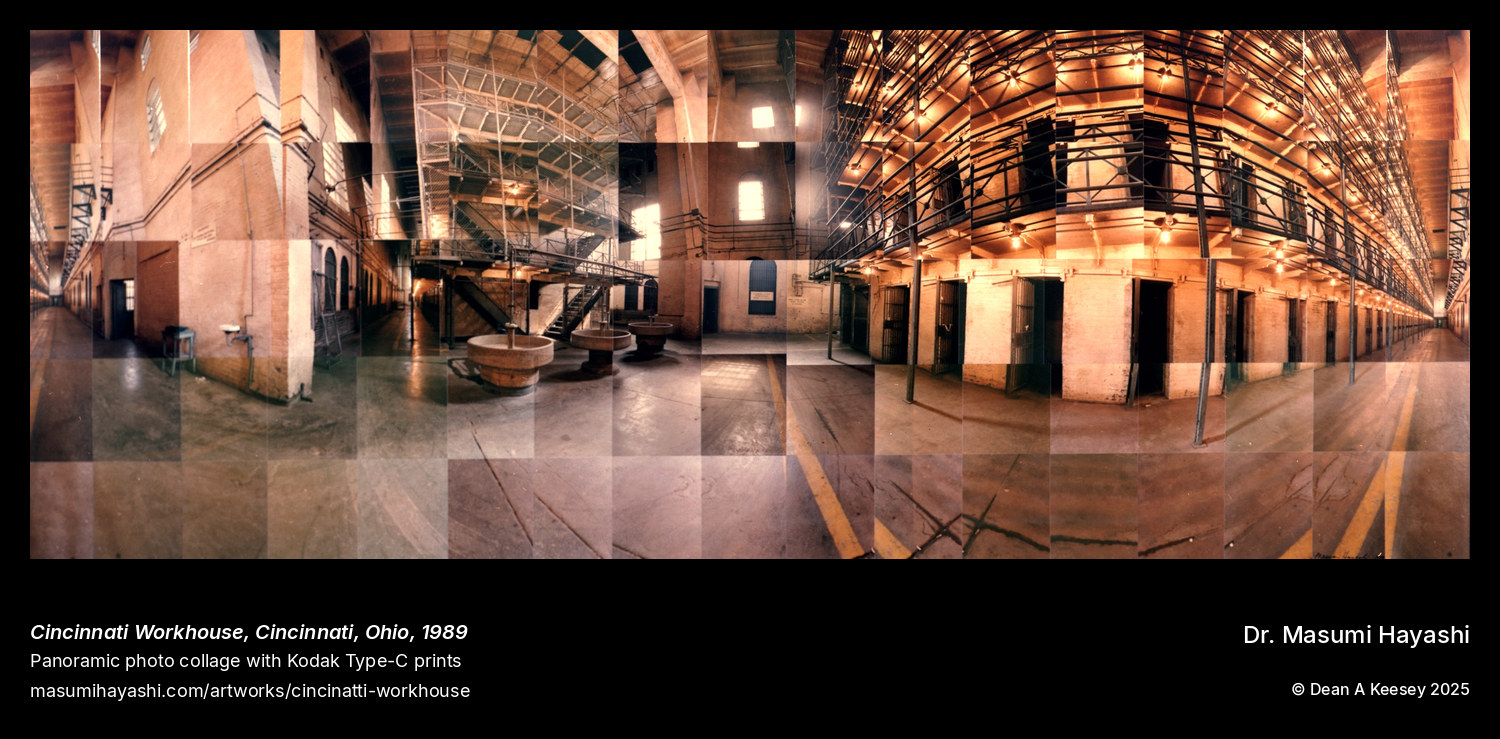
Cincinnati Workhouse, Cincinnati, Ohio