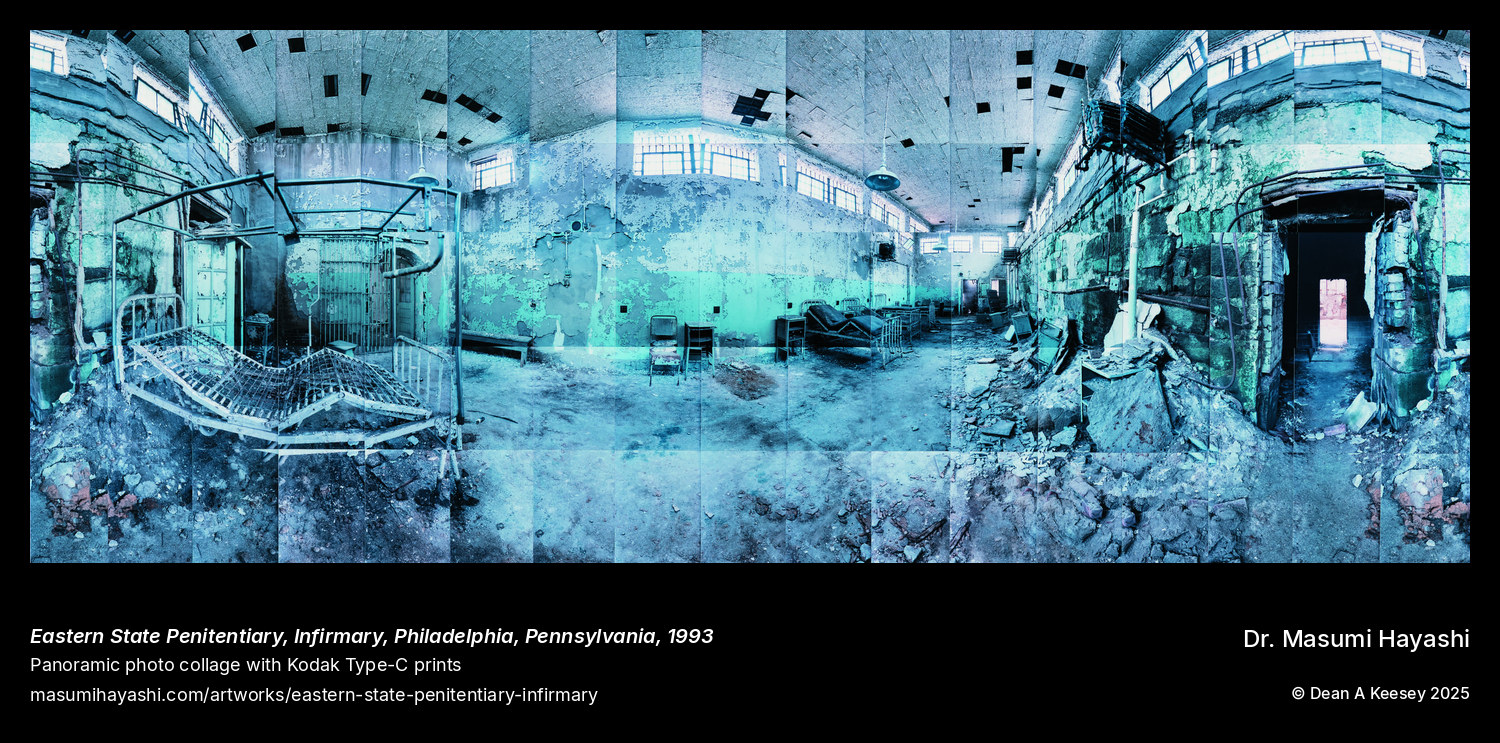
Eastern State Penitentiary, Infirmary, Philadelphia, Pennsylvania
Philadelphia, PA, USA
Panoramic Photo Collage
1993
64 x 29
Prison infirmaries faced an impossible contradiction: provide healthcare to people the institution was designed to punish. Eastern State’s infirmary operated for 142 years (1829-1971) navigating this tension, delivering minimal care under conditions that often worsened illness rather than promoted healing.
The patients arrived sick from prison itself. Tuberculosis spreading through overcrowded cells. Work injuries from forced labor. Violence injuries from assaults. Mental health crises exacerbated by solitary confinement. Chronic conditions receiving inadequate treatment. The institution created the illness, then treated it grudgingly, always subordinating healthcare to security, cost containment, and punishment philosophies that viewed sickness as weakness or manipulation.
The medical care reflected broader attitudes toward imprisoned populations. Underqualified staff. Outdated treatments. Racial discrimination in treatment access. Institutional resistance to the idea that prisoners deserved adequate healthcare. The infirmary existed not to heal but to keep bodies functional enough to continue serving sentences.
Hayashi’s wide horizontal format—64 by 29 inches, over five feet across—emphasizes the ward’s lateral organization. Long spaces with beds along walls. Corridors showing medical rooms on both sides. The expansive horizontal sweep capturing institutional medical architecture designed for efficiency, not care. By 1993 (22 years post-closure), deteriorating equipment and spartan conditions testified to decades of healthcare delivery prioritizing institutional control over patient welfare.
This is where punishment met medicine, where the obligation to provide care confronted the commitment to inflict suffering. The architecture preserves that contradiction in spatial form.
More from Abandoned Prisons
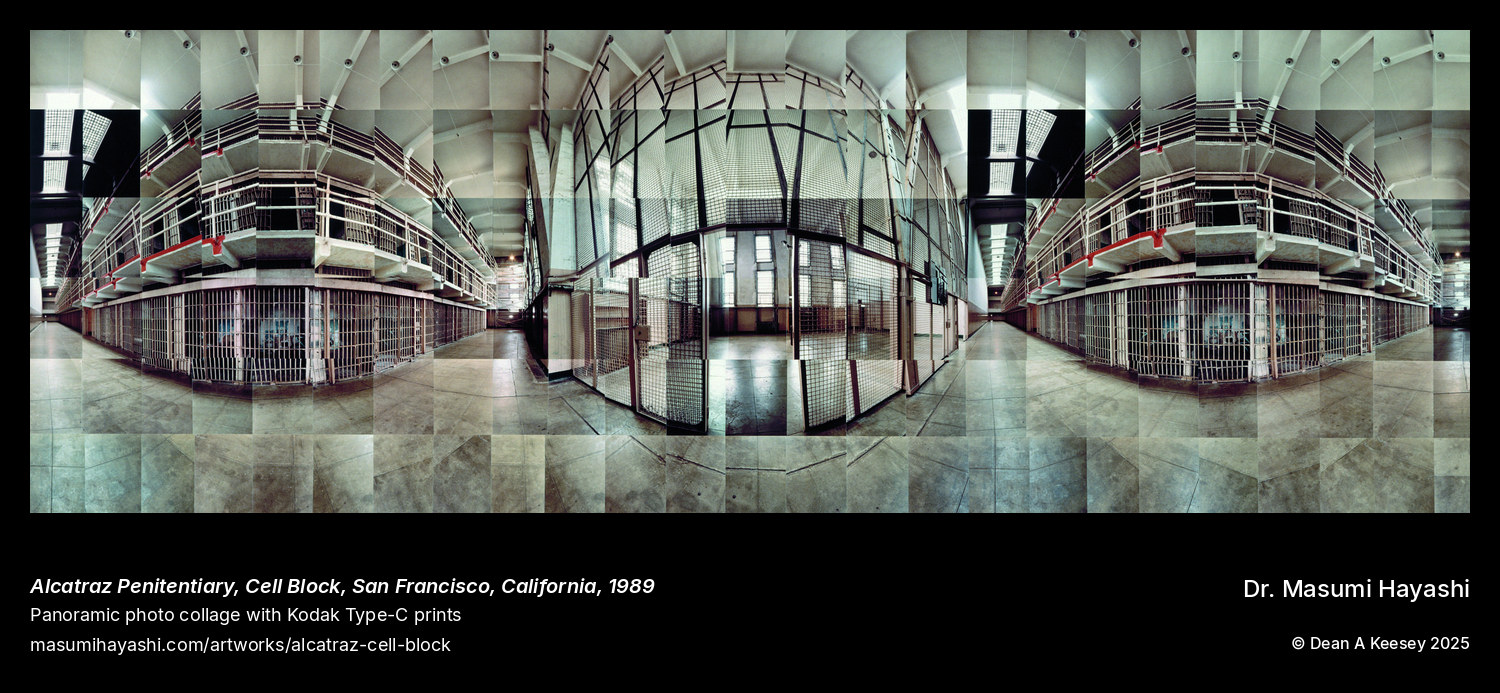
Alcatraz Penitentiary, Cellblock, San Francisco, California
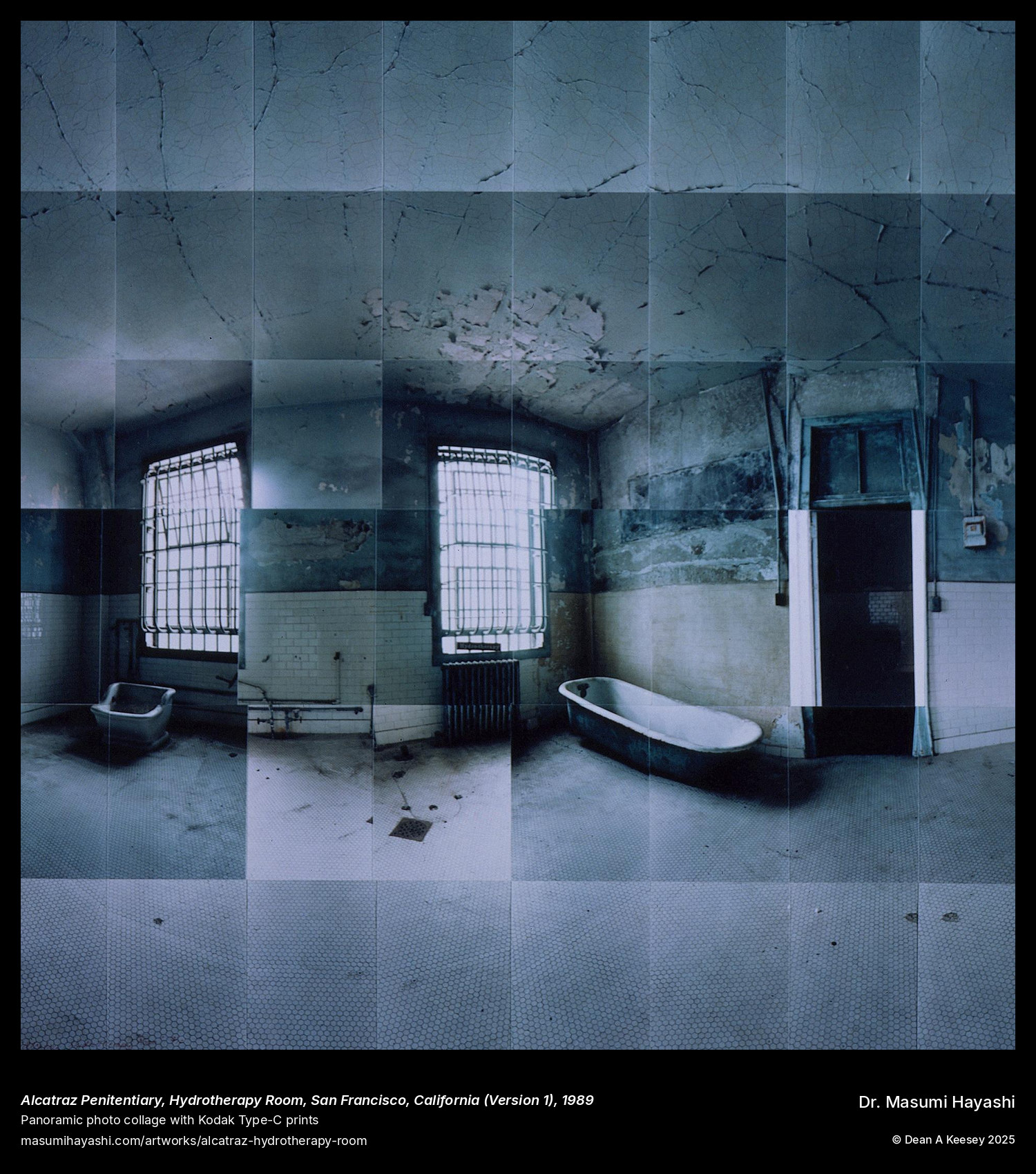
Alcatraz Penitentiary, Hydro Therapy Room, San Francisco, California (Version 1)
Alcatraz Penitentiary, Hydro Therapy Room, San Francisco, California (Version 2)
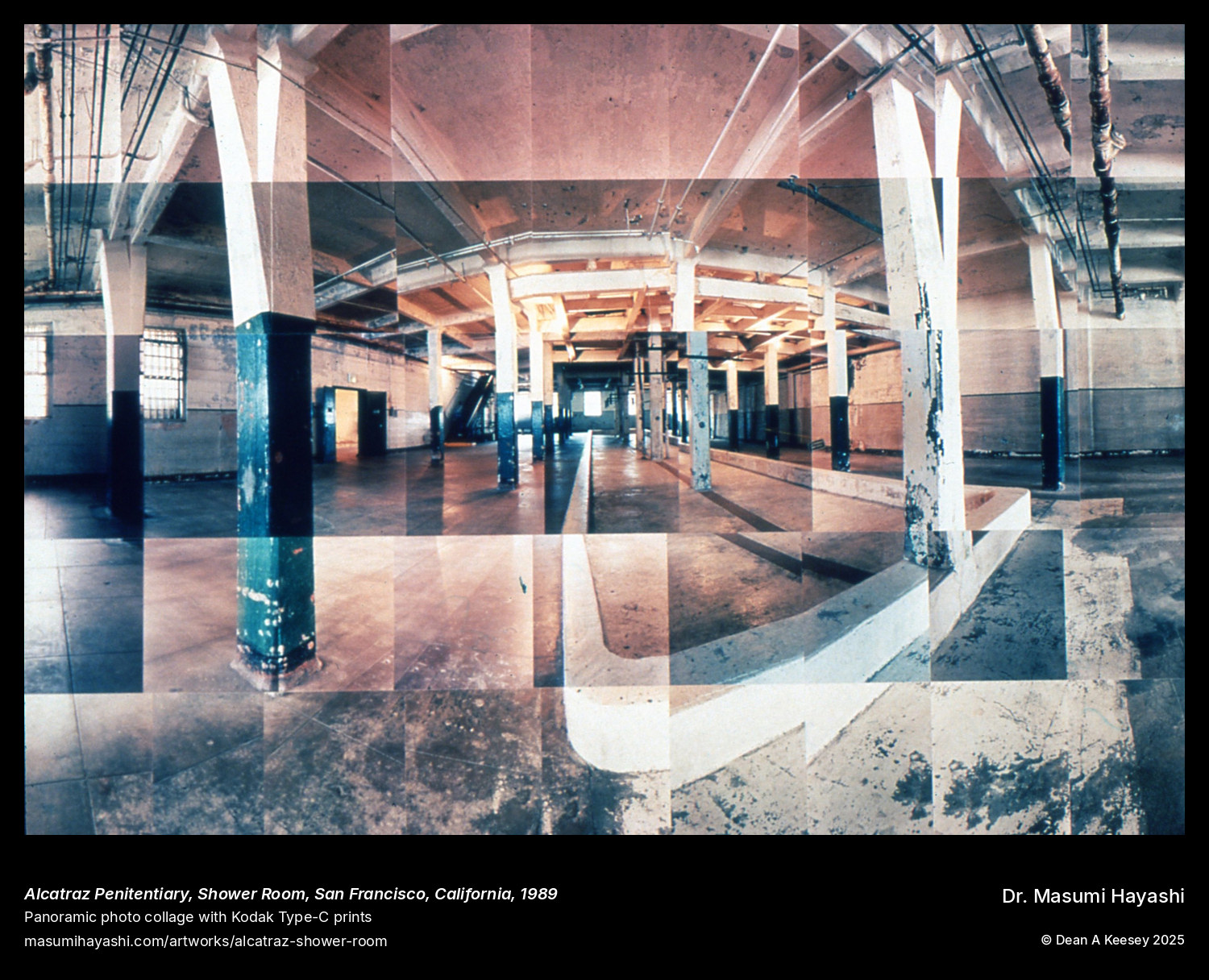
Alcatraz Penitentiary, Shower Room, San Francisco, California
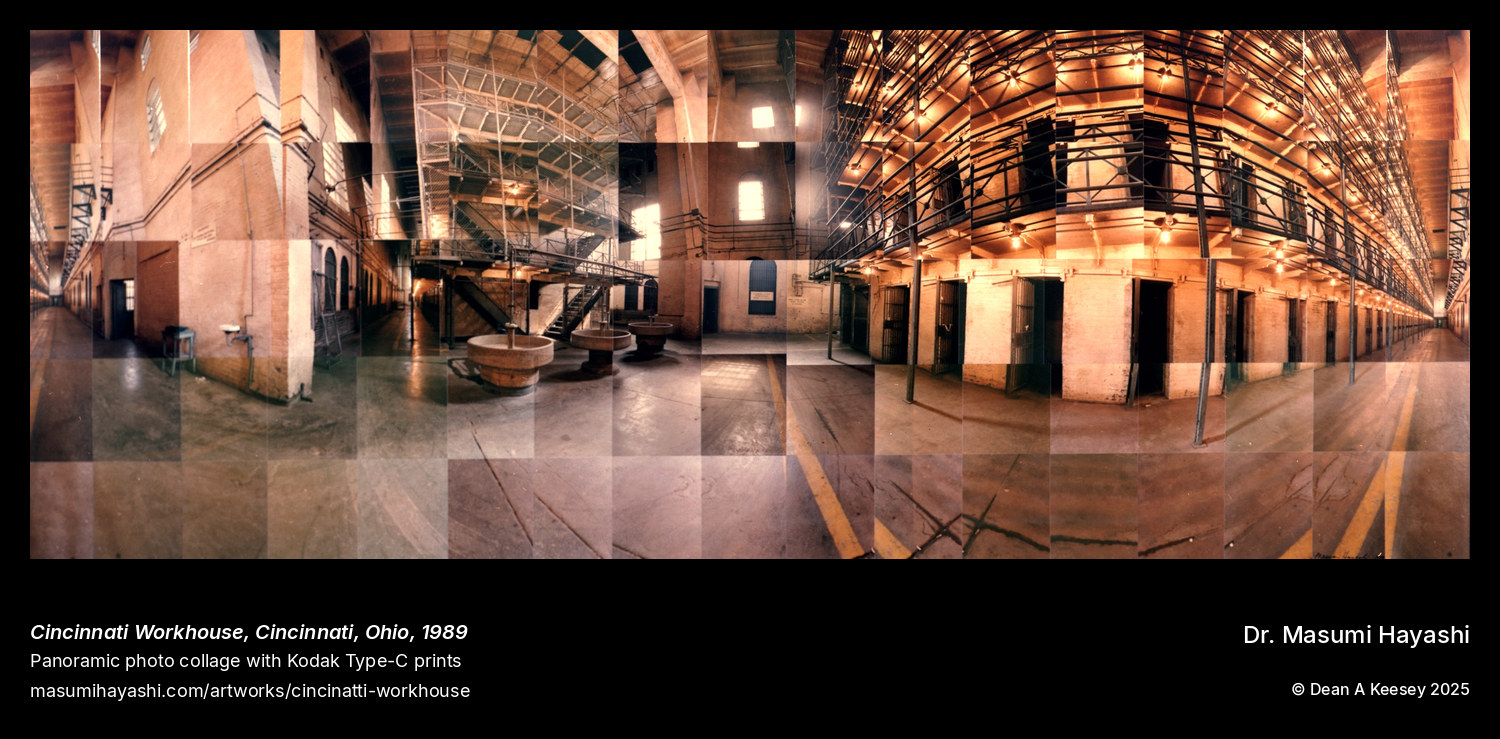
Cincinnati Workhouse, Cincinnati, Ohio