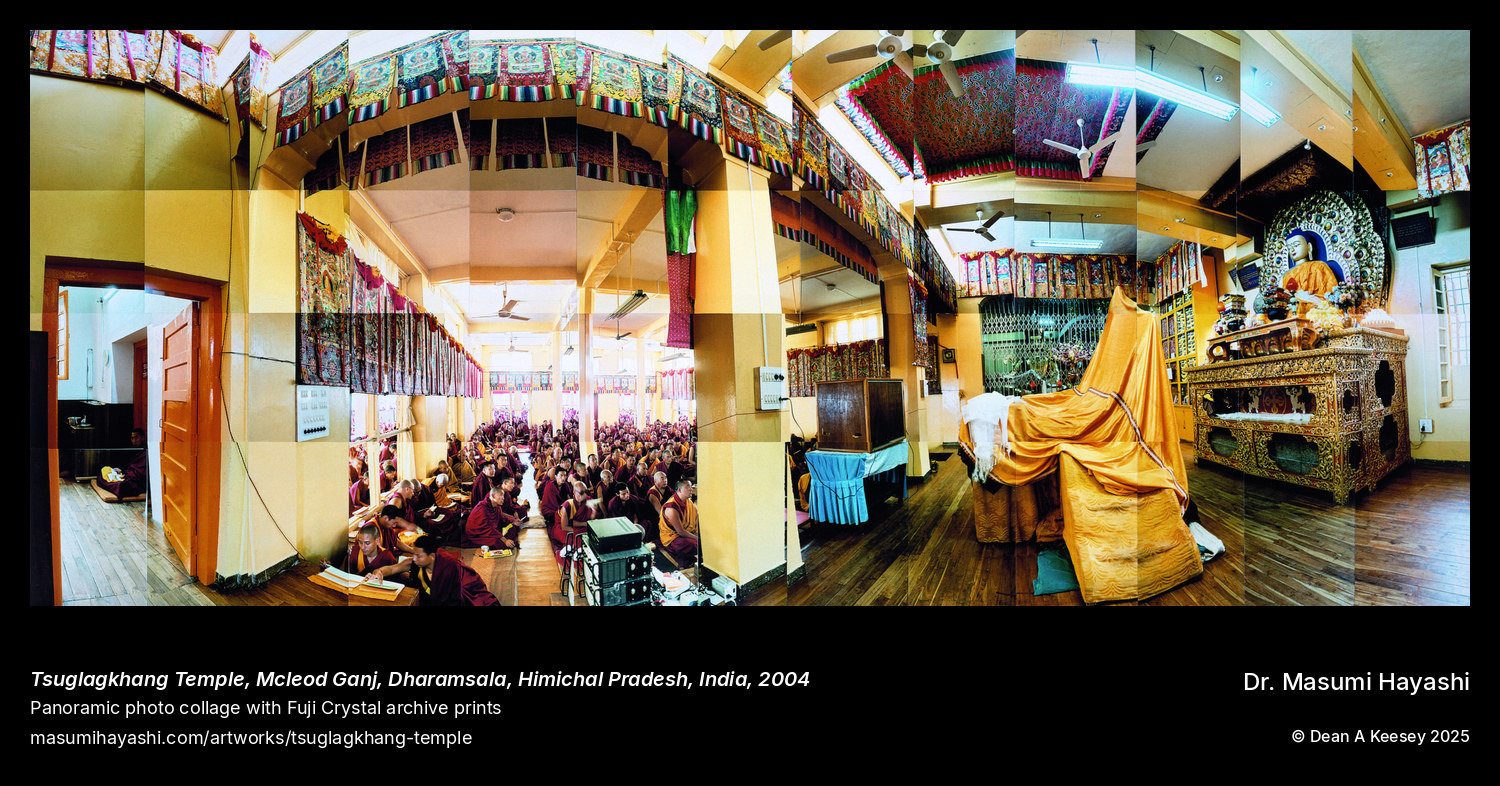
Tsuglagkhang Temple
Dharamsala, Himichal Pradesh, India
Panoramic photo collage with Fuji Crystal archive prints
2004
45 x 19
This horizontal 45-by-19-inch panorama documents Tsuglagkhang—the main temple of the Dalai Lama’s exile complex in McLeod Ganj, Dharamsala, where Tibetan Buddhism’s spiritual and political headquarters has operated since 1959. The elongated format captures the temple complex’s architectural spread across Himalayan foothills where refugee community rebuilt sacred infrastructure after fleeing Chinese occupation of Tibet.
Created in 2004, just two years before Hayashi’s death, the work represents late-career engagement with Tibetan Buddhism in diaspora—not ancient monuments surviving centuries, but contemporary sacred architecture constructed by exiled community maintaining religious continuity despite political catastrophe. The Dalai Lama’s residence and teaching spaces adjoin the temple, making Tsuglagkhang a living pilgrimage destination where devotees seek blessings from the fourteenth incarnation of Avalokiteshvara, bodhisattva of compassion.
Unlike historically layered monuments elsewhere in the Sacred Architectures series, Tsuglagkhang represents deliberate reconstruction—Tibetan architectural forms transplanted to Indian soil, traditional iconography maintained despite exile. The temple houses sacred images and texts rescued during 1959’s desperate flight, religious objects carried across Himalayan passes by refugees prioritizing spiritual treasures alongside survival necessities. This preserved material culture anchors diaspora identity, the physical objects connecting exile community to homeland now inaccessible.
McLeod Ganj itself exemplifies religion’s capacity for geographic transplantation—a former British hill station transformed into “Little Lhasa” where Tibetan language, cuisine, crafts, and spiritual practices flourish seven decades after displacement. The temple serves not merely as worship space but as cultural embassy, preservation project, and symbol of Tibet’s government-in-exile maintaining claim to occupied homeland.
The panoramic format documents the temple’s integration within hillside landscape—prayer flags fluttering against mountain backdrop, traditional architectural elements adapted to Indian context, the diaspora community’s determination to maintain cultural identity across generations of exile. Hayashi’s documentation captures Tibetan Buddhism at a specific historical moment: refugees still hoping for return, the fourteenth Dalai Lama still actively teaching, exile community thriving despite uncertainty.
More from Sacred Architectures
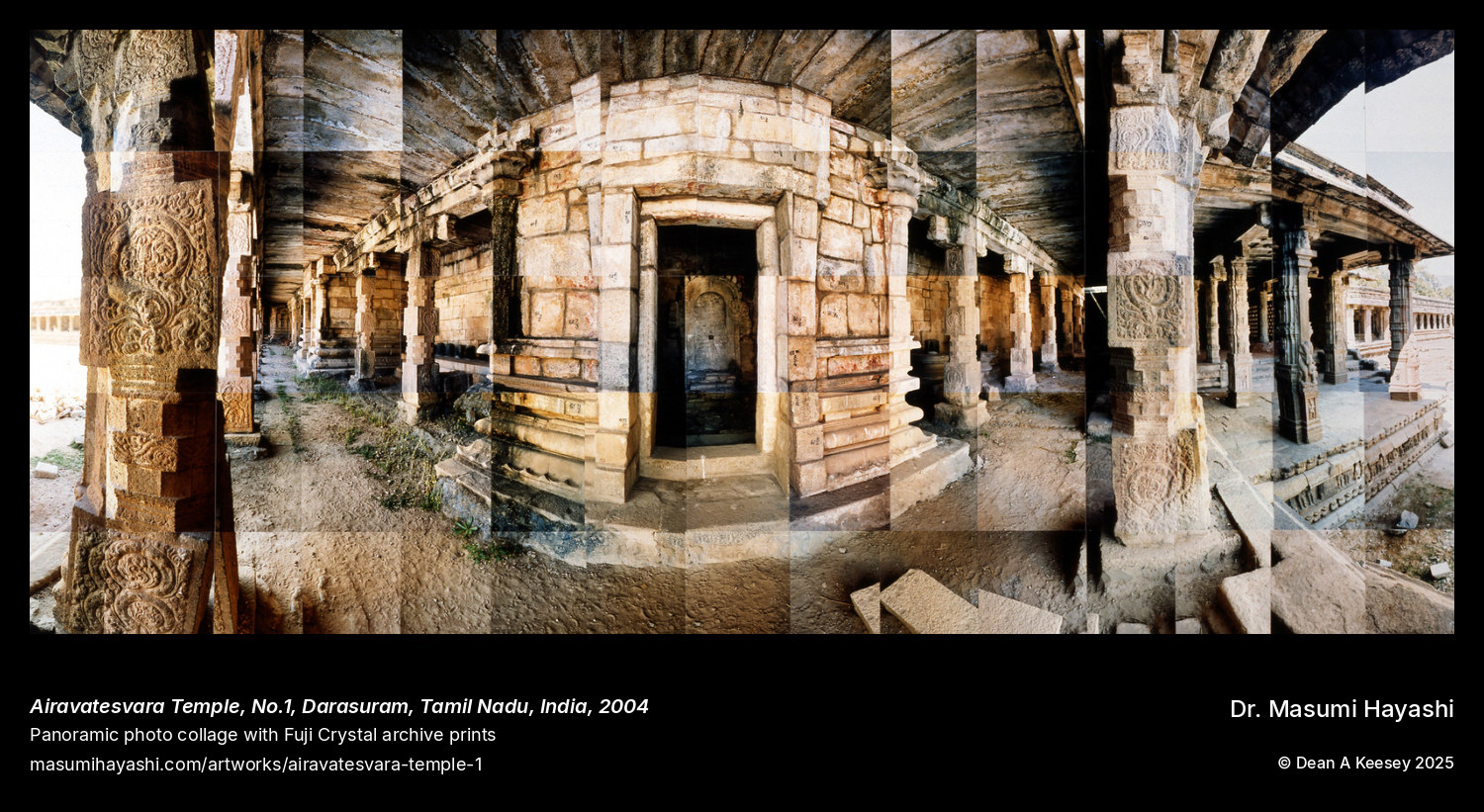
Airavatesvara Temple #1, Darasuram, Tamil Nadu, India
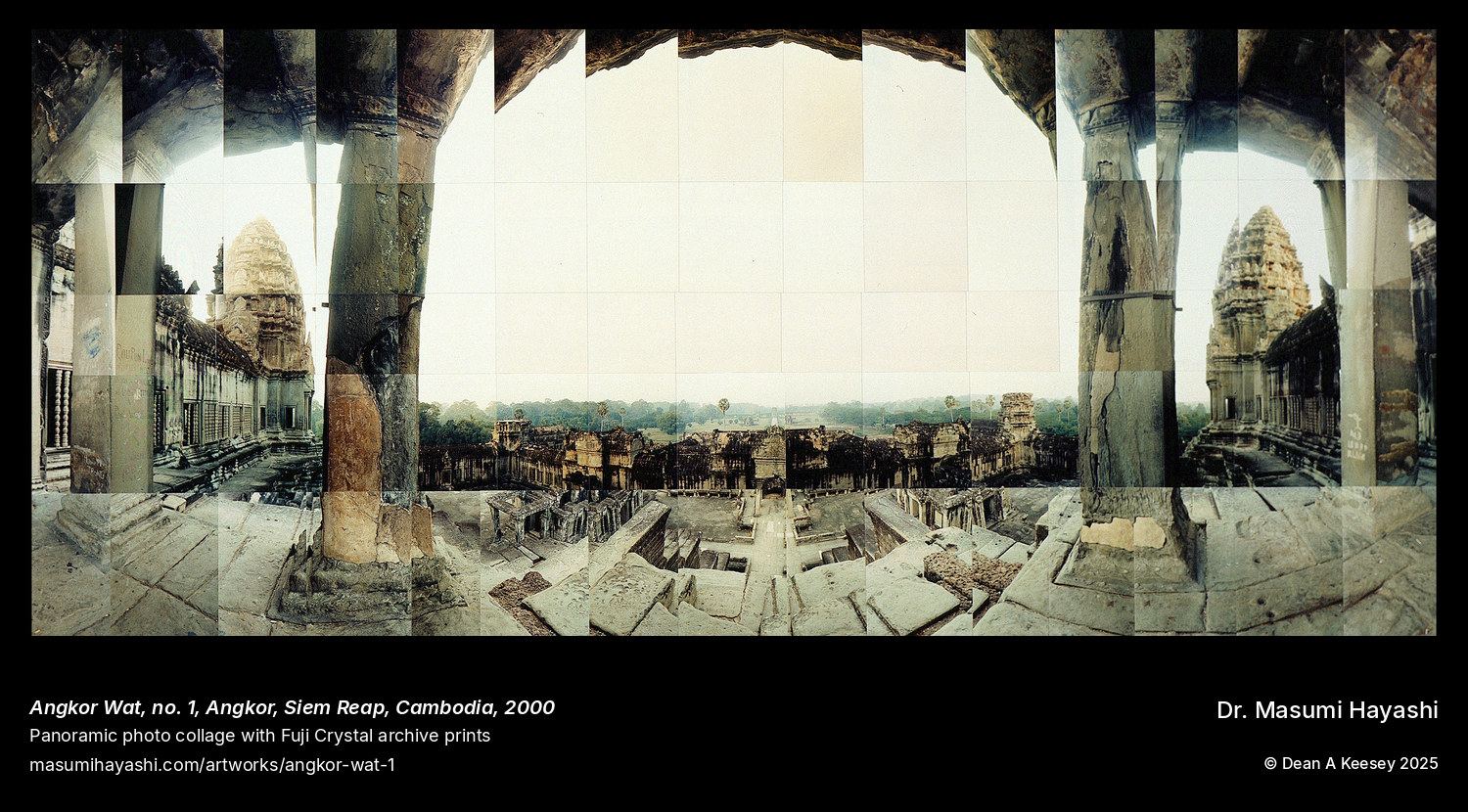
Angkor Wat, no. 1, Angkor, Siem Reap, Cambodia
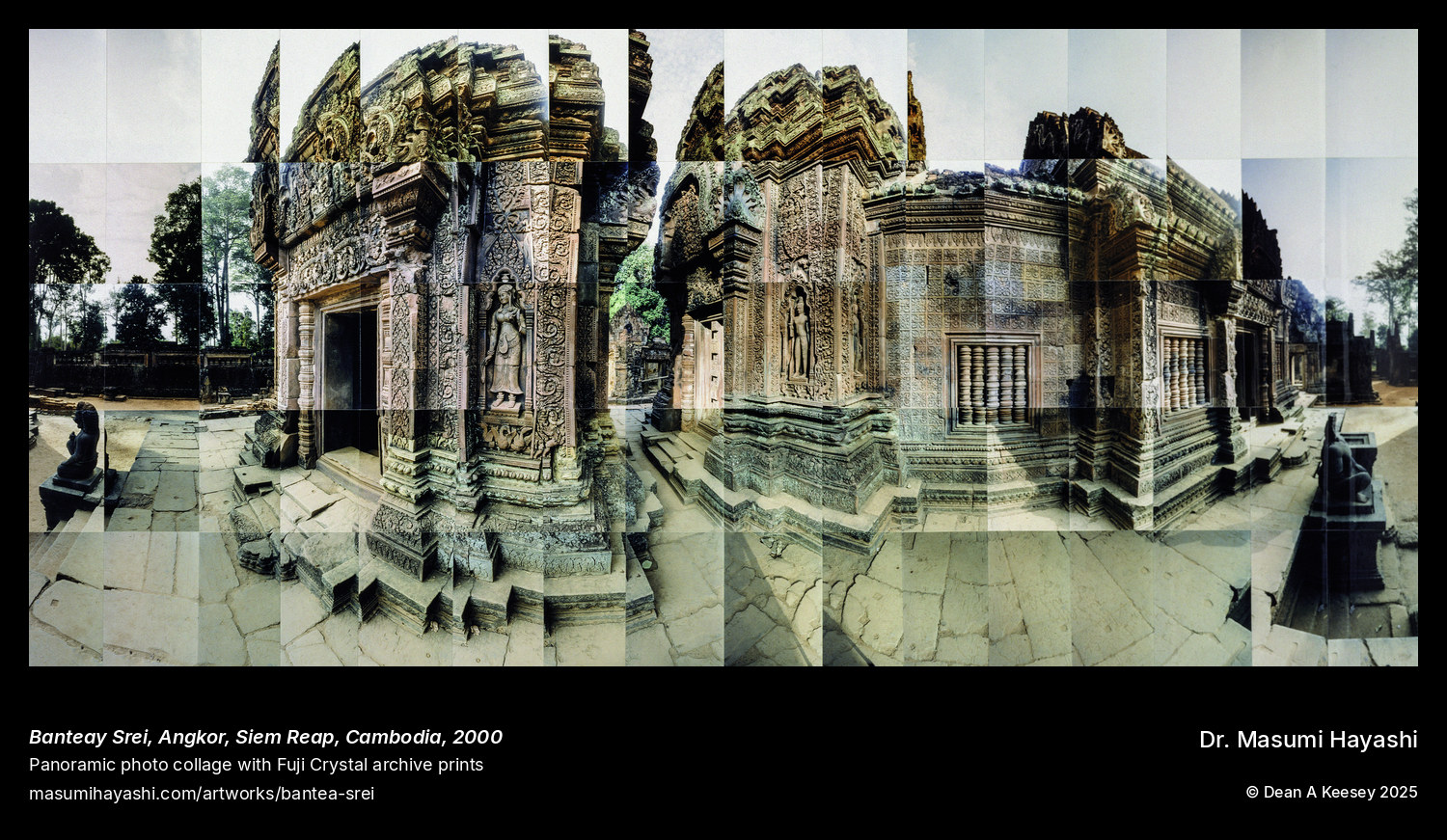
Banteay Srei, Angkor, Siem Reap, Cambodia
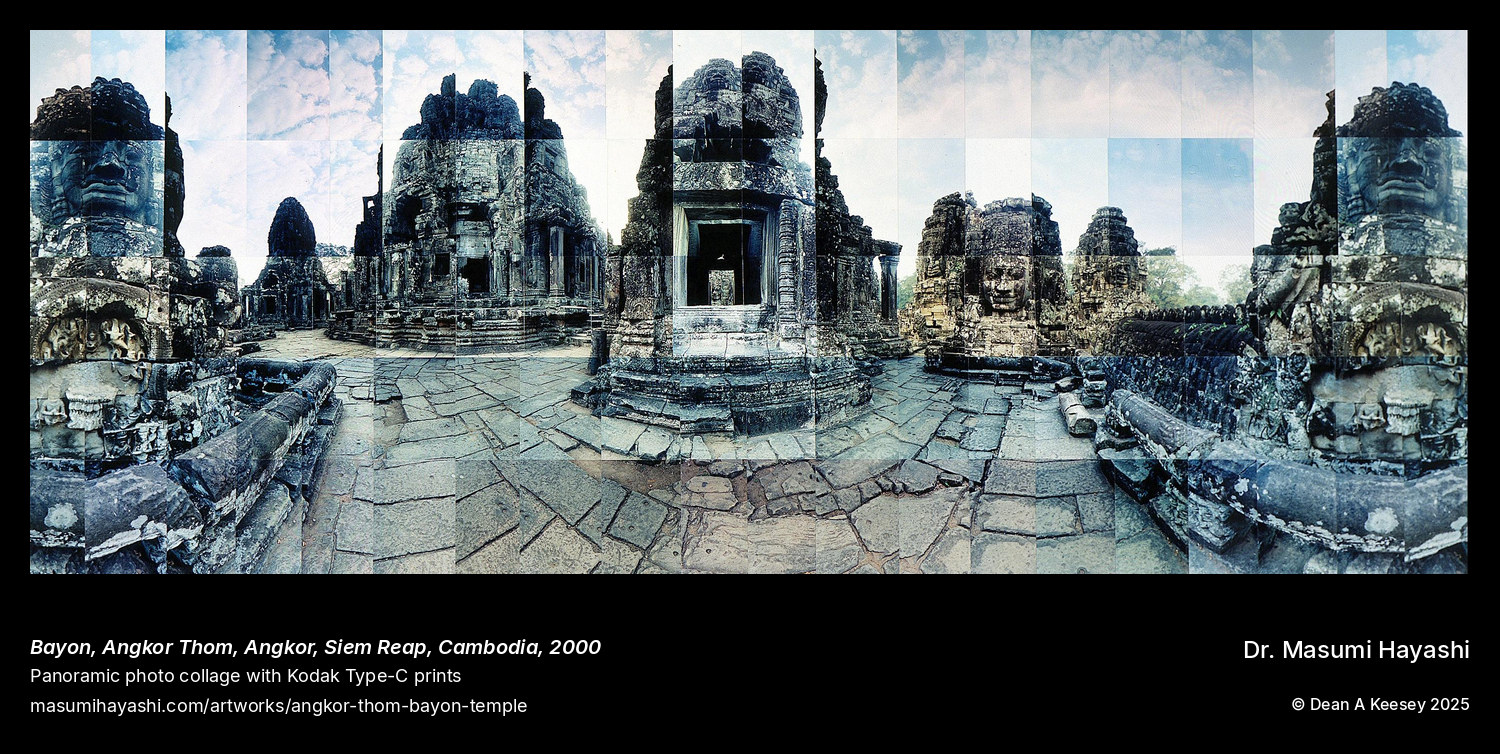
Bayon, Angkor Thom, Angkor, Siem Reap, Cambodia
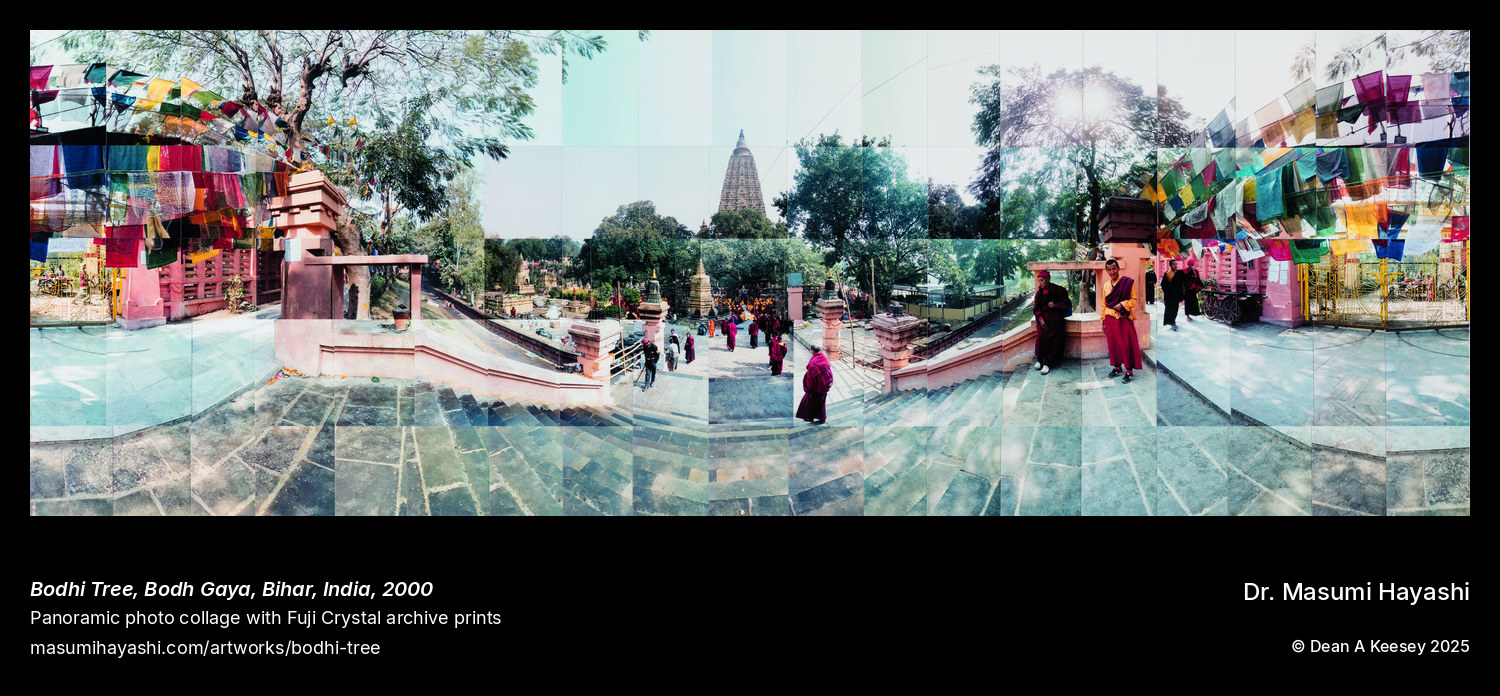
Bodhi Tree, Bodh Gaya, Bihar, India