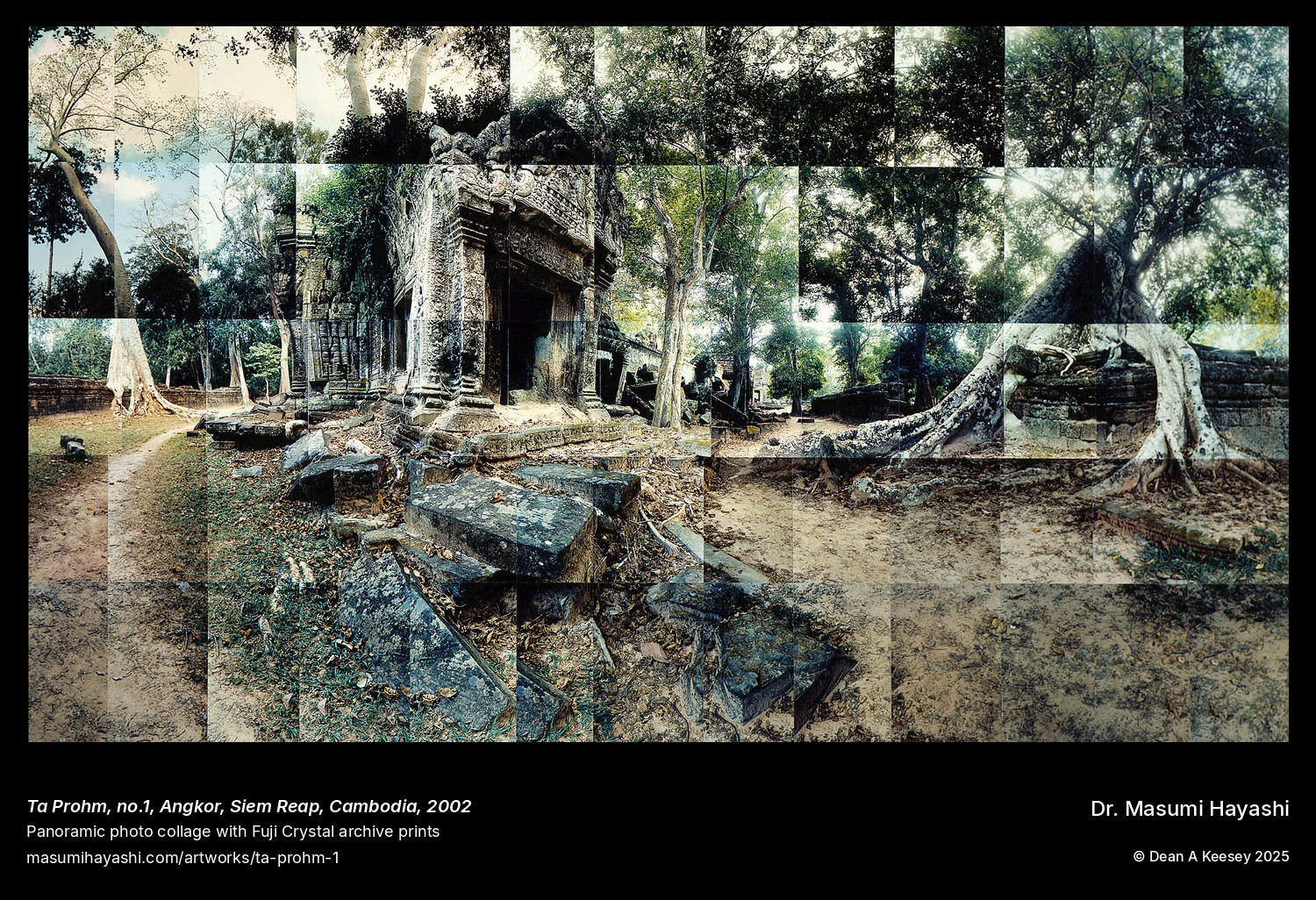
Ta Prohm, no.1
Angkor, Siem Reap, Cambodia
Panoramic photo collage with Fuji Crystal archive prints
2002
29 x 45
This vertical 29-by-45-inch panorama documents Ta Prohm—the jungle temple that has become contemporary Angkor’s most iconic image, where massive strangler figs embrace stone galleries and tree roots cascade down walls, creating the romantic ruin aesthetic that draws millions of visitors and launched the temple to global fame through the film “Tomb Raider.” The nearly four-foot height captures the vertical drama where trees rise from temples, their buttress roots engulfing architecture in organic embrace.
Created in 2002, the work represents Hayashi’s return to Cambodia two years after her initial Angkor documentation. The “No. 1” designation signals systematic coverage recognizing that Ta Prohm’s complex tree-architecture relationships require multiple perspectives—different sections revealing varied relationships between vegetal and mineral, organic and constructed.
King Jayavarman VII built Ta Prohm in 1186 CE as a Mahayana Buddhist monastery and university, dedicating it to his mother (the temple name means “Ancestor Brahma”). Contemporary inscriptions record that 12,640 people were required to serve the temple, including 18 high priests and 615 dancers, suggesting operational scale approaching small cities. The temple was abandoned following the Khmer Empire’s collapse, allowing jungle to advance unchecked for five centuries.
French archaeologists deliberately left Ta Prohm in its discovered state—a controversial conservation decision preserving the romantic aesthetic of ruin while acknowledging that tree removal would collapse already-compromised architecture. The silk-cotton and strangler fig trees have become structural elements, their roots simultaneously supporting and destroying the galleries they embrace.
The vertical format emphasizes tree-temple relationships: buttress roots descending from canopy through gallery roofs into foundations, the organic invasion creating new architectural forms where natural and built environments merge. This vertical cascade of organic growth defies the horizontal logic of conventional temple documentation.
More from Sacred Architectures
Airavatesvara Temple #1, Darasuram, Tamil Nadu, India
Angkor Wat, no. 1, Angkor, Siem Reap, Cambodia
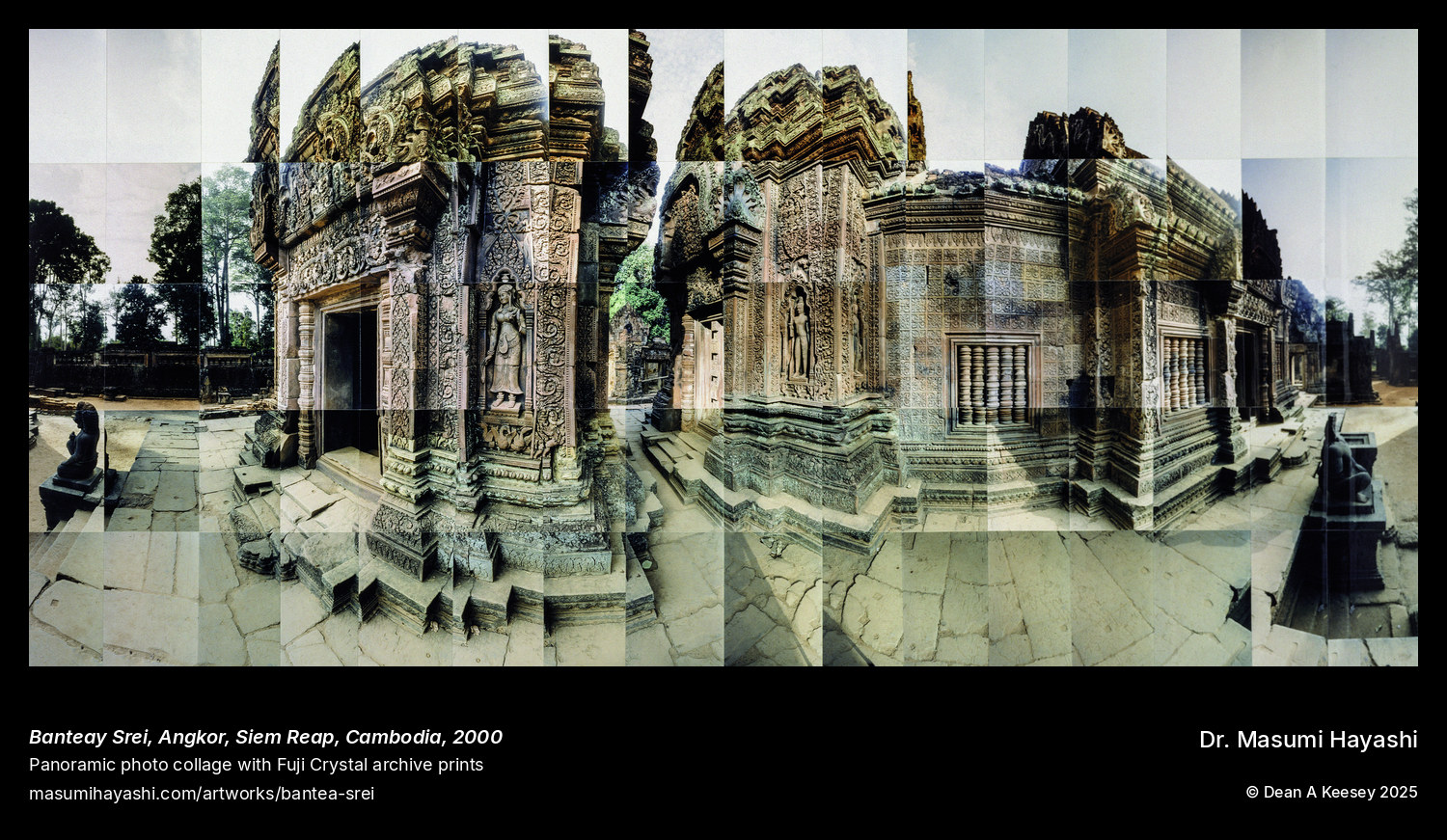
Banteay Srei, Angkor, Siem Reap, Cambodia
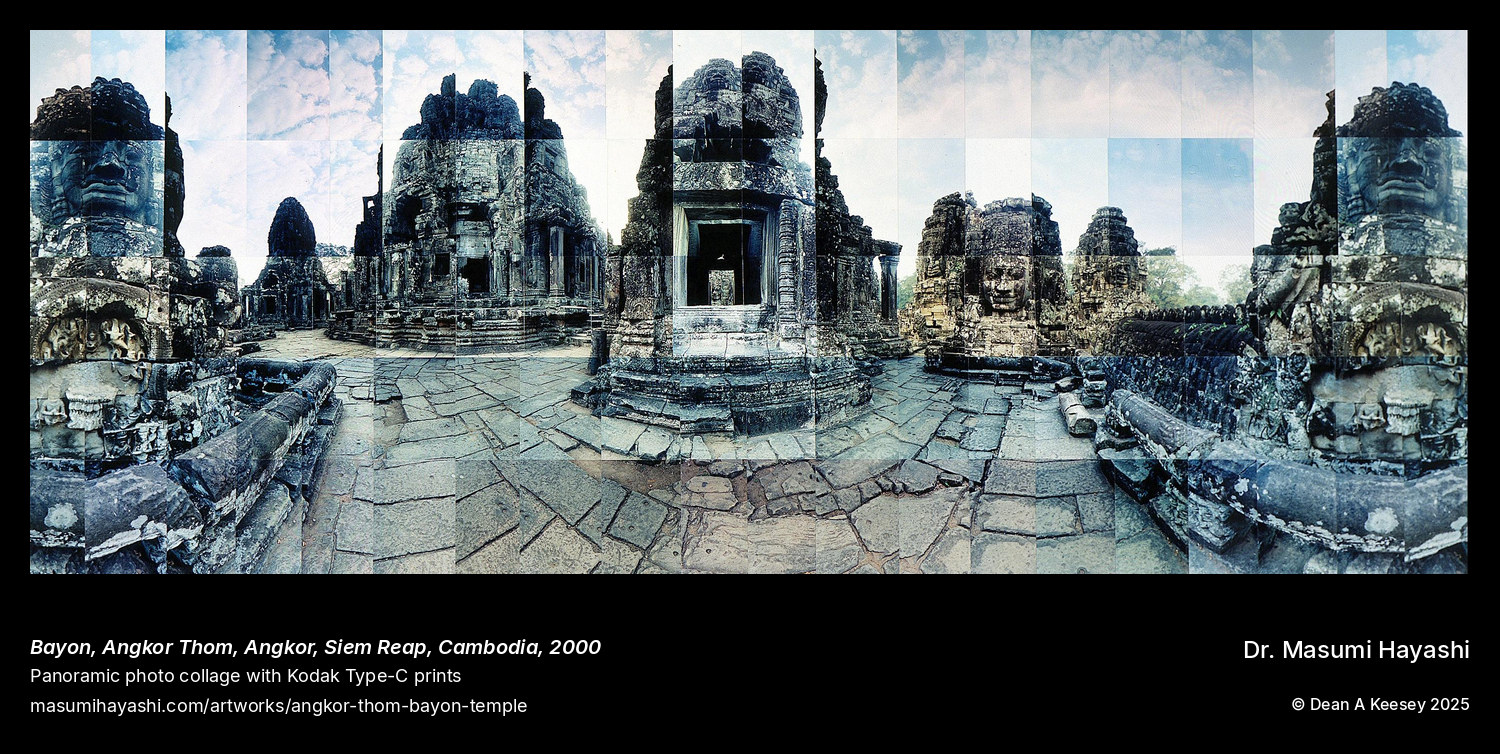
Bayon, Angkor Thom, Angkor, Siem Reap, Cambodia
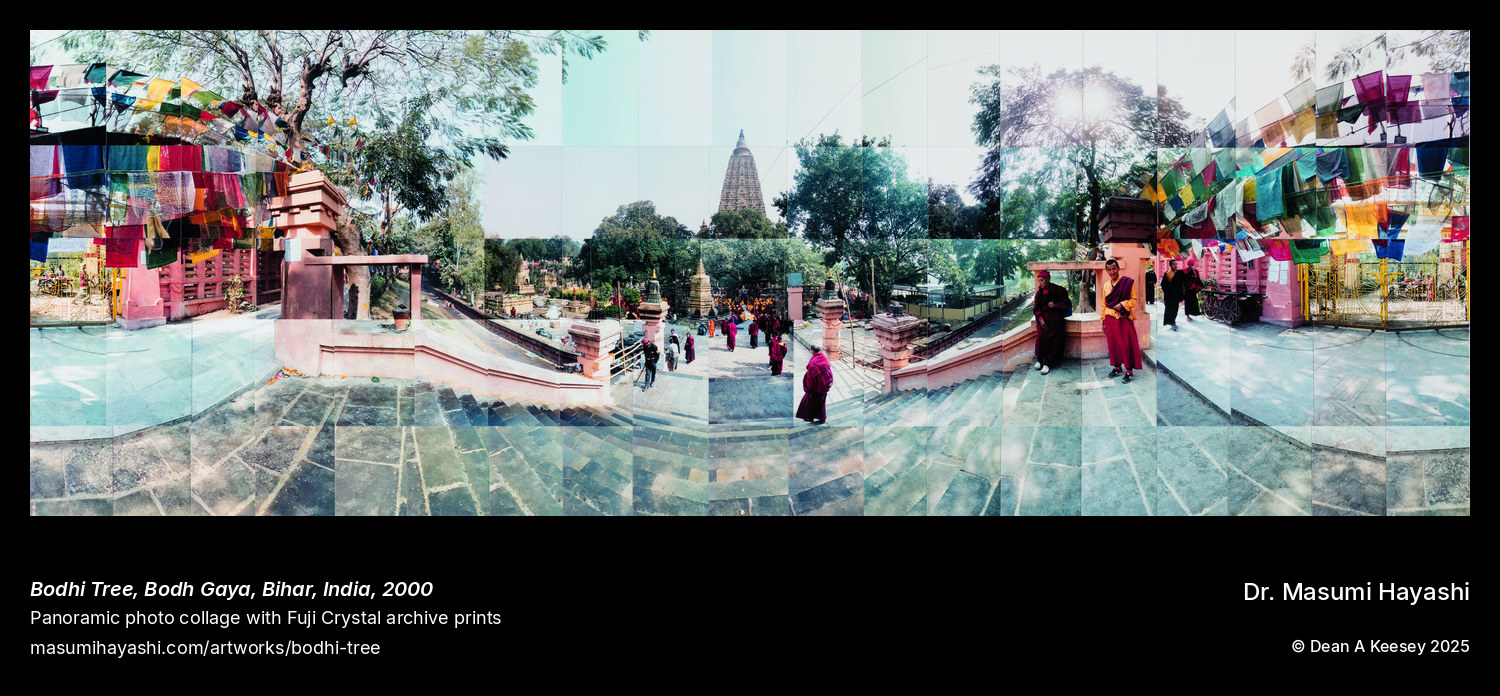
Bodhi Tree, Bodh Gaya, Bihar, India