River Ganges, Varanasi, Uttar Pradesh, India | Masumi Hayashi Foundation
Back to Gallery
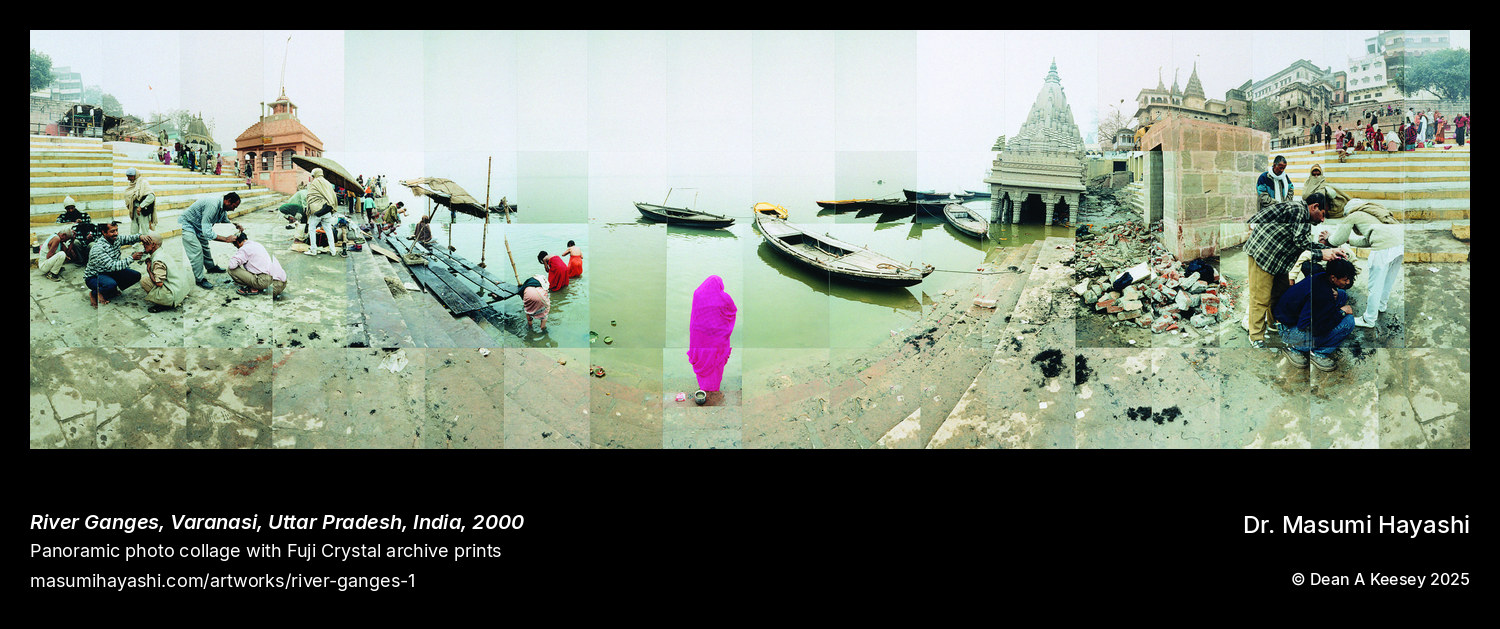
Picture of River Ganges, Varanasi, Uttar Pradesh, India by Dr. Masumi Hayashi

River Ganges, Varanasi, Uttar Pradesh, India

Varanasi, Uttar Pradesh, India

Panoramic Photo Collage

2000

19 x 62

River Ganges, Varanasi, Uttar Pradesh, India

Overview

Created in 2000, this 19 x 62-inch panoramic photo collage documents River Ganges at Varanasi—India’s holiest city and Hinduism’s most sacred pilgrimage destination where millions annually bathe in sacred waters believed to cleanse sins and liberate souls from cycle of rebirth, and where riverside cremation ghats (stepped platforms) enable moksha (liberation) through final cremation rites conducted at water’s edge with ashes immersed in Mother Ganga’s purifying flow. Varanasi (also Benares, Kashi meaning “City of Light”) represents continuous habitation spanning 3,000+ years making it among world’s oldest living cities, situated on Ganges’ crescent bend where riverbanks rise 15+ meters creating natural amphitheater lined with 88 ghats descending from temples, palaces, and ashrams toward water in cascading stone staircases accommodating ritual bathing, meditation, prayer, cremation ceremonies, and daily riverside life sustaining Hindu devotional practices unchanged for millennia. Ganges River holds supreme theological significance in Hinduism as literal goddess Ganga descended from heaven through Shiva’s hair to earth, purifying all who touch her waters—belief system transforming Varanasi into tirtha (crossing place) where earthly and divine realms intersect, death becomes auspicious liberation rather than feared ending, and river’s perpetual flow symbolizes cosmic cycle of birth-death-rebirth underlying Hindu cosmology. The 19 x 62-inch extreme vertical panorama (3.26:1 aspect ratio, MOST EXTREME aspect ratio among all documented Sacred Architectures works) employs narrowest width (19 inches, under 2 feet) with substantial height (62 inches, over 5 feet) creating extraordinarily compressed vertical format ideally suited to documenting ghat architecture’s distinctive vertical descent from upper temple terraces through multiple staircase levels to water’s edge—architectural typology unique to riverine sacred sites requiring vertical documentation capturing complete elevation impossible through horizontal or moderately vertical formats. The 2000 date positions River Ganges as ninth confirmed turn-of-millennium work, expanding photographic journey beyond Buddhist/Hindu/Jain temple architecture to include sacred natural landscape (holy river) and vernacular sacred architecture (ghat staircases, riverside temples), demonstrating systematic documentation encompassing diverse manifestations of South and Southeast Asian sacred space beyond monumental temple complexes alone. Work employing identical Fuji 4 x 6 film as other 2000 works establishes technical consistency across nine-work journey spanning India (Bihar, Madhya Pradesh, Rajasthan, Uttar Pradesh) and Cambodia (five Angkor monuments), representing unprecedented geographic breadth and religious diversity within single photographic campaign. Two editions placed with family (Connie Hayashi-Smith, artist’s sister-in-law) and private doctor, suggesting personal connections influencing early placements, while Edition 3 retained in Foundation inventory and work noted as “Artist Proof” indicating special status despite being catalogued as standard edition—cataloging ambiguity common in artist estates managing posthumous inventory documentation.

Historical and Religious Context: Varanasi and River Ganges

Varanasi represents Hinduism’s spiritual epicenter and Ganges’ supreme sacred geography:

Varanasi: “City of Light” (Kashi)

Ancient Sacred City: Varanasi among world’s oldest continuously inhabited cities:

  • Settlement History: Archaeological evidence 3,000+ years (1000 BCE minimum)
  • Vedic Literature: Mentioned in ancient Hindu texts as Kashi (“luminous, shining”)
  • Continuous Habitation: Unbroken urban life spanning three millennia
  • Population: Approximately 1.2 million (city proper), 1.7 million (metropolitan area)
  • Geographic Location: Uttar Pradesh state, northern India, on Ganges River’s crescent bend

Hindu Pilgrimage Center: Supreme tirtha (sacred crossing place):

  • Annual Pilgrims: Estimated 3-7 million Hindu pilgrims annually (pre-COVID)
  • Life Cycle Rituals: Bathing for purification, death rites for moksha (liberation)
  • Sacred Geography: Lord Shiva’s earthly abode according to Hindu cosmology
  • Kashi Vishwanath Temple: One of twelve Jyotirlingas (sacred Shiva sites), center of Varanasi pilgrimage
  • Religious Significance: Dying in Varanasi believed to guarantee moksha (liberation from rebirth cycle)

88 Ghats (Riverside Stepped Platforms):

Ghat Architecture: Distinctive architectural typology:

  • Definition: Ghat = stepped platform descending to water (Hindi: घाट)
  • Distribution: 88 ghats lining 7-kilometer riverfront along western Ganges bank
  • Construction: Stone staircases, platforms, temples, shrines, palaces creating built riverfront
  • Function: Bathing, cremation, meditation, prayer, laundry, social gathering
  • Age: Some ghats 2,000+ years old, many rebuilt/reconstructed over centuries

Major Ghats:

  • Dashashwamedh Ghat: Most prominent bathing ghat, nightly Ganga Aarti ceremony
  • Manikarnika Ghat: Primary cremation ghat (one of two), operating 24/7
  • Harishchandra Ghat: Second cremation ghat
  • Assi Ghat: Southern ghat, popular for evening rituals
  • Panchganga Ghat: Confluence of five rivers (mythological)

River Ganges (Ganga): Sacred River Goddess

Theological Significance:

Ganga as Goddess: Personified divine river:

  • Origin Myth: Goddess Ganga descended from heaven (Svarga) to earth
  • Shiva’s Role: Caught Ganga in his matted hair preventing destructive force from flooding earth
  • Himalayan Source: Gangotri Glacier (actual geographic source)
  • Theological Source: Heaven flowing through Shiva to earth
  • River as Mother: “Mother Ganga” (Maa Ganga)—nurturing, purifying, liberating

Purifying Powers: Central Hindu belief in water’s sacred properties:

  • Sin Removal: Bathing removes accumulated karmic impurities
  • Death Purification: Cremation + immersion in Ganga liberates soul
  • Holy Water: Ganga jal (Ganges water) used in rituals throughout India
  • Imperishable: Water believed never to decay (maintained in homes for years)
  • Salvation: Contact with river brings spiritual benefits across lifetimes

Moksha (Liberation) and Death Rites:

Dying in Varanasi: Supremely auspicious death:

  • Kashi Labh: “Benefit of Kashi”—dying here guarantees moksha (liberation from rebirth cycle)
  • Pilgrimage for Death: Elderly Hindus traveling to Varanasi specifically to die
  • Hospices: Mukti Bhavan and similar death hostels providing final days’ shelter

Cremation Ghats:

Manikarnika Ghat (Primary):

  • 24/7 Operation: Cremations occurring around the clock
  • Sacred Fire: “Eternal flame” (Maha Shamshan) burning constantly for millennia
  • Scale: 200-300 cremations daily
  • Dom Raja: Traditional cremation caste (Doms) controlling funeral operations
  • Cost: Wood, ghee, ceremony expenses (families paying for cremation fuel)

Cremation Process: Traditional Hindu death rites:

  1. Body Preparation: Deceased wrapped in cloth, brought to ghat on bamboo stretcher
  2. Ganges Dip: Body immersed in river five times for purification
  3. Pyre Construction: Wood stacked on ghat platform
  4. Cremation: Senior male relative (usually son) lights pyre
  5. Duration: 3-4 hours burning
  6. Ash Immersion: Remains swept into Ganges
  7. Moksha: Soul liberated from rebirth cycle

Theological Meaning:

  • Death becomes liberation rather than tragedy
  • Earthly body returns to elements (fire + water)
  • Soul freed from material attachment
  • Cycle of samsara (rebirth) broken through Ganga’s grace

Contemporary Varanasi: Sacred and Secular Life Intertwined

Daily Riverside Activity: Ghats supporting diverse functions:

  • Dawn Bathing: Pilgrims performing ritual ablutions at sunrise
  • Yoga and Meditation: Sadhus (holy men), residents, tourists
  • Laundry: Dhobis (washermen) beating clothes on stone steps
  • Boat Rides: Pilgrims, tourists viewing ghats from river
  • Markets: Vendors selling flowers, candles, religious items
  • Ceremonies: Ganga Aarti (evening fire ceremony with chanting, bells, incense)

Pollution Crisis: Sacred river facing severe environmental degradation:

  • Sewage: 80% of Varanasi’s sewage flows untreated into Ganges
  • Industrial Waste: Chemical runoff from tanneries, factories upstream
  • Cremation Remains: Partially burned bodies, wood ash contributing to pollution
  • Fecal Coliform Bacteria: Levels thousands of times WHO standards
  • Government Initiatives: Namami Gange (Clean Ganga) program attempting remediation

Paradox: Faith versus pollution:

  • Devotees bathing in heavily polluted water
  • Theological purity versus biological contamination
  • Belief transcending physical reality
  • Environmental science confronting religious practice

Tourism and Pilgrimage:

  • Religious tourism major economic driver
  • International visitors seeking “spiritual India”
  • Mark Twain, Aldous Huxley, others documenting Varanasi’s otherworldly atmosphere
  • Photography challenges: crowded ghats, cremation ethics, poverty, spiritual intensity

Most Extreme Vertical Panorama: 19 x 62 Inches

At 19 x 62 inches, River Ganges employs Sacred Architectures series’ most extreme aspect ratio:

Format Analysis:

  • Width: 19 inches (1.58 feet, under 2 feet)—narrowest width among all documented works
  • Height: 62 inches (5.17 feet, over 5 feet tall)—substantial vertical extent
  • Aspect Ratio: 3.26:1 (height to width)—MOST EXTREME aspect ratio in entire Sacred Architectures series

Comparison with Other Extreme Verticals:

  • River Ganges: 19 x 62” (3.26:1)—MOST EXTREME ASPECT RATIO
  • Jain Temple: 25 x 73” (2.92:1)—tallest, second most extreme aspect ratio
  • Bodhi Tree: 24 x 69” (2.875:1)—third most extreme
  • Preah Khan: 26 x 67” (2.58:1)—fourth most extreme
  • Bayon: 27 x 69” (2.56:1)—fifth most extreme

River Ganges’ 3.26:1 ratio represents extraordinary vertical compression—width just 30.6% of height, creating slit-like narrow field concentrating attention on vertical architectural descent.

Format Rationale: Ghat Architecture’s Vertical Descent

Ghat Typology Requires Vertical Documentation:

Vertical Architectural Sequence: Ghats designed as descending platforms:

  1. Upper Terrace: Temples, shrines, palaces at street level (15+ meters above river)
  2. Upper Platforms: Initial broad platforms for gathering, ceremonies
  3. Staircase Descent: Multiple stair sections (100+ steps on major ghats)
  4. Mid-Level Platforms: Landings for rest, subsidiary shrines, seating
  5. Lower Stairs: Final descent toward water
  6. Water’s Edge Platform: Immersion platform at river level (varies with seasonal water height)

Complete sequence requiring vertical format capturing:

  • Entire elevation from upper temples to lower water
  • Staircase rhythm and platform intervals
  • Architectural descent as spiritual progression (from earthly realm toward sacred water)
  • Human scale (pilgrims ascending/descending stairs)

19-Inch Narrow Width Strategy:

Compressed Horizontal Field: Extreme narrowness serving specific documentary purposes:

  • Single Ghat Focus: Width sufficient for one ghat’s vertical face without adjacent ghats
  • Architectural Clarity: Eliminating horizontal distractions, concentrating on vertical structure
  • Staircase Emphasis: Narrow field following stair width rather than broad riverfront panorama
  • Human Procession: Pilgrims moving vertically (up/down) rather than horizontally (along riverfront)

Possible Compositional Strategies:

Complete Ghat Elevation: Top to bottom vertical composition:

  • Upper temple/palace terrace → descending staircases → lower bathing platforms → water’s edge
  • 62-inch height enabling comprehensive vertical documentation
  • 19-inch width focusing on single ghat’s central axis

Staircase Detail: Close documentation of descent:

  • Upper landing → stair flight → mid-level platform → stair flight → lower platform → water
  • Rhythmic repetition of steps and platforms
  • Architectural detail (carved stone, worn treads, railings)
  • Pilgrims in various stages of ascent/descent

Temple to River Axis: Sacred progression:

  • Upper temple (earthly realm) → descending pilgrims → bathing platform (purification) → river (divine contact)
  • Vertical format capturing complete spiritual journey
  • Architectural framework enabling ritual transformation

Cremation Ghat Focus: If documenting Manikarnika or Harishchandra:

  • Pyre platforms at multiple levels
  • Smoke rising vertically
  • Mourners, priests, cremation workers
  • Architecture supporting death rites

62-Inch Height (Over 5 Feet): Substantial vertical presence:

  • Gallery wall impact comparable to Bodhi Tree (69”), Bayon (69”), Preah Khan (67”)
  • Over 5 feet tall requiring adequate vertical exhibition space
  • Format innovation pushing panoramic photography boundaries

Display Considerations: Extremely narrow vertical format presenting unique challenges:

  • Specialized framing for unconventional proportions
  • Gallery wall requiring 5+ foot vertical clearance
  • Viewing distance considerations (narrow width best viewed at moderate distance)
  • Distinctive visual impact—format itself communicating subject’s verticality

Ninth 2000 Work: Expanding Religious and Architectural Diversity

River Ganges represents ninth confirmed 2000 work:

2000 Works Confirmed (Complete List):

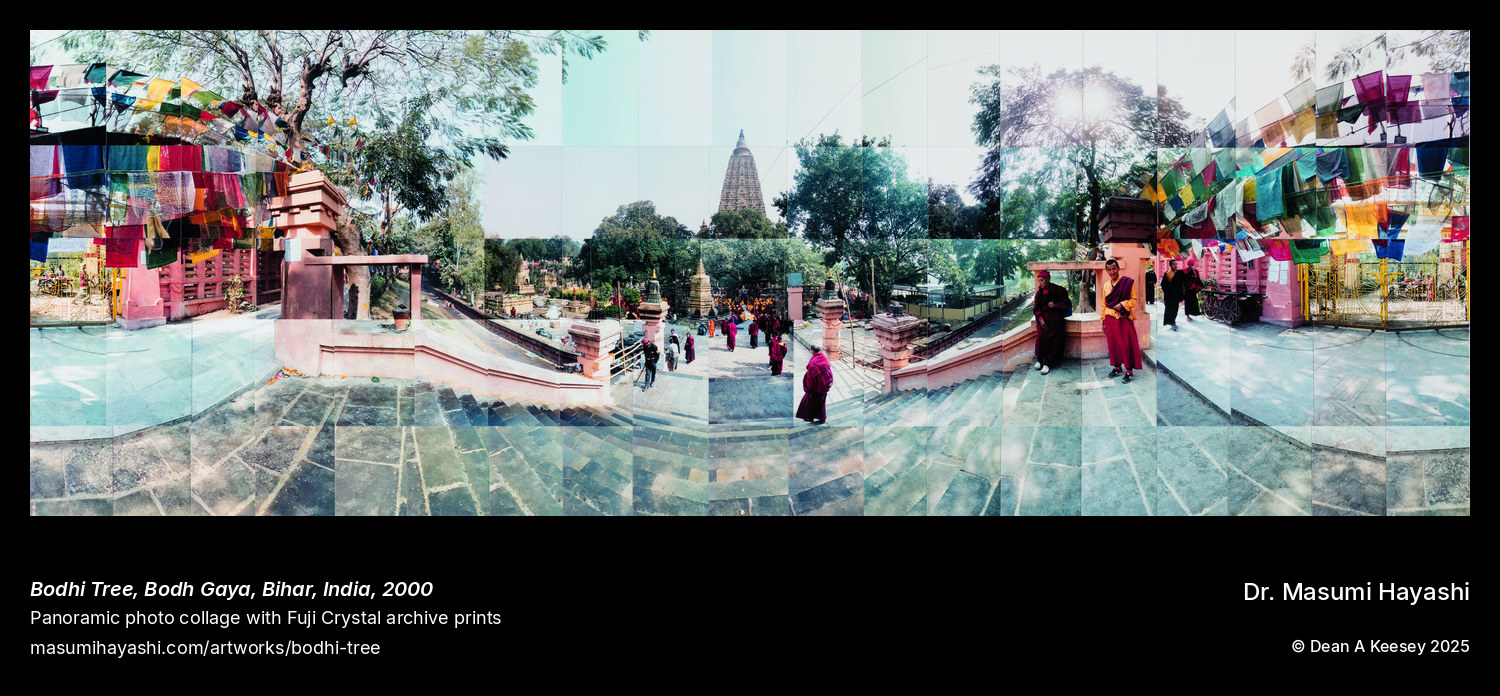
  1. Bodhi Tree (Bodh Gaya, Bihar, India)—Buddhism, enlightenment site, 24 x 69”
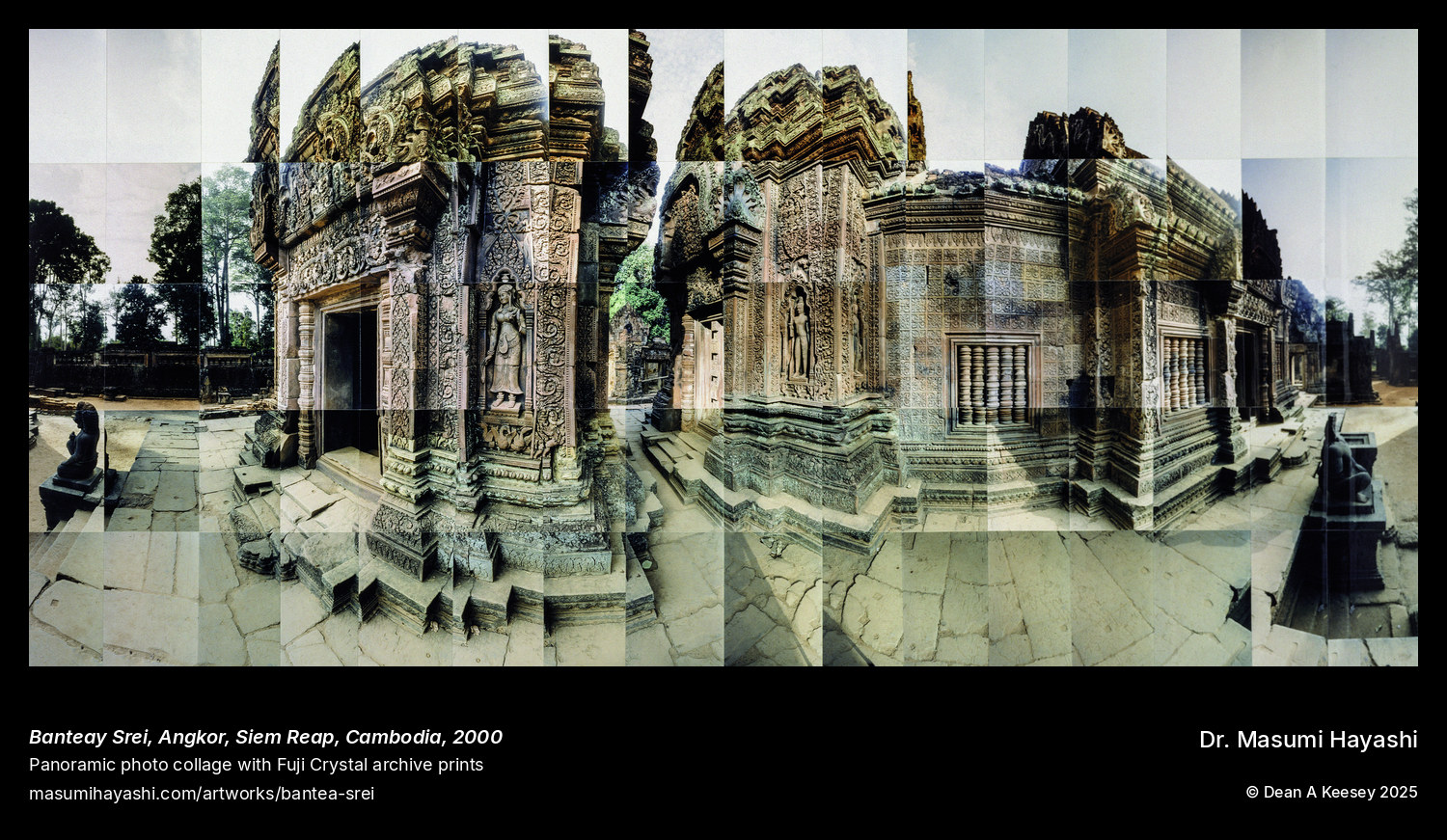
  2. Banteay Srei (Angkor, Cambodia)—Hindu-Buddhist, 10th century temple, 27 x 56”
  3. Kandariya Mahadeva (Khajuraho, Madhya Pradesh, India)—Hinduism, tantric temple, 30 x 59”
  4. Jain Temple (Jaisalmer, Rajasthan, India)—Jainism, merchant temple, 25 x 73”
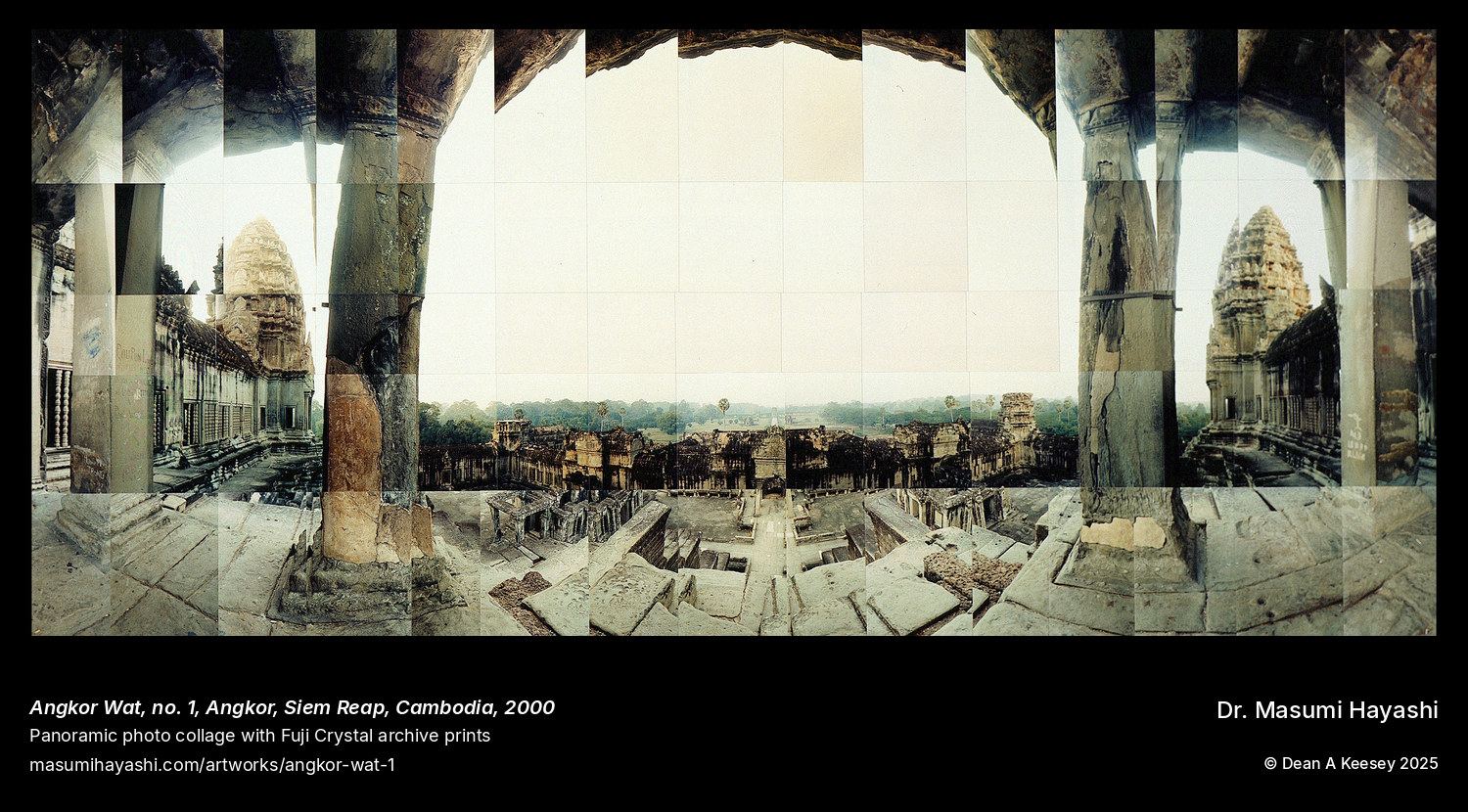
  5. Angkor Wat No. 1 (Angkor, Cambodia)—Hindu-Buddhist, world’s largest monument, 23 x 52”
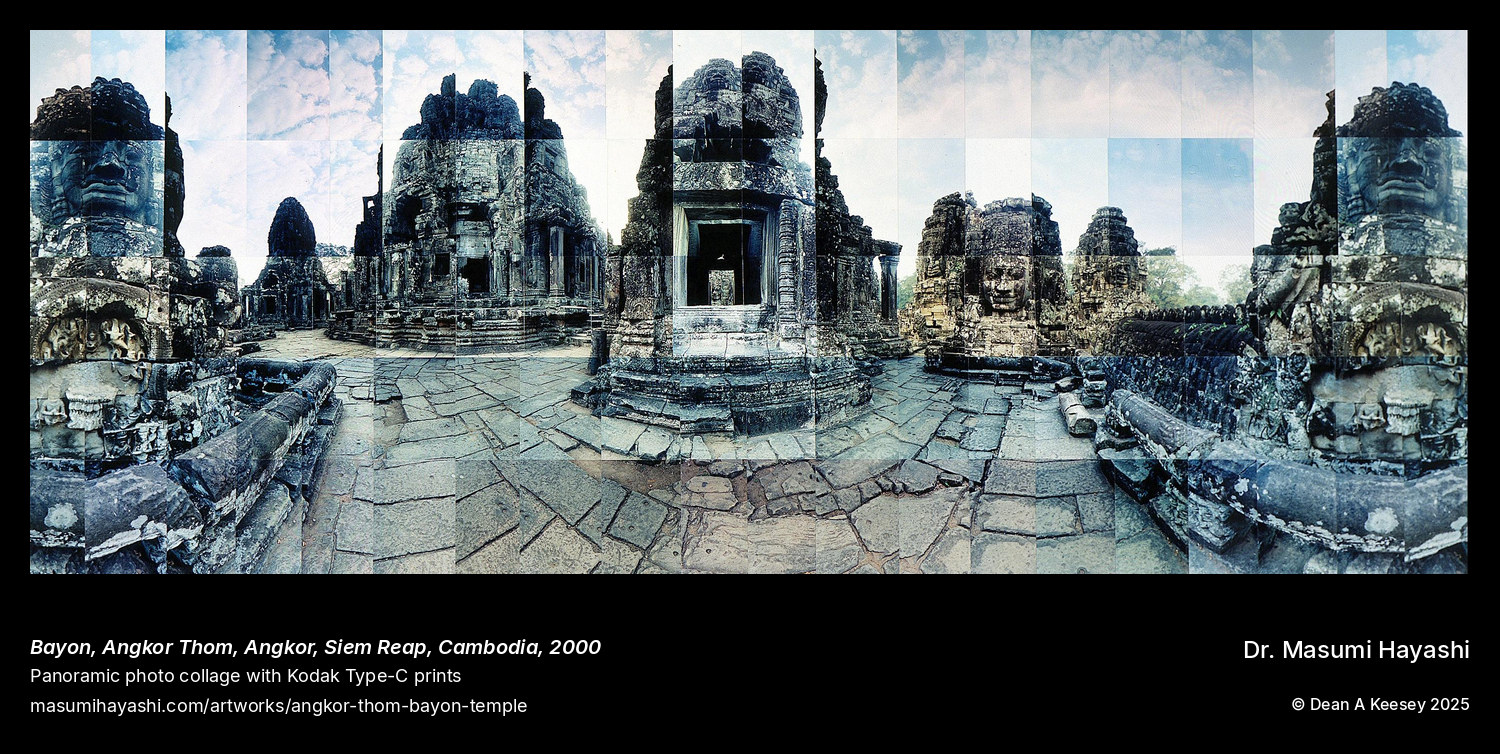
  6. Bayon (Angkor Thom, Cambodia)—Buddhism, face towers, 27 x 69”
  7. Ta Prohm (Angkor, Cambodia)—Buddhism, mother temple, jungle integration, 27 x 45”
  8. Preah Khan (Angkor, Cambodia)—Buddhism, father temple, two-story structure, 26 x 67”
  9. River Ganges (Varanasi, Uttar Pradesh, India)—Hinduism, sacred river, ghats, 19 x 62”

Technical Consistency Absolute: All nine 2000 works employ identical specifications:

  • Fuji film stock (distinct from typical Kodak)
  • 4 x 6-inch format (larger than typical 3.5 x 5)
  • Systematic technical approach throughout journey

Geographic Expansion to Four Indian States + Cambodia:

India (Four states documented):

  1. Bihar: Bodh Gaya (Buddhist enlightenment site)
  2. Madhya Pradesh: Khajuraho (Hindu tantric temple)
  3. Rajasthan: Jaisalmer (Jain merchant temple)
  4. Uttar Pradesh: Varanasi (Hindu sacred river)

Cambodia (Five Angkor monuments):

  • Banteay Srei, Angkor Wat, Bayon, Ta Prohm, Preah Khan

Pattern suggesting systematic India + Cambodia circuit covering:

  • India’s north (Uttar Pradesh), central (Madhya Pradesh), northwest (Rajasthan), northeast (Bihar)
  • Cambodia’s premier archaeological complex (Angkor)
  • Comprehensive rather than concentrated geographic approach

Architectural Typology Expansion:

Sacred Architecture Types Documented:

  1. Temple Architecture: Kandariya Mahadeva, Jain Temple, Angkor Wat, Bayon, Banteay Srei
  2. Monastery Complexes: Ta Prohm, Preah Khan
  3. Sacred Natural Landscape: Bodhi Tree (tree shrine)
  4. Sacred River and Vernacular Architecture: River Ganges (ghats)

Varanasi expanding series beyond monumental temple architecture to include:

  • Riverine Sacred Architecture: Ghats as sacred infrastructure
  • Vernacular Sacred Building: Stone staircases, bathing platforms (not monumental temples)
  • Sacred Natural Feature: River itself as goddess/divine presence
  • Living Sacred Space: Active pilgrimage site (not archaeological ruin)

Religious Diversity Complete + Living Practice:

Religious Traditions:

  • Buddhism: Bodh Gaya, Bayon, Ta Prohm, Preah Khan
  • Hinduism: Khajuraho, Angkor Wat (originally), Varanasi
  • Jainism: Jaisalmer
  • Hindu-Buddhist Synthesis: Banteay Srei, Angkor Wat (transformation)

Sacred Site Types:

  • Archaeological monuments (Angkor, Khajuraho, Jaisalmer)
  • Active pilgrimage sites (Bodh Gaya, Varanasi)
  • Mixed (some Angkor temples actively used)

Varanasi representing living Hindu tradition contrasting with primarily archaeological focus of other works—capturing contemporary devotional practice rather than historical monument alone.

Edition Placement Analysis

Edition Locations:

  • Edition 1: Connie Hayashi-Smith (family—artist’s sister-in-law)
  • Edition 2: Gentile - private doctor (personal connection)
  • Edition 3: Masumi Hayashi Foundation (inventory, unframed)
  • Editions 4-5: Unaccounted

Family Placement: Connie Hayashi-Smith (Edition 1):

  • Artist’s sister-in-law (married to artist’s brother)
  • Family retention of work from significant 2000 journey
  • Personal connection influencing placement over commercial sale

Private Doctor Placement: “Gentile- private doctor” (Edition 2):

  • Possibly Dr. Gentile, artist’s physician
  • Personal relationship leading to private placement
  • Artwork as gift or private sale to trusted individual

Single Foundation Edition: Unlike Bayon, Jain Temple, Preah Khan (multiple editions retained):

  • Only one edition in Foundation inventory
  • Suggesting early placements (family, doctor) reducing available editions
  • Work noted as “Artist Proof” despite being Edition 3—cataloging ambiguity

Artist Proof Notation: Catalogue notes “Artist Proof” but tracking shows Edition 3:

  • Possible cataloging confusion (common in posthumous estate management)

  • Edition 3 possibly functioning as artist proof kept by artist

  • Or separate artist proof edition not tracked in main edition numbering

  • Comparable pricing to other Sacred Architectures works

  • Indicating market valuation

Varanasi: Distinctive Sacred Space Within Series

River Ganges work occupies unique position:

Contrasts with Temple Architecture:

  • Not Monumental Temple: Vernacular stepped platforms rather than royal/religious monument
  • Not Archaeological Site: Living, functioning sacred space (not historical ruin)
  • Not Single Building: Extended riverfront infrastructure (88 ghats along 7 kilometers)
  • Not Isolated Monument: Integrated into dense urban fabric (not removed temple complex)

Unique Documentary Subjects:

  • Human Activity: Pilgrims bathing, cremations, daily life (not empty architectural documentation)
  • Water Presence: River as subject, not just architectural backdrop
  • Death and Life: Cremation ghats visualizing Hindu death theology
  • Urban Sacred Space: City context (not rural or archaeological park setting)

Challenges Documenting Varanasi:

  • Crowds: Millions of annual pilgrims creating dense human presence
  • Privacy: Photographing cremations ethically problematic
  • Pollution: Visual evidence of environmental degradation
  • Poverty: Visible deprivation contrasting spiritual intensity
  • Sensory Overload: Sounds, smells, colors, activity overwhelming
  • Cultural Sensitivity: Foreigners photographing Hindu death rites contentious

Hayashi’s 2000 documentation navigating these challenges while maintaining photographic series’ focus on sacred architecture and religious devotion.

Collection Information

Year: 2000 Location: Varanasi, Uttar Pradesh, India Medium: Panoramic Photo Collage Dimensions: 19 x 62 inches (extreme vertical panorama, over 5 feet tall, MOST EXTREME aspect ratio in series) Edition: 1 of 5 Film: 4 x 6 inches, Fuji

  1. Connie Hayashi-Smith (family—artist’s sister-in-law)
  2. Gentile - private doctor (personal connection)
  3. Masumi Hayashi Foundation (inventory, unframed) 4-5. Unaccounted

Note: Two editions placed with family and private doctor through personal connections. Edition 3 noted as “Artist Proof” despite catalogue tracking as standard edition—cataloging ambiguity common in posthumous estate documentation. Ninth confirmed 2000 work expanding turn-of-millennium photographic journey to document Buddhism (Bodh Gaya, Bayon, Ta Prohm, Preah Khan), Hinduism (Khajuraho, Angkor Wat originally, Varanasi), Jainism (Jaisalmer), and Hindu-Buddhist synthesis (Banteay Srei, Angkor Wat’s transformation)—all employing identical Fuji 4 x 6 film establishing systematic approach achieving unprecedented religious architectural diversity spanning India (Bihar, Madhya Pradesh, Rajasthan, Uttar Pradesh—four states) and Cambodia (five Angkor monuments). Work documents River Ganges at Varanasi—India’s holiest city and Hinduism’s most sacred pilgrimage destination where millions annually bathe in sacred waters believed to cleanse sins and liberate souls, and where riverside cremation ghats enable moksha (liberation) through final rites conducted at water’s edge. Varanasi representing continuous 3,000+ year habitation among world’s oldest living cities, situated on Ganges’ crescent bend where 88 ghats descend from temples and palaces toward water in cascading stone staircases supporting ritual bathing, meditation, prayer, 24/7 cremation ceremonies (200-300 daily at Manikarnika Ghat), and daily riverside life sustaining Hindu devotional practices unchanged for millennia. Ganges holding supreme theological significance as literal goddess Ganga descended from heaven, purifying all who touch her waters—belief transforming Varanasi into tirtha (crossing place) where earthly and divine realms intersect, death becomes liberation rather than feared ending, and river’s perpetual flow symbolizes cosmic rebirth cycle. Most extreme vertical panoramic format (19 x 62”, 3.26:1 aspect ratio, narrowest width at 19” among all documented works) employs extraordinary vertical compression ideally suited to ghat architecture’s distinctive descent from upper temple terraces through multiple staircase levels to water’s edge—architectural typology unique to riverine sacred sites requiring vertical documentation impossible through horizontal formats. Work expanding series beyond monumental temple architecture to include sacred natural landscape (holy river), vernacular sacred architecture (ghat staircases), and living Hindu tradition contrasting with primarily archaeological focus of other 2000 works—capturing contemporary devotional practice including bathing pilgrims, cremation ceremonies, daily riverside activities. Two early placements with family (sister-in-law) and private doctor (personal physician) suggest personal connections influencing distribution over commercial institutional placement. Appropriate for major art museums with comprehensive South Asian collections, Hindu religious art programs, sacred geography studies, pilgrimage documentation, riverine architecture research, living religious tradition emphasis, or photographic format innovation demonstrating most extreme vertical panorama addressing specific ghat vertical descent documentation requirements. Work’s focus on living sacred space (active pilgrimage site with contemporary cremations, bathing, worship) differentiates from series’ archaeological monuments, offering counterpoint exploring continuity of Hindu practice across millennia—Getty-level placement opportunity balancing architectural documentation with anthropological observation of sustained religious devotion in world’s oldest continuously operating pilgrimage center.

Donate