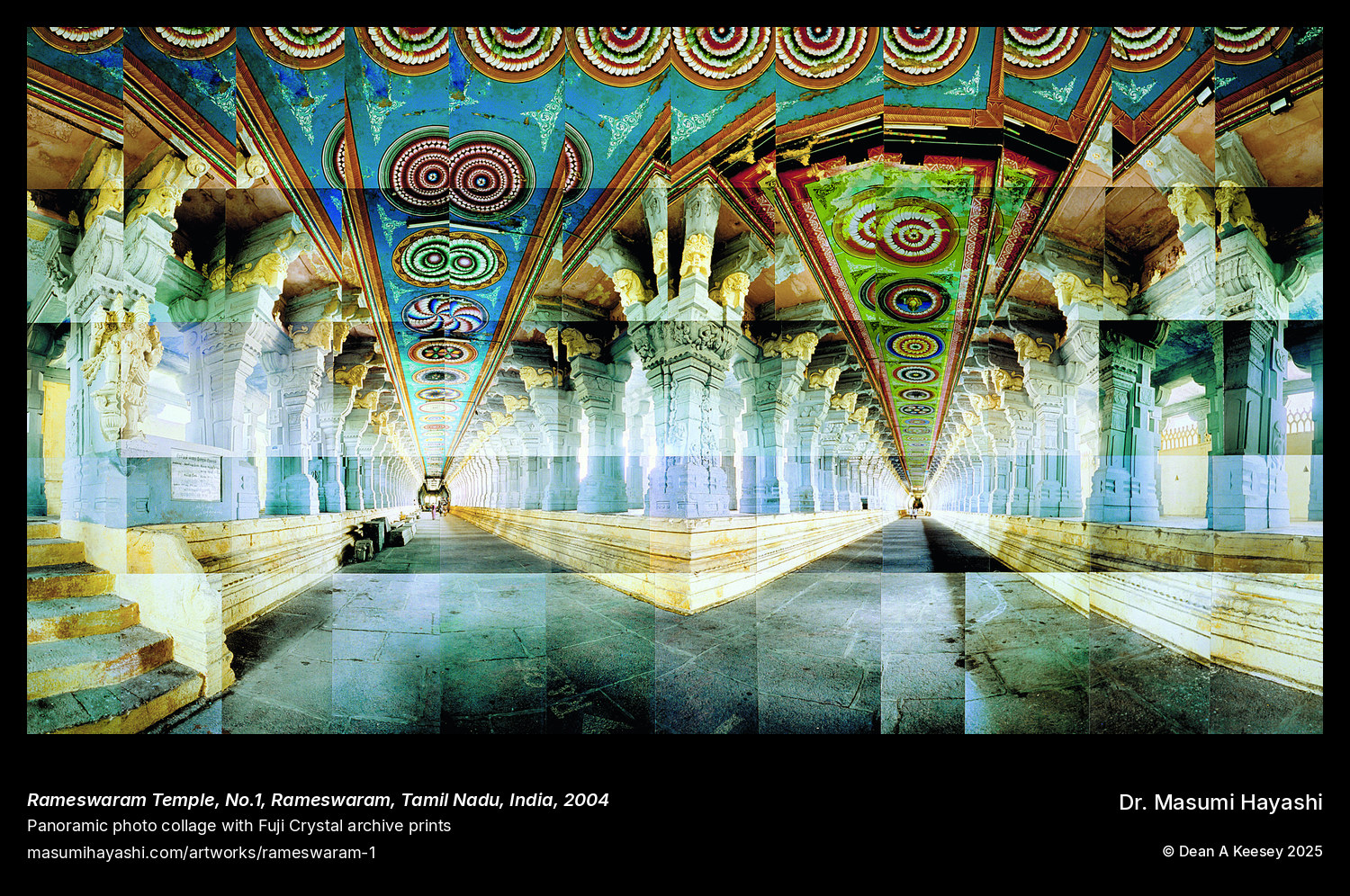
Rameswaram Temple, No.1
Rameswaram, Tamil Nadu, India
Panoramic photo collage with Fuji Crystal archive prints
2004
41 x 23
This vertical 41-by-23-inch panorama documents Ramanathaswamy Temple at Rameswaram—one of Hinduism’s holiest pilgrimage destinations and southernmost point of the sacred Char Dham pilgrimage circuit. The temple’s fame derives from its extraordinary corridors: the longest temple corridors in India stretching over 1,200 meters, lined with massive granite pillars creating seemingly infinite perspectives in both directions.
Created in 2004 during Hayashi’s final productive year, the work represents late-career documentation of South India’s great pilgrimage temples. Rameswaram occupies Pamban Island in the Palk Strait, where epic tradition places Rama’s construction of a bridge to Lanka for the battle rescuing Sita from the demon king Ravana. The temple marks the spot where Rama worshipped Shiva after his victorious return, establishing one of India’s twelve jyotirlinga shrines—sacred sites where Shiva manifested as infinite light.
The corridors’ architectural achievement defies simple documentation—2,000 massive pillars carved from single granite blocks, supporting continuous roofed walkways enabling pilgrimage procession regardless of monsoon rain or tropical sun. The “No. 1” designation suggests systematic coverage recognizing that no single panorama captures such extraordinary spatial extent.
The vertical format emphasizes the corridors’ towering proportions—columns rising to meet carved stone ceilings, the viewer’s eye ascending through architectural space designed to inspire contemplation. Pilgrims circumambulating the temple’s sacred waters (twenty-two wells requiring ritual bathing before worship) experience the corridors as architectural pilgrimage, the physical journey through stone columns replicating spiritual progression toward the sanctum.
The temple’s location on India’s southeastern tip creates geographic sacredness—the point where Bay of Bengal meets Indian Ocean, where the subcontinent reaches toward Sri Lanka, where Rama’s mythological bridge began. Hayashi’s documentation captures both architectural achievement and pilgrimage landscape.
More from Sacred Architectures
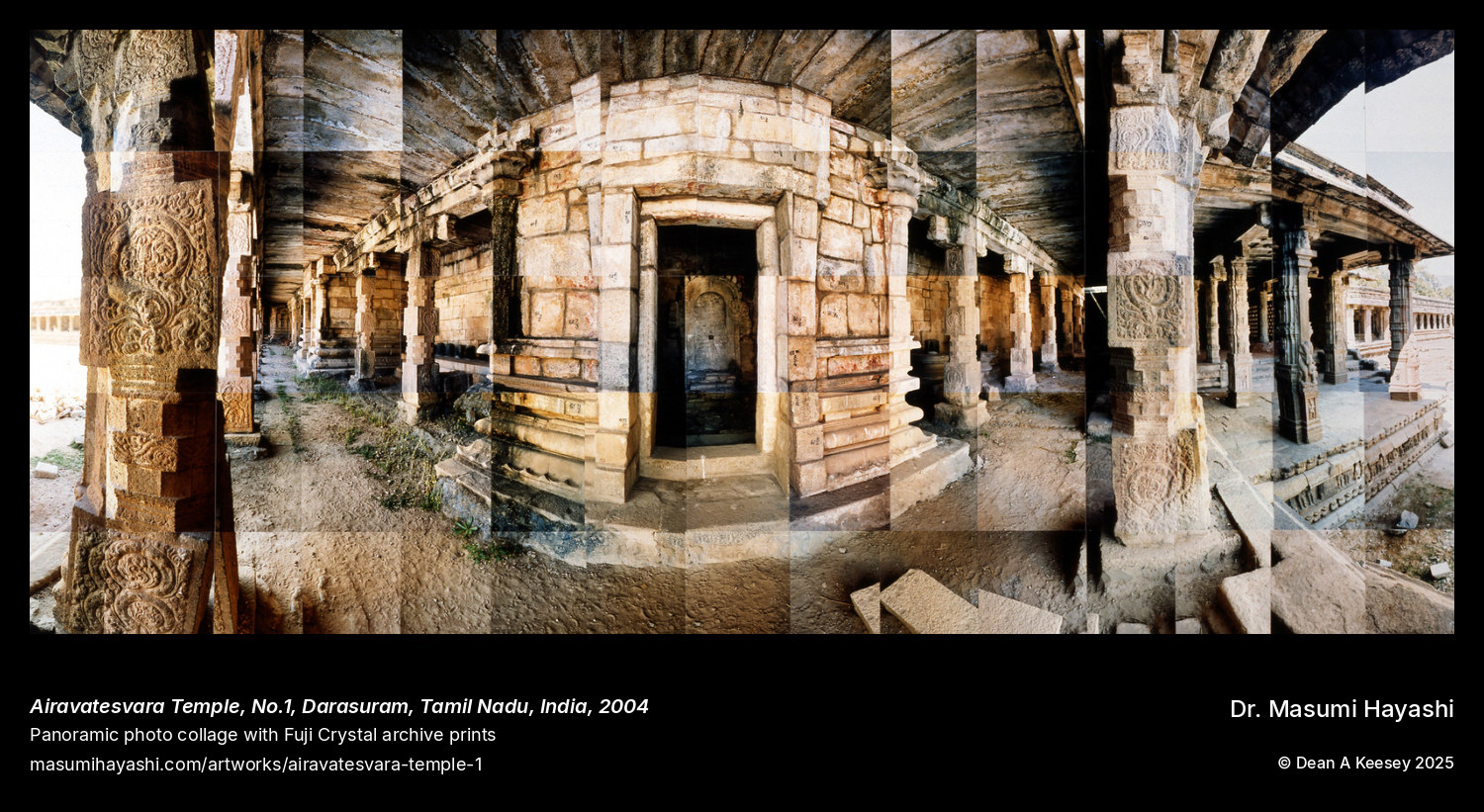
Airavatesvara Temple #1, Darasuram, Tamil Nadu, India
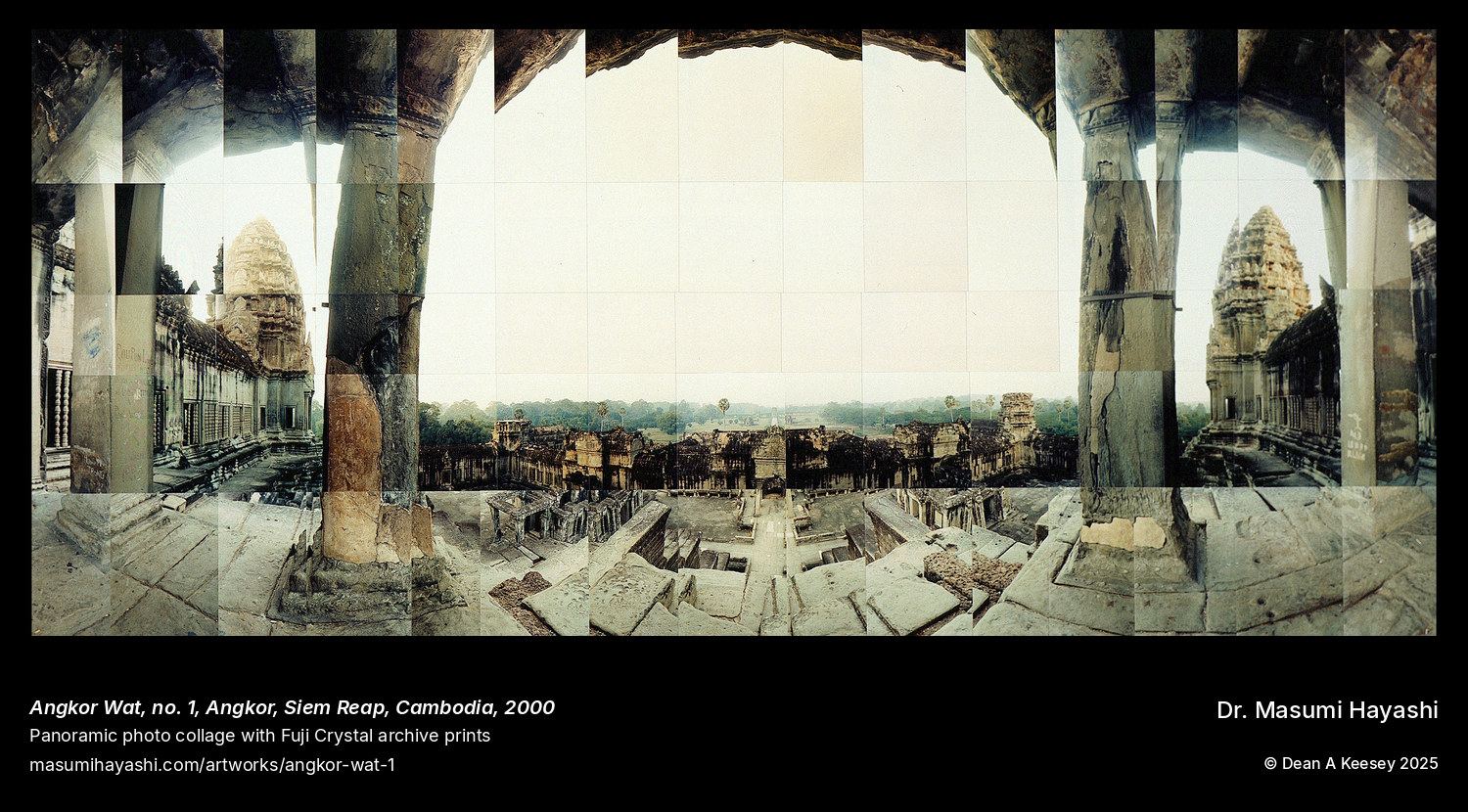
Angkor Wat, no. 1, Angkor, Siem Reap, Cambodia
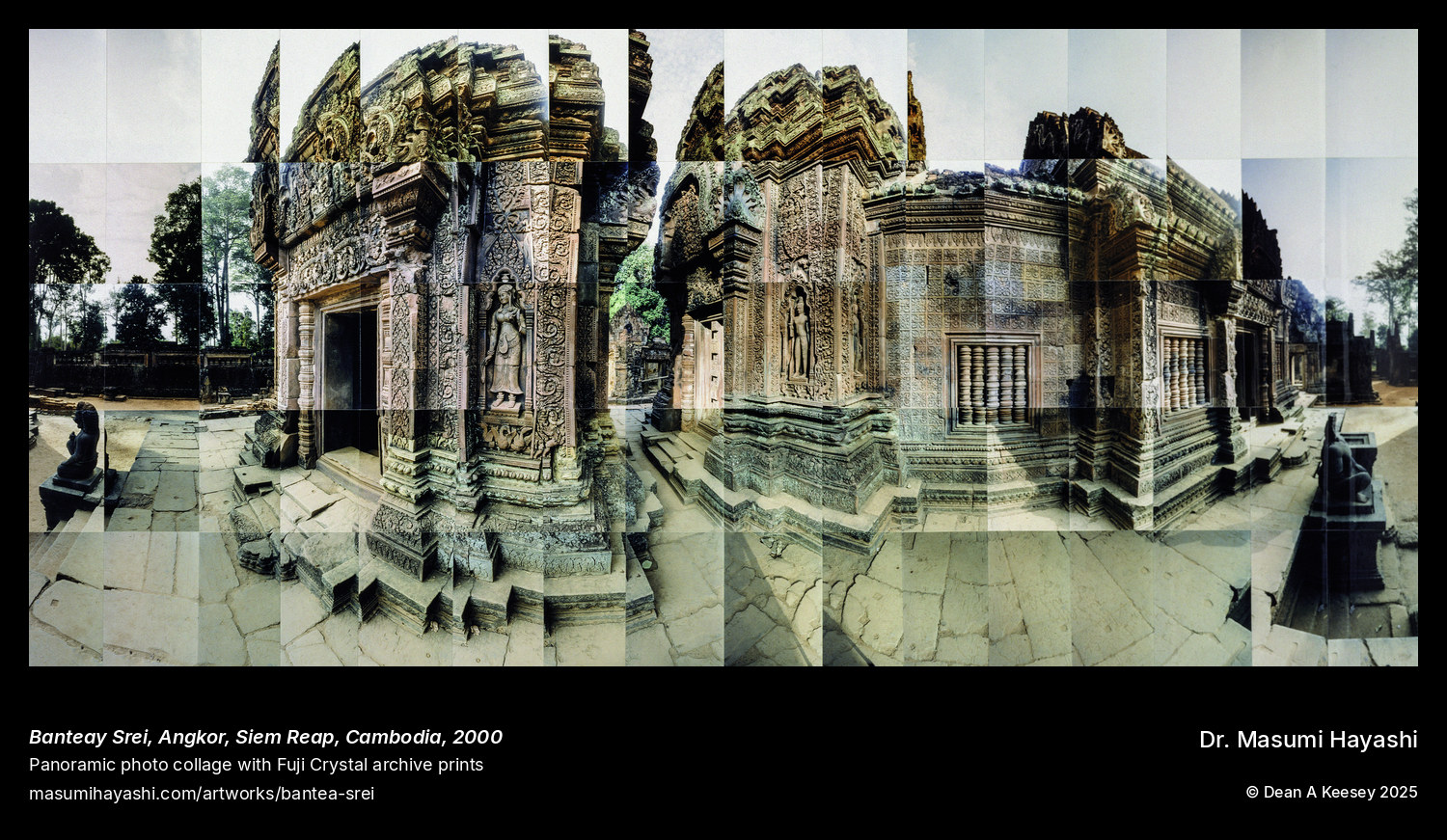
Banteay Srei, Angkor, Siem Reap, Cambodia
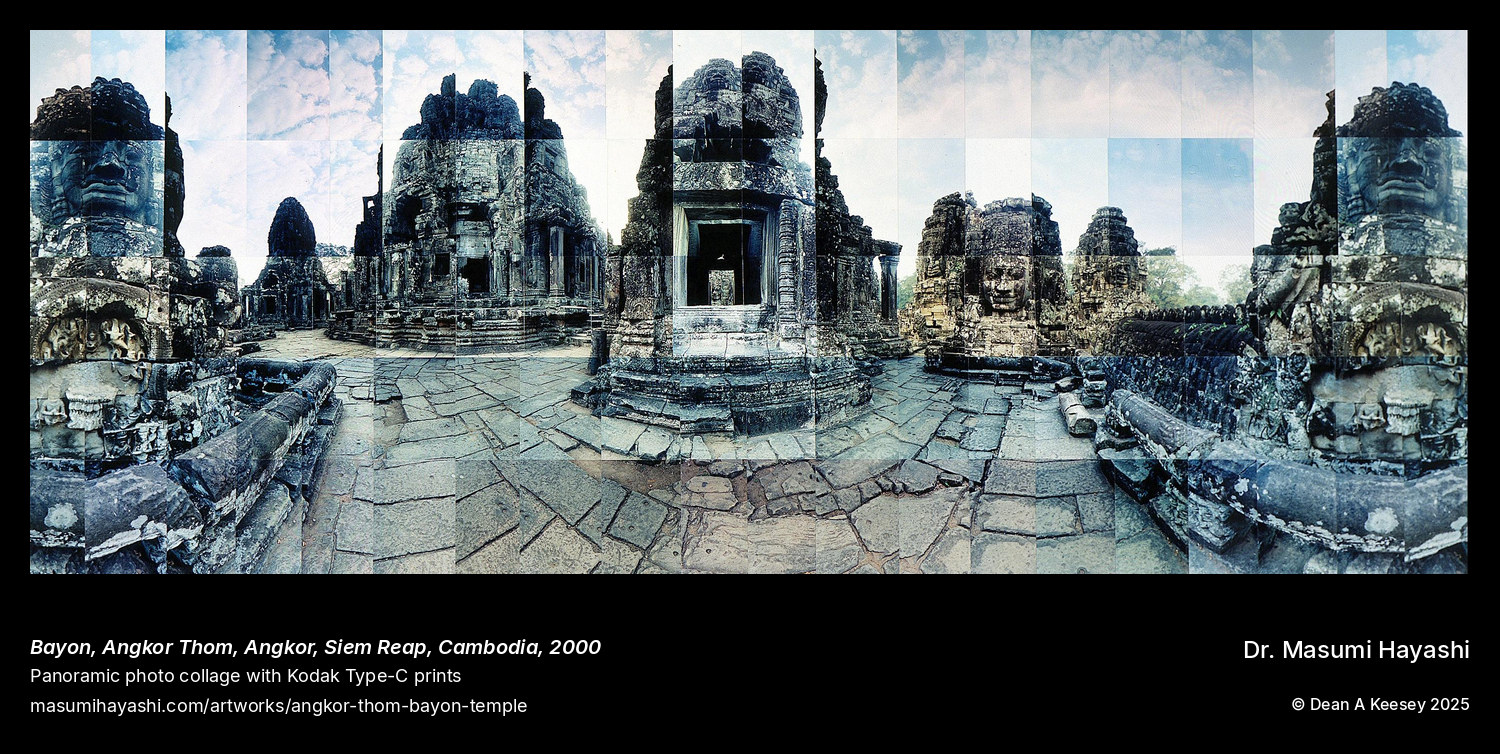
Bayon, Angkor Thom, Angkor, Siem Reap, Cambodia
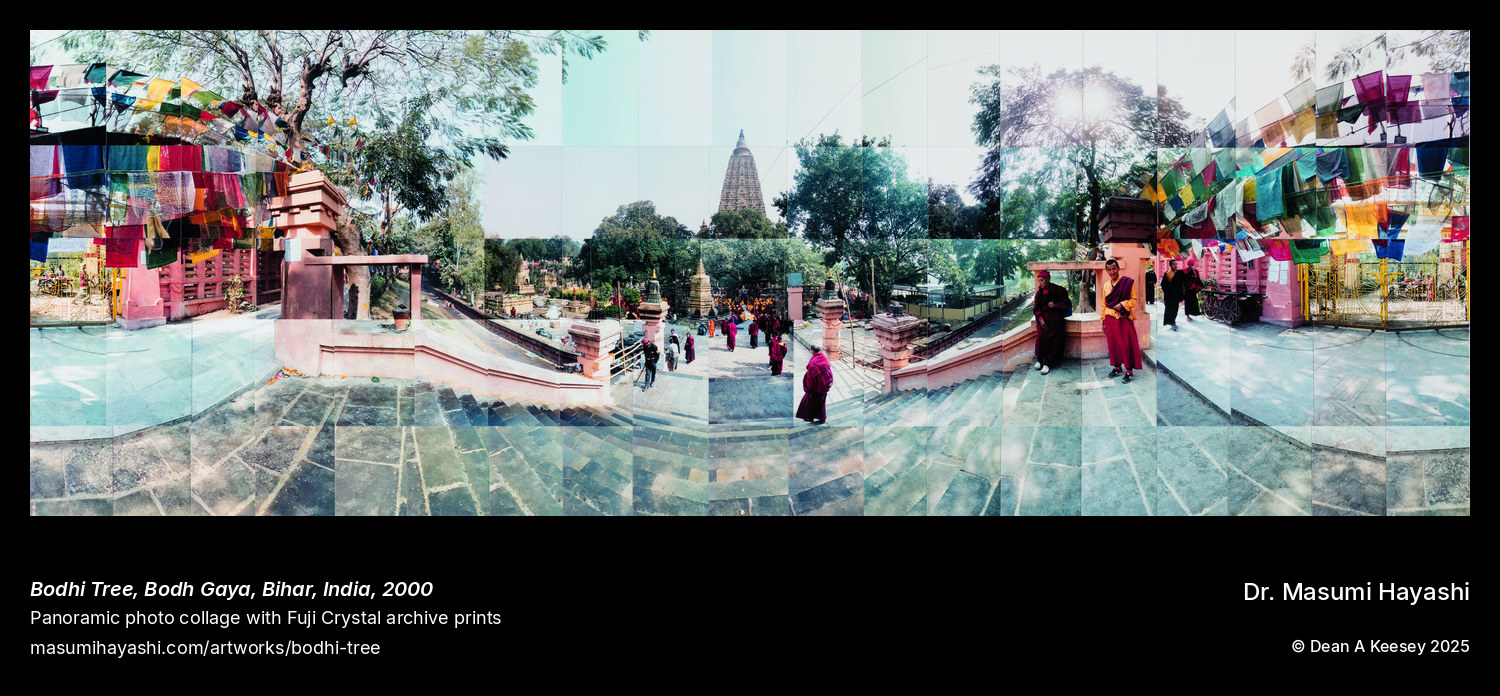
Bodhi Tree, Bodh Gaya, Bihar, India