Preah Khan Temple, Angkor, Siem Reap, Cambodia
Angkor, Siem Reap, Cambodia
Panoramic Photo Collage
2000
26 x 67
Preah Khan Temple, Angkor, Siem Reap, Cambodia
Overview
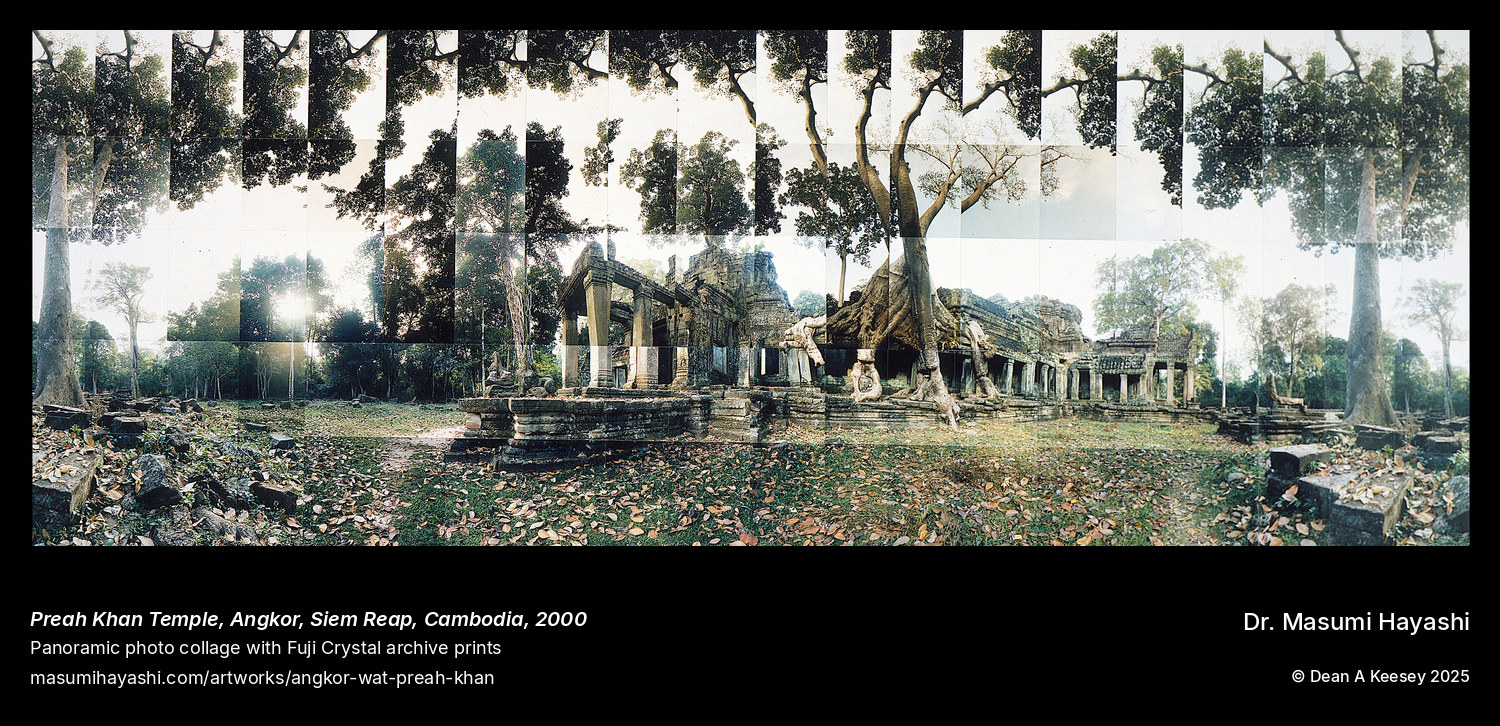
Created in 2000, this 26 x 67-inch panoramic photo collage documents Preah Khan (“Sacred Sword”)—sprawling Buddhist monastery and university complex built 1191 CE by King Jayavarman VII and dedicated to his father, creating paired filial monuments with Ta Prohm (dedicated to mother) expressing Buddhist devotion through monumental religious architecture honoring both parents in form of Buddhist deities. Temple inscription recording extraordinary institutional scale matching Ta Prohm’s grandeur: 97,840 people serving complex including temple personnel, support staff, and dependent villages—evidence of Angkorian civilization’s sustained capacity for massive religious endowments supporting multiple simultaneous projects during Jayavarman VII’s extraordinary building program. Preah Khan meaning “Sacred Sword” possibly referencing legendary weapon King Jayavarman VII received from gods during military victories against Cham invaders (1177-1181), combining royal military prowess with Buddhist piety in single architectural expression. Complex originally functioned as Buddhist monastery, university (teaching Buddhist texts and philosophy), and royal residence, featuring multiple concentric enclosures spanning 700 x 800 meters—among Angkor’s largest temple complexes rivaling Angkor Wat in scale though less architecturally unified, with sprawling galleries, halls, courtyards, and unique two-story structure rare in Angkorian architecture. Unlike Ta Prohm’s dramatic tree-stone integration, Preah Khan maintains partial clearing while allowing controlled vegetation creating atmospheric ruined passages, carved lintels emerging from jungle undergrowth, and Hall of Dancers with elaborate pillars demonstrating refined late-12th century Bayon-style carving before forest reclamation. The 26 x 67-inch extreme vertical panorama (2.58:1 aspect ratio, 67-inch height nearly matching Bodhi Tree’s and Bayon’s extraordinary vertical formats) emphasizes temple’s tower architecture, gallery elevations, or possibly unique two-story structure requiring vertical documentation uncommon in single-level Angkorian temples—format enabling comprehensive architectural elevation from ground through multiple levels to summit or capturing vertical progression through enclosures, doorways, and stacked architectural elements. The 2000 date positions Preah Khan as eighth confirmed turn-of-millennium work and fifth Angkor monument from 2000 (alongside Banteay Srei, Angkor Wat No. 1, Bayon, and Ta Prohm), establishing absolutely extraordinary concentrated Cambodia documentation suggesting extended multi-week Angkor stay enabling systematic comprehensive complex coverage across five major monuments representing different centuries (10th to late 12th-early 13th), religious dedications (Hindu gods to Buddhist bodhisattvas to royal ancestors), architectural scales (intimate to massive), and preservation states (restored clarity to jungle integration). Five Angkor works unprecedented in photographic documentation suggesting this represents most comprehensive single-artist systematic coverage of Angkor archaeological complex undertaken 2000, rivaling institutional archaeological documentation in breadth. Two Foundation editions retained (both unframed, including signed Edition 2)—strategic retention pattern matched by Bayon and Jain Temple suggesting recognition of work’s institutional appeal, though “damaged back, image ok” notation on Edition 1 indicating conservation concern requiring preservation of backup edition while maintaining availability for potential placement of undamaged signed Edition 2.
Historical Context: Jayavarman VII’s Father Temple
Preah Khan represents Jayavarman VII’s filial devotion expressed through monumental architecture:
Foundation (1191 CE):
Royal Dedication and Paired Monuments: Built by Jayavarman VII (reign 1181-1218 CE):
- Dedication: King’s father honored through Buddhist temple endowment
- Paired with Ta Prohm: Mother temple (1186) and father temple (1191) creating dual filial monuments
- Five-Year Interval: Ta Prohm built first (1186), Preah Khan five years later (1191)—suggesting sequential major projects
- Buddhist Filial Piety: Honoring parents through religious architecture generating karmic merit benefiting deceased ancestors and living king
- Original Name: Preah Khan (“Sacred Sword”)—possibly referencing legendary weapon Jayavarman VII received during battles against Cham invaders
- Site Significance: Built on location of Jayavarman VII’s military victory over Chams (1181), combining military triumph with religious devotion
Extraordinary Institutional Scale:
Temple inscription documenting operations:
Total Dependent Population: 97,840 people serving Preah Khan
Scale Comparison with Ta Prohm:
- Ta Prohm (mother temple): 79,365 people
- Preah Khan (father temple): 97,840 people
- Preah Khan supporting 23% larger dependent population despite being built five years later
- Combined total: 177,205 people serving just two of Jayavarman VII’s temples (not counting Bayon, Banteay Kdei, Neak Pean, others)
Resources and Wealth:
- Thousands of temple personnel (priests, monks, dancers, officials)
- Tens of thousands external support staff
- Multiple villages providing agricultural surplus
- Gold, gems, silk, rice stores
- Monastery housing hundreds of monks
- University teaching Buddhist philosophy
Numbers demonstrating sustained capacity for massive religious patronage—Jayavarman VII simultaneously supporting multiple enormous temple complexes requiring hundreds of thousands of people, suggesting either extraordinary economic productivity or unsustainable resource extraction potentially contributing to empire’s later decline as agricultural labor diverted to temple service.
Jayavarman VII’s Building Program Context:
Preah Khan one component among many:
- 1186: Ta Prohm (mother temple)
- 1191: Preah Khan (father temple)
- Late 12th century: Bayon (state temple), Angkor Thom (entire walled capital)
- Additional temples: Banteay Kdei, Neak Pean, Srah Srang, Ta Som, others
- Infrastructure: 102 hospitals, 121 rest houses throughout kingdom
- Roads: Network connecting temples, cities, provinces
Construction representing either pinnacle of Angkorian achievement or empire’s over-extension—debate among historians regarding whether building program demonstrated strength or accelerated decline.
Buddhist Monastery and University:
Preah Khan’s multiple functions:
Monastery:
- Residential complex for Buddhist monks
- Living quarters, meditation halls, libraries
- Daily ritual worship practices
- Training novice monks
University:
- Teaching Buddhist texts (sutras, philosophical treatises)
- Sanskrit and Pali language instruction
- Mahayana Buddhist philosophy and practice
- Intellectual center attracting scholars
Royal Residence:
- Possibly used by Jayavarman VII before Angkor Thom completion
- Royal apartments within temple complex
- Combining sacred and secular authority in single location
Ritual Center:
- Ceremonies honoring father-as-deity
- Daily offerings, chanting, rituals
- Pilgrimage destination for devotees
Architectural Layout and Features
Preah Khan spans enormous area with complex organization:
Scale and Enclosures:
Overall Dimensions:
- Outer enclosure: 700 x 800 meters
- Among Angkor’s largest complexes (comparable to Angkor Wat’s outer dimensions)
- Multiple concentric rectangular enclosures (typical Angkorian design)
- Progressive sacred zones from outer public to inner restricted
Concentric Structure:
- Fourth (Outer) Enclosure: Laterite wall with moat, extensive ruins
- Third Enclosure: 200 x 175 meters
- Second Enclosure: Smaller gallery complex
- First (Central) Enclosure: Central sanctuary and principal structures
Architectural Elements:
Central Sanctuary:
- Principal shrine originally housing deity image (father as Buddhist figure)
- Surrounded by galleries, libraries, auxiliary shrines
- Towers at cardinal points
Hall of Dancers:
- Elaborate pillared hall with exceptional carving
- Apsara (celestial dancer) figures
- Bayon-style late-12th-century sculptural refinement
- Demonstrates continued artistic sophistication despite massive construction scale
Two-Story Structure (Unique Feature):
- Rare in Angkorian architecture: Most temples single-level with towers providing vertical accent
- Two-story building with upper level accessible via stairs
- Purpose uncertain: library, royal apartments, special shrine
- Demonstrates architectural experimentation beyond typical temple formulas
Galleries and Passages:
- Kilometers of interconnected stone corridors
- Cruciform passages with decorated lintels
- Multiple courtyards between gallery levels
- Some galleries roofed (corbeled vaulting), others open
Libraries:
- Traditional paired libraries (typically on east side)
- Stone structures for storing Buddhist texts, manuscripts
- Some surviving in partial condition
Garudas and Nagas:
- Carved mythological figures throughout complex
- Garudas (eagle-like divine creatures, Vishnu’s mount)
- Nagas (serpent deities) guarding entrances, stairways
- Syncretistic Hindu-Buddhist iconography
Materials:
- Sandstone: Primary carved blocks for galleries, towers
- Laterite: Outer walls, foundations, less-visible structures
- Dry-stone construction: No mortar (like other Angkorian temples)
Current State: Controlled Jungle Integration
Preah Khan’s preservation differs from both fully-restored temples and Ta Prohm’s extreme tree integration:
Conservation Approach:
Partial Clearing: Unlike Ta Prohm’s deliberate romantic ruin preservation:
- Major walkways cleared enabling visitor circulation
- Significant vegetation removed from critical structures
- Some galleries stabilized preventing collapse
- Access maintained to principal architectural elements
Controlled Vegetation:
- Some trees preserved creating atmospheric jungle setting
- Massive roots integrated with architecture in select locations
- Not as dramatic as Ta Prohm but maintaining “discovered” aesthetic
- Balance between accessibility and romantic ruin appeal
Atmospheric Qualities:
- Dappled sunlight through tree canopy
- Carved lintels emerging from undergrowth
- Moss and lichen on sandstone creating aged patina
- Sense of discovery despite cleared paths
- Less crowded than Angkor Wat, Bayon, Ta Prohm
Ongoing Conservation:
- French EFEO historical restoration work (early-mid 20th century)
- World Monuments Fund conservation projects (late 20th-21st centuries)
- Structural stabilization addressing collapse risks
- Drainage improvements
- Vegetation management balancing preservation with aesthetic
Challenges:
- Massive scale making comprehensive restoration difficult
- Limited funding relative to complex size
- Tourism wear on sandstone surfaces
- Continued vegetation pressure
- Balancing archaeological clarity with atmospheric appeal
Extreme Vertical Panorama: 26 x 67 Inches
At 26 x 67 inches, Preah Khan employs extreme vertical panorama emphasizing tower/gallery elevation:
Format Analysis:
- Width: 26 inches (2.17 feet) creates narrow horizontal field
- Height: 67 inches (5.58 feet, nearly 5.5 feet tall) establishes powerful vertical emphasis
- Aspect Ratio: 2.58:1 (height to width)—extreme vertical panorama, fourth most extreme among documented works
Comparison with Other Extreme Verticals:
- Jain Temple: 25 x 73” (2.92:1)—MOST EXTREME, tallest
- Bodhi Tree: 24 x 69” (2.875:1)—second most extreme
- Bayon: 27 x 69” (2.56:1)—third most extreme (same 69” height as Bodhi Tree)
- Preah Khan: 26 x 67” (2.58:1)—fourth most extreme, nearly matching Bayon
- Kandariya Mahadeva: 30 x 59” (1.97:1)—significant vertical
Preah Khan’s 67-inch height (5.5+ feet) approaches Bodhi Tree/Bayon’s 69-inch maximum, while 26-inch width creates narrow vertical field concentrating attention on upward architectural movement.
Format Rationale: Tower and Gallery Documentation
Two-Story Structure: Preah Khan’s unique two-story building requiring vertical documentation:
- Ground floor → upper floor accessed via stairs → roof level
- Vertical format capturing complete elevation of rare multi-story Angkorian architecture
- Showing architectural innovation absent from typical single-level temples
Tower Elevation: Central sanctuary towers:
- Foundation → gallery base → tower levels → prasant peak
- Vertical format documenting complete tower architecture
- Emphasizing upward spiritual symbolism (Mount Meru)
Gallery Corridor Heights: Interior passages with vertical proportions:
- Floor → carved pillars → corbeled vault ceiling → possible upper structures
- Narrow vertical format suited to gallery corridor documentation
- Capturing full interior elevation
Enclosure Progressions: Vertical stacking of architectural elements:
- Outer wall → gateway tower → gallery → inner shrine → central tower
- Possible vertical composition showing progressive sacred zones
- Compressed horizontal space emphasizing vertical movement through enclosures
Possible Compositional Strategies:
Central Tower Focus:
- Complete tower elevation from terrace to summit
- Narrow width concentrating on single tower without adjacent elements
- Vertical format essential for tower’s upward reach
Two-Story Building:
- Documenting unique multi-level structure
- Ground floor doorway → upper level windows → roof line
- Vertical format required for showing both levels
Gallery to Tower Progression:
- Low gallery → intermediate structure → tall tower
- Vertical sequence showing architectural hierarchy
- Format emphasizing sacred progression from accessible to restricted
26-Inch Width Advantage: Slightly wider than Bodhi Tree (24”) and Preah Khan (26”):
- Additional horizontal information showing context
- Potentially capturing adjacent architectural elements
- Balanced composition between extreme vertical emphasis and necessary width
Eighth 2000 Work: Five Angkor Monuments Documented
Preah Khan represents eighth confirmed 2000 work, fifth Angkor monument:
2000 Works Confirmed (Complete List):
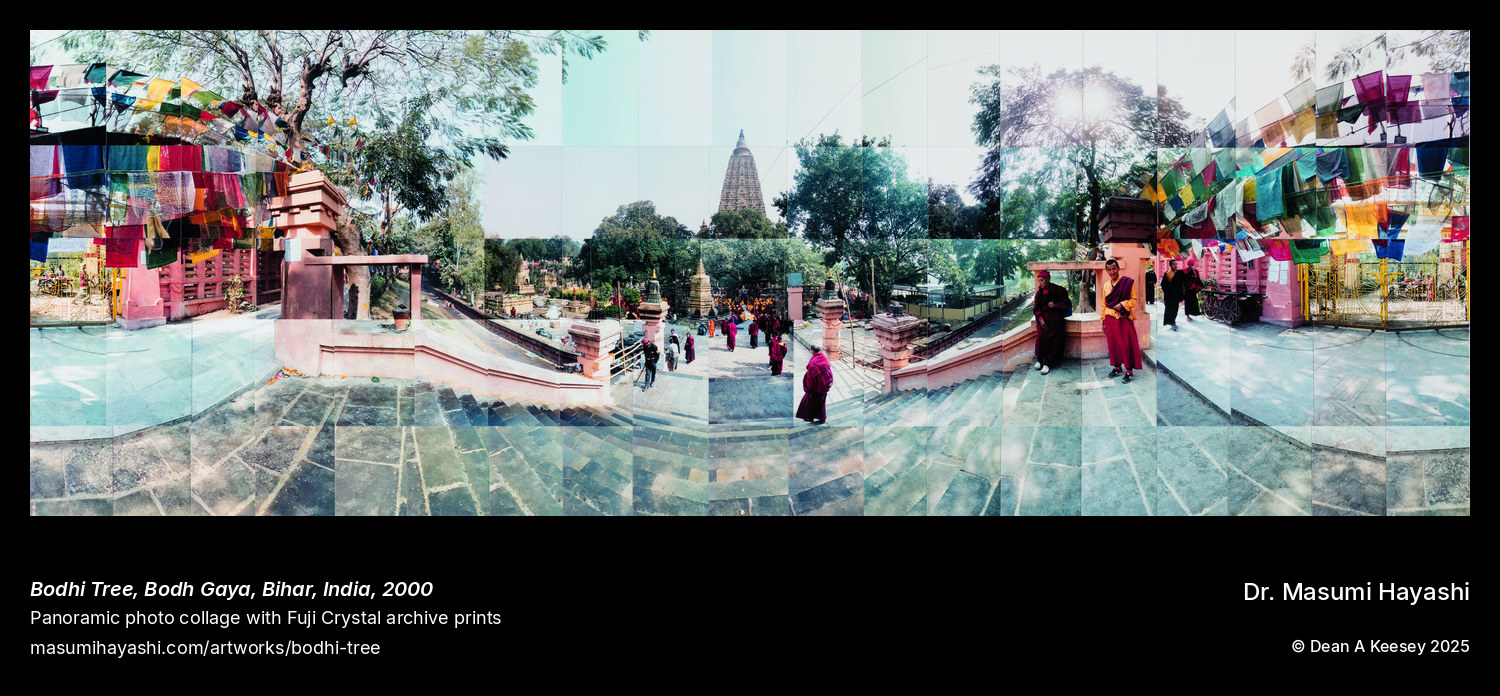
- Bodhi Tree (Bodh Gaya, Bihar, India)—Buddhism, enlightenment site, 24 x 69” extreme vertical
- Banteay Srei (Angkor, Cambodia)—Hindu-Buddhist, 10th century, 27 x 56” moderate horizontal
- Kandariya Mahadeva (Khajuraho, Madhya Pradesh, India)—Hinduism, tantric temple, 30 x 59” vertical
- Jain Temple (Jaisalmer, Rajasthan, India)—Jainism, merchant temple, 25 x 73” extreme vertical
- Angkor Wat No. 1 (Angkor, Cambodia)—Hindu-Buddhist, world’s largest monument, 23 x 52” vertical
- Bayon (Angkor Thom, Cambodia)—Buddhism, face towers, 27 x 69” extreme vertical
- Ta Prohm (Angkor, Cambodia)—Buddhism, mother temple, jungle integration, 27 x 45” moderate vertical
- Preah Khan (Angkor, Cambodia)—Buddhism, father temple, two-story structure, 26 x 67” extreme vertical
Technical Consistency Absolute: All eight 2000 works employ identical specifications:
- Fuji film stock (distinct from typical Kodak)
- 4 x 6-inch format (larger than typical 3.5 x 5)
- Systematic technical approach throughout journey
Five Angkor Works from 2000—Absolutely Extraordinary Concentration:
Angkor Monuments Documented:
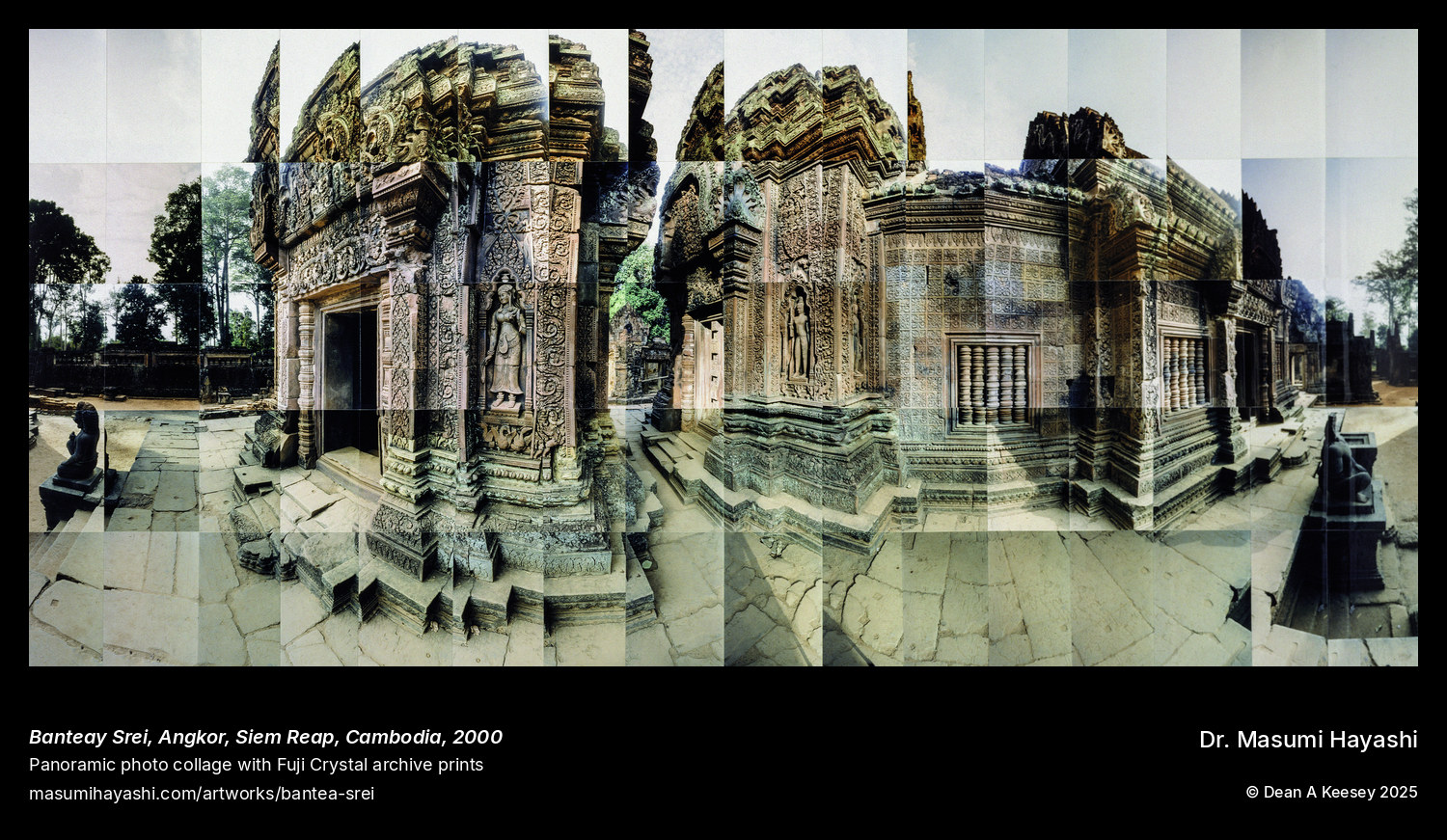
- Banteay Srei (25km from main complex)—intimate pink sandstone temple, 10th century Hindu
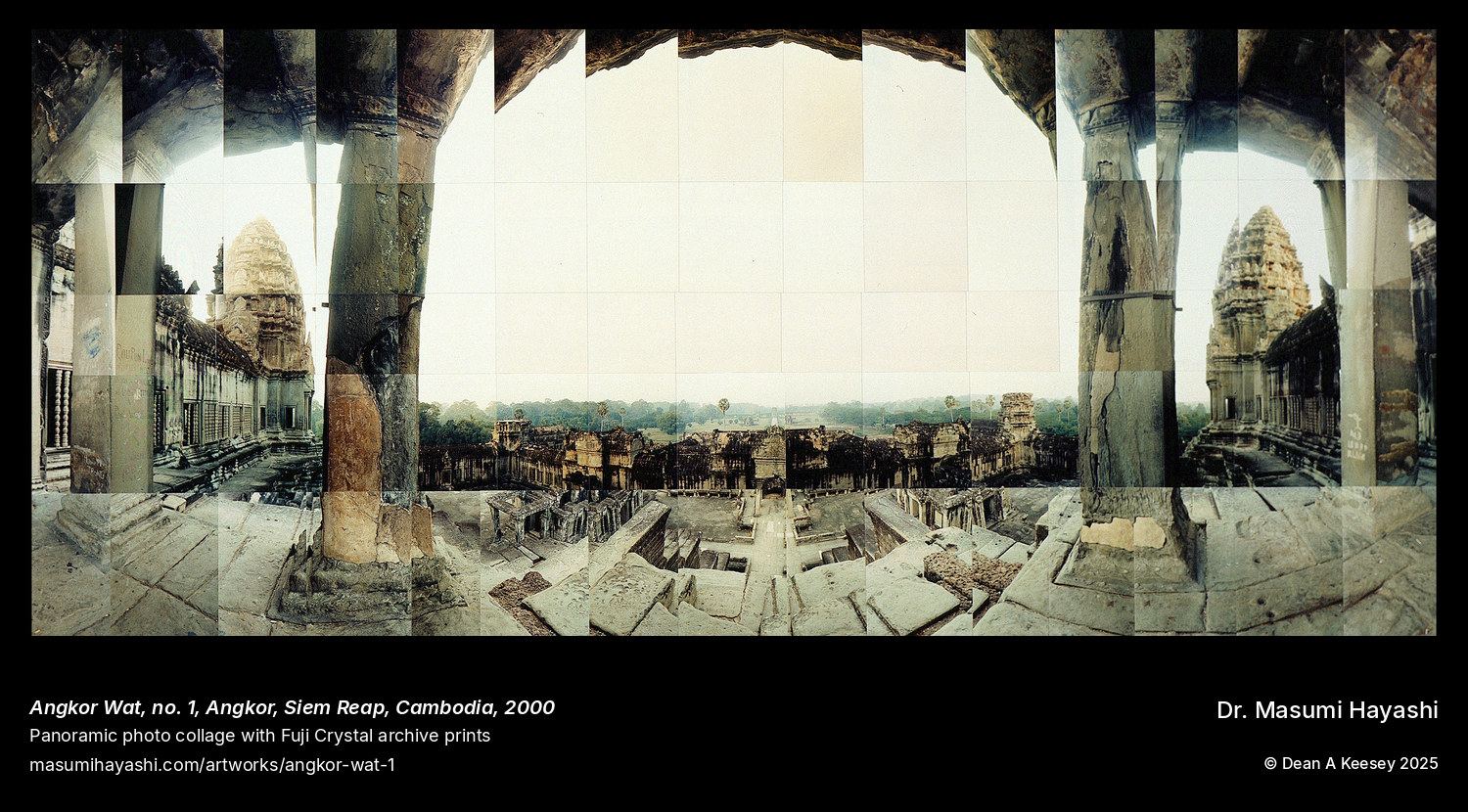
- Angkor Wat (central monument)—world’s largest religious monument, 12th century Hindu → Buddhist
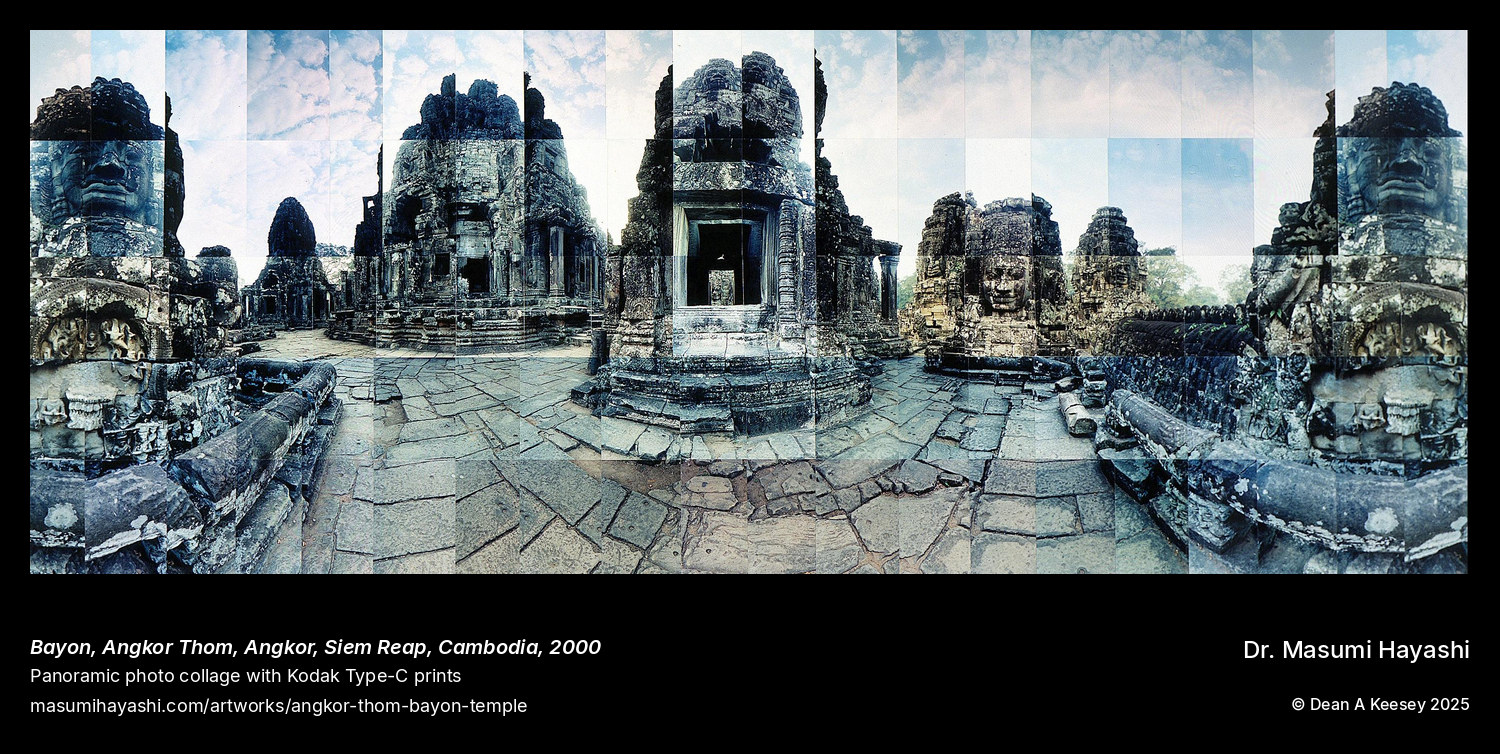
- Bayon (Angkor Thom center)—enigmatic face temple, late 12th-early 13th century Buddhist
- Ta Prohm (Angkor vicinity)—jungle temple dedicated to mother, late 12th century Buddhist
- Preah Khan (Angkor vicinity)—sprawling monastery dedicated to father, late 12th century Buddhist
Unprecedented Documentation: Five works from single archaeological complex absolutely extraordinary:
- Suggests multi-week Cambodia stay (likely 3-4 weeks minimum given travel between sites, permissions, photography time)
- Most comprehensive single-artist systematic coverage of Angkor undertaken turn of millennium
- Rivaling institutional archaeological documentation in breadth
- Understanding Angkor requires multiple works capturing architectural diversity
Systematic Coverage Across Multiple Dimensions:
Architectural Scales:
- Intimate refined temple (Banteay Srei, 100 meters)
- Medium monastery (Ta Prohm, 600 x 1000 meters; Preah Khan, 700 x 800 meters)
- Massive monumental complex (Angkor Wat, multiple kilometers)
- Medium face towers (Bayon)
Religious Phases and Dedications:
- 10th century Hindu (Banteay Srei - Shiva)
- 12th century Hindu → Buddhist transformation (Angkor Wat - Vishnu → Buddha)
- Late 12th century Buddhist state temple (Bayon - Jayavarman VII as bodhisattva)
- Late 12th century Buddhist filial monuments (Ta Prohm - mother, Preah Khan - father)
Preservation States:
- Fully restored decorative perfection (Banteay Srei)
- Maintained monumental clarity (Angkor Wat)
- Stable with iconic features (Bayon faces)
- Deliberately partially unrestored romantic ruin (Ta Prohm)
- Controlled jungle integration (Preah Khan—middle ground between full restoration and deliberate ruin)
Architectural Typologies:
- Decorative temple with exquisite relief carving (Banteay Srei)
- Tower quintet and bas-relief galleries (Angkor Wat)
- Clustered face towers (Bayon)
- Monastery galleries with dramatic tree-stone symbiosis (Ta Prohm)
- Sprawling monastery with unique two-story structure (Preah Khan)
Construction Periods:
- 10th century (Banteay Srei, 967 CE)
- Early 12th century (Angkor Wat, 1113-1150)
- Late 12th-early 13th century (Bayon, Ta Prohm, Preah Khan, 1186-1191)
Pattern demonstrating sophisticated understanding that comprehensive documentation of major archaeological complex requires systematic coverage across centuries, religious traditions, architectural innovations, and preservation philosophies rather than single representative “greatest hits” approach.
Two Foundation Editions Retained: Strategic Importance
Preah Khan’s two-edition retention pattern:
Edition Status:
- Edition 1: Foundation inventory (unframed), “damaged back, image ok”
- Edition 2: Foundation inventory (unframed), signed
- Edition 3: Missing from tracking
- Editions 4-5: Packets (available for placement)
Strategic Retention Analysis:
Damaged Edition 1:
- Notation “damaged back, image ok” suggesting:
- Physical damage to print backing or mounting
- Image surface undamaged, suitable for rematting/reframing
- Kept as backup despite damage given work’s importance
Signed Edition 2:
- Artist signature enhancing value
- Premium edition for potential high-value institutional placement
- Unframed state allowing institution to select custom framing
Two Editions Retained Pattern: Matches Bayon and Jain Temple retention strategy:
- Jain Temple: TWO framed editions (tallest work, only Jain documentation)
- Bayon: TWO editions (framed + unframed, iconic faces)
- Preah Khan: TWO editions (both unframed, including signed)
Pattern suggesting recognition of:
- Exceptional institutional appeal (five Angkor works demonstrating comprehensive coverage)
- Paired monument significance (father temple complementing mother temple Ta Prohm)
- Unique architectural features (two-story structure rare in Angkor)
- Part of extraordinary concentrated documentation deserving strategic retention
Missing Edition 3: Gap in tracking suggesting:
- Possible early placement not recorded
- Lost in studio/storage
- Damaged beyond repair
- Accounting oversight
Paired Filial Monuments: Father and Mother Temples
Preah Khan and Ta Prohm form complementary pair:
Ta Prohm (1186, Mother Temple):
- Dedicated to mother as Prajnaparamita (Perfection of Wisdom)
- 79,365 people serving temple
- Deliberately left in romantic ruin state with dramatic tree integration
- 27 x 45” moderate vertical format
- One framed edition retained
Preah Khan (1191, Father Temple):
- Dedicated to father (five years after mother temple)
- 97,840 people serving temple (23% larger)
- Controlled jungle integration, partially cleared
- Unique two-story structure
- 26 x 67” extreme vertical format
- Two unframed editions retained (including signed)
Artistic Pairing: Hayashi documenting both temples recognizing:
- Complementary filial dedications (mother + father)
- Different preservation philosophies (romantic ruin vs. controlled clearing)
- Scale comparison (both massive monastery complexes)
- Jayavarman VII’s dual devotion expressed through paired architecture
Exhibition Potential: Displaying Ta Prohm and Preah Khan together:
- Narrative of Buddhist filial piety through architecture
- Contrasting preservation approaches
- Comparison of institutional scales
- Comprehensive understanding of Jayavarman VII’s building program
- Different format strategies (moderate vertical vs. extreme vertical)
Collection Information
Year: 2000 Location: Angkor, Siem Reap, Cambodia Medium: Panoramic Photo Collage Dimensions: 26 x 67 inches (extreme vertical panorama, nearly 5.5 feet tall) Edition: 1 of 5 Film: 4 x 6 inches, Fuji
- Masumi Hayashi Foundation (unframed, inventory, “damaged back, image ok”)
- Masumi Hayashi Foundation (unframed, inventory, signed) 4-5. Packets (available for placement)
Note: Edition 3 missing from tracking. Two Foundation editions retained including signed premium edition. Eighth confirmed 2000 work and fifth Angkor monument from 2000 establishing absolutely extraordinary concentrated Cambodia documentation suggesting extended multi-week Angkor stay enabling systematic comprehensive complex coverage across five major monuments representing different centuries (10th to late 12th-early 13th), religious dedications (Hindu gods to Buddhist bodhisattvas to royal ancestors), architectural scales (intimate to massive), preservation states (restored clarity to jungle integration), and construction periods spanning Angkorian civilization’s evolution—all employing identical Fuji 4 x 6 film establishing systematic approach unparalleled in turn-of-millennium Angkor photographic documentation. Work documents Preah Khan (“Sacred Sword”)—sprawling Buddhist monastery and university complex built 1191 CE by King Jayavarman VII dedicated to his father, creating paired filial monuments with Ta Prohm (mother temple) expressing Buddhist devotion through monumental architecture honoring both parents. Temple inscription recording extraordinary institutional scale: 97,840 people serving complex (23% larger than Ta Prohm’s 79,365), demonstrating sustained capacity for massive simultaneous religious endowments. Complex functioned as monastery, Buddhist university teaching philosophy and texts, possibly royal residence, spanning 700 x 800 meters among Angkor’s largest temple complexes with sprawling galleries, halls, courtyards, and unique two-story structure rare in Angkorian architecture demonstrating architectural experimentation beyond typical temple formulas. Unlike Ta Prohm’s dramatic tree-stone integration, Preah Khan maintains controlled jungle setting with partial clearing enabling visitor circulation while preserving atmospheric “discovered” aesthetic through selective vegetation, moss-covered carvings, and dappled forest light creating middle ground between full archaeological restoration and romantic ruin preservation. Extreme vertical panoramic format (26 x 67”, nearly 5.5 feet tall, 2.58:1 aspect ratio, fourth most extreme vertical among documented works) emphasizes tower architecture, gallery elevations, or unique two-story structure requiring vertical documentation uncommon in single-level temples—format enabling comprehensive architectural elevation from ground through multiple levels to summit. Preah Khan represents fifth Angkor work from 2000 establishing unprecedented single-artist systematic coverage rivaling institutional archaeological documentation in breadth—five works capturing architectural diversity (intimate refined temple to sprawling monastery), religious evolution (10th century Hindu to late 12th century Buddhist), preservation philosophies (restored to jungle-integrated), and architectural innovations (tower quintets to face clusters to two-story structures) demonstrating understanding that major archaeological complex requires multiple works rather than single representative image. Two Foundation editions retained (including signed Edition 2) suggesting strategic importance as complement to Ta Prohm mother temple, part of extraordinary five-work Angkor concentration, and documentation of unique architectural features. Appropriate for major art museums with comprehensive Southeast Asian collections, Buddhist art programs, Khmer Empire architectural studies, comparative monastery documentation, paired exhibition opportunities with Ta Prohm exploring filial devotion themes, or photographic format innovation demonstrating extreme vertical panorama. Five-work Angkor concentration creates exceptional institutional narrative potential documenting Angkorian civilization’s evolution across three centuries through systematic coverage unmatched by single-work approaches—Getty-level placement opportunity balancing scholarly archaeological rigor with comprehensive site documentation appealing to museums prioritizing complete rather than fragmentary representation of world heritage sites.