Madonna and Child, Meenakshi Temple, Madurai, Tamil Nadu, India | Masumi Hayashi Foundation
Back to Gallery
Picture of Madonna and Child, Meenakshi Temple, Madurai, Tamil Nadu, India by Dr. Masumi Hayashi

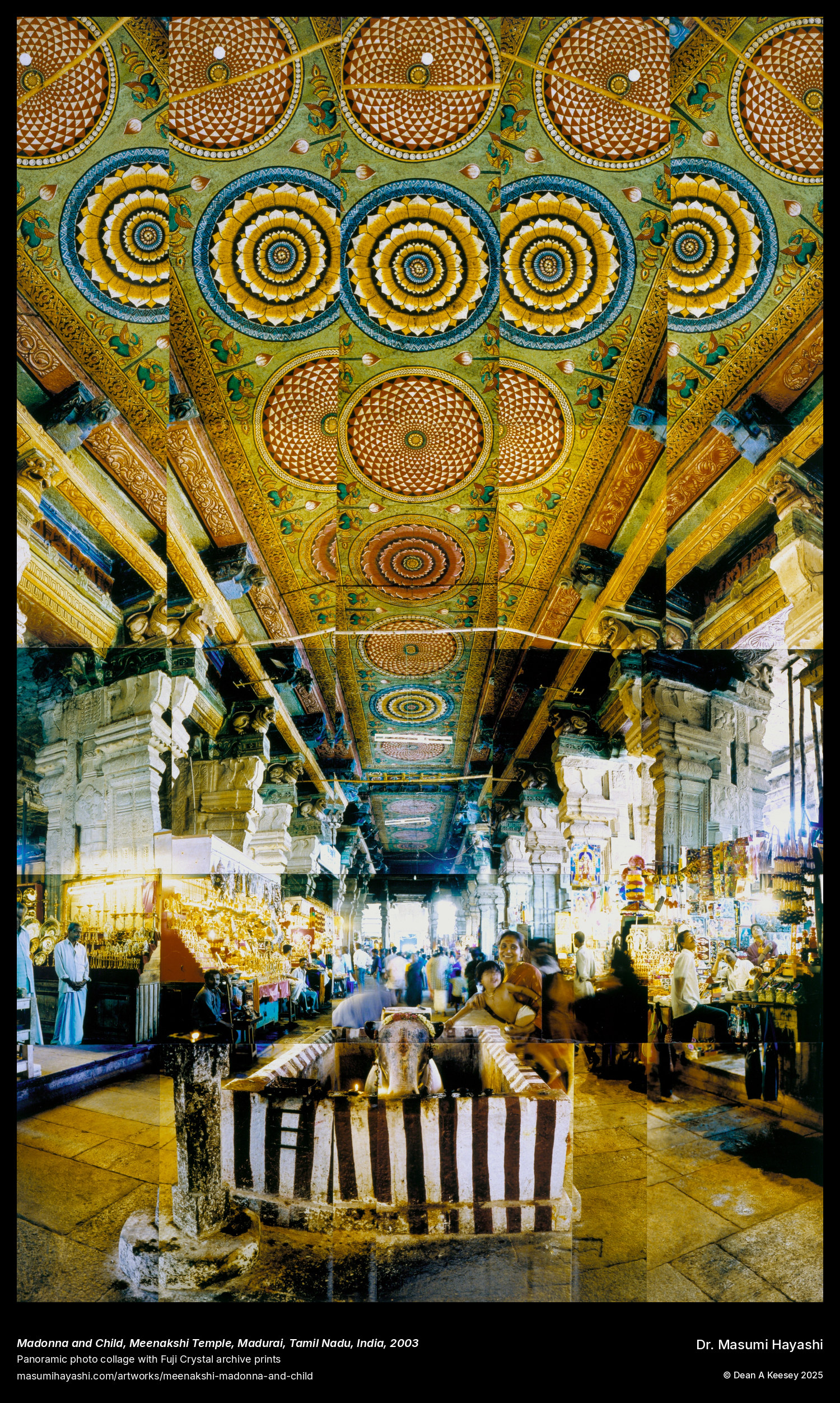
Madonna and Child, Meenakshi Temple, Madurai, Tamil Nadu, India

Madurai, Tamil Nadu, India

Panoramic Photo Collage

2003

17" x 27"

Madonna and Child, Meenakshi Temple, Madurai, Tamil Nadu, India

Overview

Created in 2003, this 17 x 27-inch panoramic photo collage documents Meenakshi Temple in Madurai through title evoking Catholic “Madonna and Child” iconography—suggesting Hindu goddess sculpture or relief compositionally echoing Christian mother-child imagery, demonstrating Hayashi’s interest in cross-cultural visual parallels where distinct religious traditions employ similar artistic vocabulary expressing universal maternal divine archetypes. The work documents one of South India’s most architecturally significant Hindu temples—Meenakshi Amman Temple complex covering 14 acres with towering gopurams (gateway towers) rising 170+ feet, covered with thousands of painted stucco sculptures depicting deities, mythological narratives, and protective guardians creating overwhelming visual density characteristic of Dravidian temple architecture. Meenakshi Temple, dedicated to goddess Meenakshi (form of Parvati) and her consort Sundareshwar (Shiva), represents peak of Tamil Nadu’s temple-building tradition where sacred architecture functions as cosmic diagram—concentric rectangular enclosures (prakarams) creating progressive sacred zones leading from outer worldly realm toward innermost sanctum (garbhagriha) housing deity image accessed only by priests. The 17 x 27-inch format represents second vertical panorama within known Sacred Architectures works (alongside Hanuman Ghat’s 24 x 45”), suggesting architectural documentation priorities emphasizing vertical elements—gopuram towers, sculptural reliefs, or temple elevation requiring vertical compositional emphasis over horizontal sweep. The 2003 date positions this as late-career work—three years before 2006 death, year before 2004 Nepal documentation concentration—demonstrating sustained international travel and Sacred Architectures documentation commitment through final active period. Remarkably, zero Foundation inventory (both framed and unframed editions absent) combined with tier 1 status indicates complete edition placement—all five editions sold or donated to collections, representing exceptional commercial success unusual within Hayashi’s oeuvre where Foundation typically retained multiple editions for exhibitions, research, and future placement opportunities.

Historical Context: Meenakshi Temple

Meenakshi Temple represents architectural and religious pinnacle of Tamil Dravidian temple tradition:

Temple History and Significance:

Ancient Origins: Temple traditions claim 2,000+ year history, though current architectural fabric primarily dates to 12th-17th centuries following repeated destructions by Islamic invasions (13th-14th centuries) and subsequent Hindu restoration efforts

Nayak Dynasty Patronage (16th-17th Centuries): Temple’s current magnificent form emerged under Nayak rulers who commissioned massive gopurams, expanded temple complex, and created architectural ensemble surviving today

Goddess Meenakshi: Tamil form of goddess Parvati (Shiva’s consort), depicted with fish-shaped eyes (meena = fish, akshi = eyes)—local goddess elevated to pan-Hindu status through temple’s religious and political significance

Sundareshwar (Beautiful Lord): Form of Shiva worshipped as Meenakshi’s consort—temple uniquely emphasizes goddess over male deity, reversing typical Hindu temple hierarchy

Architectural Features:

Gopurams (Gateway Towers): Temple contains 14 gopurams including:

  • Four major gopurams: Facing cardinal directions, reaching 150-170 feet height
  • Pyramid-shaped structures covered with thousands of painted stucco sculptures
  • Sculptures depict gods, goddesses, demons, mythological scenes, protective guardians
  • Vivid polychrome painting (periodically restored) creating rainbow-hued surfaces
  • Gopurams function as vertical cosmic mountains—axis mundi connecting earthly and divine realms

Concentric Enclosures (Prakarams):

  • Multiple rectangular courtyards surrounded by columned corridors
  • Pillared halls (mandapas) with carved columns featuring horses, lions, mythological beings
  • Progressive sacred zones—outer areas accessible to all, inner sanctums restricted to initiated devotees
  • Thousand Pillar Hall with intricate carved columns creating forest-like architectural space

Main Shrines:

  • Meenakshi shrine (goddess sanctum)
  • Sundareshwar shrine (Shiva sanctum)
  • Subsidiary shrines for various deities
  • Gold-plated vimanas (tower structures above sanctums)

Sacred Tank (Porthamarai Kulam):

  • Central water tank for ritual bathing
  • Golden lotus centerpiece
  • Surrounding colonnades providing shaded circumambulation paths

Active Religious Function: Unlike many heritage monuments, Meenakshi Temple maintains intense ritual life:

  • Daily worship ceremonies (pujas) multiple times per day
  • Annual festivals including Chithirai Festival (marriage celebration of Meenakshi and Sundareshwar)
  • Thousands of pilgrims daily
  • Living Brahmin priest community maintaining Sanskrit ritual traditions
  • Integration of ancient practices with modern devotional movements

”Madonna and Child” Title: Cross-Cultural Visual Parallels

The title’s Catholic reference at Hindu temple warrants analysis:

Possible Interpretations:

1. Compositional Parallel: Hindu sculpture depicting goddess (possibly Meenakshi, Parvati, or Lakshmi) holding infant or young deity (Krishna, Murugan, or other divine child) creating visual composition echoing Christian Madonna and Child iconography:

  • Similar poses—mother holding child, protective embrace, tender gestures
  • Universal maternal divine archetype expressed across religious traditions
  • Hayashi recognizing visual kinship despite theological differences

2. Specific Sculpture Documentation: Gopuram or temple interior sculpture explicitly referencing Madonna and Child compositional tradition:

  • Colonial-era syncretism incorporating Catholic imagery into Hindu temple decoration
  • Portuguese Catholic influence in Kerala/Tamil Nadu creating hybrid iconographies
  • 19th-20th century temple renovations incorporating diverse artistic influences
  • Specific relief Hayashi identified as “Madonna-like” in composition

3. Artistic Commentary: Hayashi drawing explicit parallel between Hindu goddess worship and Catholic Marian devotion:

  • Both traditions emphasize divine mother figure
  • Maternal compassion as pathway to divine grace
  • Mother-child bond as sacred relationship
  • Visual vocabulary transcending specific theological contexts

4. Tourist Perspective: Western viewers’ tendency to interpret unfamiliar Hindu imagery through Christian visual categories:

  • “Madonna and Child” serving as accessible reference for Western audiences
  • Title bridging cultural/religious gaps through familiar artistic language
  • Hayashi acknowledging viewers’ interpretive frameworks

Hindu Mother-Child Iconography: Multiple Hindu traditions depict divine mother figures:

  • Yashoda and Krishna: Foster mother with divine child—popular subject in Indian art
  • Parvati and Ganesha/Murugan: Goddess with her sons
  • Devaki and Krishna: Birth mother with infant deity
  • Lakshmi holding infant: Goddess of prosperity with divine child

Any of these could create visual parallel to Madonna and Child compositional tradition.

Vertical Format: 17 x 27 Inches

At 17 x 27 inches, work employs compact vertical panorama:

Format Analysis:

  • Width: 17 inches (under 1.5 feet) creates narrow horizontal field
  • Height: 27 inches (2.25 feet) emphasizes vertical dimension
  • Aspect Ratio: 1.59:1 (height to width)—moderate vertical panorama

Comparison with Hanuman Ghat: Both Sacred Architectures works employ vertical formats:

  • Hanuman Ghat: 24 x 45” (more extreme vertical)
  • Madonna and Child: 17 x 27” (more compact vertical)
  • Suggests architectural documentation strategy emphasizing vertical elements when subject demands

Possible Subjects Requiring Vertical Format:

Gopuram Tower Documentation: Towering gateway structures rising 150+ feet create inherent vertical compositions—narrow base, pyramidal rise, sculptural density requiring vertical frame capturing full elevation

Sculptural Relief: Specific relief panel or sculptural group requiring vertical framing—detailed documentation emphasizing specific iconographic element rather than architectural ensemble

Temple Elevation: Vimana tower over sanctum, columned façade, or other vertical architectural feature

Compact Format Advantages:

  • 17 x 27” represents relatively modest dimensions compared to extreme panoramas
  • More displayable in domestic contexts
  • Lower production costs
  • Focus on specific subject rather than comprehensive architectural documentation

Tamil Nadu Sacred Architecture

Madonna and Child expands Sacred Architectures’ Indian geographic scope:

India Documentation Confirmed:

  • Tamil Nadu: Meenakshi Temple, Madurai (this work)
  • Karnataka: Hampi temples (multiple works)
  • Madhya Pradesh: Khajuraho temples
  • Maharashtra: Ellora and Ajanta caves
  • Rajasthan: Jain temples, Hindu complexes
  • Other locations: Additional Indian sacred sites across multiple states

Dravidian vs. North Indian Traditions: Meenakshi represents Dravidian architectural tradition distinct from North Indian styles documented elsewhere:

Dravidian Characteristics (South India: Tamil Nadu, Karnataka, Andhra Pradesh):

  • Towering gopurams as most prominent features
  • Rectangular temple plans with concentric enclosures
  • Extensive sculptural coverage—every surface carved or painted
  • Pyramid-shaped tower structures
  • Emphasis on horizontal spread and multiple enclosures

North Indian Characteristics (documented in Khajuraho, other sites):

  • Shikhara (curved tower) over sanctum as dominant element
  • Typically more compact temple footprints
  • Different sculptural programs and iconographic traditions
  • Architectural language influenced by Nagara style

Comprehensive Indian Documentation: Documenting both Dravidian and North Indian traditions demonstrates systematic approach understanding Indian sacred architecture’s regional diversity rather than treating “Hindu temple” as monolithic category.

Late-Career Work: 2003 Creation

Madonna and Child’s 2003 date positions within final active years:

2003-2004 Concentrated Asian Documentation:

  • 2003: Indian sites including Meenakshi Temple
  • 2004: Nepal concentration (Golden Temple, Hanuman Ghat, Patan Durbar Square)
  • Suggests final major international travel focusing on Asian sacred architecture
  • Recognition of endangered heritage requiring urgent documentation
  • Physical demands of international travel, temple access, equipment transport managed despite approaching 60 years age

Three Years Before Death: Creating work three years before 2006 death:

  • Continued artistic productivity through final period
  • No apparent artistic decline—Madonna and Child achieved complete edition placement indicating commercial and critical success
  • Sustained technical mastery of panoramic photo collage technique
  • Ongoing willingness to explore new sites rather than repeating documented subjects

Complete Edition Placement: Exceptional Success

Zero Foundation inventory represents unusual commercial achievement:

All Five Editions Placed: Unlike typical pattern where Foundation retained 1-3 editions:

  • All five editions sold to private collectors or donated to institutions
  • No inventory retained for exhibitions, loans, or future placement
  • Complete market absorption indicating strong collector interest

Possible Explanations:

Subject Appeal: Meenakshi Temple’s international recognition, dramatic architecture, and religious significance creating broader collector interest than more specialized subjects

Title Intrigue: “Madonna and Child” title at Hindu temple intriguing Western collectors through unexpected cultural juxtaposition

Manageable Format: Compact 17 x 27” dimensions more displayable than extreme panoramas, broadening potential collector base

Strategic Placement: All five editions strategically donated to institutions prioritizing South Asian sacred architecture or cross-cultural religious art

Early Sales: Work sold/placed shortly after creation before Foundation retention strategies evolved

Indian Art Market: Collectors specializing in Indian sacred architecture acquiring editions

Collection Information

Year: 2003 Location: Madurai, Tamil Nadu, India Medium: Panoramic Photo Collage Dimensions: 17 x 27 inches (vertical panorama) Edition: 1 of 5

No editions currently in Foundation inventory—all five editions placed/sold.

Note: Complete edition placement represents exceptional commercial success within Hayashi’s oeuvre. Vertical panoramic format (17” wide x 27” tall) suited to documenting Meenakshi Temple’s architectural vertical elements—possibly gopuram towers rising 150+ feet with thousands of painted sculptures, or specific sculptural relief requiring vertical compositional emphasis. Title “Madonna and Child” at Hindu temple suggests cross-cultural visual parallel between Hindu mother-goddess imagery and Catholic Madonna iconography, demonstrating Hayashi’s interest in universal divine maternal archetypes expressed through distinct religious artistic traditions. Late-career work (2003, three years before 2006 death) documents one of South India’s most significant Hindu temples—Meenakshi Amman Temple representing pinnacle of Tamil Dravidian architectural tradition with towering gopurams, concentric sacred enclosures, and intense ongoing ritual life. Work expands Sacred Architectures documentation from Nepal concentration to Tamil Nadu, adding Dravidian temple architecture to series’ North Indian, Newari, and Cambodian sacred architectural documentation. Appropriate for museum collections prioritizing South Asian religious architecture, Hindu temple traditions, Dravidian architectural heritage, cross-cultural religious art studies, or photographic documentation of living sacred landscapes. Vertical format creates distinctive display presence suited to specific architectural or sculptural documentation requirements. Complete edition absence from Foundation inventory precludes current availability but indicates work’s strong historical market reception and collector appeal across all five editions.

Donate