Lakshmana Temple, Khajuraho, Madhya Pradesh, India
Khajuraho, Madhya Pradesh, India
Panoramic Photo Collage
2000
24 x 37
Lakshmana Temple, Khajuraho, Madhya Pradesh, India
Overview
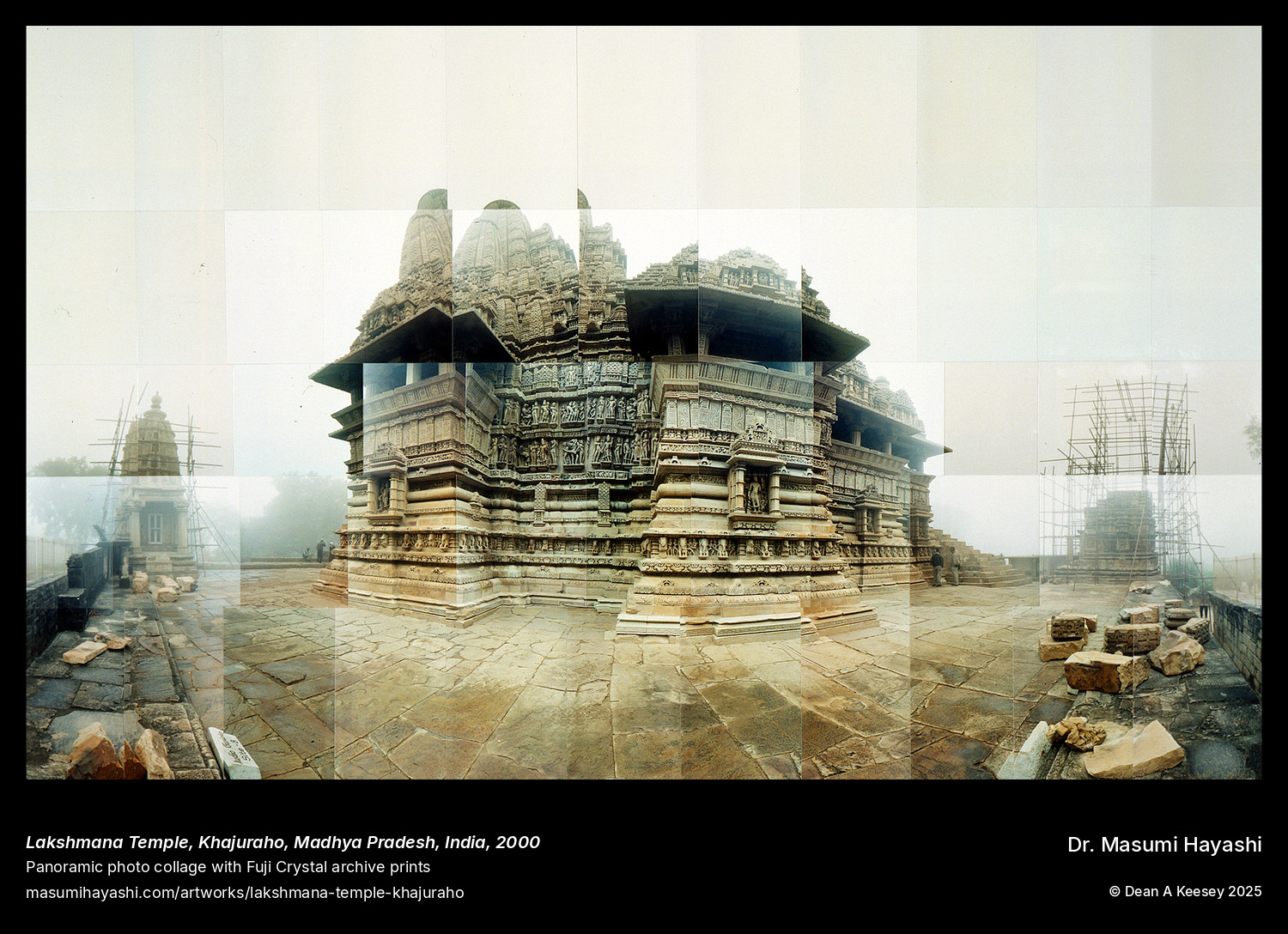
Created in 2000, this 24 x 37-inch panoramic photo collage documents Lakshmana Temple—oldest surviving temple at Khajuraho (built 954 CE) and masterpiece of early medieval North Indian Nagara-style Hindu architecture commissioned by Chandella dynasty King Yashovarman celebrating military victories and establishing royal authority through monumental religious endowment dedicated to Vaikuntha Vishnu (Vishnu enthroned in paradise). Temple representing culmination of earlier architectural experiments establishing Khajuraho’s distinctive characteristics: stepped sandstone plinth (jagati) creating elevated platform, cruciform plan with projecting transepts, multiple subsidiary shrines surrounding main tower (shikhara), and extensive sculptural program including erotic mithuna couples, divine beings (apsaras, devas), mythological narratives, and elaborate decorative patterns covering every surface transforming architecture into three-dimensional theological encyclopedia. Lakshmana predating more famous Kandariya Mahadeva temple (1025-1050 CE) by approximately 70+ years, establishing architectural vocabulary and iconographic program subsequently refined across Khajuraho’s Western Group temples built during Chandella dynasty’s 10th-11th century zenith. Temple’s dedication to Vishnu (rather than Shiva, more common at Khajuraho) reflected through extensive Vaishnava iconography: Vishnu’s ten avatars (dashavatara) depicted on exterior, Varaha (boar incarnation) rescuing earth goddess, Krishna narratives from Bhagavata Purana, and sanctum’s original Vaikuntha Vishnu image (Vishnu with three heads representing multiple divine forms). Temple surviving remarkably intact despite 1,000+ years exposure to monsoons, earthquakes, occasional Muslim destruction (Ghaznavid raids 1022), British colonial-era rediscovery (1838), and modern conservation challenges—UNESCO World Heritage Site (1986) recognition establishing international significance. The 24 x 37-inch moderate vertical panorama (1.54:1 aspect ratio) suits temple’s tower (shikhara) elevation and stepped platform architecture, likely documenting complete elevation from jagati base through subsidiary shrines and ascending tower tiers to urunga (amalaka crowning element), or capturing facade’s vertical sculptural organization from foundation friezes through ascending deity registers to tower summit—format enabling comprehensive architectural documentation while maintaining moderate proportions more accessible than extreme vertical formats employed for other temples. The 2000 date positions Lakshmana as tenth confirmed turn-of-millennium work and second Khajuraho monument from 2000 (alongside Kandariya Mahadeva), establishing systematic dual-temple documentation of Khajuraho complex comparable to five-work Angkor concentration—pattern demonstrating understanding that major temple sites require multiple works capturing architectural evolution, different dedications (Vishnu vs. Shiva), and chronological diversity (10th century Lakshmana vs. 11th century Kandariya) rather than single representative work. Two Foundation editions retained (framed + unframed)—strategic retention matched by Bayon, Jain Temple, and Preah Khan suggesting recognition of Khajuraho’s exceptional institutional appeal, with dual retention enabling simultaneous exhibition opportunities or preserving presentation options for future Getty-level museum placement.
Historical Context: Chandella Dynasty and Early Khajuraho
Lakshmana Temple represents Chandella power at its medieval zenith:
Chandella Dynasty (9th-13th Centuries):
Regional Power: Hindu Rajput dynasty controlling Bundelkhand region (central India):
- Capital: Khajuraho (called Khajuravahak in inscriptions)
- Peak Period: 10th-11th centuries under Kings Yashovarman, Dhanga, Vidyadhara
- Decline: 13th century due to Muslim invasions, internal fragmentation
- Religious Affiliation: Shaiva and Vaishnava Hinduism, tantric practices
- Cultural Achievement: Monumental temple building, Sanskrit literature patronage
King Yashovarman (Reign: 925-950 CE):
Lakshmana Temple Patron:
- Commission Date: 954 CE (completed shortly after Yashovarman’s death)
- Dedication: Vaikuntha Vishnu—Yashovarman’s chosen deity
- Temple Inscription: Records king’s military victories, religious devotion
- Political Significance: Temple establishing royal authority through religious patronage
- Military Context: Built following successful campaigns against Pratihara, Pala, Rashtrakuta rivals
Khajuraho Temple Complex:
Scale and Organization:
- Total Temples: Originally 85+ temples (surviving: 25 temples)
- Chronology: Built 950-1050 CE (approximately one century of intensive construction)
- Groups: Western Group (12 temples, most famous), Eastern Group (Jain + Hindu), Southern Group (smaller temples)
- UNESCO World Heritage (1986): International recognition of architectural and sculptural significance
Western Group Temples (Most Important):
- Lakshmana (954 CE)—oldest surviving, this work
- Vishvanatha (1002 CE)—dedicated to Shiva
- Kandariya Mahadeva (1025-1050 CE)—largest, most elaborate, also documented 2000
- Devi Jagadamba (1000-1025 CE)—originally Vishnu, later Parvati dedication
- Chitragupta (1000-1025 CE)—dedicated to Surya (sun god)
- Others: Varaha shrine, Matangeshvara (still actively worshipped), Nandi pavilion
Lakshmana establishing architectural vocabulary subsequently refined across Western Group.
Lakshmana Temple: Architecture and Iconography
Temple Structure:
Panchayatana Plan (Five-Shrine Layout): Hindu temple typology featuring:
- Main Shrine: Central tower housing principal deity (Vaikuntha Vishnu)
- Four Subsidiary Shrines: Corner shrines at jagati platform cardinal points (originally housing Vishnu’s emanations)
- Unified Composition: Five shrines integrated on single raised platform
Elevated Platform (Jagati): Distinctive Khajuraho feature:
- Height: Approximately 4 meters elevation above ground
- Access: Steep staircase on one side (typically east)
- Surrounding Processional Path: Devotees circumambulating (pradakshina) at platform level
- Subsidiary Shrines: Small temples at platform corners
- Visual Effect: Main temple appearing taller, more monumental due to platform elevation
Main Temple Components:
Cruciform Floor Plan:
- Ardha Mandapa (Entrance Porch): Initial entry with carved pillars
- Mandapa (Assembly Hall): Larger pillared hall for worship gatherings
- Maha Mandapa (Great Hall): Principal ceremonial space
- Antarala (Vestibule): Narrow passage connecting hall to sanctum
- Garbhagriha (Sanctum): Small dark chamber housing deity image
Cruciform shape created by projecting transepts (balconies) on three sides (north, south, west).
Shikhara (Tower): Nagara-style curvilinear tower:
- Height: Approximately 21 meters from platform base
- Form: Curvilinear profile (latina type) resembling mountain peak or corn cob
- Urushringa (Miniature Shikharas): Smaller replica towers clustered on main tower creating ascending rhythm
- Amalaka: Large ribbed stone crowning element (like flattened melon)
- Kalasha: Pot-shaped finial above amalaka
- Symbolism: Tower representing Mount Meru (cosmic mountain, gods’ abode)
Sculptural Program: Erotic and Divine:
Exterior Sculpture Coverage: Every surface carved with high-relief figures:
- Three Horizontal Bands: Sculptures arranged in register tiers encircling temple
- Density: Hundreds of figures covering walls, pillars, ceilings, lintels
- Scale: Life-size or larger figures creating dramatic presence
- Detail: Intricate jewelry, clothing, facial expressions, gestures
Iconographic Categories:
1. Divine Figures (Devas, Devis):
- Apsaras (Celestial Dancers): Beautiful female figures in graceful poses, elaborate headdresses
- Surasundaris (Heavenly Beauties): Women in daily activities—applying makeup, holding mirror, playing instruments, with animals
- Gods and Goddesses: Vishnu, Lakshmi, Brahma, Sarasvati, Shiva, Parvati, Ganesha
- Dikpalas (Guardians of Directions): Protective deities at cardinal points
2. Mithuna Couples (Erotic Sculptures): Famous controversial content:
- Maithuna: Couples in sexual union (approximately 10% of total sculptures)
- Variety: Different positions, group compositions, human-divine couplings
- Location: Primarily exterior bands, rarely inside sanctum
- Artistic Treatment: Graceful, idealized bodies, sensuous but not pornographic
- Theological Interpretation: Tantric philosophy, fertility symbolism, kama (desire) as legitimate life goal, symbolic of cosmic creative energy
3. Mythological Narratives: Vishnu-centric stories:
- Dashavatara (Ten Avatars of Vishnu): Matsya (fish), Kurma (tortoise), Varaha (boar), Narasimha (man-lion), Vamana (dwarf), Parashurama, Rama, Krishna, Buddha, Kalki
- Varaha Panel: Boar incarnation rescuing Earth Goddess—major sculptural panel
- Krishna Legends: Bhagavata Purana stories—lifting Govardhan Hill, defeating demons, childhood mischief
- Ramayana Scenes: Rama’s exile, battle against Ravana
4. Secular Scenes: Daily life, royal court, military processions:
- Musicians, dancers, acrobats, hunters
- Court scenes showing king, nobles, attendants
- Animals—elephants, horses, lions, serpents (nagas)
Lakshmana vs. Kandariya Mahadeva: Two Khajuraho Temples Compared
Chronology:
- Lakshmana: 954 CE (10th century, early Khajuraho)
- Kandariya Mahadeva: 1025-1050 CE (11th century, mature Khajuraho)
- Gap: 70+ years separating constructions
Dedication:
- Lakshmana: Vaikuntha Vishnu (Vaishnava temple)
- Kandariya Mahadeva: Shiva (Shaiva temple)
Architectural Evolution:
- Lakshmana: Established panchayatana plan, jagati platform, sculptural density
- Kandariya: Refined and elaborated—taller tower (31m vs. 21m), more complex subsidiary shikharas, greater sculptural density
- Lakshmana: Relatively restrained decorative program
- Kandariya: Exuberant maximalist decoration
Artistic Treatment: Both featuring erotic mithuna couples, but:
- Lakshmana: Approximately 10% erotic content, balanced with devotional iconography
- Kandariya: Similar proportion but larger absolute numbers due to greater overall sculpture
Both works documenting Khajuraho’s architectural evolution from early (Lakshmana) to mature (Kandariya) phases.
Moderate Vertical Panorama: 24 x 37 Inches
At 24 x 37 inches, Lakshmana employs moderate vertical panorama:
Format Analysis:
- Width: 24 inches (2 feet) creates moderate horizontal field
- Height: 37 inches (3.08 feet, over 3 feet) provides vertical emphasis
- Aspect Ratio: 1.54:1 (height to width)—moderate vertical panorama
Comparison with Other Formats:
- River Ganges: 19 x 62” (3.26:1)—extreme vertical
- Jain Temple: 25 x 73” (2.92:1)—extreme vertical
- Bodhi Tree: 24 x 69” (2.875:1)—extreme vertical
- Kandariya Mahadeva: 30 x 59” (1.97:1)—significant vertical approaching 2:1
- Lakshmana: 24 x 37” (1.54:1)—moderate vertical, less extreme than other temples
- Hanuman Ghat: 24 x 45” (1.88:1)—comparable moderate vertical
- Ta Prohm: 27 x 45” (1.67:1)—comparable moderate vertical
Lakshmana’s 1.54:1 ratio less extreme than Kandariya’s 1.97:1, suggesting different compositional strategy for same temple complex.
Format Rationale: Platform and Tower Documentation
Complete Temple Elevation: Jagati platform to tower summit:
- Platform base (ground level) → jagati elevation (4m) → temple base → ascending shikhara tiers → amalaka → kalasha (finial)
- 37-inch height enabling comprehensive vertical documentation
- Moderate width (24”) providing architectural context
Panchayatana Composition: Five-shrine layout:
- Main central tower → subsidiary corner shrines → jagati platform
- Vertical format capturing hierarchical arrangement
- Showing main temple’s dominance over auxiliary shrines
Sculptural Register Organization: Three horizontal bands of sculpture:
- Lower register → middle register → upper register → tower
- Vertical format documenting complete sculptural program
- Capturing ascending deity iconography from earthly to divine realms
Possible Compositional Strategies:
Frontal Tower Elevation: Direct facade view:
- Entrance staircase → jagati platform → mandapa entrance → ascending shikhara → crowning elements
- Vertical format following tower’s upward movement
- 24-inch width sufficient for frontal view without excessive lateral context
Side Elevation with Transept: Cruciform plan documentation:
- Projecting balcony (transept) → main tower → urushringa miniature towers
- Vertical format emphasizing architectural elevation
- Showing depth and volumetric complexity
Platform and Shrine Integration: Panchayatana composition:
- Subsidiary corner shrine → jagati platform → main tower rising above
- Vertical format capturing hierarchical spatial relationships
- Demonstrating five-shrine coordination
24-Inch Width Versatility: Moderate width allowing:
- Architectural context without extreme narrowness (unlike River Ganges’ 19”)
- Balanced composition between vertical emphasis and lateral information
- Accessible proportions for gallery display (3 feet tall vs. 5+ feet for extreme verticals)
Tenth 2000 Work: Second Khajuraho Temple
Lakshmana represents tenth confirmed 2000 work, second Khajuraho monument:
2000 Works Confirmed (Complete List):
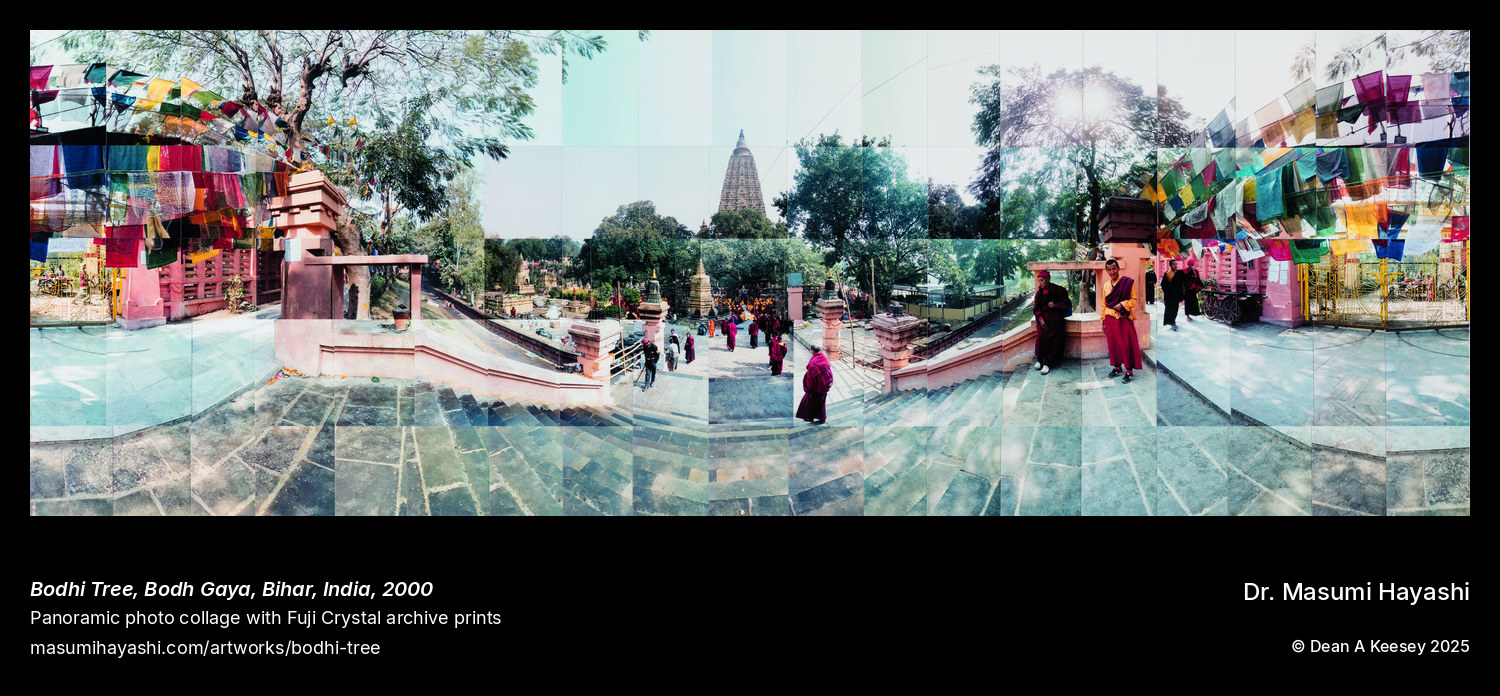
- Bodhi Tree (Bodh Gaya, Bihar, India)—Buddhism, 24 x 69”
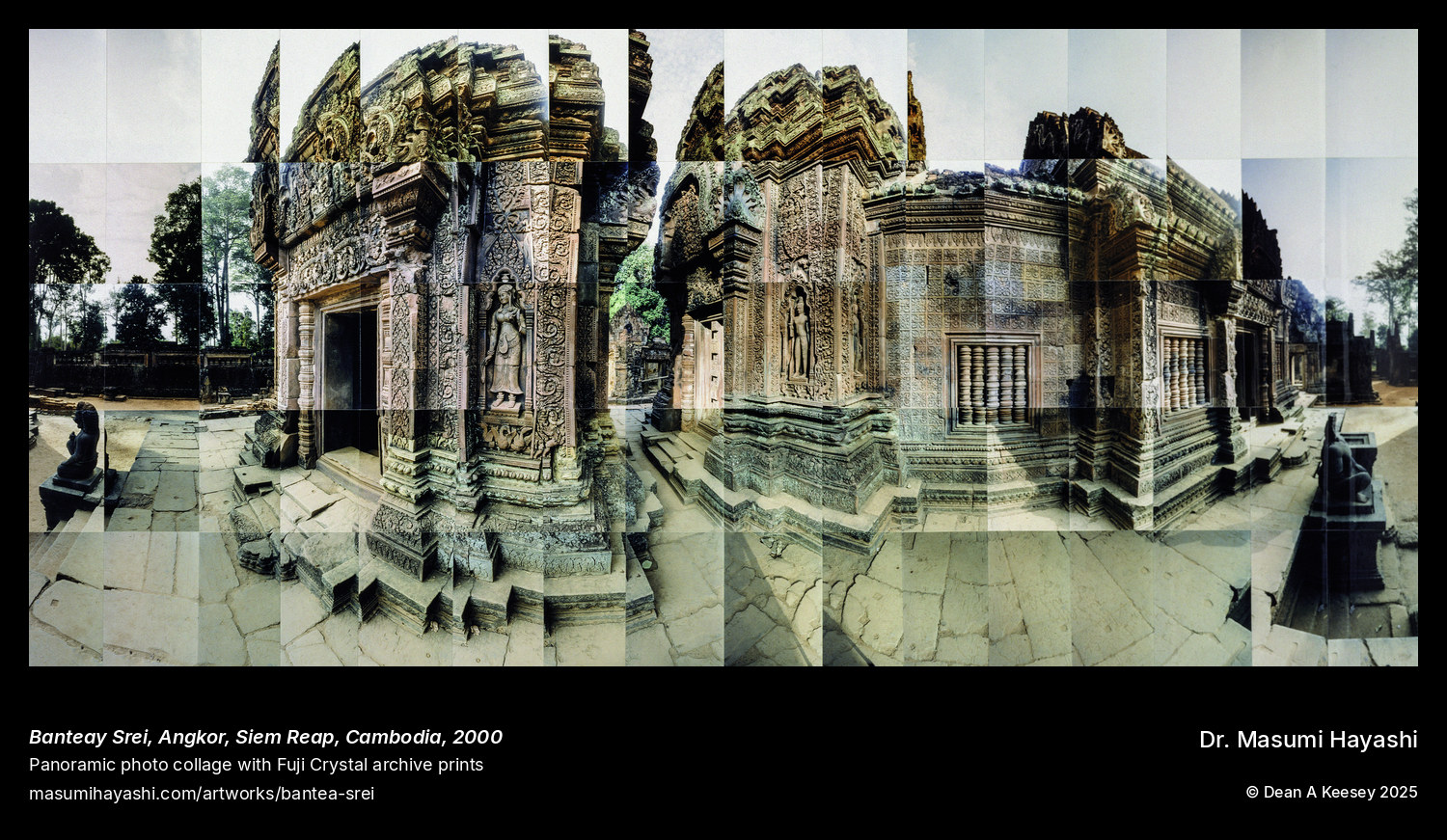
- Banteay Srei (Angkor, Cambodia)—Hindu-Buddhist, 27 x 56”
- Kandariya Mahadeva (Khajuraho, Madhya Pradesh, India)—Hinduism, Shiva, 30 x 59”
- Jain Temple (Jaisalmer, Rajasthan, India)—Jainism, 25 x 73”
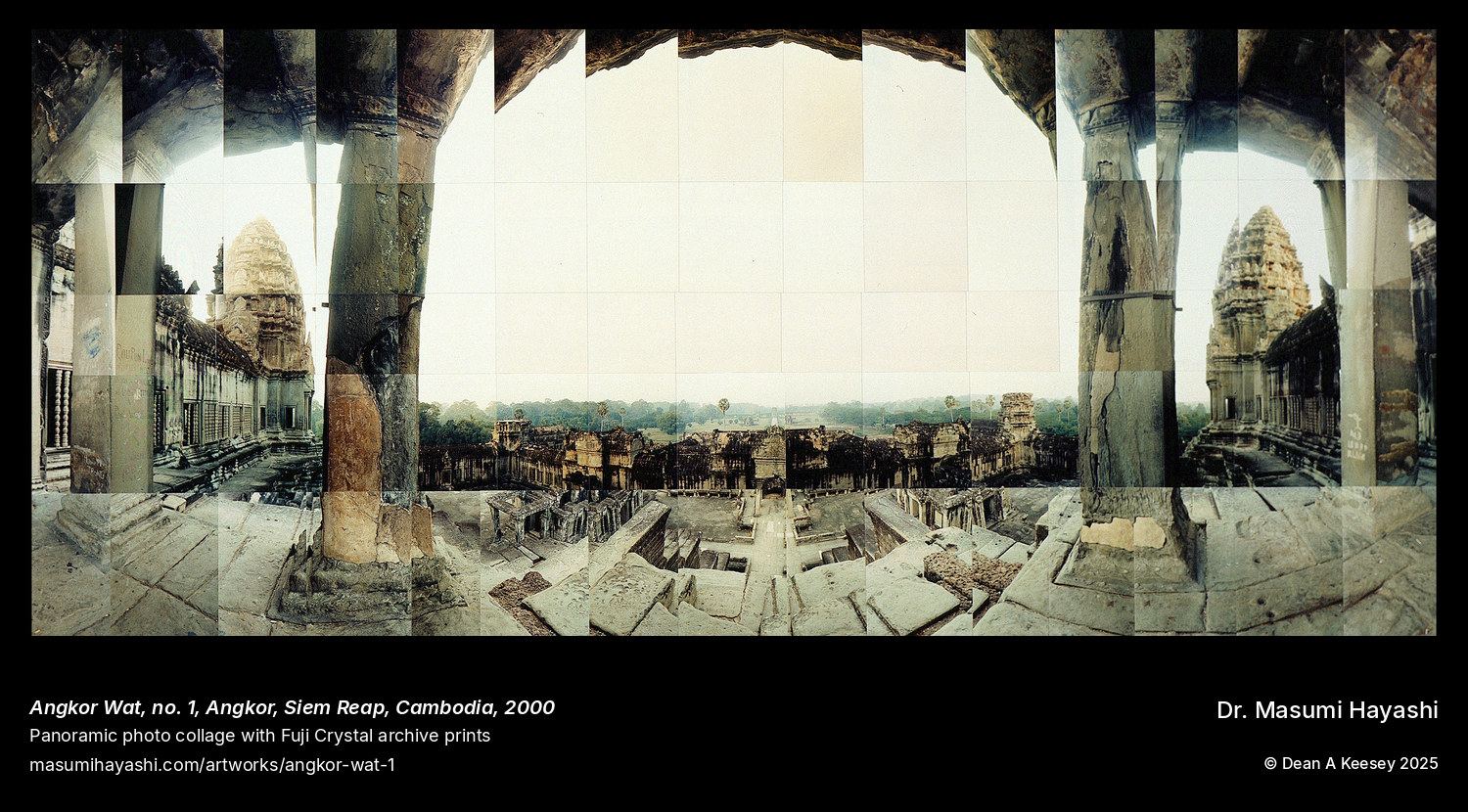
- Angkor Wat No. 1 (Angkor, Cambodia)—Hindu-Buddhist, 23 x 52”
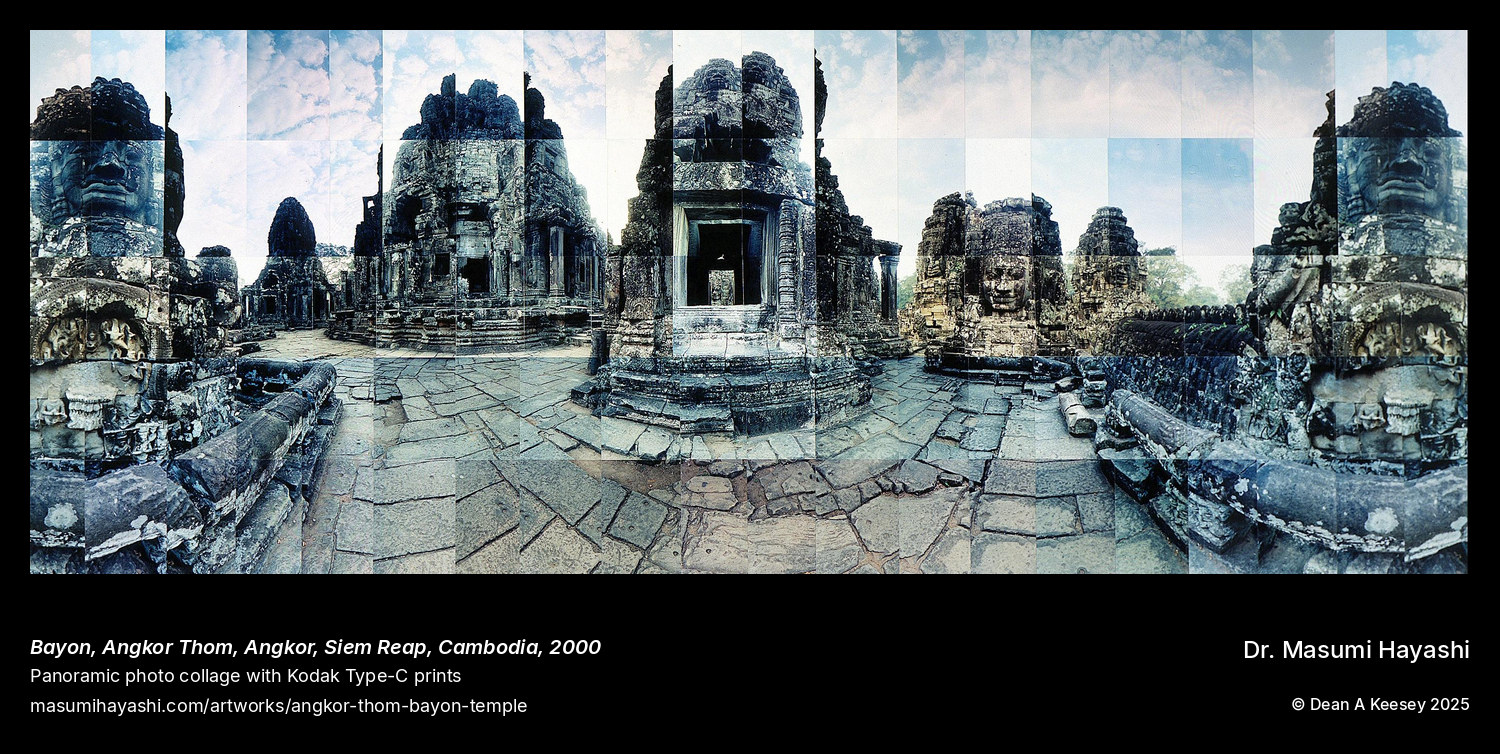
- Bayon (Angkor Thom, Cambodia)—Buddhism, 27 x 69”
- Ta Prohm (Angkor, Cambodia)—Buddhism, 27 x 45”
- Preah Khan (Angkor, Cambodia)—Buddhism, 26 x 67”
- River Ganges (Varanasi, Uttar Pradesh, India)—Hinduism, 19 x 62”
- Lakshmana Temple (Khajuraho, Madhya Pradesh, India)—Hinduism, Vishnu, 24 x 37”
Technical Consistency Absolute: All ten 2000 works employ identical specifications:
- Fuji film stock (distinct from typical Kodak)
- 4 x 6-inch format (larger than typical 3.5 x 5)
- Systematic technical approach throughout journey
Two Khajuraho Temples Documented:
Systematic Site Coverage: Like five Angkor monuments, Khajuraho receiving multiple-work documentation:
- Lakshmana (954 CE, oldest, Vishnu dedication)
- Kandariya Mahadeva (1025-1050 CE, largest, Shiva dedication)
Two works capturing:
- Chronological Diversity: 70+ year span showing architectural evolution
- Deity Diversity: Vishnu vs. Shiva (two major Hindu traditions)
- Architectural Development: Early restrained (Lakshmana) to mature exuberant (Kandariya)
- Scale Variety: Moderate (Lakshmana 21m tower) to massive (Kandariya 31m tower)
Pattern consistent with Angkor’s five-work concentration and Sacred Architectures’ systematic approach requiring multiple works documenting major temple complexes.
India + Cambodia Geographic Balance:
India (Five works across four states):
- Bihar: Bodh Gaya (Buddhism)
- Madhya Pradesh: Khajuraho - Lakshmana, Kandariya Mahadeva (Hinduism, two temples)
- Rajasthan: Jaisalmer (Jainism)
- Uttar Pradesh: Varanasi (Hinduism, sacred river)
Cambodia (Five works at Angkor):
- Banteay Srei, Angkor Wat, Bayon, Ta Prohm, Preah Khan
Pattern: 5 India + 5 Cambodia = Ten works balanced between two countries, demonstrating comparable systematic documentation of Indian and Southeast Asian sacred architecture.
Religious Diversity Maintained:
- Buddhism: Bodh Gaya, Bayon, Ta Prohm, Preah Khan (4 works)
- Hinduism: Kandariya (Shiva), Lakshmana (Vishnu), Varanasi, Angkor Wat originally (4 works)
- Jainism: Jaisalmer (1 work)
- Hindu-Buddhist Synthesis: Banteay Srei, Angkor Wat transformation (2 works)
Ten works achieving exceptional religious balance.
Two Foundation Editions Retained: Strategic Importance
Edition Status:
- Edition 1: Masumi Hayashi Foundation (inventory, framed)
- Edition 2: Masumi Hayashi Foundation (inventory, unframed)
- Editions 3-5: Unaccounted
Two Editions Retained Pattern: Matches Bayon, Jain Temple, Preah Khan:
- Jain Temple: TWO framed editions (only Jain documentation)
- Bayon: TWO editions (framed + unframed, iconic Angkor faces)
- Preah Khan: TWO editions (both unframed including signed, father temple)
- Lakshmana: TWO editions (framed + unframed, oldest Khajuraho)
Strategic retention suggesting:
- Recognition of Khajuraho’s institutional appeal (UNESCO site, world-famous erotic sculptures)
- Dual-temple documentation (Lakshmana + Kandariya) demonstrating comprehensive coverage
- Oldest surviving Khajuraho temple representing historical primacy
- Exhibition flexibility—simultaneous displays or presentation options
Framed + Unframed Retention: Unlike Jain Temple (two framed) or Preah Khan (two unframed):
- One framed edition ready for immediate traditional gallery exhibition
- One unframed edition allowing institutional custom framing choices
- Balanced approach preserving both presentation options
Khajuraho’s UNESCO Status and Institutional Appeal
UNESCO World Heritage Site (1986): International recognition based on:
- Outstanding Universal Value: “Masterpieces of human creative genius”
- Architectural Achievement: Nagara-style temple architecture at zenith
- Sculptural Excellence: Finest medieval Indian stone carving
- Cultural Testimony: Chandella dynasty artistic sophistication
Tourist Destination:
- 3+ million annual visitors (pre-COVID)
- Khajuraho Dance Festival (February, classical Indian dance)
- Light and sound show at Western Group temples
- International recognition rivaling Taj Mahal, Angkor Wat for Indian tourism
Scholarly Interest:
- Architecture studies (Nagara typology evolution)
- Iconography research (erotic sculpture interpretation)
- Tantric studies (ritual context for mithuna imagery)
- Sculpture technique analysis (medieval stone carving methods)
Getty-Level Placement Potential: Lakshmana + Kandariya dual documentation creates exceptional institutional narrative:
- Demonstrating 70-year architectural evolution at single site
- Capturing Vishnu and Shiva temple traditions
- Documenting UNESCO World Heritage Site comprehensively
- Famous subject matter (erotic sculptures) creating public recognition
- Scholarly depth (architectural analysis) balancing popular appeal
Collection Information
Year: 2000 Location: Khajuraho, Madhya Pradesh, India Medium: Panoramic Photo Collage Dimensions: 24 x 37 inches (moderate vertical panorama, over 3 feet tall) Edition: 1 of 5 Film: 4 x 6 inches, Fuji
- Masumi Hayashi Foundation (framed, inventory)
- Masumi Hayashi Foundation (unframed, inventory) 3-5. Unaccounted
Note: Two Foundation editions retained (framed + unframed) enabling exhibition flexibility. Tenth confirmed 2000 work and second Khajuraho monument from 2000 establishing systematic dual-temple documentation comparable to five-work Angkor concentration, demonstrating understanding that major temple complexes require multiple works capturing architectural evolution (70+ year span), different dedications (Vishnu vs. Shiva), and chronological diversity (oldest vs. largest) rather than single representative work. Work documents Lakshmana Temple—oldest surviving temple at Khajuraho (954 CE) and masterpiece of early medieval Nagara-style architecture commissioned by Chandella King Yashovarman dedicated to Vaikuntha Vishnu. Temple representing culmination of architectural experiments establishing Khajuraho’s distinctive characteristics: stepped jagati platform (4m elevation), panchayatana five-shrine layout, cruciform plan with projecting transepts, and extensive sculptural program including erotic mithuna couples, divine apsaras, Vishnu’s ten avatars (dashavatara), mythological narratives covering every surface. Lakshmana predating famous Kandariya Mahadeva by 70+ years, establishing architectural vocabulary subsequently refined across Khajuraho’s Western Group temples during Chandella dynasty’s 10th-11th century zenith. Moderate vertical panoramic format (24 x 37”, 1.54:1 aspect ratio, over 3 feet tall) suits temple’s platform-to-tower elevation and sculptural register organization, likely documenting complete architectural hierarchy from jagati base through ascending shikhara tiers to urunga crowning element—format less extreme than Kandariya’s 1.97:1 vertical, suggesting different compositional approach for same temple complex. Two Khajuraho works (Lakshmana + Kandariya) parallel five Angkor monuments establishing systematic major-site coverage pattern, with dual documentation capturing both Vishnu and Shiva traditions, architectural evolution across seven decades, and scale variety from moderate (21m tower) to massive (31m tower). Ten 2000 works now confirmed achieving geographic balance: five India works across four states (Bihar, Madhya Pradesh including two Khajuraho temples, Rajasthan, Uttar Pradesh) plus five Cambodia works at Angkor—unprecedented systematic turn-of-millennium photographic journey documenting Buddhism, Hinduism (Vaishnava and Shaiva), Jainism, and Hindu-Buddhist synthesis across monumental temples, monastery complexes, sacred rivers, and natural shrines. Appropriate for major art museums with comprehensive South Asian collections, Hindu temple architecture programs, Chandella dynasty studies, medieval Indian sculpture research, UNESCO World Heritage documentation, or paired exhibition with Kandariya Mahadeva exploring 70-year architectural evolution demonstrating Khajuraho’s development from early restrained elegance to mature exuberant monumentality—Getty-level placement opportunity combining world-famous subject matter (erotic sculptures attracting public interest) with scholarly architectural documentation and comprehensive dual-temple systematic coverage establishing foundation’s commitment to complete rather than fragmentary representation of major UNESCO World Heritage complexes.