Kandariya Mahadeva, Khujaraho, Madhya Pradesh, India
Khajuraho, Madhya Pradesh, India
Panoramic Photo Collage
2000
30 x 59
Kandariya Mahadeva, Khujaraho, Madhya Pradesh, India
Overview
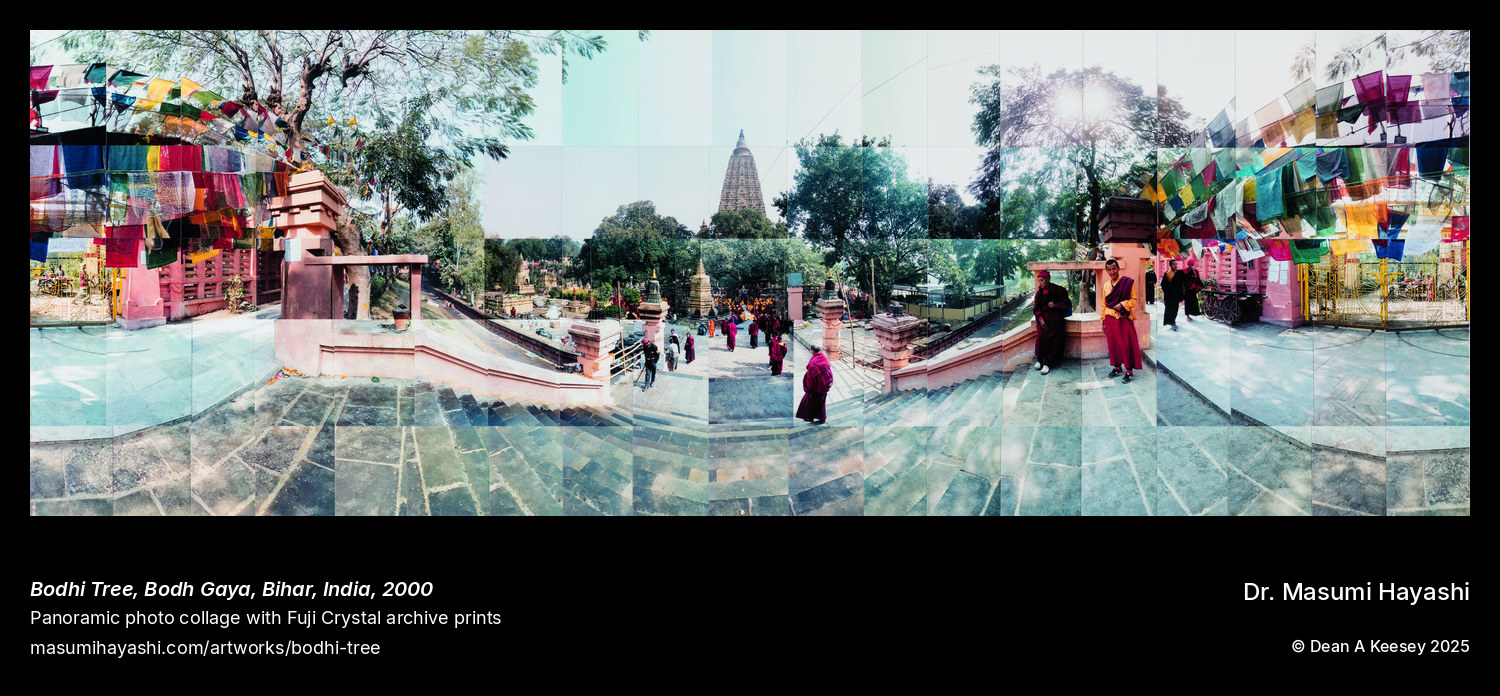
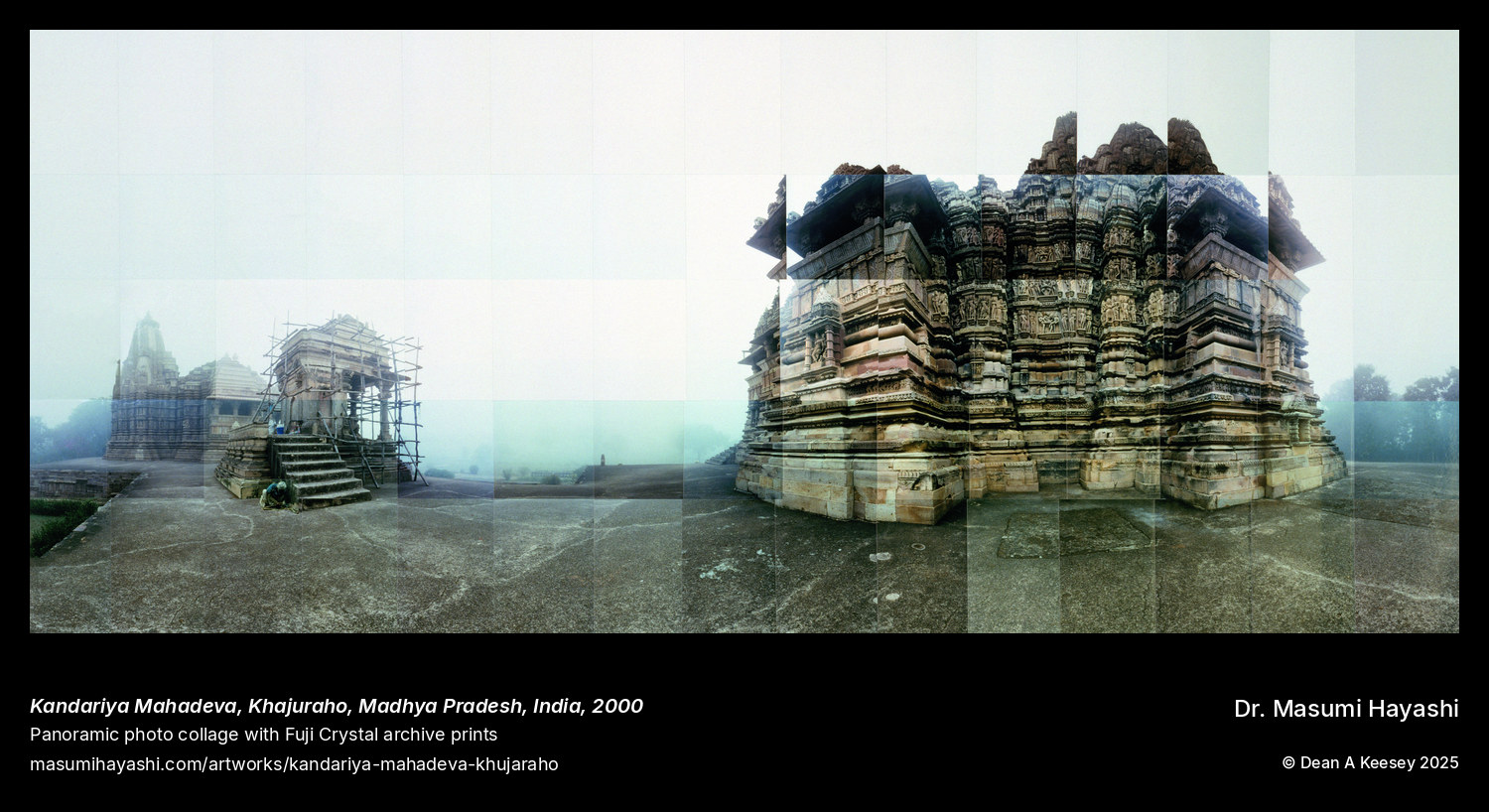
Created in 2000, this 30 x 59-inch panoramic photo collage documents Kandariya Mahadeva Temple at Khajuraho—UNESCO World Heritage Site preserving 25 surviving medieval Hindu and Jain temples (originally 85 temples) constructed 950-1050 CE during Chandela dynasty’s zenith representing masterpiece of Nagara architectural style where soaring shikhara towers covered with thousands of meticulously carved sculptures create unprecedented sculptural density depicting gods, goddesses, celestial beings, mythological narratives, secular court life, and famously erotic imagery celebrating sexuality as sacred dimension of human experience within Hindu tantric philosophical frameworks. Kandariya Mahadeva, largest and most architecturally sophisticated Khajuraho temple, rises 102 feet through graduated shikhara peaks symbolizing Mount Meru (cosmic mountain in Hindu cosmology) with exterior surfaces bearing approximately 870 carved figures representing gods (Shiva, Vishnu, Brahma), apsaras (celestial dancers), mithuna couples (erotic sculptures), guardian deities, and decorative floral patterns creating visual richness unmatched in North Indian temple architecture. The 30 x 59-inch format employs significant vertical panorama (1.97:1 aspect ratio, nearly 2:1 vertical, approaching 5 feet tall) emphasizing temple’s soaring shikhara elevation from ground-level platform through graduated peaks to finial crowning 102-foot summit—vertical format capturing Nagara style’s characteristic upward thrust symbolizing devotee’s spiritual ascent from earthly realm toward divine transcendence embodied in shikhara’s mountain metaphor. The 2000 date positions Kandariya Mahadeva alongside Bodhi Tree (Bihar) and Banteay Srei (Cambodia) as third confirmed turn-of-millennium work, all sharing identical Fuji 4 x 6 film specifications suggesting systematic 2000 Asian sacred architecture photographic journey documenting Buddhist enlightenment site (Bihar), Hindu-Buddhist Angkor temple (Cambodia), and Hindu tantric temple complex (Madhya Pradesh) within single international travel documenting diverse religious architectural traditions. Only one edition documented (Foundation framed inventory) while four editions remain unaccounted for, indicating either incomplete records or editions awaiting strategic institutional placement appropriate for Khajuraho’s international recognition and controversial erotic sculptural content potentially limiting certain conservative institutional contexts while appealing to museums prioritizing comprehensive Hindu architectural documentation and tantric artistic traditions.
Historical Context: Khajuraho Temple Complex and Chandela Dynasty
Khajuraho represents extraordinary medieval Hindu temple construction during regional kingdom’s cultural florescence:
Chandela Dynasty (9th-13th centuries): Rajput clan ruling central Indian territories (modern Madhya Pradesh):
- Political power: Regional kingdom maintaining independence from larger empires through strategic alliances and military strength
- Economic prosperity: Agricultural wealth, trade revenue, and military success funding extensive temple construction
- Cultural patronage: Royal sponsorship of temple architecture, sculpture, Sanskrit poetry, music, dance traditions
- Temple construction: 950-1050 CE “golden century” producing 85 temples across Khajuraho capital complex
- Decline: 13th century military defeats by Delhi Sultanate, capital abandonment, temple complex falling into obscurity
Khajuraho Site: Originally 85 temples constructed across approximately 20 square kilometers:
- 25 temples surviving: Various states of preservation from intact structures to fragmentary remains
- Three geographic clusters: Western Group (largest, most visited), Eastern Group, Southern Group
- Religious diversity: Predominantly Hindu (Shaiva and Vaishnava), some Jain temples
- Remote location: Central India forest setting contributing to preservation through obscurity—Muslim invasions affecting Delhi, Agra, other northern sites but missing isolated Khajuraho
UNESCO World Heritage Site (1986): International recognition for:
- Architectural achievement representing Nagara style perfection
- Sculptural programs of exceptional artistic quality and iconographic complexity
- Cultural significance documenting medieval Hindu tantric philosophy and artistic expression
- Preservation challenges requiring ongoing conservation addressing sandstone weathering, vegetation growth, structural stabilization
“Rediscovery” and Modern Tourism:
- 1838: British engineer T.S. Burt “discovering” abandoned temple complex covered by vegetation
- Late 19th-early 20th century: Archaeological Survey of India conducting excavation, documentation, initial preservation efforts
- Mid-20th century: Jawaharlal Nehru (first Prime Minister) championing Khajuraho preservation recognizing cultural significance despite controversial content
- Contemporary: Major tourist destination attracting millions annually, generating local economy while creating conservation pressures
Kandariya Mahadeva Temple: Architectural Masterpiece
Among Khajuraho’s 25 surviving temples, Kandariya Mahadeva represents undisputed architectural and sculptural pinnacle:
Name and Dedication:
- Kandariya: “Cave dweller”—reference to Shiva’s mountain cave residence
- Mahadeva: “Great god”—Shiva epithet
- Temple dedicated to Shiva, housing linga in interior sanctum
Construction Date: Circa 1025-1050 CE during King Vidyadhara’s reign representing Chandela dynasty’s peak power and cultural achievement
Architectural Specifications:
Overall Dimensions:
- Platform: 109 feet length × 60 feet width, elevated base separating sacred architecture from worldly ground
- Height: 102 feet from platform to shikhara finial—tallest surviving Khajuraho temple
- Orientation: East-facing entrance following Hindu architectural tradition where sunrise illuminates deity
Nagara Architectural Style: North Indian temple architecture characterized by:
- Shikhara: Curvilinear tower rising over sanctum, composed of horizontal bands creating rhythmic upward movement
- Graduated peaks: Multiple subsidiary shikharas (urushringa) surrounding main tower creating mountain cluster effect
- Mount Meru symbolism: Temple form replicating cosmic mountain where gods reside—architectural cosmology
- Vertical emphasis: Tower dominating composition, pulling devotee’s gaze and spiritual attention upward
Spatial Progression (East to West):
- Entrance Porch (Ardha-mandapa): Modest entrance with guardian sculptures
- Main Hall (Maha-mandapa): Large pillared hall for congregation, ceremonies
- Vestibule (Antarala): Transitional space between hall and sanctum
- Sanctum (Garbhagriha): Small dark chamber housing Shiva linga, restricted priestly access
- Circumambulation Path (Pradakshina-patha): Corridor enabling ritual clockwise walking around sanctum
Each spatial zone elevated slightly higher than preceding zone, creating stepped ascent toward divine presence.
Sculptural Programs: 870 Carved Figures:
Exterior Walls: Three horizontal registers (bands) covering entire surface:
Divine Figures:
- Gods: Shiva, Vishnu, Brahma, Ganesha, Kartikeya—major deities in various forms
- Goddesses: Parvati, Lakshmi, Saraswati—divine consorts and independent female deities
- Apsaras (Celestial Dancers): Female figures in graceful poses—mirrors, cosmetics, jewelry, dance gestures
- Guardian Deities (Dikpalas): Protectors of cardinal directions positioned strategically
Mithuna Couples (Erotic Sculptures): Famous controversial content representing approximately 10% of total carvings:
- Couples engaged in sexual acts ranging from modest embraces to explicit intercourse
- Tantric Philosophy: Sex as sacred spiritual practice when performed with awareness, mutual respect, spiritual intention
- Life Celebration: Sexuality as legitimate aspect of human experience, not separation of sacred and profane
- Fertility Symbolism: Sexual union generating creative power paralleling cosmic creation
- Kama (Desire): One of four legitimate life goals (purushartha) in Hindu philosophy alongside dharma (duty), artha (prosperity), moksha (liberation)
Secular Life Depictions:
- Court scenes: Kings, ministers, attendants
- Musicians and dancers: Cultural performances
- Warriors and horses: Military prowess
- Daily activities: Women applying makeup, lovers exchanging glances, families
Architectural Ornament:
- Floral patterns, geometric designs, scrolling vines
- Mythical creatures: Makaras, vyalas, kinnaras
- Decorative bands framing sculptural registers
Technical Mastery:
- Deep relief: Figures carved projecting significantly from wall surface creating shadows, three-dimensionality
- Fine details: Jewelry, fabric folds, facial expressions rendered with precision despite figures often positioned 50+ feet above ground
- Compositional balance: Sculptural placement creating visual rhythm across horizontal bands
- Sandstone medium: Local buff-colored sandstone enabling fine carving detail
Interior Sanctum: Relatively austere compared to exterior:
- Dark chamber with minimal natural light
- Shiva linga on raised platform
- Modest wall carvings
- Ritual focus on linga worship rather than visual spectacle
Significant Vertical Panorama: 30 x 59 Inches
At 30 x 59 inches, Kandariya Mahadeva employs significant vertical panorama capturing temple’s soaring elevation:
Format Analysis:
- Width: 30 inches (2.5 feet) provides adequate horizontal field
- Height: 59 inches (4.92 feet, nearly 5 feet) creates strong vertical emphasis
- Aspect Ratio: 1.97:1 (height to width)—approaching 2:1 vertical panorama
Comparison with Other Vertical Panoramas:
- Bodhi Tree: 24 x 69” (2.875:1 vertical)—MOST EXTREME
- Kandariya Mahadeva: 30 x 59” (1.97:1 vertical)—approaching 2:1
- Hanuman Ghat: 24 x 45” (1.88:1 vertical)—ghat descent
- Mantapa with Devotees: 22 x 37” (1.68:1 vertical)—pillared hall
- Madonna and Child: 17 x 27” (1.59:1 vertical)—gopuram/sculpture
Kandariya Mahadeva’s 59-inch height (nearly 5 feet) creates substantial vertical presence requiring specialized exhibition space.
Format Rationale: Shikhara Documentation:
Vertical Tower Architecture: Nagara style shikharas create inherent vertical compositions:
- Ground platform → temple base → graduated subsidiary peaks → main shikhara → finial
- Vertical progression requiring vertical format capturing full elevation
- 102-foot temple height demanding format emphasizing upward thrust
Mount Meru Symbolism: Vertical format reinforcing theological meaning:
- Mountain metaphor requiring vertical documentation
- Spiritual ascent from earthly platform toward divine summit
- Format replicating devotee’s experience gazing upward at towering structure
Sculptural Density Across Height: Documenting three horizontal registers:
- Bottom register: Accessible viewing level with intimate figure examination
- Middle register: Primary viewing level with most elaborate sculptural programs
- Upper register: Distant figures requiring vertical format capturing full extent
- Nearly 5-foot format enabling comprehensive vertical documentation
Architectural Proportions: 30-inch width (2.5 feet) accommodating:
- Temple’s horizontal footprint at base
- Shikhara narrowing toward summit
- Proportions roughly approximating actual temple’s width-to-height relationship
Display Considerations: 59-inch height creating:
- Nearly 5-foot vertical presence requiring adequate wall height
- Substantial visual impact through unexpected orientation
- Framed edition (Edition 1) maintained in Foundation inventory demonstrating institutional commitment to preserving vertical format diversity
2000 Photographic Journey: Third Confirmed Work
Kandariya Mahadeva represents third confirmed 2000 work establishing major turn-of-millennium documentation effort:
2000 Works Confirmed:
- Bodhi Tree (Bodh Gaya, Bihar)—Buddhist enlightenment site, 24 x 69” extreme vertical, Fuji 4 x 6
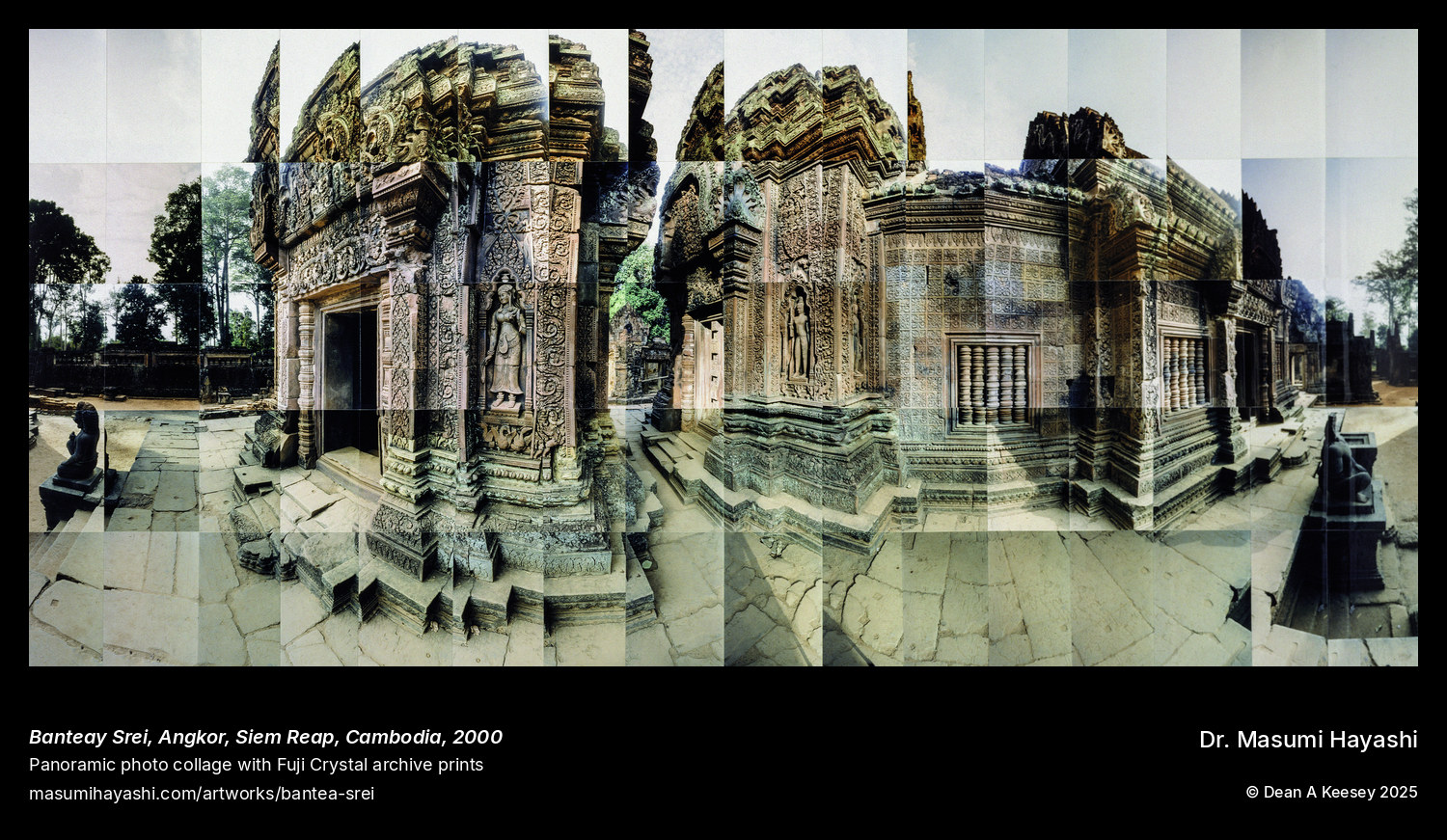
- Banteay Srei (Angkor, Cambodia)—Hindu-Buddhist Khmer temple, 27 x 56”, Fuji 4 x 6
- Kandariya Mahadeva (Khajuraho, Madhya Pradesh)—Hindu tantric temple, 30 x 59” vertical, Fuji 4 x 6
Technical Consistency: All three 2000 works employ identical film specifications:
- Fuji film stock (not typical Kodak)
- 4 x 6-inch format (larger than typical 3.5 x 5)
- Suggesting deliberate equipment/film choice for 2000 travel
Geographic Sequence (Possible Route):
- Bihar (northeastern India) → Madhya Pradesh (central India) → Cambodia (Southeast Asia)
- Alternatively: India → Cambodia → India (multiple legs)
- Concentrated documentation maximizing international travel efficiency
Religious Diversity Documentation: 2000 journey capturing:
- Buddhism: Bodh Gaya enlightenment site, foundational pilgrimage destination
- Hinduism: Khajuraho tantric temple complex, erotic sculptural traditions
- Hindu-Buddhist Synthesis: Angkor Wat complex, Khmer religious evolution
Comprehensive approach understanding Asian sacred architecture requires documenting diverse religious traditions within single photographic campaign.
Turn of Millennium Symbolism: Year 2000 timing potentially significant:
- Documenting ancient sacred traditions (6th century BCE Buddhism, 11th century CE Hinduism, 10th century CE Angkor) at century’s turn
- Contemporary pilgrimage and tourism contexts amid rapid modernization
- Preservation urgency recognizing endangered heritage
Madhya Pradesh Sacred Architecture: Central India
Kandariya Mahadeva expands Sacred Architectures’ Indian geographic scope to central region:
India Documentation Confirmed (Geographic Distribution):
- Bihar: Bodh Gaya (2000)—Buddhist
- Madhya Pradesh: Khajuraho (2000)—Hindu, Ellora vicinity (possible additional MP sites)
- Maharashtra: Ellora Caves (2002)—Hindu-Buddhist-Jain rock-cut
- Karnataka: Hampi (2003-2004)—Hindu Vijayanagara
- Tamil Nadu: Meenakshi Temple (2003)—Hindu Dravidian
Systematic coverage across northern, central, and southern Indian states.
Khajuraho Within UNESCO World Heritage Documentation: Multiple Sacred Architectures works document UNESCO sites:
- India: Khajuraho (2000), Ellora Caves (2002), Hampi (2003-2004), Bodh Gaya (2000)
- Nepal: Patan Durbar Square (2004), Kathmandu Valley sites
- Cambodia: Angkor complex (2000, other dates)
Deliberate focus on internationally recognized heritage requiring institutional documentation and preservation awareness.
Erotic Sculpture Context: Tantric Philosophy and Museum Placement
Khajuraho’s erotic content creates complex cultural, religious, and institutional implications:
Tantric Philosophy: Hindu tantric traditions viewing sexuality as:
- Sacred Practice: Sex with spiritual awareness transcending mere physical pleasure
- Divine Union: Sexual coupling mirroring cosmic creation—Shiva-Shakti union generating universe
- Legitimate Life Goal: Kama (desire) as one of four purushartha (life aims) in Hindu philosophy
- Artistic Celebration: Erotic imagery as legitimate artistic subject celebrating human experience
Historical Context: Medieval Hindu attitudes toward sexuality:
- Pre-colonial India more sexually open than Victorian British morality later imposed
- Temple architecture incorporating full spectrum of human experience—spiritual, martial, sexual, domestic
- Tantric practices flourishing in certain Hindu communities during medieval period
- Artistic expression celebrating body, pleasure, sexuality without shame
Contemporary Controversies:
- Conservative Reactions: Some Hindu nationalists discomfort with erotic content
- Tourism Tensions: Sexual imagery attracting tourists while potentially reinforcing stereotypes
- Religious Attitudes: Some contemporary Hindu communities uncomfortable with explicit temple decoration despite historical precedent
Museum Placement Implications:
Advantages for Collection:
- UNESCO World Heritage Site—international recognition
- Extraordinary artistic achievement—sculptural mastery
- Cultural-historical significance—documenting medieval Hindu tantric traditions
- Photographic documentation—capturing comprehensive architectural context
Potential Challenges:
- Conservative institutions potentially hesitant about erotic content
- K-12 educational contexts requiring content considerations
- Religious communities with varying comfort levels
- Public display requiring contextual explanation
Getty-Level Placement Strategy: Work appropriate for:
- Major art museums with comprehensive Asian collections
- University museums with academic contexts
- Institutions prioritizing complete Hindu architectural documentation
- Museums with sophisticated audiences comfortable with cultural-historical sexual imagery
Contextual Presentation Essential: Institutional placement requiring:
- Educational materials explaining tantric philosophy
- Historical context about medieval Hindu sexuality attitudes
- Artistic merit emphasis beyond sensational aspects
- Comparison with other religious artistic traditions celebrating sexuality (certain Buddhist, Jain works)
Collection Information
Year: 2000 Location: Khajuraho, Madhya Pradesh, India Medium: Panoramic Photo Collage Dimensions: 30 x 59 inches (significant vertical panorama, nearly 5 feet tall) Edition: 1 of 5 Film: 4 x 6 inches, Fuji
- Masumi Hayashi Foundation (framed, inventory)
Note: Four additional edition locations unaccounted for. Third confirmed 2000 work (alongside Bodhi Tree, Banteay Srei) establishing major turn-of-millennium Asian sacred architecture photographic journey—all three employing identical Fuji 4 x 6 film suggesting systematic documentation campaign capturing Buddhist enlightenment site (Bihar), Hindu tantric temple complex (Madhya Pradesh), and Hindu-Buddhist Angkor architecture (Cambodia) within single international travel. Work documents UNESCO World Heritage Site Khajuraho—medieval Hindu temple complex where 25 surviving temples (originally 85) constructed 950-1050 CE during Chandela dynasty represent masterpiece of Nagara architectural style. Kandariya Mahadeva Temple, Khajuraho’s largest and most sophisticated structure, rises 102 feet through graduated shikhara peaks covered with approximately 870 carved figures depicting gods, goddesses, celestial dancers, and famously erotic mithuna couples celebrating sexuality as sacred dimension within Hindu tantric philosophical frameworks—sculptural programs of exceptional artistic quality documenting medieval Hindu cultural attitudes toward body, pleasure, and divine union predating colonial Victorian morality. Significant vertical panoramic format (30 x 59”, nearly 5 feet tall, 1.97:1 aspect ratio approaching 2:1 vertical) emphasizes temple’s soaring shikhara elevation from ground platform through graduated peaks to 102-foot summit—vertical format capturing Nagara style’s upward thrust symbolizing spiritual ascent toward divine transcendence embodied in Mount Meru cosmic mountain metaphor. Only one edition documented (Foundation framed inventory) while four editions unaccounted for, potentially indicating strategic retention awaiting appropriate institutional placement balancing Khajuraho’s international recognition with erotic content requiring sophisticated academic or museum contexts comfortable with comprehensive Hindu architectural documentation including tantric artistic traditions. Appropriate for major art museums with comprehensive Asian collections, university museums with academic frameworks, or institutions prioritizing complete Indian sacred architecture documentation requiring contextual presentation explaining tantric philosophy, medieval Hindu sexuality attitudes, and artistic achievement beyond sensational aspects. Khajuraho’s UNESCO recognition combined with Chandela dynasty’s extraordinary sculptural mastery establishes this as significant work documenting one of India’s most architecturally and culturally important temple complexes deserving prominent exhibition and scholarly attention within Indian sacred architecture studies.