Hemakuta Hill, Hampi Ruins, Hampi, Karnataka, India | Masumi Hayashi Foundation
Back to Gallery
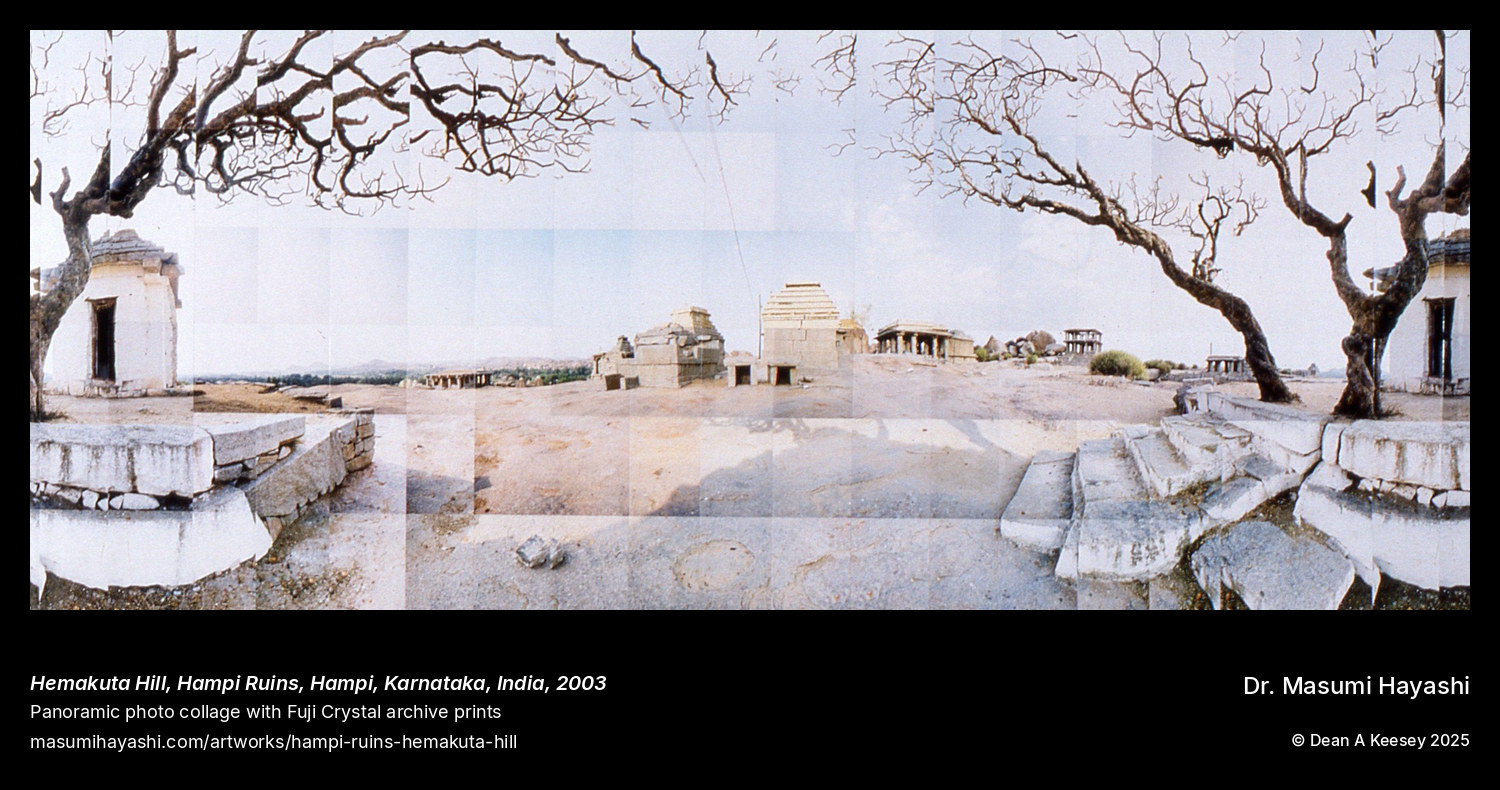
Picture of Hemakuta Hill, Hampi Ruins, Hampi, Karnataka, India by Dr. Masumi Hayashi

Hemakuta Hill, Hampi Ruins, Hampi, Karnataka, India

Hampi, Karnataka, India

Panoramic Photo Collage

2003

73" x 28"

Hemakuta Hill, Hampi Ruins, Hampi, Karnataka, India

Overview

Created in 2003, this 73 x 28-inch panoramic photo collage documents Hemakuta Hill at Hampi—elevated hilltop temple cluster occupying sacred high ground southwest of Virupaksha Temple, where dozens of small shrines scattered among massive granite boulders create distinctive sacred landscape integrating pre-Vijayanagara religious architecture (9th-10th centuries) with dramatic geological formations characteristic of Hampi’s UNESCO World Heritage Site. The hill’s strategic position provides panoramic views across Hampi’s architectural landscape—Virupaksha Temple complex to northeast, Tungabhadra River valley, surrounding boulder-strewn plains, and distant temple structures creating visual sweep requiring extreme horizontal documentation to capture lateral architectural extent and topographic relationships. The 73 x 28-inch format represents one of Sacred Architectures series’ most extreme horizontal panoramas—73-inch width exceeds 6 feet (2.6:1 aspect ratio), matching Post-Industrial Landscapes’ most expansive horizontal formats, suggesting panoramic vista documentation where temple cluster’s distribution across hilltop demands comprehensive lateral sweep impossible through conventional photographic framing or moderate panoramic formats. The 2003 date positions this alongside Madonna and Child (Meenakshi Temple, Tamil Nadu) as early South Indian documentation, predating 2004 Nepal concentration and Mantapa with Devotees (Hampi, 2004), indicating sustained multi-year engagement with Karnataka sacred architecture where Hayashi returned to Hampi between 2003-2004 documenting diverse architectural typologies—panoramic hilltop vistas (2003) and individual mantapa structures (2004)—demonstrating systematic site coverage rather than single-visit documentation. Hemakuta Hill’s religious significance extends beyond Vijayanagara-period construction (14th-16th centuries), preserving earlier temples suggesting sacred site continuity across centuries—pre-imperial worship locations subsequently incorporated into Vijayanagara sacred geography, maintained through 1565 capital destruction, and continuing as pilgrimage destination where sunset views, Virupaksha Temple proximity, and architectural density attract contemporary visitors navigating boulder pathways connecting scattered shrines.

Historical Context: Hemakuta Hill Within Hampi Sacred Geography

Hemakuta Hill represents distinctive architectural and topographic element within broader Hampi landscape:

Vijayanagara Empire Context (1336-1646): Hampi served as capital of major South Indian Hindu kingdom:

  • Political power controlling most of South India at zenith (15th-16th centuries)
  • Architectural patronage producing monumental temple complexes, palace structures, urban infrastructure
  • 1565 Battle of Talikota catastrophe—capital sacked by coalition of Deccan Sultanates, permanently abandoned
  • Architectural remains preserving extraordinary temple heritage despite systematic destruction

Hemakuta Hill Sacred Landscape: Elevated hilltop southwest of main Virupaksha Temple complex:

Topographic Prominence: Hill rises above surrounding plains providing commanding views—strategic sacred geography where elevation signifies divine proximity, offering panoramic surveillance of sacred architectural landscape

Temple Cluster Characteristics:

  • Dozens of small shrines rather than single monumental complex
  • Pre-Vijayanagara origins—some temples dating 9th-10th centuries, predating empire’s 14th-century foundation
  • Architectural diversity—varied shrine types, construction periods, deity dedications creating heterogeneous sacred environment
  • Boulder integration—temples positioned among, between, and atop massive granite boulders creating dramatic architectural-geological fusion

Architectural Features:

Small-Scale Shrines: Unlike Virupaksha’s monumental gopurams or Vittala Temple’s elaborate complexes:

  • Modest single-chamber shrines (garbhagrihas) with simple towers (vimanas)
  • Pillared pavilions (mantapas) providing shade and congregation space
  • Minimal sculptural programs compared to later Vijayanagara elaboration
  • Stone construction integrated with natural boulder outcroppings

Shiva Linga Shrines: Many temples house linga (Shiva symbols):

  • Simple cylindrical stone forms in square chambers
  • Daily worship by local priests despite tourist presence
  • Continuation of centuries-old ritual traditions

Stepped Platforms: Shrines positioned on elevated stone platforms:

  • Multiple terrace levels accommodating hilltop topography
  • Circumambulation paths (pradakshinapatha) enabling ritual walking around shrines
  • Integration with boulder formations creating varied architectural relationships

Panoramic Views: Hill’s elevation provides sweeping vistas:

  • Northeast: Virupaksha Temple complex with towering gopurams
  • North: Tungabhadra River valley with stone bridge remains
  • East: Royal enclosure area, palace structures, urban ruins
  • South: Boulder plains extending toward horizon
  • Sunset destination: Evening light creating dramatic boulder silhouettes, temple profiles

Pre-Vijayanagara Sacred Continuity: Archaeological and architectural evidence indicates:

  • Religious use predating Vijayanagara Empire by several centuries
  • Early medieval temple construction (9th-10th centuries)
  • Sacred site selection based on topographic prominence and natural boulder formations
  • Vijayanagara rulers respecting earlier sacred geography—maintaining, renovating, adding to existing temples rather than complete reconstruction

UNESCO World Heritage Site (1986): Hemakuta Hill included within broader Hampi designation recognizing:

  • Architectural and historical significance
  • Integration of natural and built heritage
  • Continuing sacred function within archaeological landscape

Extreme Horizontal Format: 73 x 28 Inches

At 73 x 28 inches, this work employs one of Sacred Architectures series’ most expansive horizontal formats:

Format Analysis:

  • Width: 73 inches (6.08 feet, over 6 feet) creates extraordinary lateral sweep
  • Height: 28 inches (2.33 feet, under 2.5 feet) provides sufficient vertical information without vertical emphasis
  • Aspect Ratio: 2.6:1 (width to height)—extreme horizontal panorama approaching Post-Industrial Landscapes’ most expansive formats

Comparison with Other Sacred Architectures Works: Hemakuta Hill represents extreme within series’ format range:

  • Golden Temple (Kathmandu): 46 x 29” (1.59:1)—moderate horizontal
  • Maha Buddha Temple (Patan): 45 x 22” (2.05:1)—moderate horizontal
  • Hemakuta Hill: 73 x 28” (2.6:1)—extreme horizontal
  • Hanuman Ghat (Bhaktapur): 24 x 45” (1.88:1 vertical)—vertical panorama
  • Mantapa with Devotees (Hampi): 22 x 37” (1.68:1 vertical)—vertical panorama

Series demonstrates format flexibility responding to specific architectural requirements rather than standardized technical approach.

Extreme Width Rationale:

Panoramic Vista Documentation: Hemakuta Hill’s architectural character demands lateral sweep:

Temple Cluster Distribution: Dozens of shrines scattered across hilltop rather than concentrated architectural ensemble—documenting spatial relationships requires comprehensive horizontal field capturing lateral extent impossible through conventional framing

Topographic Spread: Hill’s elevation and boulder terrain create three-dimensional sacred landscape where temple positioning responds to natural formations—extreme horizontal format captures this distributed architecture

Visual Sweep: Panoramic views characteristic of hilltop vantage point—extreme horizontal format possibly documenting vista looking out from Hemakuta Hill across Hampi landscape, or view of hilltop temple cluster itself

Boulder Landscape Integration: Granite boulder formations create horizontal visual rhythm—temple architecture punctuating boulder masses, extreme format documenting this architectural-geological dialogue

Architectural Density Without Monumentality: Unlike single monumental complex (vertical gopurams, concentrated courtyard), Hemakuta Hill’s modest shrines create horizontal architectural field requiring lateral documentation

Format Comparison with Post-Industrial Landscapes: 73-inch width matches some of Post-Industrial series’ most extreme horizontal formats:

  • Ernie’s in the Flats: 34 x 88” (2.59:1)
  • Century Freeway No. 6: 26 x 88” (3.38:1)
  • Hemakuta Hill: 73 x 28” (2.6:1)—comparable extreme horizontal emphasis

Suggests Hayashi’s format strategy transcends series boundaries—applying extreme horizontals when subject demands comprehensive lateral documentation regardless of whether documenting industrial sites or sacred architectures.

Display Considerations: 73-inch width creates significant practical implications:

  • Over 6 feet width requires substantial wall space
  • Horizontal emphasis suited to gallery walls with adequate lateral extent
  • Aspect ratio creates dramatic visual impact through unexpected breadth
  • Framing and shipping complexity for 6+ foot width
  • May limit certain exhibition contexts with space constraints

Within Hampi Documentation: Systematic Multi-Year Coverage

Hemakuta Hill contributes to sustained Hampi engagement across 2003-2004:

Confirmed Hampi Works:

  1. Hemakuta Hill (2003): Panoramic hilltop vista—extreme horizontal format
  2. Mantapa with Devotees (2004): Individual pillared hall documentation—vertical format

Multi-Year Documentation Pattern: Different works created in successive years suggests:

  • Initial 2003 visit documenting panoramic vistas, landscape-scale architecture
  • Return 2004 visit focusing on specific architectural elements, human-scale sacred spaces
  • Systematic coverage across architectural typologies—from hilltop clusters to individual mantapas
  • Recognition of Hampi’s architectural richness requiring multiple works capturing diverse scales and building types

Architectural Typology Diversity: Two confirmed works represent contrasting approaches:

  • Hemakuta Hill (2003): Distributed temple cluster, panoramic landscape, extreme horizontal format
  • Mantapa with Devotees (2004): Single architectural element, vertical pillared structure, human presence, vertical format

Demonstrates comprehensive documentary strategy understanding site requires multiple perspectives, formats, and scales rather than single representative work.

2003 South Indian Journey: Hemakuta Hill created same year as Madonna and Child (Meenakshi Temple, Madurai, Tamil Nadu):

  • Multi-site South Indian documentation—Karnataka and Tamil Nadu
  • Major temple complexes across South Indian states
  • Concentrated international travel maximizing geographic coverage
  • Distinct from 2004 Nepal concentration—South India (2003) vs. Kathmandu Valley (2004)

Format Strategy Across Hampi Works:

  • 2003: Extreme horizontal (73 x 28”)—panoramic vista
  • 2004: Vertical panorama (22 x 37”)—pillared architecture

Each format chosen specifically for subject requirements demonstrating responsive technical approach.

Karnataka Sacred Architecture Within Sacred Architectures Series

Hemakuta Hill expands series’ South Indian geographic scope:

India Documentation Confirmed:

  • Karnataka: Hemakuta Hill (Hampi, 2003), Mantapa with Devotees (Hampi, 2004), likely other Hampi works
  • Tamil Nadu: Madonna and Child (Meenakshi Temple, Madurai, 2003)
  • Other states likely documented: Madhya Pradesh (Khajuraho), Maharashtra (Ajanta/Ellora), Rajasthan, Uttar Pradesh

Vijayanagara Architectural Tradition: Hampi works document distinctive South Indian architectural heritage:

  • Granite construction and monolithic pillars
  • Boulder landscape integration creating unique architectural-geological fusion
  • Hindu temple architecture under royal patronage
  • Pre-Vijayanagara continuity—sacred sites predating empire

UNESCO World Heritage Site Documentation: Multiple Sacred Architectures works document UNESCO sites:

  • Nepal: Patan Durbar Square, Golden Temple area, Bhaktapur
  • Cambodia: Banteay Srei (Angkor complex)
  • India: Hampi (Hemakuta Hill, Mantapa with Devotees)

Pattern suggests deliberate focus on internationally recognized architectural heritage requiring documentation, preservation awareness, and institutional collection placement emphasis.

Late-Career Work: 2003 Creation

Hemakuta Hill’s 2003 date positions within concentrated late-career Asian documentation:

2003-2004 International Travel Sequence:

  • 2003: South India (Karnataka, Tamil Nadu)—Hemakuta Hill, Madonna and Child
  • 2004: Return to Karnataka (Hampi—Mantapa with Devotees) + Nepal concentration (Patan, Bhaktapur, Kathmandu)

Suggests sustained two-year commitment to Asian sacred architecture documentation across South and Southeast Asia.

Three Years Before Death: Creating work three years before 2006 death:

  • Sustained international travel capacity and physical stamina
  • Technical mastery maintained through final years
  • Continued willingness to explore new sites and return to previously visited locations
  • Sacred Architectures series as culminating artistic focus

Multi-Year Site Engagement: Returning to Hampi between 2003-2004 demonstrates:

  • Recognition of site’s complexity requiring multiple visits, perspectives, formats
  • Willingness to revisit locations for comprehensive coverage
  • Evolving understanding of site enabling focused 2004 documentation following 2003 overview

Format Experimentation Continuing: Extreme horizontal format (73 x 28”) in late career shows:

  • Continued exploration of format possibilities
  • Responsiveness to specific architectural requirements
  • Not repeating formulaic approaches—each work format determined by subject
  • Artistic vitality through final active period

Collection Information

Year: 2003 Location: Hampi, Karnataka, India Medium: Panoramic Photo Collage Dimensions: 73 x 28 inches (extreme horizontal panorama) Edition: 1 of 5

  1. Masumi Hayashi Foundation (unframed, inventory)

Note: Four additional edition locations unaccounted for. Extreme horizontal panoramic format (73 x 28”, over 6 feet width) represents one of Sacred Architectures series’ widest works, creating comprehensive lateral sweep documenting Hemakuta Hill’s temple cluster scattered across elevated hilltop among massive granite boulders. Work documents UNESCO World Heritage Site Hampi—preserved ruins of Vijayanagara Empire’s 14th-16th century capital where pre-Vijayanagara temples (9th-10th centuries) demonstrate sacred site continuity across centuries. Hemakuta Hill occupies strategic sacred geography southwest of main Virupaksha Temple, offering panoramic views across architectural landscape and boulder-strewn plains—topographic prominence creating distinctive sacred environment where modest shrines, Shiva linga temples, and pillared pavilions integrate with natural geological formations. Created 2003, work predates Mantapa with Devotees (Hampi, 2004), demonstrating multi-year systematic site documentation where panoramic vista (2003, extreme horizontal format) preceded focused architectural element documentation (2004, vertical format). Work created same year as Madonna and Child (Meenakshi Temple, Tamil Nadu), indicating 2003 South Indian photographic journey documenting Karnataka and Tamil Nadu sacred sites during concentrated international travel three years before artist’s 2006 death. Extreme horizontal format matches Post-Industrial Landscapes’ most expansive widths (comparable to 88-inch works), suggesting format strategy transcends series boundaries—applying extreme horizontals when comprehensive lateral documentation required regardless of subject matter. Appropriate for museum collections prioritizing South Asian architectural documentation, Vijayanagara heritage, UNESCO World Heritage Site preservation, panoramic sacred landscape documentation, or photographic format experimentation addressing specific spatial characteristics of distributed architectural ensembles within dramatic natural settings. Extreme width creates distinctive display presence while requiring substantial wall space and specialized exhibition contexts accommodating 6+ foot horizontal extent.

Donate