Hanuman Ghat, Bhaktapur, Nepal
Bhaktapur, Nepal
Panoramic Photo Collage
2004
24" x 45"
Hanuman Ghat, Bhaktapur, Nepal
Overview
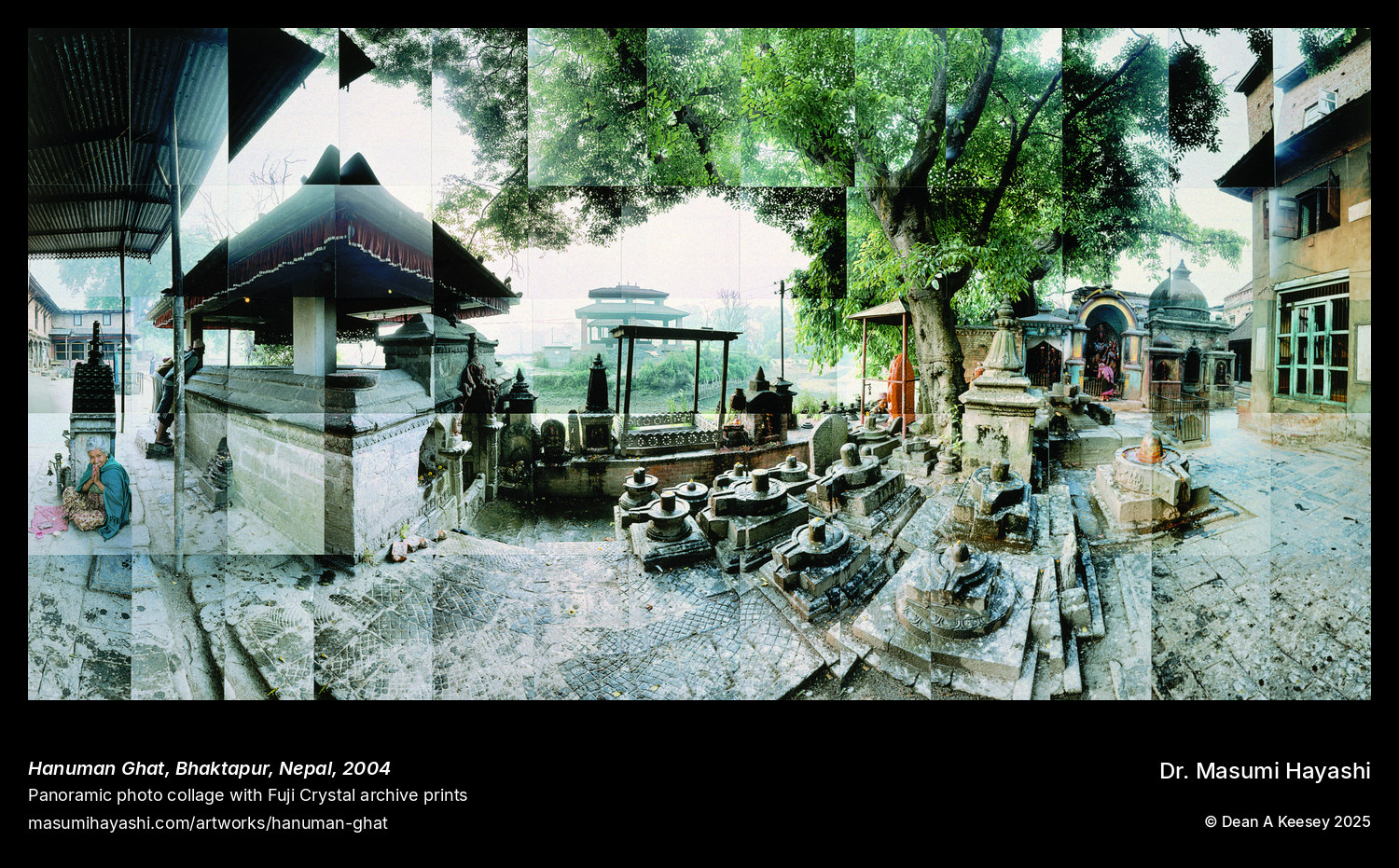
Created in 2004, this 24 x 45-inch panoramic photo collage documents Hanuman Ghat in Bhaktapur—riverside sacred landscape where stepped stone terraces descend from urban fabric to Hanumante River creating vertical architectural cascade serving ritual bathing, cremation ceremonies, and sacred water access for Bhaktapur’s Hindu community. The ghat represents distinctive South Asian architectural typology where monumental stone staircases, temple pavilions, rest platforms (pati), and ritual spaces create liminal zone between terrestrial urban realm and sacred river waters believed to purify sins, facilitate spiritual transformation, and provide passage for cremated remains to journey toward final liberation. The 24 x 45-inch format represents rare vertical panorama within Hayashi’s predominantly horizontal panoramic oeuvre—45-inch height (nearly 4 feet tall) creates strong vertical emphasis suited to documenting ghat’s architectural descent from street level through multiple terraced levels down to river’s edge, capturing vertical spatial sequence impossible to convey through conventional horizontal panoramas or square formats. The 2004 date positions this as late-career work created alongside Golden Temple (also 2004), both documenting Kathmandu Valley sacred architecture during same photographic journey two years before Hayashi’s 2006 death, suggesting concentrated final documentation effort preserving Nepal’s endangered sacred architectural heritage. Bhaktapur (Bhadgaon, “City of Devotees”), third of Kathmandu Valley’s three Malla Kingdom capitals, maintains most preserved medieval character among valley cities—traditional Newari urban fabric, brick-paved squares, and functioning ghats continuing centuries-old ritual practices despite earthquake damage, modern development pressures, and tourism transformation. Only one edition accounted for (Foundation inventory, unframed) while four editions remain unplaced possibly reflects specialized subject matter (riverine sacred architecture), vertical format’s display challenges (requiring substantial wall height), or Foundation’s retention strategy for underrepresented architectural typologies deserving future museum placement.
Historical Context: Ghats in Hindu Sacred Architecture
Ghats represent essential architectural element in Hindu sacred landscapes:
Definition and Function: “Ghat” (Sanskrit: descent, slope) designates stepped riverbank architecture serving multiple sacred functions:
Ritual Bathing (Snana): Hindu tradition emphasizes sacred rivers’ purifying properties—bathing in holy waters cleanses sins, enables spiritual merit, marks religious observances and life transitions
Cremation Grounds (Shmashana Ghat): Some ghats serve as cremation sites where bodies burned on wooden pyres, ashes scattered in river enabling deceased’s journey toward moksha (liberation from rebirth cycle)
Religious Ceremonies: Ghats host daily worship (puja), festival celebrations, priestly rituals, and communal religious observances requiring water access
Social Gathering: Beyond religious functions, ghats serve as community spaces—washing clothes, social interaction, rest, and contemplation overlooking sacred waters
Architectural Components:
Stepped Stone Terraces: Monumental staircases descending from urban level to water—stone construction withstanding seasonal floods, providing access at varying water levels throughout year
Temple Pavilions: Small shrines positioned at various terrace levels housing deities, particularly Shiva (associated with cremation grounds), Hanuman (devotion exemplar), and river goddesses
Rest Platforms (Pati/Sattal): Covered shelters providing shade for pilgrims, mourners, and worshippers resting between ritual activities
Ritual Infrastructure: Water spouts, bathing tanks, platforms for offerings, cremation platforms—specialized architectural elements supporting varied religious activities
Hanuman Ghat Significance: Naming ghat after Hanuman (monkey deity epitomizing devotion in Hindu tradition) indicates:
- Temple or shrine dedicated to Hanuman positioned at ghat
- Devotional associations—pilgrims seeking Hanuman’s blessings for strength, devotion, protection
- Integration of specific deity worship within broader riverine sacred landscape
Hanumante River (Bhaktapur): Small tributary river flowing through Bhaktapur:
- Less grand than Ganges or other major sacred rivers but locally significant for Bhaktapur Hindus
- Multiple ghats positioned along river’s course through city
- Seasonal water level variations affecting ghat accessibility
- Pollution challenges confronting modern sacred rivers throughout South Asia
- Despite environmental degradation, river maintains sacred status and ritual use continues
Vertical Panorama: Unusual Format Choice
At 24 x 45 inches, this work employs rare vertical panoramic format:
Format Analysis:
- Width: 24 inches (2 feet) provides moderate horizontal field
- Height: 45 inches (3.75 feet, nearly 4 feet tall) creates strong vertical emphasis
- Aspect Ratio: 1.88:1 (height to width)—nearly 2:1 vertical panorama
Rarity Within Hayashi’s Work: Hayashi’s panoramic photo collages predominantly emphasize horizontal formats:
- Post-Industrial Landscapes: Extreme horizontal panoramas (some exceeding 80 inches width)
- Sacred Architectures: Generally horizontal formats documenting temple complexes’ lateral extent
- Vertical panoramas: Exceptionally rare, suggesting specific architectural rationale
Format-Subject Relationship:
Ghat Architecture’s Vertical Sequence: Stepped river access creates inherent vertical composition:
- Upper Level: Street level with urban architecture, ghat entrance
- Middle Terraces: Descending stone staircases with rest platforms, intermediate shrines
- Lower Terraces: Closer to water, primary bathing areas, cremation platforms
- River Level: Water’s edge, seasonal flooding zone, direct water access
Documenting this vertical architectural cascade requires vertical format capturing spatial descent impossible to convey through horizontal compositions emphasizing lateral spread.
Vertical Visual Narrative: Format creates top-to-bottom viewing experience:
- Viewers’ eyes descend composition mirroring pilgrims’ physical descent down ghat steps
- Vertical sequence reveals architectural layering—how sacred space transforms from urban realm to river interface
- Height emphasizes monumentality of stone staircase architecture
- Format suited to ghat’s primary spatial axis—vertical descent rather than horizontal extension
Display Challenges and Advantages:
Challenges:
- 45-inch height requires substantial vertical wall space limiting display locations
- Vertical works less common in collectors’ inventories—horizontal formats dominate wall arrangements
- Shipping and framing complexity for nearly-4-foot-tall narrow works
Advantages:
- Distinctive format creates visual impact through unexpected orientation
- Vertical emphasis suited to specific architectural documentation requirements
- Rarity within artist’s oeuvre potentially increasing value to comprehensive collection representing Hayashi’s format experimentation
Bhaktapur Context: Most Medieval Valley City
Hanuman Ghat belongs to Bhaktapur’s preserved Newari urban fabric:
Bhaktapur’s Distinctive Character: Among Kathmandu Valley’s three Malla capitals, Bhaktapur maintains strongest medieval atmosphere:
Urban Preservation: Traditional brick-paved streets, multi-story brick buildings with carved wooden windows, integrated temple and courtyard architecture creating coherent historic urban landscape
Religious Life: Active Hindu and Buddhist practices continuing within historic architectural settings—ghats, temples, shrines maintaining original sacred functions
Crafts Traditions: Pottery, woodcarving, metalwork, and traditional crafts continuing through family lineages
Limited Modernization: Compared to Kathmandu’s sprawl or Patan’s urban pressures, Bhaktapur retained more traditional character (though tourism, earthquake damage, and development pressure increasing)
Bhaktapur Durbar Square: Third royal palace square (alongside Kathmandu, Patan) with distinctive temples, palace architecture, urban design
Hanumante River Ghats: Multiple ghats line river through Bhaktapur:
- Ram Ghat, Hanuman Ghat, Mangal Ghat, others serving different neighborhoods
- Each ghat associated with specific temples, communities, ritual traditions
- Collective ghat network creating sacred infrastructure enabling city’s Hindu ritual life
2015 Earthquake Impact: Bhaktapur suffered severe 2015 Gorkha earthquake damage:
- Many temples collapsed including Bhaktapur Durbar Square monuments
- Ghat architecture (stone staircases, riverside temples) potentially damaged
- Hayashi’s 2004 documentation preserves pre-earthquake architecture
- Comparison value for reconstruction efforts
Within Hayashi’s Kathmandu Valley Documentation
Hanuman Ghat expands documented architectural typologies:
Nepal Works Confirmed (2004):
- Patan Durbar Square: Royal palace and temple complex
- Golden Temple (Hiranya Varna Mahavihar): Newari Buddhist monastery, Patan
- Hanuman Ghat: Riverine sacred architecture, Bhaktapur
- Likely additional works documenting Kathmandu, Bhaktapur, other valley sites
Architectural Type Diversity: Three confirmed works represent distinct categories:
- Royal Architecture: Durbar Squares—political and ceremonial centers
- Monastic Architecture: Golden Temple—Buddhist religious community
- Riverine Architecture: Hanuman Ghat—Hindu water-based sacred landscape
Systematic documentation across architectural types demonstrates comprehensive approach understanding Newari sacred architecture requiring multiple genres, functions, and religious traditions.
Geographic Distribution: Documenting sites across all three valley cities:
- Patan (Golden Temple, Durbar Square)
- Bhaktapur (Hanuman Ghat, likely Durbar Square)
- Kathmandu (likely Durbar Square, other sites)
Comprehensive geographic coverage suggests sustained engagement with Kathmandu Valley as unified cultural landscape rather than isolated sites.
Late-Career Work: 2004 Documentation
Hanuman Ghat’s 2004 creation continues late-career pattern:
Sustained Nepal Focus: Multiple 2004 Nepal works (Golden Temple, Hanuman Ghat) indicate concentrated photographic journey:
- Single trip documenting multiple Kathmandu Valley sites
- Efficient documentary strategy maximizing international travel
- Recognition of Nepal’s architectural richness deserving extensive documentation
- Urgency sensing threats to heritage (prescient given 2015 earthquake)
Technical Continuity: Continuing panoramic photo collage technique through final years:
- Film photography in transitioning digital era
- Analog darkroom processes for collage creation
- Labor-intensive post-production maintained despite physical demands
- Commitment to established artistic method rather than adopting emerging digital technologies
Format Experimentation: Hanuman Ghat’s vertical panorama demonstrates continued artistic exploration:
- Not repeating formulaic horizontal approaches
- Responding to specific architectural requirements with format innovation
- Late-career willingness to experiment with unusual orientations
- Artistic vitality continuing through final active period
Collection Information
Year: 2004 Location: Bhaktapur, Nepal Medium: Panoramic Photo Collage Dimensions: 24 x 45 inches (vertical panorama) Edition: 1 of 5
- Masumi Hayashi Foundation (unframed, inventory)
Note: Four additional edition locations unaccounted for. Rare vertical panoramic format (24” wide x 45” tall, nearly 4 feet height) creates strong vertical emphasis documenting Hanuman Ghat’s stepped descent from street level to Hanumante River—architectural cascade of stone terraces, temple pavilions, and ritual spaces serving Hindu bathing, cremation, and sacred water access. Vertical orientation unusual within Hayashi’s predominantly horizontal panoramic oeuvre, chosen specifically for ghat architecture’s inherent vertical spatial sequence. Late-career work (2004, two years before 2006 death) created during same Kathmandu Valley photographic journey as Golden Temple, expanding documented architectural typologies to include riverine sacred landscapes alongside royal palace complexes and Buddhist monasteries. Bhaktapur maintains Kathmandu Valley’s most preserved medieval character with traditional Newari urban fabric and active ritual practices continuing within historic settings. Photography created 11 years before 2015 Gorkha earthquake damaging Bhaktapur heritage, potentially documenting pre-earthquake ghat architecture subsequently altered. Appropriate for museum collections prioritizing South Asian sacred architecture, Hindu ritual landscapes, Newari cultural heritage, or photographic format experimentation. Vertical panorama format creates distinctive display presence while presenting wall height requirements limiting some exhibition contexts. Work represents intersection of documentary photography, architectural typology documentation, and format innovation addressing specific spatial characteristics of vertical sacred landscapes.