Bayon, Angkor Thom, Angkor, Siem Reap, Cambodia | Masumi Hayashi Foundation
Back to Gallery
Picture of Bayon, Angkor Thom, Angkor, Siem Reap, Cambodia by Dr. Masumi Hayashi

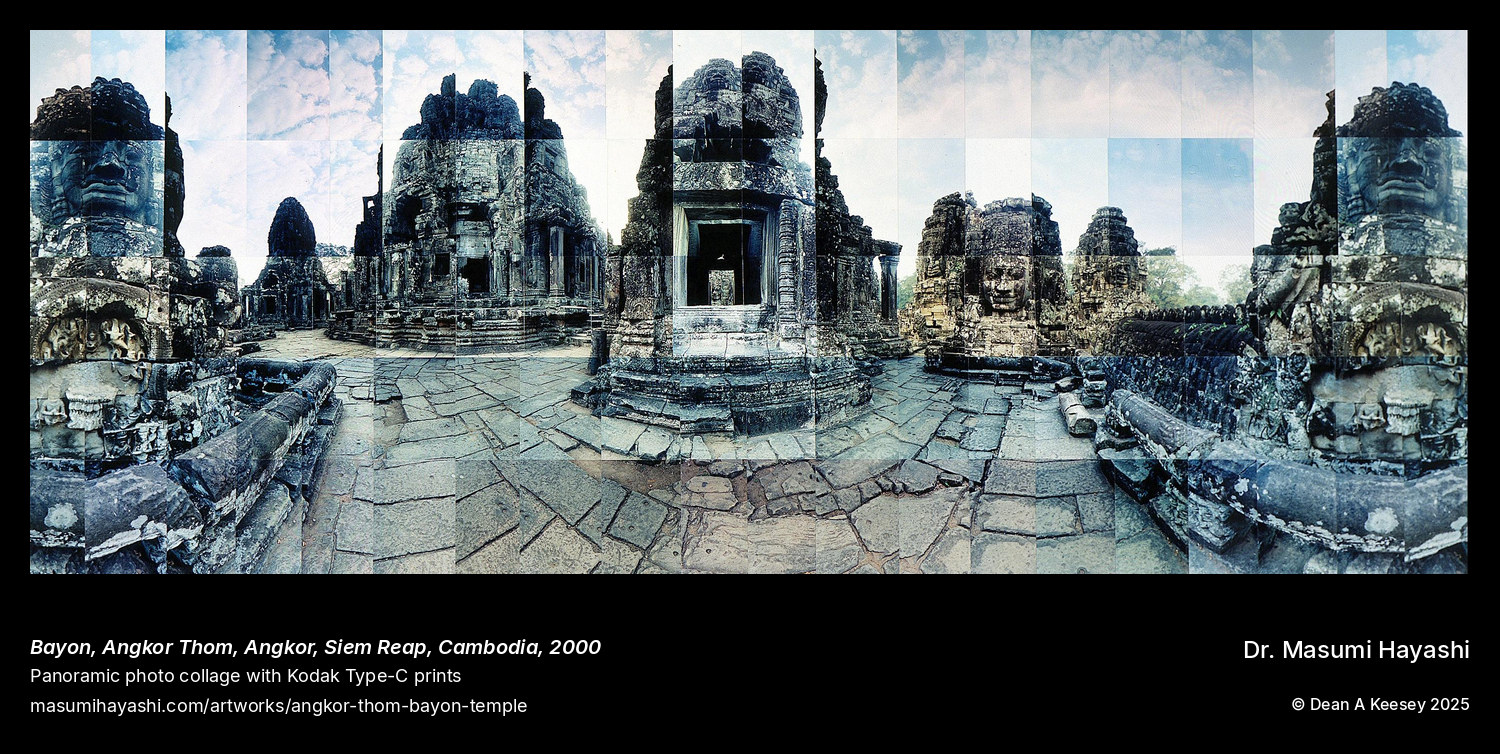
Bayon, Angkor Thom, Angkor, Siem Reap, Cambodia

Angkor, Siem Reap, Cambodia

Panoramic Photo Collage

2000

27 x 69

Bayon, Angkor Thom, Angkor, Siem Reap, Cambodia

Overview

Created in 2000, this 27 x 69-inch panoramic photo collage documents Bayon—enigmatic Buddhist state temple at center of Angkor Thom, last great capital of Khmer Empire, renowned worldwide for 216 massive serene stone faces carved on 54 towers representing either bodhisattva Avalokiteshvara or King Jayavarman VII himself (or synthesis of both), creating haunting forest of giant visages that have captivated visitors, archaeologists, and artists for over century since French colonial rediscovery. Built late 12th-early 13th centuries during Jayavarman VII’s reign (1181-1218 CE), Bayon marks dramatic religious shift from Hindu-dominated Angkor Wat era to Mahayana Buddhism, embodying king’s syncretistic vision combining Buddhist compassion (avalokita = “looking down” in Sanskrit, referencing Avalokiteshvara’s compassionate gaze upon suffering world) with royal cult of devaraja (god-king) where divine and earthly authority merged through architectural symbolism. Temple’s unique design features three levels rising from 140x160-meter base through intricate bas-relief galleries depicting historical scenes (Khmer-Cham naval battles, royal processions, daily life) to upper terrace supporting 54 towers each bearing four faces oriented to cardinal directions—creating 216 total faces whose serene smiles and half-closed eyes surveying landscape from every angle establish omnipresent divine-royal presence watching over kingdom. The 27 x 69-inch extreme vertical panorama (2.56:1 aspect ratio, 69-inch height matching Bodhi Tree’s extraordinary vertical extent) emphasizes tower architecture’s upward reach and stacked facial tiers, likely capturing single tower’s full elevation from base through multiple face-levels to summit or documenting several towers’ vertical arrangement creating rhythmic repetition of massive visages ascending toward sky. The 2000 date positions Bayon as sixth confirmed turn-of-millennium work and third Angkor monument from 2000 (alongside Banteay Srei and Angkor Wat No. 1), establishing concentrated Cambodia documentation within systematic photographic journey that also encompassed India’s Buddhist (Bodh Gaya), Hindu (Khajuraho), and Jain (Jaisalmer) sacred sites—all employing identical Fuji 4 x 6 film specifications suggesting extended Southeast Asian stay enabling comprehensive Angkor complex documentation. Bayon’s Buddhist identity contrasts with Hindu-dedicated Angkor Wat while representing Khmer Empire’s later religious evolution, and temple’s unique iconography (giant faces absent from other Angkor monuments) creates distinctive architectural typology requiring separate documentation beyond Angkor Wat’s tower quintet. Two Foundation editions retained (one framed, one unframed)—unusual retention strategy matched only by Jain Temple among documented Sacred Architectures works—suggests recognition of Bayon’s exceptional art market appeal, institutional collection potential, and iconic status as one of world’s most recognizable sacred architectural images, with giant serene faces offering immediately accessible visual impact transcending specialist contexts while maintaining scholarly documentary rigor appropriate for Getty-level museum placement.

Historical Context: Bayon and Angkor Thom

Bayon represents Khmer Empire’s Buddhist transformation and Jayavarman VII’s architectural ambitions:

Angkor Thom: “Great City”—Last Capital of Khmer Empire (Late 12th-13th Centuries)

Urban Scale: Founded by Jayavarman VII following Cham sack of earlier Angkor capital (1177 CE):

  • Area: 9 square kilometers enclosed by walls and moat
  • Walls: 8 meters high, 12 kilometers total perimeter
  • Moat: 100 meters wide surrounding entire city
  • Gates: Five monumental gates (four cardinal directions plus victory gate), each surmounted by towers bearing four faces (Bayon facial motif)
  • Population: Estimated 80,000-150,000 at peak (city proper), supporting larger Angkor metropolitan region of 750,000-1,000,000

Angkor Thom Complex: Multiple temples, monuments within walled city:

  • Bayon: Central state temple, geometric center of Angkor Thom
  • Royal Palace: Wooden structures (not survived), immediately north of Bayon
  • Baphuon: Earlier Hindu temple (mid-11th century) incorporated into Angkor Thom complex
  • Terrace of the Elephants: 350-meter platform for royal ceremonies, troop reviews
  • Terrace of the Leper King: Sculpted terrace with mysterious name origin
  • Phimeanakas: Temple within Royal Palace enclosure

Angkor Thom functioning as administrative, religious, and ceremonial center of Khmer Empire during final centuries of Angkorian period before capital shift to Phnom Penh (15th century).

King Jayavarman VII (Reign: 1181-1218 CE)

Religious Revolutionary: Jayavarman VII dramatically shifted Khmer state religion:

  • Previous Angkor Kings: Predominantly Hindu (Shaivite or Vaishnavite)
  • Jayavarman VII: Mahayana Buddhist, first major Buddhist monarch in Angkorian history
  • Syncretism: Combined Buddhist cosmology with traditional devaraja (god-king) cult
  • State Ideology: King as bodhisattva figure, embodying compassion for subjects while maintaining divine authority

Ambitious Builder: Jayavarman VII’s reign produced extraordinary architectural output:

  • Hospitals: 102 hospitals built throughout kingdom—Inscription mentioning “house of fire” (arogyasala) rest houses with medical care
  • Rest Houses: 121 rest houses along roads for travelers
  • Major Temples: Bayon (state temple), Ta Prohm (dedicated to mother), Preah Khan (dedicated to father), Banteay Kdei, Neak Pean, others
  • Angkor Thom: Entire walled capital city

Construction scale suggesting massive labor mobilization, potential economic strain contributing to empire’s later decline.

Military Context: Jayavarman VII’s reign involved significant warfare:

  • Cham Invasion (1177): Champa (central Vietnam) naval forces sacked Angkor, destroyed earlier capital
  • Jayavarman VII’s Response: Military campaigns expelled Chams, reasserted Khmer control
  • Territorial Expansion: Extended Khmer Empire to greatest geographic extent
  • Bayon Bas-Reliefs: Document Khmer-Cham battles, royal military processions, celebrating victories

Bayon Temple: Architecture and Iconography

Temple Structure:

Three Levels (Ascending Platform Design):

  1. First Level (Base): 140 x 160 meters, outer gallery with 1,200 meters of bas-relief carvings

Bas-Relief Themes:

  • South Gallery: Khmer-Cham naval battle (most famous relief)—Tonlé Sap Lake battle scene with ships, crocodiles, daily life
  • East Gallery: Royal processions, military marches, palace life
  • North Gallery: Daily life scenes (markets, cooking, festivals, games), celestial beings
  • West Gallery: Additional battle scenes, historical events

Unlike Angkor Wat’s mythological focus (Ramayana, Churning of Ocean), Bayon reliefs emphasize historical events and contemporary society, providing invaluable documentation of 12th-13th century Khmer culture.

  1. Second Level (Intermediate): Smaller galleries, libraries, transitional sacred space

  2. Upper Terrace (Summit): Central platform supporting 54 towers

54 Towers with 216 Faces (Bayon’s Defining Feature):

Tower Arrangement: Fifty-four towers clustered on upper terrace creating dense architectural forest:

  • Central Tower: Tallest, 43 meters height from ground
  • Subsidiary Towers: Surrounding central peak in clustered arrangement (not geometric quintet like Angkor Wat)
  • Four Faces per Tower: Each tower bearing four faces oriented to cardinal directions (North, South, East, West)
  • Total: 54 towers × 4 faces = 216 faces

Face Iconography:

Physical Characteristics:

  • Size: Faces approximately 2+ meters height
  • Expression: Serene smile (“Khmer smile” or “smile of Angkor”), half-closed eyes
  • Features: Broad nose, full lips, elongated earlobes (sign of wisdom/royalty)
  • Crowns: Elaborate headdresses suggesting royal or divine status
  • Gaze: Eyes looking slightly downward, “observing” landscape and kingdom

Identity Debate: Scholarly interpretations regarding face identity:

  1. Avalokiteshvara (Bodhisattva of Compassion):

    • Jayavarman VII’s Buddhism emphasized Avalokiteshvara worship
    • Compassionate gaze reflecting bodhisattva’s vow to relieve suffering
    • Four faces possibly representing omnidirectional compassion
  2. Jayavarman VII (Royal Portraits):

    • Faces possibly portraits of king himself
    • Devaraja cult tradition merging divine and royal identities
    • King as living bodhisattva, embodiment of compassion
  3. Synthesis (Most Accepted View):

    • Faces deliberately ambiguous, representing both Avalokiteshvara and Jayavarman VII
    • King identified with bodhisattva, becoming divine through Buddhist practice
    • Architectural program visualizing theo-political ideology where king’s compassion mirrors divine compassion

Omnipresent Surveillance/Protection: 216 faces gazing outward from central temple create effect of:

  • Constant divine observation of kingdom
  • Royal presence extended across landscape via architectural symbol
  • Protective watching over subjects (benevolent interpretation)
  • Or potentially intimidating display of inescapable authority

Architectural Symbolism:

Mount Meru (Cosmic Mountain): Like Angkor Wat, Bayon represents Mount Meru:

  • Central tower as cosmic peak
  • Surrounding towers as subsidiary mountains
  • Moat representing cosmic ocean
  • Temple functioning as axis mundi (world axis) connecting earthly and divine realms

Mandala (Sacred Diagram): Temple layout possibly forming three-dimensional mandala:

  • Concentric galleries representing progressive spiritual zones
  • Central sanctuary as ultimate sacred space
  • Architectural form as meditation device

Extreme Vertical Panorama: 27 x 69 Inches

At 27 x 69 inches, Bayon employs extreme vertical panorama emphasizing tower architecture:

Format Analysis:

  • Width: 27 inches (2.25 feet) creates narrow horizontal field
  • Height: 69 inches (5.75 feet, nearly 6 feet tall) establishes powerful vertical emphasis
  • Aspect Ratio: 2.56:1 (height to width)—extreme vertical panorama, third most extreme among documented Sacred Architectures works

Comparison with Other Extreme Verticals:

  • Jain Temple: 25 x 73” (2.92:1)—TALLEST, most extreme vertical
  • Bodhi Tree: 24 x 69” (2.875:1)—MOST EXTREME aspect ratio, same 69” height
  • Bayon: 27 x 69” (2.56:1)—third most extreme, slightly wider than Bodhi Tree, same height
  • Kandariya Mahadeva: 30 x 59” (1.97:1)—significant vertical, approaching 2:1
  • Angkor Wat No. 1: 23 x 52” (2.26:1)—significant vertical

Bayon’s 69-inch height matches Bodhi Tree exactly, while slightly wider 27-inch width (vs. Bodhi Tree’s 24”) creates marginally less extreme aspect ratio but maintains same towering vertical presence.

Format Rationale: Tower Documentation

54-Tower Forest: Bayon’s clustered tower arrangement creates vertical composition:

  • Multiple towers rising in dense architectural forest
  • Stacked faces on tower levels creating vertical rhythm
  • 27 x 69” format capturing towers’ upward reach

Possible Compositional Strategies:

Single Tower Elevation: Documenting individual tower’s full height:

  • Base platform → first face level → second face level → third face level → summit crown
  • Vertical format capturing complete tower elevation showing stacked faces
  • 69-inch height enabling face-scale documentation (if faces approximately 2+ meters, multiple faces vertically arranged would require extreme vertical format)

Multiple Tower Vertical Arrangement: Several towers documented in vertical composition:

  • Foreground tower → middle-ground tower → background tower ascending
  • Vertical format capturing depth and tower density
  • Rhythmic repetition of faces at different elevations

Face-Level Focus: Close documentation of face tiers:

  • Lower face level → mid-level faces → upper faces → summit
  • Vertical progression emphasizing omnidirectional gaze at multiple elevations
  • Narrow width concentrating attention on facial features and vertical stacking

27-Inch Width Advantage Over 24-Inch: Slightly wider than Bodhi Tree’s 24”:

  • Additional lateral information potentially capturing adjacent tower faces
  • Showing multiple faces at same elevation (since each tower has four faces oriented to cardinal directions)
  • Or documenting single tower with sufficient width to show face’s full frontal aspect without excessive cropping

Display Considerations: 69-inch height (nearly 6 feet) requiring:

  • Gallery walls with substantial vertical clearance
  • Professional framing handling extreme vertical format
  • Exhibition contexts appreciating format innovation
  • Two editions retained (framed + unframed) enabling simultaneous display opportunities or preserving both presentation options

Sixth 2000 Work: Expanding Turn-of-Millennium Journey

Bayon represents sixth confirmed 2000 work, expanding systematic photographic journey:

2000 Works Confirmed (Complete List):

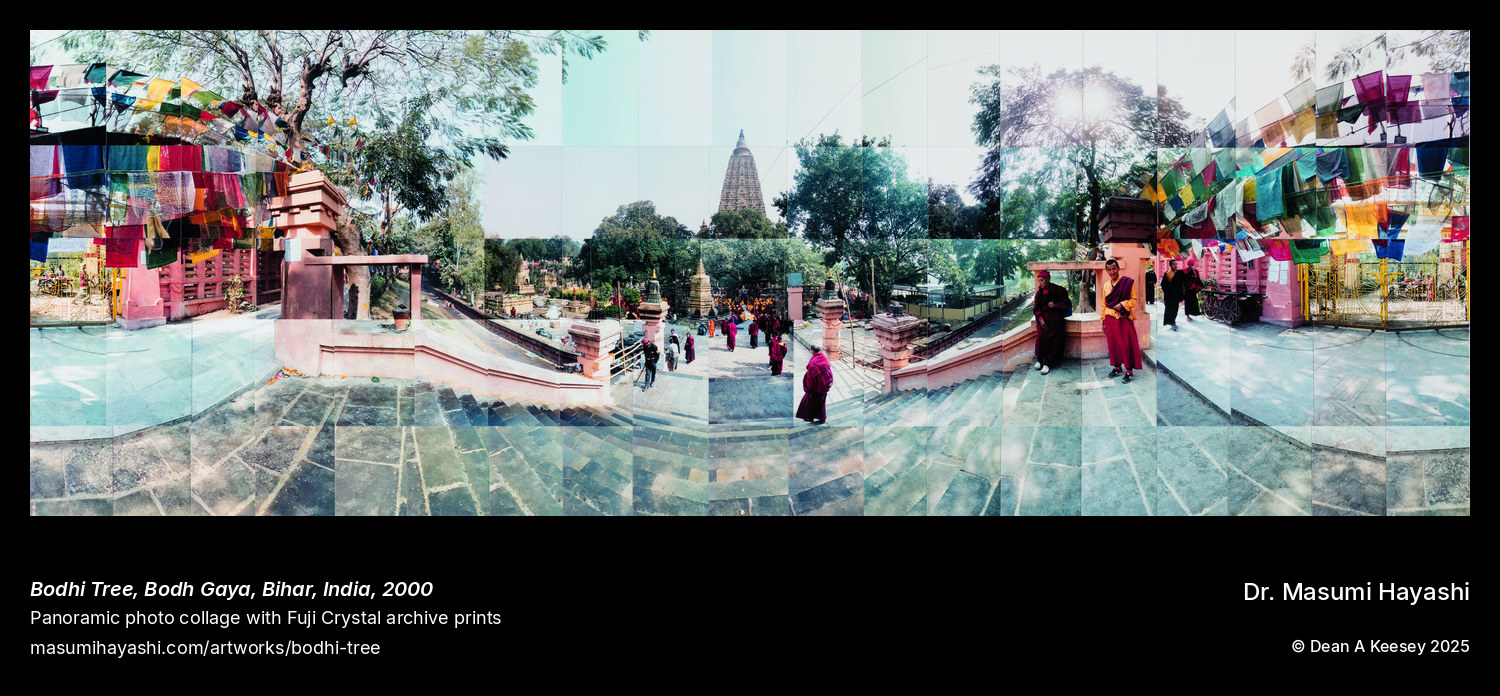
  1. Bodhi Tree (Bodh Gaya, Bihar, India)—Buddhism, 24 x 69” extreme vertical
  2. Banteay Srei (Angkor, Cambodia)—Hindu-Buddhist, 27 x 56” moderate horizontal
  3. Kandariya Mahadeva (Khajuraho, Madhya Pradesh, India)—Hinduism, 30 x 59” vertical
  4. Jain Temple (Jaisalmer, Rajasthan, India)—Jainism, 25 x 73” extreme vertical
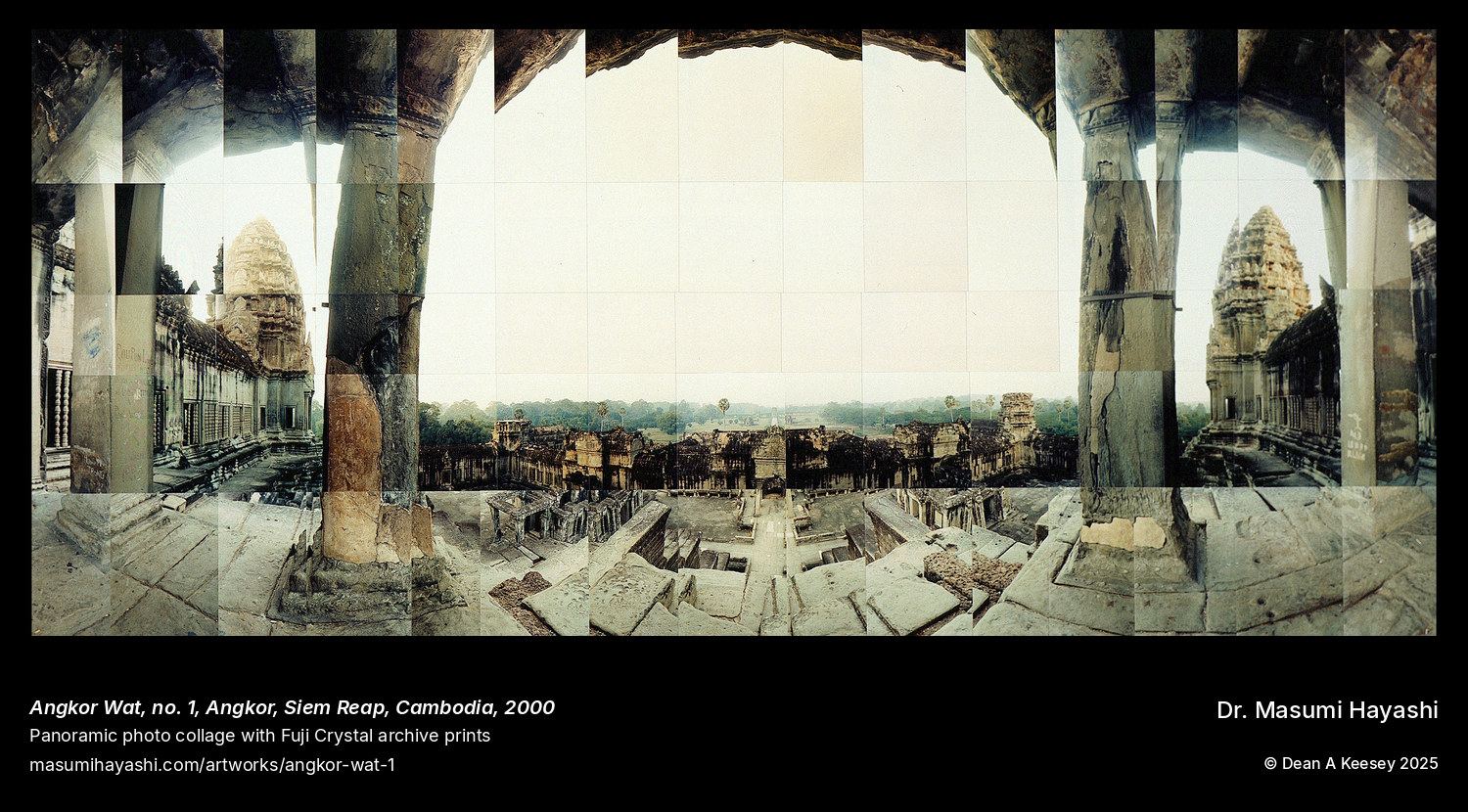
  5. Angkor Wat No. 1 (Angkor, Cambodia)—Hindu-Buddhist (originally Hindu), 23 x 52” vertical
  6. Bayon (Angkor Thom, Cambodia)—Buddhism, 27 x 69” extreme vertical

Technical Consistency Absolute: All six 2000 works employ identical specifications:

  • Fuji film stock (distinct from typical Kodak)
  • 4 x 6-inch format (larger than typical 3.5 x 5)
  • Systematic technical approach throughout journey

Three Angkor Works from 2000: Concentrated Cambodia documentation:

  • Banteay Srei (25km from main Angkor complex)—intimate pink sandstone temple, 10th century Hindu
  • Angkor Wat (central monument)—world’s largest religious monument, 12th century Hindu → Buddhist
  • Bayon (Angkor Thom center)—enigmatic face temple, late 12th-early 13th century Buddhist

Three works suggesting extended Cambodia stay enabling systematic Angkor documentation across:

  • Different architectural scales (intimate Banteay Srei vs. massive Angkor Wat vs. medium-scale Bayon)
  • Different religious phases (Hindu Banteay Srei → Hindu-Buddhist Angkor Wat → Buddhist Bayon)
  • Different architectural typologies (decorative temple vs. tower quintet vs. face towers)
  • Different time periods (10th century → 12th century → late 12th-13th century)

Pattern indicating comprehensive approach understanding major archaeological complex requires multiple works capturing architectural diversity rather than single representative image.

Religious Diversity Complete: Six works documenting Indian subcontinent’s three major indigenous religious traditions plus Southeast Asian Buddhist evolution:

  • Buddhism: Bodh Gaya (Indian enlightenment site), Bayon (Khmer Buddhist state temple)
  • Hinduism: Khajuraho (tantric Nagara style), Angkor Wat originally (Vishnu dedication)
  • Jainism: Jaisalmer (merchant-patronage temple complex)
  • Hindu-Buddhist Synthesis: Banteay Srei, Angkor Wat’s Buddhist transformation

Unprecedented religious architectural comprehensiveness within single photographic journey spanning India (Bihar, Madhya Pradesh, Rajasthan) and Cambodia (Angkor).

Format Diversity Analysis:

  • Four extreme/significant verticals: Bodhi Tree (24x69”), Bayon (27x69”), Jain Temple (25x73”), Kandariya Mahadeva (30x59”), Angkor Wat (23x52”)
  • One moderate horizontal: Banteay Srei (27x56”)

Heavy vertical emphasis in 2000 works (5 of 6 vertical) suggesting deliberate strategy favoring tower/temple elevation documentation, sacred tree vertical extent, or architectural elements requiring upward compositional emphasis.

Two Foundation Editions Retained: Strategic Importance

Bayon’s two-edition retention (framed + unframed) matches Jain Temple as only documented Sacred Architectures works with multiple Foundation editions:

Retention Strategy Implications:

Exceptional Market Appeal: Two editions suggesting:

  • Recognition of Bayon’s iconic status (giant faces among world’s most recognizable sacred architecture images)
  • Anticipation of strong institutional interest from museums prioritizing Southeast Asian collections
  • Unique iconography (faces absent from other Angkor monuments) creating distinctive work within Sacred Architectures series

Exhibition Flexibility: Framed + unframed editions enabling:

  • Simultaneous display at different venues (traveling exhibitions, multiple museum requests)
  • Preserving both presentation options (framed for traditional gallery contexts, unframed for contemporary museum installations)
  • Loaning one edition while retaining other for Foundation collections access

Comparison with Other 2000 Works:

  • Banteay Srei: All 5 editions sold (“Bummer!” note suggesting regret at complete placement)
  • Madonna and Child (Meenakshi Temple): All 5 editions sold
  • Bodhi Tree: Edition 1 only (Willard Huyck/Gloria Katz Collection → Smithsonian), 4 unaccounted
  • Kandariya Mahadeva: Edition 1 only (Foundation inventory), 4 unaccounted
  • Jain Temple: TWO framed editions retained, 3 unaccounted
  • Bayon: TWO editions retained (1 framed, 1 unframed), 3 unaccounted

Pattern suggesting learning curve where complete early placements (Banteay Srei, Madonna and Child) led to strategic retention of exceptional works (Jain Temple, Bayon) for future high-value institutional placement rather than selling all editions.

Buddhist Identity: Contrast with Hindu Angkor Wat

Bayon’s Buddhist dedication differentiates it within Angkor complex:

Angkor’s Religious Evolution:

  • Early Angkor (9th-12th centuries): Predominantly Hindu (Shiva, Vishnu worship)
  • Angkor Wat (early 12th century): Hindu temple dedicated to Vishnu
  • Jayavarman VII’s Reign (late 12th-early 13th centuries): Shift to Mahayana Buddhism
  • Bayon: Buddhist state temple reflecting new religious orientation
  • Later Angkor (13th-15th centuries): Continued Buddhist predominance (Theravada Buddhism replacing Mahayana)

Mahayana Buddhism Context: Jayavarman VII’s Buddhism differed from later Theravada:

  • Mahayana: “Great Vehicle”—emphasizing bodhisattva path, compassion, multiple celestial buddhas/bodhisattvas
  • Avalokiteshvara: Bodhisattva of compassion, central to Mahayana practice, Jayavarman VII’s chosen patron deity
  • Theravada: “Way of the Elders”—later Southeast Asian form emphasizing monastic discipline, individual enlightenment
  • Cambodia’s 13th-15th century shift: Mahayana → Theravada (Bayon representing Mahayana peak before transformation)

Architectural Differences from Angkor Wat:

  • Iconography: Giant faces (absent from Angkor Wat) vs. apsara dancers and Hindu mythology
  • Bas-Reliefs: Historical battles and daily life (Bayon) vs. mythological narratives (Angkor Wat)
  • Orientation: Bayon faces all directions (54 towers × 4 faces) vs. Angkor Wat’s western orientation
  • Scale: Medium-scale clustered towers (Bayon) vs. massive geometric quintet (Angkor Wat)
  • Layout: Dense irregular tower arrangement (Bayon) vs. orderly concentric galleries (Angkor Wat)

Contrasts necessitating separate documentation recognizing Angkor complex’s architectural diversity across religious traditions and royal patronage periods.

Angkor Thom’s Later History and Contemporary Status

Post-Angkorian Period (15th-19th Centuries): Following capital shift to Phnom Penh (mid-15th century):

  • Angkor Thom gradually abandoned as administrative center
  • Theravada Buddhist monks maintained some temples
  • Jungle encroachment reclaiming stone structures
  • Local populations continuing religious use despite official abandonment

French Colonial Rediscovery (Late 19th Century):

  • French naturalist Henri Mouhot’s 1860 visit publicizing Angkor to Western audiences (though local Khmer always knew of sites)
  • École française d’Extrême-Orient (EFEO) beginning systematic clearing, documentation, restoration
  • Archaeological study establishing chronology, historical context
  • Bayon initially misidentified as Hindu temple before Buddhist identity clarified through inscription study

20th Century Challenges:

  • Khmer Rouge period (1975-1979): Minimal damage to Bayon (spared worst destruction unlike some sites)
  • Looting: Statue theft, artifact removal for international art market
  • Landmines: Surrounding areas mined during conflicts (cleared by 1990s-2000s)
  • Tourism pressure: Increasing visitation creating conservation challenges

UNESCO World Heritage Site (1992): International recognition and conservation support:

  • Angkor Archaeological Park designation protecting Angkor Thom and wider complex
  • Ongoing restoration addressing stone deterioration, structural stability, vegetation management
  • Tourism management balancing preservation with economic benefits (2+ million annual visitors pre-COVID)
  • International cooperation (Japan, India, China, France, others sponsoring specific temple restorations)

Contemporary Function:

  • Major tourist destination (Bayon among most photographed Angkor monuments after Angkor Wat)
  • Active Buddhist worship at some Angkor Thom temples
  • Archaeological research continuing to reveal urban context, construction techniques, daily life
  • Symbol of Cambodian national identity and cultural heritage

Collection Information

Year: 2000 Location: Angkor, Siem Reap, Cambodia Medium: Panoramic Photo Collage Dimensions: 27 x 69 inches (extreme vertical panorama, nearly 6 feet tall) Edition: 1 of 5 Film: 4 x 6 inches, Fuji

  1. Masumi Hayashi Foundation (framed, inventory)
  2. Masumi Hayashi Foundation (unframed, inventory)

Note: Three additional edition locations unaccounted for. Sixth confirmed 2000 work expanding turn-of-millennium photographic journey to document Buddhism (Bodh Gaya, Bayon), Hinduism (Khajuraho, Angkor Wat originally), Jainism (Jaisalmer), and Hindu-Buddhist synthesis (Banteay Srei, Angkor Wat’s transformation)—all employing identical Fuji 4 x 6 film establishing systematic approach achieving unprecedented religious architectural diversity spanning India (Bihar, Madhya Pradesh, Rajasthan) and Cambodia (three Angkor works). Work documents Bayon—enigmatic Buddhist state temple at center of Angkor Thom renowned for 216 massive serene stone faces on 54 towers representing bodhisattva Avalokiteshvara, King Jayavarman VII, or synthesis of both, creating haunting architectural forest of giant visages surveying landscape from every direction. Built late 12th-early 13th centuries during Jayavarman VII’s reign, Bayon marks Khmer Empire’s shift from Hindu-dominated era to Mahayana Buddhism while maintaining devaraja (god-king) tradition where divine and earthly authority merged through architectural symbolism. Temple’s three-level design features bas-relief galleries depicting historical Khmer-Cham battles and daily life (unlike Angkor Wat’s mythological focus) ascending to upper terrace supporting clustered towers each bearing four faces oriented to cardinal directions—omnipresent gaze establishing divine-royal presence watching over kingdom. Extreme vertical panoramic format (27 x 69”, nearly 6 feet tall, 2.56:1 aspect ratio, matching Bodhi Tree’s 69-inch height exactly while slightly wider at 27” vs. 24”) emphasizes tower architecture’s upward reach and stacked facial tiers, likely capturing single tower’s full elevation through multiple face-levels or documenting several towers’ vertical arrangement creating rhythmic repetition of massive visages ascending toward sky. Bayon represents third Angkor work from 2000 (alongside Banteay Srei and Angkor Wat No. 1), establishing concentrated Cambodia documentation within systematic journey suggesting extended Southeast Asian stay enabling comprehensive Angkor complex coverage across different architectural scales (intimate vs. massive), religious phases (Hindu → Buddhist), architectural typologies (decorative temple vs. tower quintet vs. face towers), and time periods (10th → 12th → late 12th-13th centuries). Buddhist identity contrasts with Hindu Angkor Wat while representing Khmer religious evolution, and unique face iconography (absent from other Angkor monuments) creates distinctive architectural typology requiring separate documentation. Two Foundation editions retained (framed + unframed)—strategic retention matched only by Jain Temple among documented Sacred Architectures works—suggests recognition of Bayon’s exceptional institutional collection potential and iconic status as one of world’s most recognizable sacred architecture images, with giant serene faces offering immediately accessible visual impact transcending specialist contexts while maintaining scholarly documentary rigor. Appropriate for major art museums with comprehensive Southeast Asian collections, Buddhist art specialization, UNESCO World Heritage Site documentation priorities, Khmer Empire architectural studies, comparative religious architecture research, or photographic format innovation demonstrating extreme vertical panorama addressing specific tower documentation requirements. Two-edition retention enables simultaneous exhibition opportunities at different venues (traveling shows, multiple museum requests) while preserving both framed and unframed presentation options for diverse institutional installation contexts. Work combining scholarly architectural documentation with iconic subject matter (giant faces among most photographed images in Southeast Asian art history) creates exceptional Getty-level placement opportunity balancing academic rigor with broad public recognition and visual accessibility appealing to museum audiences beyond specialist scholars.

Donate