Manzanar Relocation Camp, Tree View
Inyo County, CA, USA
Panoramic photo collage with Fuji Crystal Archive prints
1995
27 x 63
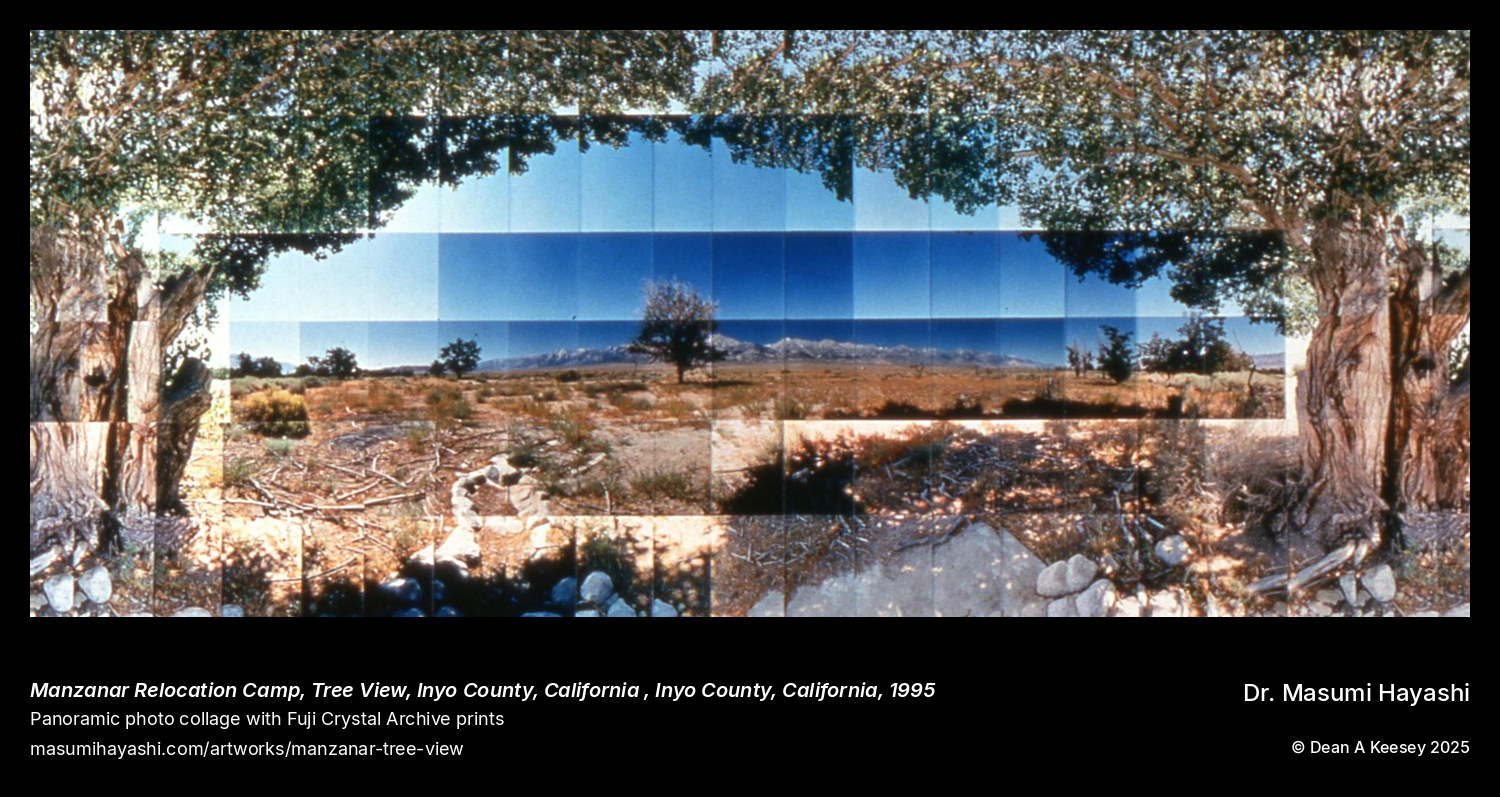
This horizontal 27-by-63-inch panorama documents trees at Manzanar Relocation Center—the most visited and best-preserved of the ten War Relocation Authority camps, where 11,000 Japanese Americans were imprisoned beneath the Sierra Nevada’s eastern escarpment in California’s Owens Valley from 1942 to 1945. The over-five-foot width captures mature trees that internees planted and nurtured, living witnesses to incarceration that continue growing decades after the camp’s closure.
Created in 1995, the work documents what distinguishes Manzanar from other camp sites: extensive landscaping that internees created despite their circumstances. Japanese gardening traditions transformed harsh desert into cultivated spaces—ornamental gardens, orchards, and vegetable plots that humanized the concentration camp’s industrial architecture.
The trees’ survival represents unintended memorial: planted by people imprisoned solely for ancestry, the trees outlived their planters, grew beyond camp boundaries, and now shade visitors touring the National Historic Site that Manzanar became in 1992. The organic growth contrasts with the geometric barracks grid, nature exceeding the rigid planning that attempted to contain human lives.
Manzanar’s location created both beauty and hardship: the Sierra Nevada’s snow-capped peaks formed spectacular backdrop while dust storms swept across the valley, temperatures ranged from summer heat to winter freezes, and the mountain wall blocked escape in any meaningful sense. The landscape’s grandeur mocked the circumstances confining thousands within barbed wire.
The panoramic format captures the trees’ integration within surviving landscape—not isolated specimens but elements of cultivated environment that internees maintained despite confinement. The “Tree View” title acknowledges the organic dimension distinguishing this work from documentation of concrete foundations and rusting infrastructure elsewhere in the series.
Manzanar’s preservation as National Historic Site ensures that trees internees planted continue welcoming visitors who seek understanding of injustice their nation committed against its own citizens.
This work documents Manzanar, one of the concentration camps where Japanese Americans were incarcerated during World War II.
Part of the American Concentration Camps project
More from Japanese-American Internment Camps
Gila River Relocation Camp, Dog Grave
Gila River Relocation Camp, Monument
Gila River Relocation Camp, Foundations
Gila River Relocation Camp, Sewer
Granada (Amache) Relocation Camp, Foundations