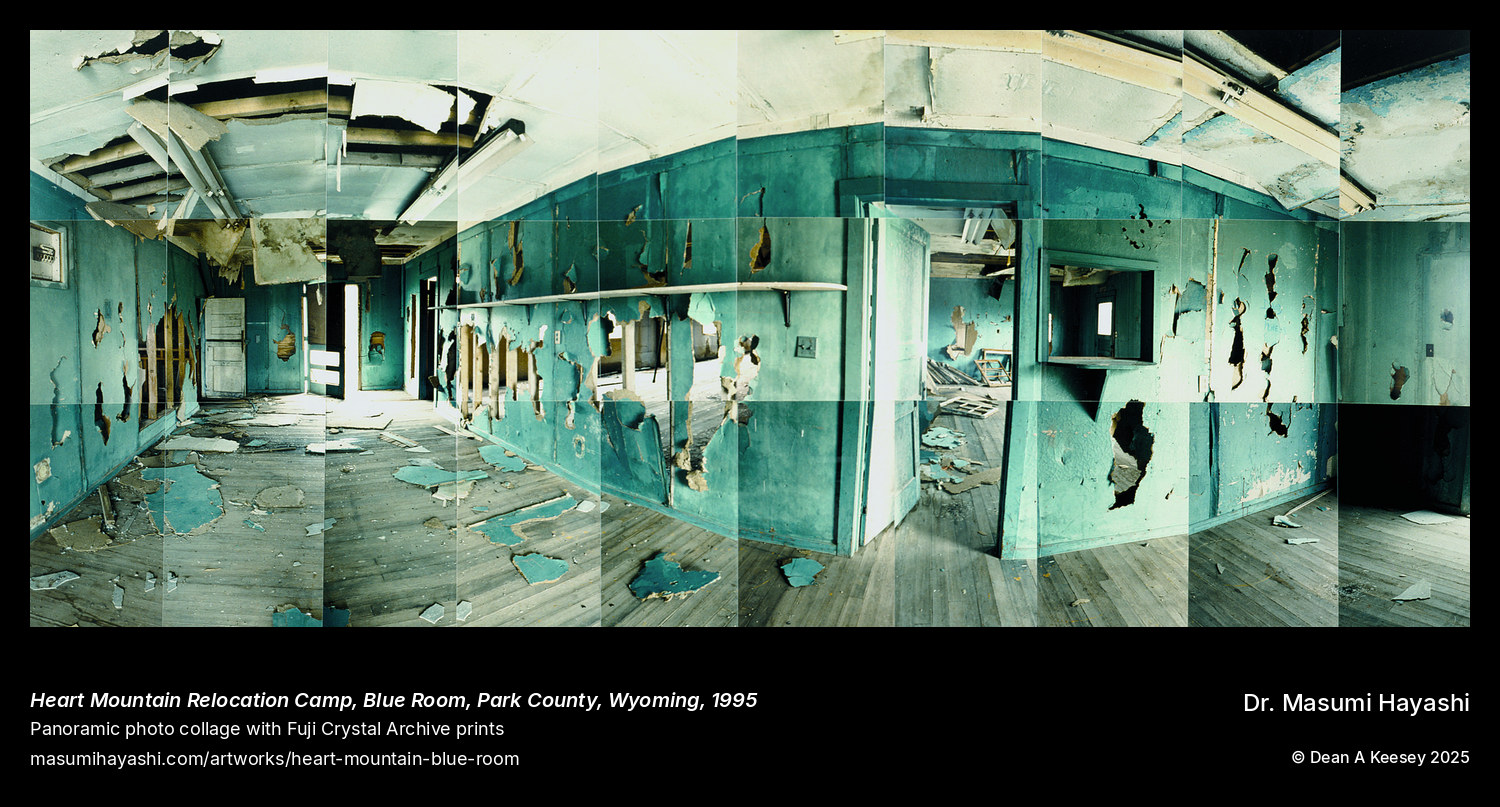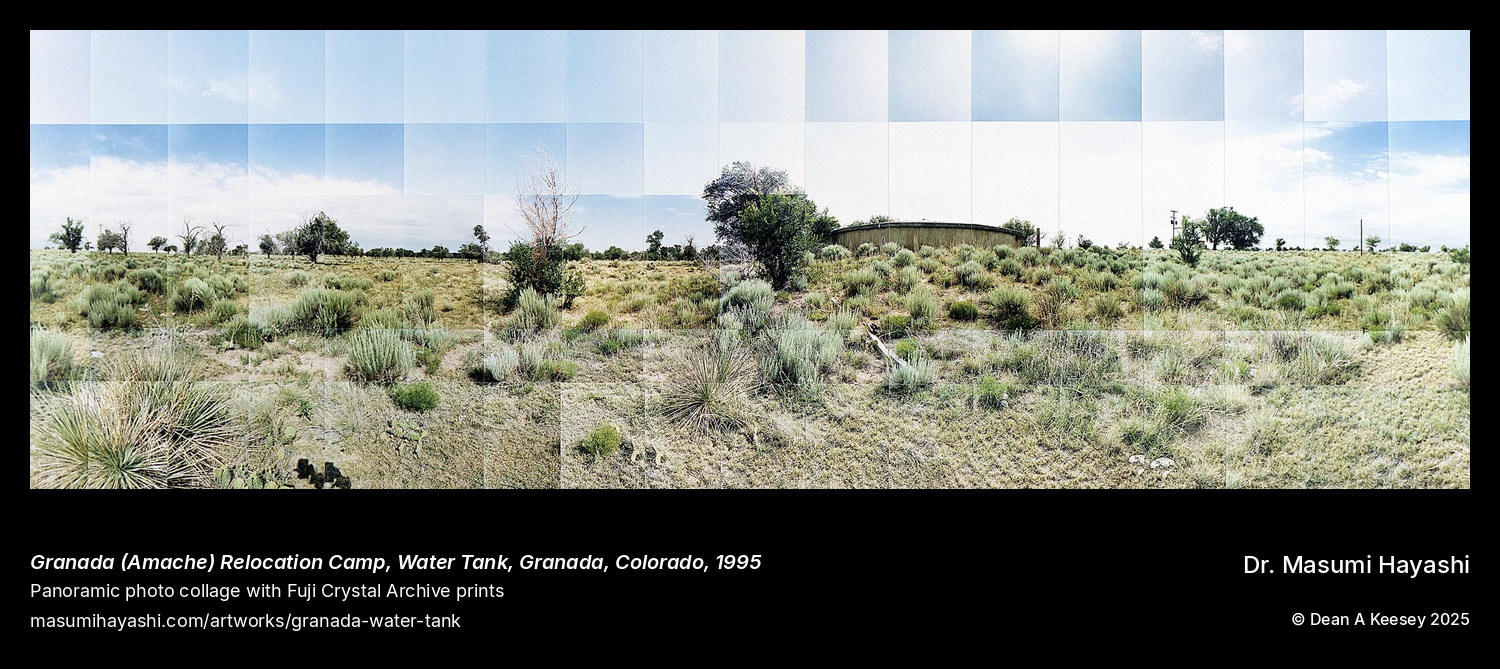
Granada (Amache) Relocation Camp, Water Tank
Granada, CO, USA
Panoramic photo collage with Fuji Crystal Archive prints
1995
16 x 56
This vertical 16-by-56-inch panorama documents the water tank at Granada (Amache) Relocation Center—a utilitarian steel tower rising from Colorado prairie, the infrastructure of incarceration surviving while barracks and guard towers have disappeared. The nearly five-foot height captures the tank’s vertical isolation against empty landscape, the lone structure marking where 7,300 Japanese Americans were imprisoned from 1942 to 1945.
Created in 1995, the work demonstrates Hayashi’s strategy of documenting surviving infrastructure rather than recreating vanished buildings—the water tank standing as witness because its utility outlasted its original purpose, while structures specifically built for human confinement were demolished, dismantled, or allowed to decay.
Granada, located in southeastern Colorado’s high plains, was the westernmost of ten War Relocation Authority camps. The site’s selection followed the pattern: remote location, harsh climate, government-owned land. Summer temperatures exceeded 100 degrees; winter brought sub-zero cold; wind carried dust that internees described as omnipresent.
The water tank represents the industrial logic of mass incarceration—thousands of people requiring water supply, sewage treatment, electrical generation, and other infrastructure that transformed empty land into functional prison within months. This engineering achievement, directed toward confining American citizens based solely on ancestry, demonstrates how technical competence can serve unjust purposes.
The vertical format emphasizes the tank’s isolation: a single vertical element rising from horizontal prairie, the geometric contrast between engineered structure and natural landscape. The extreme height-to-width ratio creates visual tension suited to documenting absence—the tank standing where a city once confined thousands, the vertical line punctuating emptiness rather than presence.
The site gained National Historic Landmark designation in 2006, one of several camp sites now recognized as historically significant precisely because they document injustice rather than achievement.
This work documents Granada (Amache), one of the concentration camps where Japanese Americans were incarcerated during World War II.
Part of the American Concentration Camps project
More from Japanese-American Internment Camps
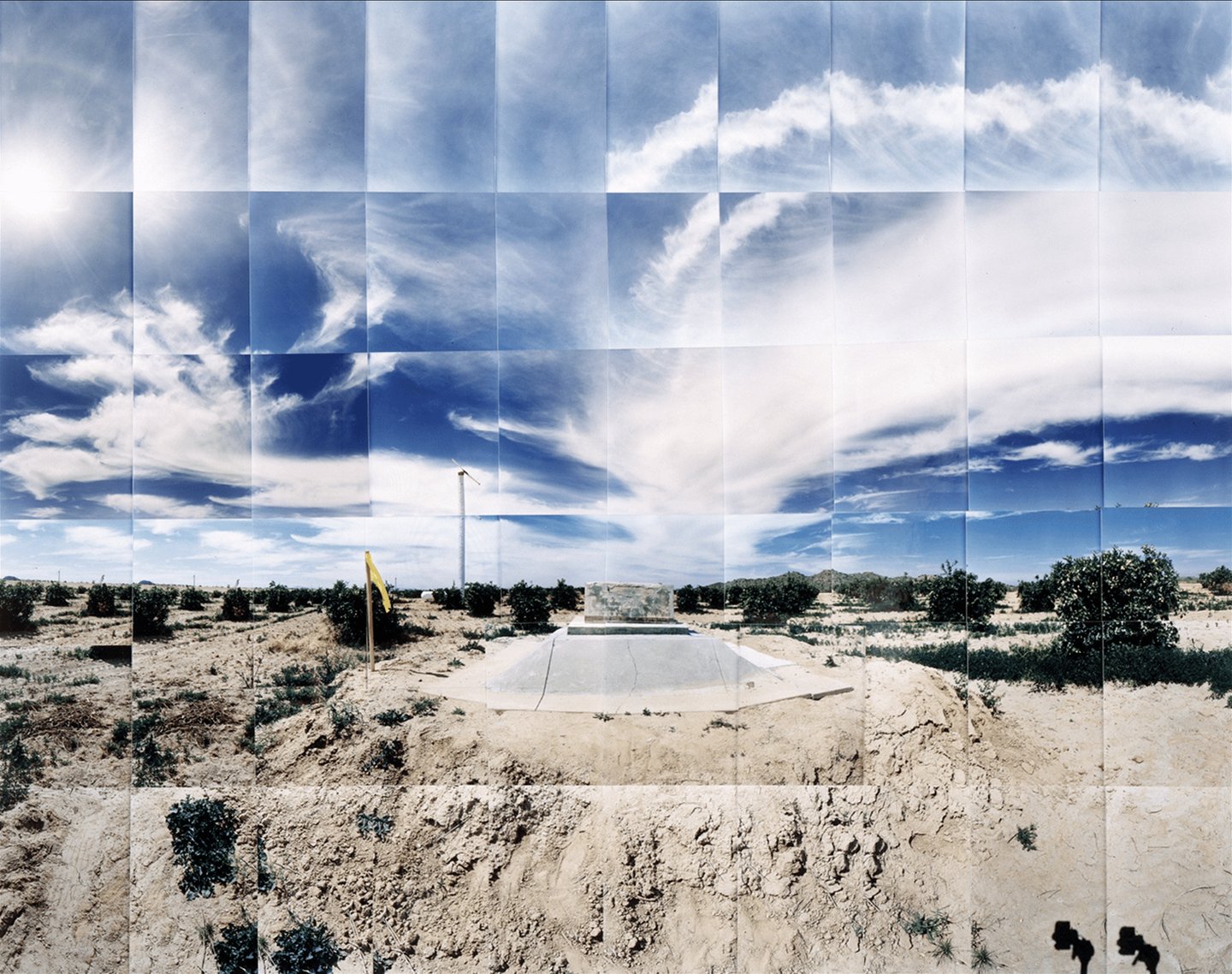
Gila River Relocation Camp, Dog Grave
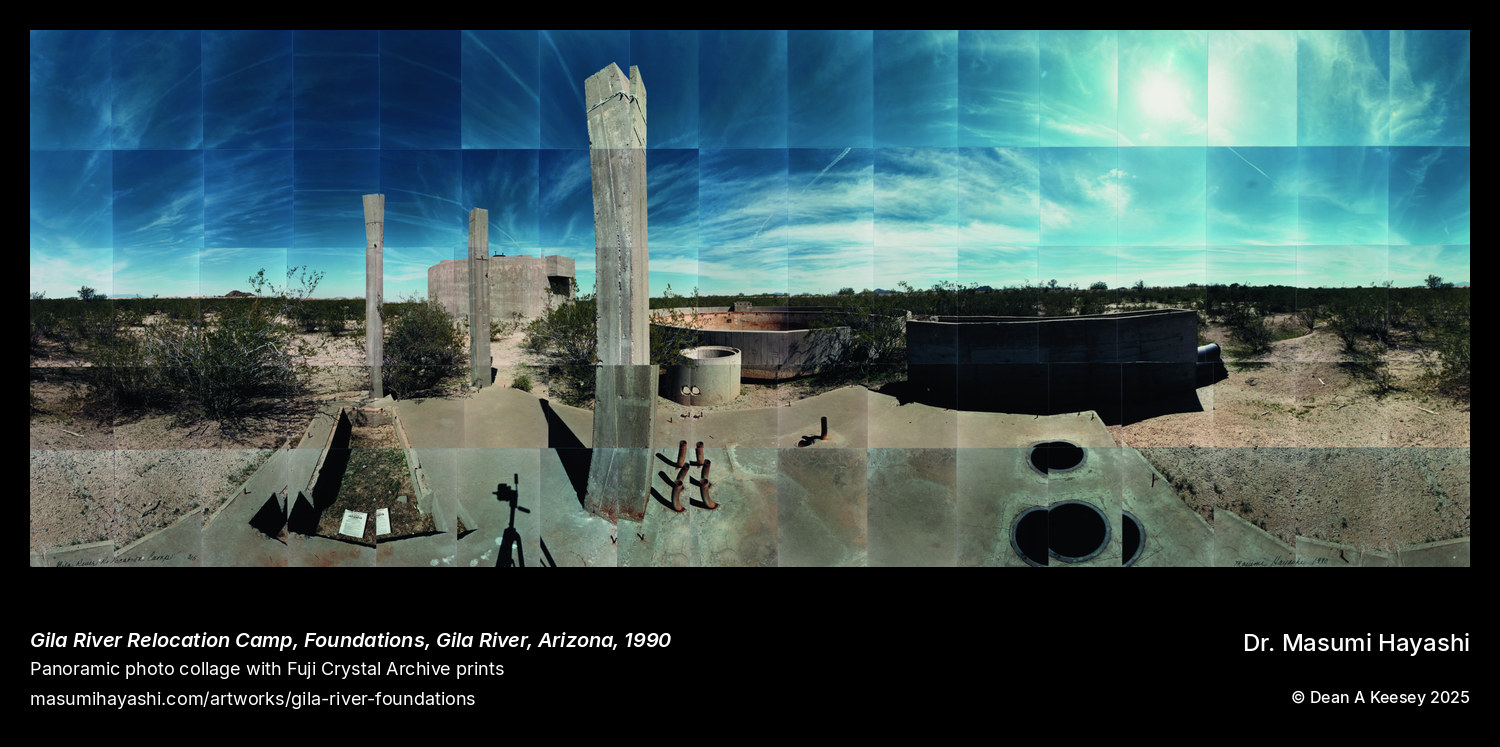
Gila River Relocation Camp, Foundations
Gila River Relocation Camp, Monument
Gila River Relocation Camp, Sewer
Granada (Amache) Relocation Camp, Foundations