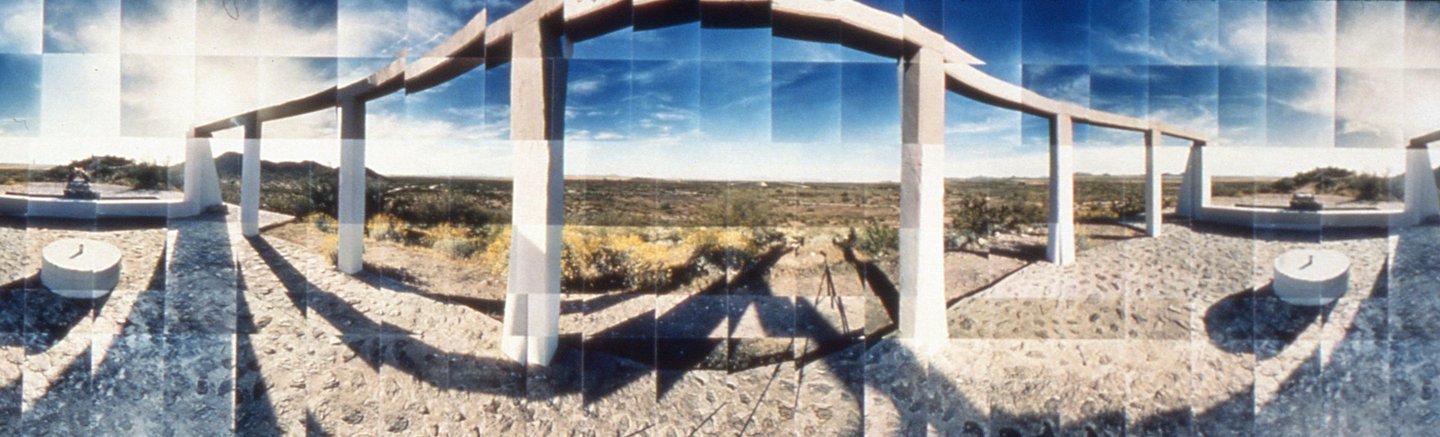
Gila River Internment Camp, Monument
Gila River, Arizona, USA
Panoramic photo collage with Fuji Crystal Archive prints
1995
31" x 75"
Research: Gila River Relocation Camp
Location: Pinal County, Arizona, on the Gila River Indian Reservation.
Land: Leased from the Gila River Indian Community.
Size: 16,500 acres total, with two separate camps: Canal Camp (3,000 acres) and Butte Camp (13,500 acres).
Peak population: 13,348
Date of peak: December 1942
Opening date: July 20, 1942
Closing Dates:
Canal Camp: September 28, 1945
Butte Camp: November 10, 1945
Climate: Desert climate with extreme heat. Summer temperatures regularly exceeded 100 degrees, reaching as high as 125°F. Winters were mild. The area experienced frequent dust storms.
Population Origins:
Of the 13,348 Americans held prisoner here...
5,904 prisoners were from Los Angeles County, CA
1,963 prisoners were from Fresno County, CA
2,321 prisoners were from Sacramento County, CA
1,832 prisoners were from Tulare County, CA
1,328 prisoners were from Other California regions
Project Director(s): Eastburn Smith, L. H. Bennett, Douglas M. Todd
Community Analysts: Robert F. Spencer and James H. Barnett
Newspaper(s): Gila News-Courier (September 1942 - January 1946)
% who answered question 28 of the loyalty questionnaire positively: 93.8%
Number and percentage of eligible citizen males inducted into ARMED FORCES: 487 (4.2%)
Industry: The camp had significant agricultural operations, producing vegetables and other crops. Industries included a camouflage net factory, garment factory, and various craft workshops. The camp was known for its successful cooperative enterprises.
History: Gila River was unique in being located on Native American reservation land, leading to complex relationships between the WRA, the Office of Indian Affairs, and the Gila River Indian Community.
The camp was considered one of the 'better' camps due to its relatively moderate climate and agricultural success.
Gila River became known for its educational and recreational programs, including a high school that gained accreditation from the state of Arizona.
The camp's baseball team, the Butte High Eagles, became legendary in the camp system, playing against teams from other camps and nearby communities.
Despite being in the desert, inmates managed to create gardens and parks, including a 3-acre park with grass, trees, and a pond.
The camp maintained good relations with the surrounding Native American community, with some tribal members working in the camp and inmates helping with reservation agricultural projects.