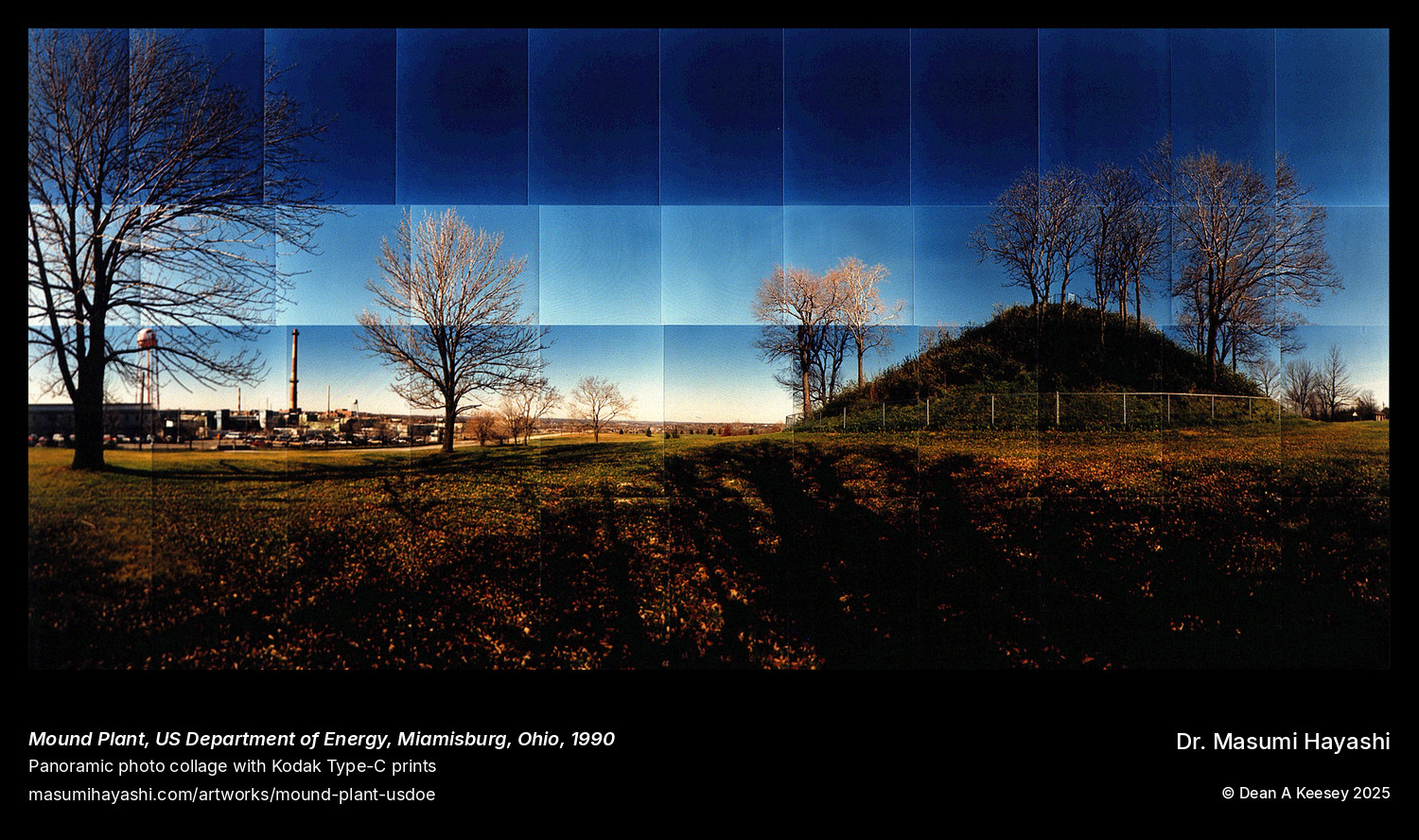
Mound Plant (USDOE), Miamisburg, Ohio
Miamisburg, OH, USA
Panoramic Photo Collage
1990
31 x 26
EPA SUPERFUND SITE - DOE INDIAN MOUND SITE
Miamisburg, Ohio
June 1991
History:
The GGE Plant started operations in 1943 and is still in operation. The plant is on a 306-acre site owned by the US Department of Energy. Its main function is to manufacture non-nuclear components and tritium-containing components for nuclear weapons. The site includes a landfill in which solvents, paints, photo processing and planting baths solutions were deposited; several leach beds used for disposal of solutions containing radionucleotides and / or explosive pyrotechnic materials; an area where a plutonium spill occurred; ground water contaminated with tritium; and 30 acres of soil with potential radioactive contamination.
Miamisburg Indian Mound:
The GGE plant is located across the street from the Miamisburg Adena Indian Mound. This mound was erected in prehistoric times by the mound builders of the Adena Indian tribe. It was a part of their tradition to have graves covered with earth. This is the largest conical mound in the area, being 70 feet high, 877 feet in circumference at the base, and contains 54,000 cubic yards of earth. The mound contains horizontal tunnels and was excavated in 1869.
Current Status:
The site was placed on the National Priorities List in 1989. US EPA is preparing to start remedial investigation and a feasibility study.
Exposure Assessment:
There was a tritium spill into the Great Miami River. Tritium radioactive waste has a lifespan of 12,000 years. Plutonium has a lifespan of 240,000 years. The GGE Plant is contaminating the Great Miami Barrier aquifier, which supplies the drinking water to the city of Dayton.
Source Information:
(1) EPA National Priorities List Sites: Ohio, Sept. 1990, Mound Plant (US DOE), pages 32-33, EPA/540/4-90/035, (20 US Dept. of Energy, Mound Plant Site Fact Sheet, Sept. 1990, (3) Mound Plant, Environmental Restoration and Waste Management, site specific plan, Feb. 12, 1990, EE & G Mound Applied Technologies, operated for the US DOE.
February 2000Cleanup Progress:
A Federal Facilities Agreement (FFA) was signed by DOE and U. S. Environmental Protection Agency (USEPA) in October, 1990. The Ohio Environmental Protection Agency (OEPA) signed the FFA in July, 1993. DOE, as the lead agency, is conducting the clean-up of the Mound Plan, with oversight being provided by USEPA and OEPA.
A Record of Decision (ROD) was signed on June 12, 1995, to remove VOC contamination from the aquifer underlying the facility by pumping and treating the groundwater with an air stripper. Construction of the treatment system began in the Fall of 1996, and as of February 18, 1997, that system is treating up to 140,000 gallons of groundwater per day.
Sediments in the Miami-Erie Canal are contaminated with plutonium-238. This was caused by a plutonium waste line break in 1969, and a subsequent rain event which washed the contamination down a hillside to the canal. In October, 1996, DOE began the removing about 20,000 cubic yards of contaminated soil for disposal at an off-site facility. The entire removal action is expected to be completed in December, 1997.
Several other smaller actions have also taken place at Mound to remove radionuclide and VOC contamination. Once the site is cleaned up, the city of Miamisburg may take ownership and redevelop the site for economic use. There are several removal actions to address radionuclide and VOC contamination in soil scheduled to take place in the next few years. A new site operations contractor, Babcock & Wilcox, has just taken over implementing the site restoration management. They are due to release a schedule early in 1998, for completing the cleanup at the Mound Plant.
Information Source:
The above information is from the following on-line publications: US EPA Region 5 NPL Fact Sheet, OHIO EPA ID# OH6890008984, February 1998, www.epa.gov/region5superfund/npl/ohio/OH6890008984.ht
More from EPA Superfund Sites
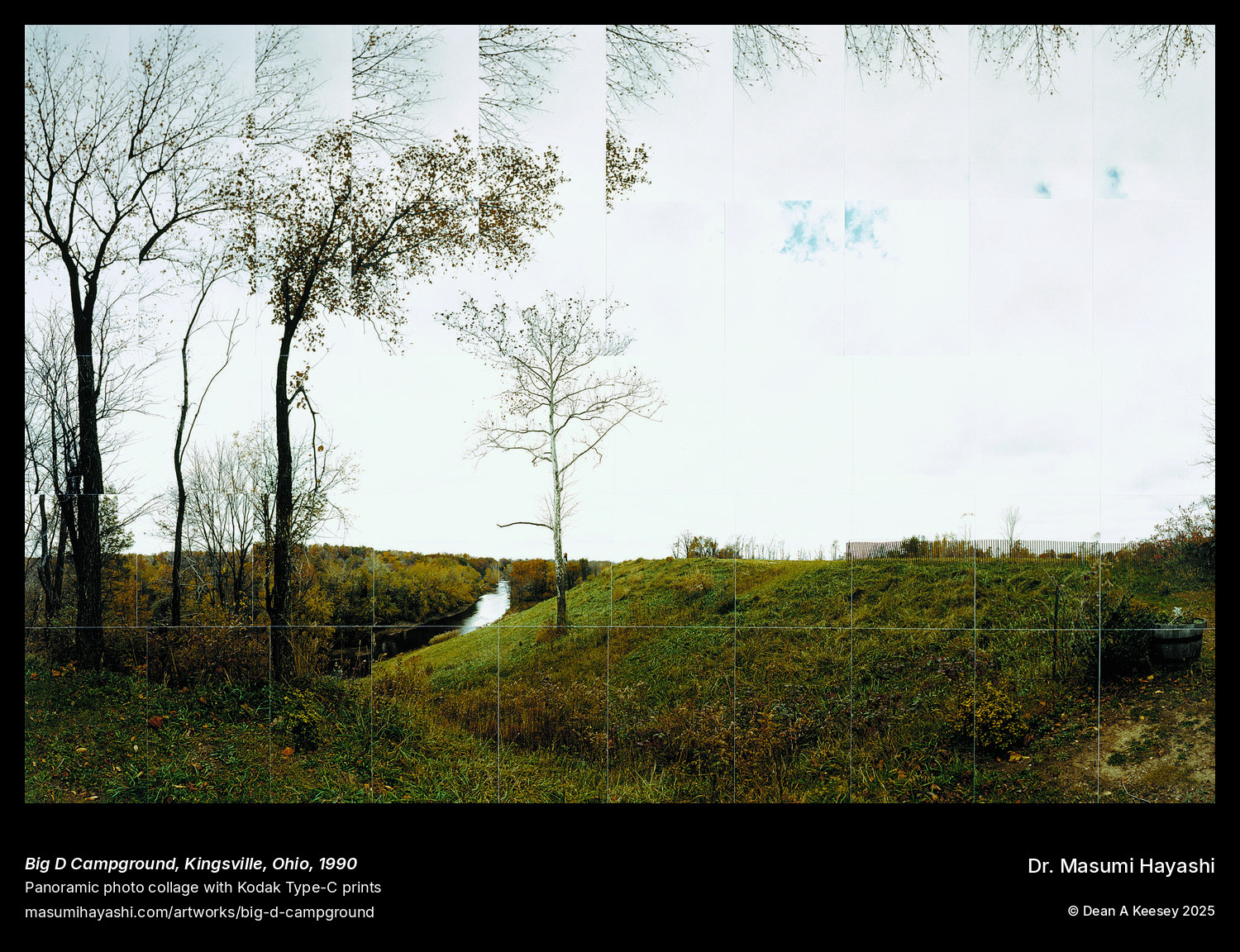
Big D Campground, Kingsville, Ohio
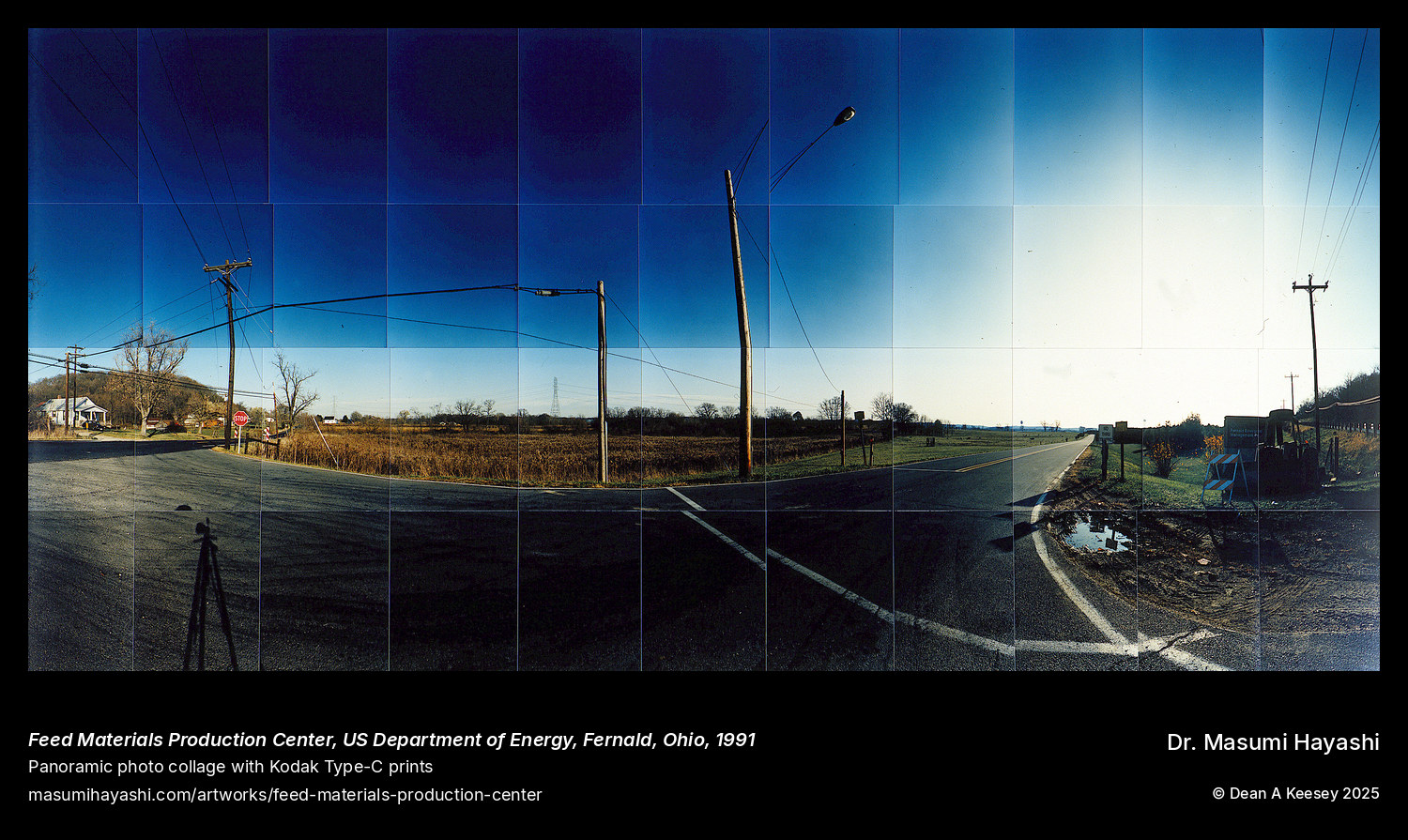
Feed Materials Production Center, US Department of Energy

Industrial Excess Landfill, Uniontown, Ohio

Love Canal, no. 1, Niagra Falls, New York

Love Canal, no. 2, Niagra Falls, New York