Edgewater Park
Cleveland, OH, USA
Panoramic Photo Collage
1992
38 x 67
Edgewater Park #2, Cleveland, Ohio
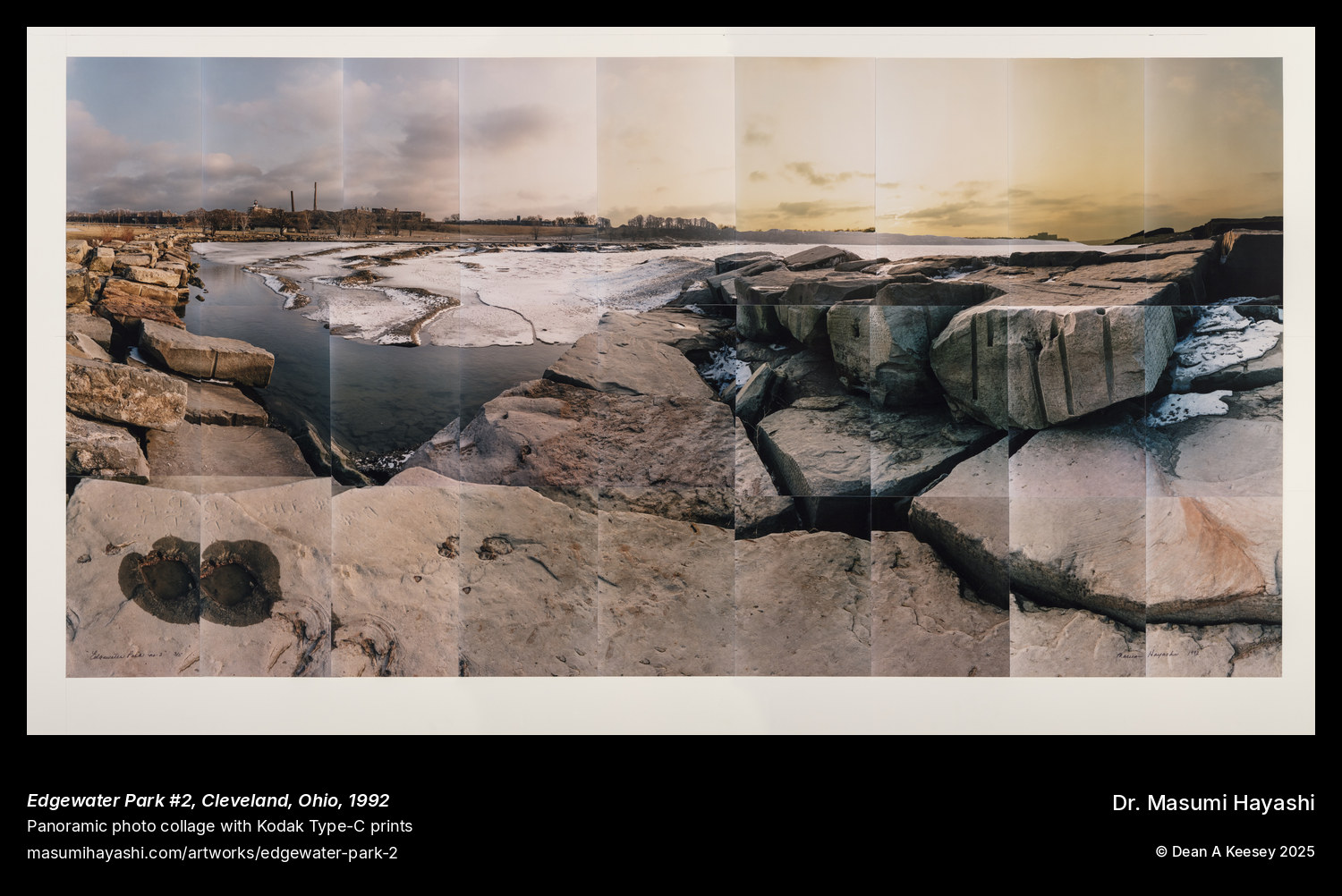
Masumi Hayashi’s 1992 panoramic photo collage Edgewater Park #2, Cleveland, Ohio documents Cleveland’s premier lakefront public park—255 acres of beaches, picnic areas, and recreational facilities along Lake Erie’s southern shore representing Cleveland’s commitment to public waterfront access and urban park systems. This 38×67-inch wide horizontal panorama, created using larger 8×10 film format (rather than series-standard 3.5×5), captures Edgewater’s landscape character where urban park meets Great Lakes shoreline, industrial infrastructure coexists with recreational spaces, and Cleveland’s working-class westside neighborhood connects to natural waterfront amenity.” suggests possible philanthropic dimension where [private collector]‘s acquisition might have involved donation context—potentially gifting work to institution, donating to fundraising auction, or supporting Edgewater Park preservation/improvement initiatives through art acquisition’s proceeds or subsequent donation.
Historical Context: Cleveland’s Lakefront Legacy
Cleveland’s Lake Erie waterfront, despite Great Lakes location offering natural amenity comparable to ocean coastline, endured century of industrial dominance—steel mills, ore docks, power plants, and heavy industry monopolizing shoreline access while residential neighborhoods lacked public waterfront parks. Progressive Era reform movements (1900s-1920s) challenged industrial waterfront monopoly, advocating public park systems providing working-class access to natural recreation opposing exclusive private clubs and industrial zones.
Edgewater Park, established 1894 and expanded through subsequent decades, emerged as Cleveland’s westside lakefront park success story—public beaches, picnic groves, fishing piers, and recreational facilities serving Ohio City and Tremont neighborhoods’ working-class immigrant populations seeking summer respite from urban density and industrial labor. The park’s democratic accessibility contrasted with exclusive yacht clubs and private beaches, embodying progressive ideals positioning public park access as civic right rather than class privilege.
By Hayashi’s 1992 documentation, Edgewater Park occupied transitional moment: decades of deferred maintenance, water quality concerns from industrial pollution and sewer overflows, and competition from suburban recreational facilities challenged traditional park functions, yet emerging lakefront renaissance movements advocated waterfront reclamation, park improvements, and reimagining Cleveland’s relationship with Lake Erie as civic asset rather than merely industrial resource or neglected legacy infrastructure.
Second Edgewater Work: Paired Documentation
The “Edgewater Park #2” designation indicates paired documentation with first Edgewater Park work (02009) acquired by Cleveland Foundation—suggesting Hayashi created multiple perspectives of single subject warranting comprehensive documentation through varied viewpoints, seasons, or compositional approaches. This paired strategy paralleled Love Canal (2 works), LA Subway (2 works), and other significant subjects receiving multi-work treatment enabling fuller representation than single panorama could capture.
The institutional/private split (Cleveland Foundation acquiring #1, [private collector] collecting #2) suggested strategic distribution where paired works enabled both institutional preservation and private collector acquisition, broadening work dissemination while creating series identity elevating single park beyond isolated piece into recognized multi-work documentation project.
Format: 8×10 Film & Technical Ambition
The 8×10 film format (versus series-standard 3.5×5) represented technical upgrade producing larger negatives enabling exceptional detail, tonal range, and enlargement potential—yet requiring heavier camera equipment, slower shooting pace, and increased film/processing costs. This format choice for Edgewater Park #2 suggested several motivations:
Landscape Photography Tradition: 8×10 large-format photography connected to classic landscape photography tradition (Ansel Adams, Edward Weston) where exceptional detail and tonal gradation served natural scene documentation—Edgewater Park’s lakefront landscape warranting traditional landscape photography’s technical rigor.
Enhanced Detail Capture: Lakefront scenes combining water, sky, vegetation, and distant horizons benefited from 8×10’s resolution capturing subtle tonal transitions, atmospheric effects, and distant detail impossible with smaller formats.
Premium Positioning: Larger format signaled premium work justifying [price redacted] pricing through demonstrable technical investment exceeding standard 3.5×5 work production—collectors paying premium expected exceptional technical execution validating higher valuation. 25th Street Station. Several factors potentially constrained distribution:
Subject Matter Appeal: Lakefront park documentation lacked compelling narrative of transit infrastructure (LA Subway), cultural heritage (Cultural Gardens), or historic preservation triumph (Palace Theater)—generic park scenes appealing primarily to Cleveland collectors with personal Edgewater connections or landscape photography enthusiasts.
Seasonal/Atmospheric Variability: Parks photographed in different seasons, weather, or times create varied aesthetic results—collectors viewing works might respond differently to particular atmospheric conditions captured, where some variations appeal more broadly than others constraining specific work’s market.
Paired Work Competition: Collectors choosing between Edgewater #1 and #2 might select single preferred version rather than acquiring both, creating internal competition where paired documentation strategy paradoxically limited each work’s individual distribution by offering alternative choices.
”Donation?” Notation & Philanthropic Context
The catalog notation “donation?” accompanying [private collector]‘s acquisition introduces intriguing provenance ambiguity: was Miller’s acquisition itself donation (gifting payment to charity/institution), subsequent donation of acquired work, or acquisition supporting park fundraising where art purchase proceeds benefited Edgewater Park improvements? This philanthropic dimension, if accurate, positioned artwork as vehicle for park advocacy and preservation fundraising, transcending mere aesthetic documentation to function as activism supporting Cleveland’s lakefront public access mission.
Related Works
- Edgewater Park (02009) - Cleveland Foundation, paired documentation
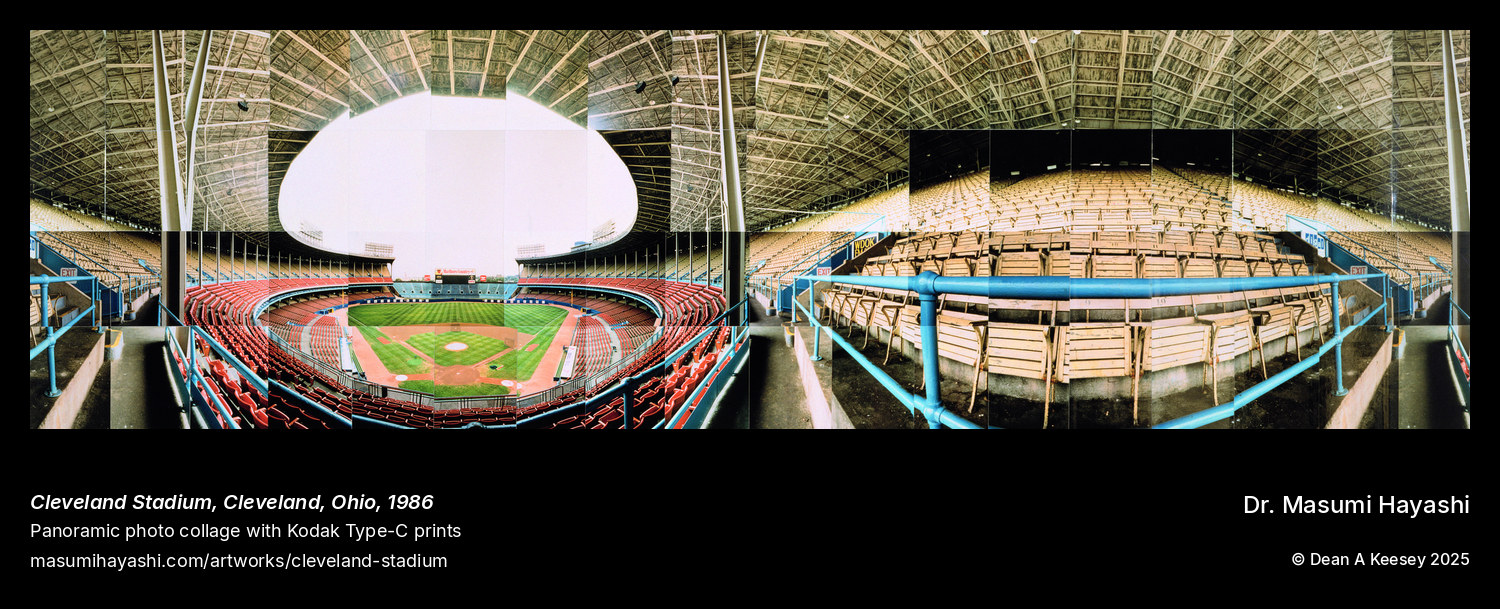
- Cleveland Stadium (02001) - Cleveland lakefront recreational infrastructure
- W. 25th Street Station (02026) - Cleveland westside landmark, comparable premium tier
- Main Avenue Bridge (02013) - Cleveland infrastructure, westside neighborhood
- Lake Erie works - Regional Great Lakes documentation
Series Context
Edgewater Park #2 represents City Works series’ engagement with Cleveland’s lakefront public park system through premium-priced paired documentation employing 8×10 large-format film for enhanced landscape detail. The work’s [price redacted] pricing, modest 40% distribution, and possible donation context positioned it as Cleveland heritage documentation serving both aesthetic collection and potential civic advocacy functions, while technical upgrade to 8×10 film demonstrated commitment to exceptional landscape photography quality justifying premium valuation through demonstrable production investment.
Dimensions: 38 × 67 inches (wide horizontal panorama, 1:1.8 ratio) Year: 1992 Medium: Panoramic Photo Collage Film: 8 × 10 Kodak (LARGE FORMAT - technical upgrade from standard 3.5×5!) Edition: 1 of 5
Distribution: 60% (1 edition placed, 2 inventory editions) Private Collector: [private collector] (Edition 1) Location: Edgewater Park, Lake Erie shoreline, westside Cleveland, Ohio Series: City Works (02) Park Significance: Cleveland’s premier lakefront public park (255 acres, established 1894) Paired Documentation: Second of two Edgewater works (with 02009 Cleveland Foundation) Technical Distinction: 8×10 large-format film (exceptional detail, landscape photography tradition) Market Performance: Modest 40% distribution despite premium pricing and technical investment Provenance Note: “donation?” notation suggests possible philanthropic acquisition/donation context Cleveland Context: Westside lakefront recreational infrastructure, public waterfront access advocacy