Dealey Plaza, Dallas, Texas
Dallas, TX, USA
Panoramic Photo Collage
1990
31 x 69
Dealey Plaza, Dallas, Texas
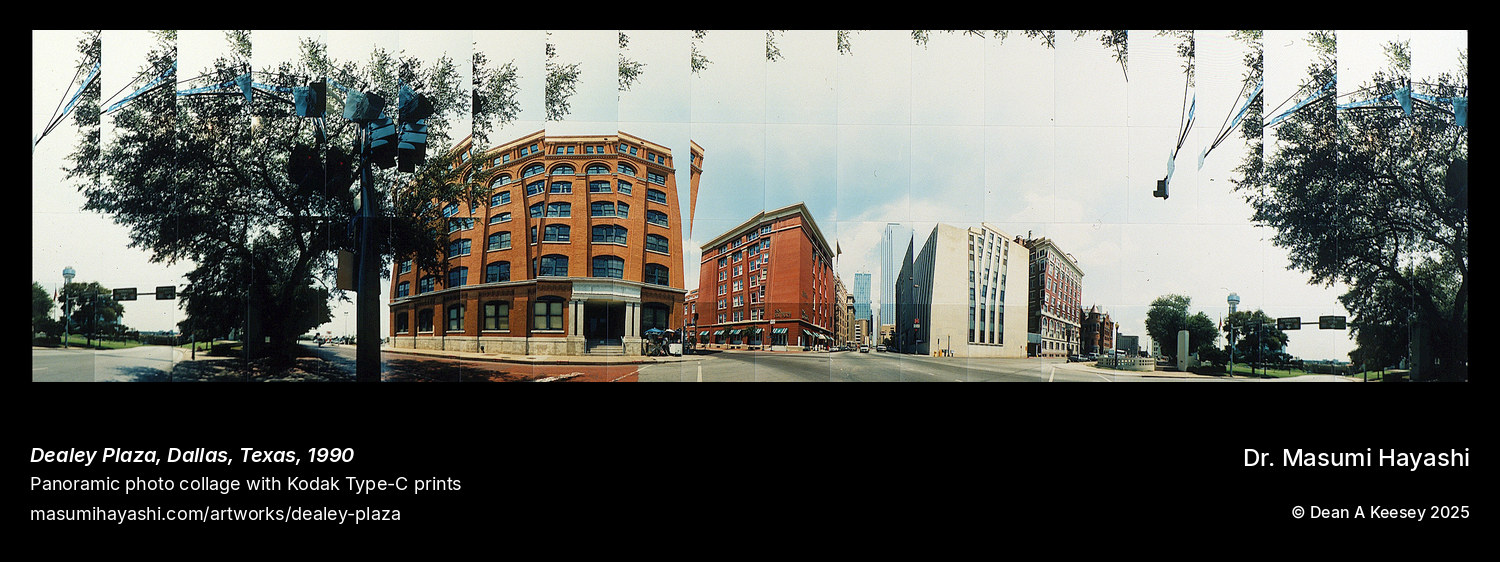
Masumi Hayashi’s 1990 panoramic photo collage Dealey Plaza, Dallas, Texas documents America’s most charged 20th-century public space—the site of President John F. Kennedy’s assassination on November 22, 1963. This 31×69-inch wide horizontal panorama captures Dealey Plaza’s spatial configuration—the Texas School Book Depository, Grassy Knoll, Elm Street’s descent toward the triple underpass—transforming familiar assassination landscape into fragmented, disorienting photo collage that mirrors the event’s contested memory and enduring national trauma. Created approaching the assassination’s 30th anniversary, the work engages how ordinary urban spaces become permanent memorials to violence while functioning simultaneously as pilgrimage destinations, tourist attractions, and conspiracy theory sites.
The work’s premium [price redacted] pricing—matching LA Subway infrastructure works—positioned Dealey Plaza as significant contemporary photography transcending tourist documentation or historical record-keeping.
Historical Context: November 22, 1963
On November 22, 1963, President John F. Kennedy’s motorcade traveled through downtown Dallas en route to the Trade Mart, passing through Dealey Plaza at approximately 12:30 PM. As the presidential limousine descended Elm Street toward the triple underpass, shots rang out—Kennedy was fatally wounded, Texas Governor John Connally injured. The assassination traumatized the nation, ended America’s postwar optimism, and spawned decades of conspiracy theories questioning official Warren Commission findings that Lee Harvey Oswald acted alone from the Texas School Book Depository’s sixth-floor window.
Dealey Plaza immediately became America’s most contested memorial landscape: the site where eyewitnesses reported hearing shots from the Grassy Knoll rather than the Book Depository, where the Zapruder film captured Kennedy’s fatal head wound, where conspiracy theorists argued evidence suggested multiple shooters or government involvement. The plaza’s physical configuration—open sight lines, surrounding buildings with windows overlooking the motorcade route, the railroad overpass—enabled endless reconstruction attempts seeking definitive answers about what happened during those seven seconds that changed American history.
By the 1970s-1980s, Dealey Plaza functioned simultaneously as solemn memorial and tourist attraction: visitors reenacted the motorcade route, stood on the Grassy Knoll speculating about alternative shooter positions, photographed the Book Depository (converted to Dallas County offices), and purchased conspiracy theory literature from vendors occupying the plaza’s periphery. The site’s dual character—sacred ground and exploitation site—reflected broader American struggles reconciling national trauma with commercial memorialization.
Format: Wide Horizontal for Contested Space
The 31×69-inch dimensions (approximately 1:2.2 ratio) created wide horizontal panorama suited to capturing Dealey Plaza’s spatial configuration—the relationship between Texas School Book Depository, Grassy Knoll, Elm Street’s descent, and surrounding buildings defining assassination sight lines. The format paralleled visitor experience: surveying the scene, reconstructing events through spatial relationships, understanding why this particular urban configuration enabled (or complicated) assassination narratives.
Yet Hayashi’s photo collage technique fragmented and disrupted spatial continuity—multiple viewpoints assembled into disorienting compositions where buildings shifted perspectives, distances compressed or expanded, and spatial relationships became uncertain. This formal fragmentation mirrored the assassination’s contested memory: conflicting eyewitness testimonies, disputed photographic evidence, Warren Commission conclusions challenged by conspiracy theories—a historical event whose “truth” remained perpetually fragmented despite occurring in full public view.
Photography, Trauma, and National Memory
Dealey Plaza presented unique challenges for artistic representation: the assassination generated perhaps America’s most extensively photographed violent event (Zapruder film, press photographs, eyewitness images), creating visual saturation where additional imagery risked repetition or exploitation. Hayashi’s approach avoided direct assassination representation—no reenactments, no graphic violence imagery, no conspiracy theory validation—instead documenting the plaza as ordinary urban space bearing extraordinary historical weight.
This restraint positioned the work as meditation on how landscapes absorb traumatic history: Dealey Plaza remained functional urban infrastructure (roads, buildings, plaza green space) yet could never be perceived as merely urban space—the assassination permanently inscribed itself onto the landscape’s meaning regardless of physical changes or ordinary daily activities continuing around the memorial site.
The 1990 creation date’s proximity to the assassination’s 30th anniversary (November 1993) suggested Hayashi engaged emerging 1990s Kennedy assassination discourse: Oliver Stone’s “JFK” (1991) reigniting conspiracy theories, renewed assassination research, and generational transitions where Americans with no direct Kennedy-era memory encountered the assassination as historical rather than lived event.
The [price redacted] pricing positioned Dealey Plaza at City Works series premium tier (matching LA Subway works, exceeded only by Watts Towers’ [price redacted]), reflecting multiple valuation factors: the subject’s historical significance as defining 20th-century American trauma site, the work’s engagement with national memory and contested history themes, and the premium format scale capturing complex spatial relationships central to assassination narratives. This modest reception potentially reflected:
Subject Matter Sensitivity: Collector discomfort acquiring assassination imagery for private display, regardless of artistic approach avoiding graphic violence or exploitation.
Market Saturation: Kennedy assassination imagery oversaturation—books, documentaries, conspiracy theory materials, tourist photographs—creating difficulty distinguishing artistic documentation from commercial assassination memorabilia.
Regional Disconnect: Unlike Cleveland works connecting to Hayashi’s home community or EPA Superfund documenting personal Ohio landscape, Dealey Plaza lacked geographic or biographical connection potentially motivating Cleveland-based collector network acquisition.
Pilgrimage Sites and Dark Tourism
Hayashi’s Dealey Plaza documentation engaged emerging “dark tourism” discourse—travel to sites associated with death, tragedy, or atrocity. Dealey Plaza exemplified this phenomenon: millions visiting not despite but because of assassination history, seeking connection to national trauma through physical presence at the death site. The plaza’s dual character—memorial and tourist attraction—raised questions about appropriate commemoration versus exploitation, solemn pilgrimage versus morbid curiosity.
By documenting the plaza without sensationalism or conspiracy theory validation, Hayashi created work acknowledging the site’s powerful historical charge while resisting reduction to either reverential memorial imagery or commercial assassination exploitation—positioning the work as thoughtful meditation on how Americans negotiate traumatic national memory through landscape engagement.
Related Works
- Terminal Tower series - Urban landmark documentation
- Union Terminal, Cincinnati (03023) - Historic civic architecture
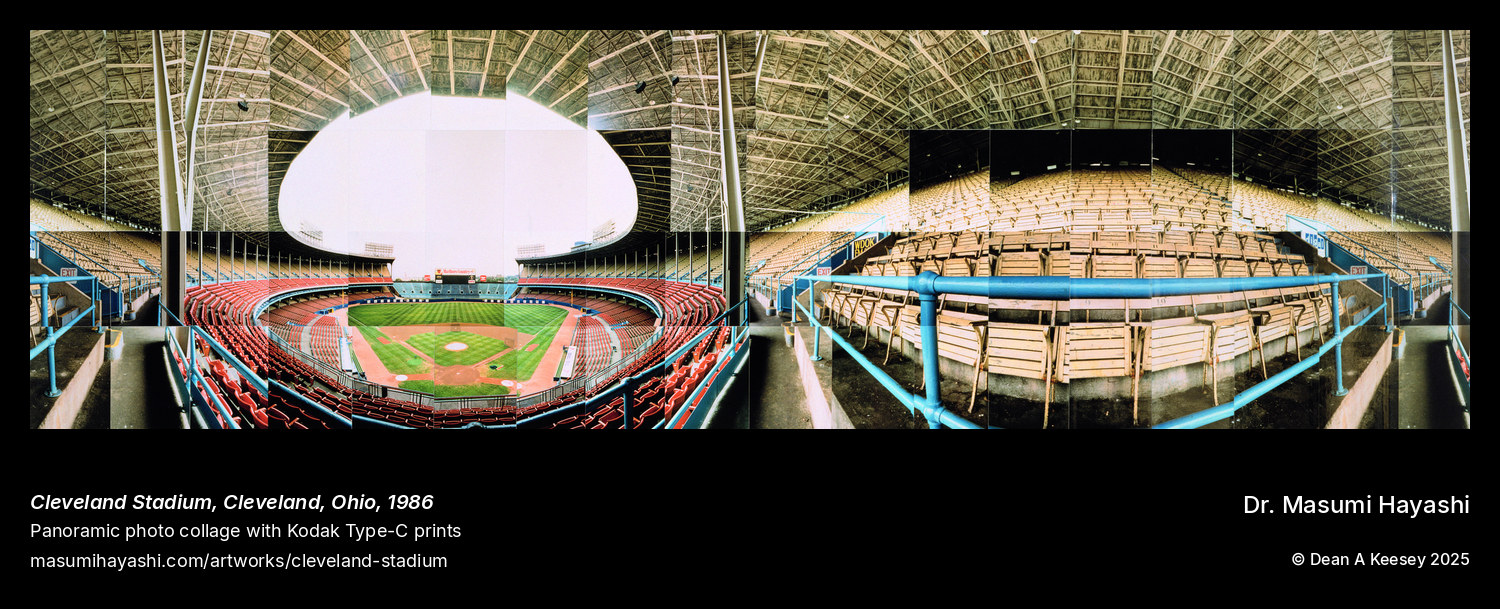
- Cleveland Stadium (02001) - Demolished civic monument documentation
- Ohio EPA Superfund sites - Landscape bearing historical trauma
Series Context
Dealey Plaza represents City Works series’ engagement with American public spaces bearing profound historical weight—urban landscapes functioning simultaneously as functional infrastructure and permanent memorials to defining national events. The work’s premium pricing and modest distribution positioned it as significant yet challenging contemporary photography engaging contested memory, national trauma, and dark tourism themes less commercially accessible than heritage documentation or architectural celebration.
Dimensions: 31 × 69 inches (wide horizontal panorama, 1:2.2 ratio) Year: 1990 Medium: Panoramic Photo Collage Film: 3.5 × 5 Kodak Edition: 1 of 5
Distribution: 80% (4 editions distributed, 1 framed inventory edition) Location: Dealey Plaza, downtown Dallas, Texas Series: City Works (02) Historical Significance: JFK assassination site (November 22, 1963) Commemoration Status: National Historic Landmark District (1993), pilgrimage destination Documentary Function: Contested memory landscape, dark tourism site, national trauma commemoration Format Approach: Wide horizontal capturing spatial relationships central to assassination narratives Market Positioning: Premium pricing, modest distribution suggesting subject matter sensitivity